

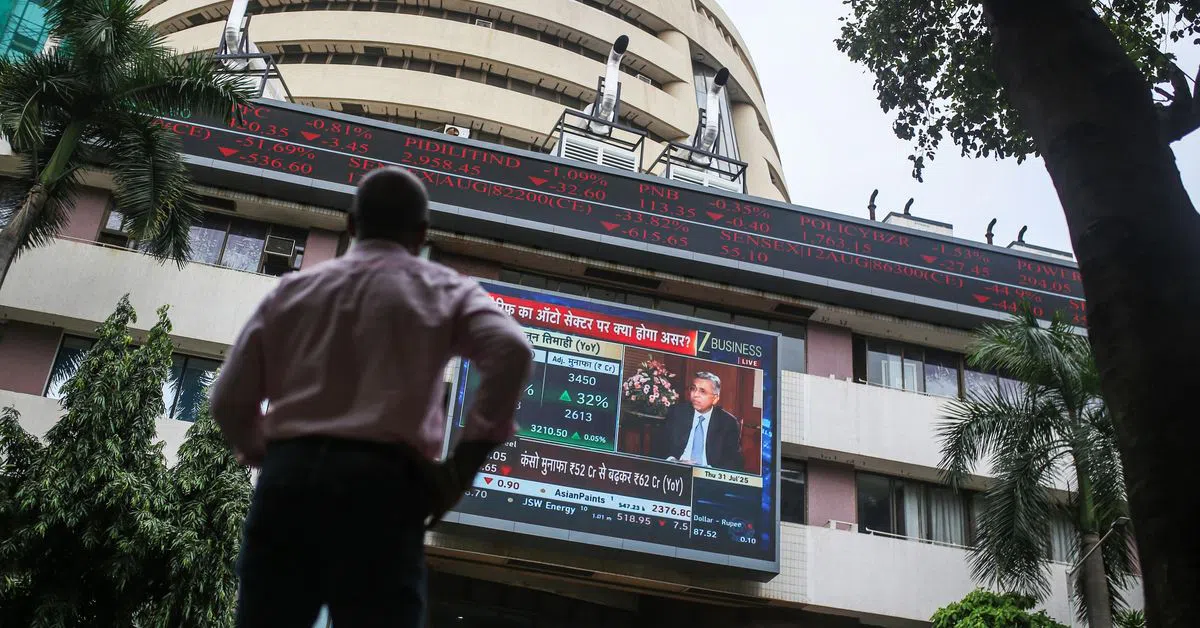
New Delhi, June 1, 2026 – Indian benchmark indices, the Nifty50 and Sensex, witnessed a volatile start to the trading week, paring early gains as investors weighed the uncertain prospects of a potential US-Iran trade deal. While the market opened on a positive note, a sharp downturn in heavyweight Fast-Moving Consumer Goods (FMCG) stocks and broader market caution led to a trimming of advances by late morning. The Nifty50, after briefly touching an intraday high, edged down to 23,538.90, registering a marginal loss of 0.02 per cent, while the Sensex held onto a slender gain of 0.06 per cent, trading at 74,822.45.
The day’s trading narrative was significantly shaped by geopolitical undertones, with market participants closely monitoring developments surrounding a potential trade agreement between the United States and Iran. Such a deal could have profound implications for global oil supply and prices, influencing energy sector stocks and broader economic sentiment. Domestically, a mixed bag of corporate updates, including robust auto sales figures and a challenging quarter for a leading airline, added layers of complexity to investor decisions.
Main Facts: A Day of Mixed Signals and Cautious Trading
Monday, June 1, 2026, commenced with a sense of cautious optimism in the Indian equity markets, quickly giving way to volatility as key indices struggled to maintain momentum. The early hours saw the Nifty50 and Sensex retreating from their day’s peaks, primarily influenced by sector-specific weakness and global cues.
At 10:04 AM, the Nifty50 was recorded at 23,538.90, down 5.50 points or 0.02 per cent from its previous close. Concurrently, the Sensex was trading at 74,822.45, up 45.28 points or 0.06 per cent. This modest performance underscored a broader market indecision. The primary drag came from the FMCG sector, which saw significant selling pressure. Major index components like Hindustan Unilever, NTPC, and Adani Enterprises were among the top losers on the Nifty50, contributing to the overall subdued sentiment.
Broader markets mirrored this cautious mood, with the Nifty MidCap index declining by 0.80 per cent and the Nifty SmallCap index down by 0.16 per cent at the 10:04 AM mark, indicating a risk-off approach among investors towards mid and small-sized companies. However, this trend saw slight variations later in the morning.
Sectoral performance presented a divergent picture. The Nifty IT and Nifty Media indices demonstrated resilience, trading in positive territory, with IT notably climbing more than 2 per cent. This strength was juxtaposed against the underperformance of Nifty FMCG, Nifty Auto, and Nifty Healthcare, reflecting sector-specific headwinds or profit-booking.
On the primary market front, two Initial Public Offers (IPOs) captured investor attention. Merritronix Ltd.’s IPO, a fresh issue worth ₹70.03 crore, opened for subscription, while Aureate Tradde IPO continued its second day of subscription, aiming to raise ₹27.29 crore at ₹70 per share.
Several companies also released their May sales figures, offering a snapshot of economic activity. Major automotive players like Escorts Kubota, Mahindra & Mahindra, Hyundai Motor, and Bajaj Auto reported healthy year-on-year sales growth, signaling robust demand in the auto sector. Conversely, InterGlobe Aviation, the parent company of IndiGo, announced weaker-than-expected Q4 FY26 earnings, reporting a substantial loss attributed to foreign exchange fluctuations and geopolitical disruptions in West Asia, despite analysts largely remaining bullish on its long-term prospects.
Chronology: A Morning of Fluctuations
The trading day for Indian equities began with a discernible positive bias, reflecting a continuation of the optimistic sentiment from the previous week’s close.
9:15 AM (Market Open): The Sensex opened above the 74,900 mark, while the Nifty50 started comfortably above 23,550. Early trades indicated broad-based buying across several sectors, including IT, banking, and select industrials, pushing both indices towards their intraday highs. The initial rally was fueled by global positive cues and hopes of sustained foreign institutional investor (FII) inflows.
9:22 AM: Early market data showed IndiGo and Asian Paints emerging as top gainers within the Sensex pack, along with major IT players like Infosys, TCS, Tech Mahindra, and HCLTech. This initial surge in IT stocks hinted at renewed confidence in the tech sector, possibly on the back of favorable global contract announcements or currency benefits.
9:26 AM: The Nifty IT index solidified its lead, climbing more than 2 per cent, becoming the top-performing sectoral index. This strong showing suggested a bullish outlook for the technology sector, possibly driven by export demand and a weaker rupee.
9:28 AM: Broader markets presented a mixed picture. While the Nifty Midcap 100 index had slipped marginally by 0.10 per cent, the Nifty Smallcap 100 index surprisingly gained 0.47 per cent, indicating selective buying interest in smaller companies despite overall caution.
9:36 AM: The Nifty Oil & Gas sector also began to show strength, with most constituent stocks advancing. Aegis Logistics, Chennai Petroleum Corporation, and Petronet LNG were noted as top gainers, possibly anticipating implications of global oil market dynamics.
9:40 AM – 9:48 AM: A series of positive sales updates from the auto sector provided some underlying support. Bajaj Auto reported a 20% Y-o-Y increase in total sales for May, with exports surging 34%. Hyundai Motor followed suit, announcing a 4.1% Y-o-Y rise in total sales. These figures underscored resilience in consumer demand within the automotive segment.
10:04 AM: This marked a pivotal point where the market began to consolidate and pare its earlier gains. The Nifty50 slipped into negative territory, down 0.02 per cent at 23,538.90, while the Sensex’s advance narrowed significantly to just 0.06 per cent at 74,822.45. This retraction was largely attributed to the sudden selling pressure in FMCG stocks and increased investor apprehension regarding the US-Iran deal, which introduced an element of uncertainty.
10:06 AM: The market update officially confirmed the Nifty and Sensex being off their day’s highs, reflecting the shift in sentiment.
10:18 AM: News surrounding IndiGo’s Q4 FY26 results broke, detailing a substantial loss but also highlighting analysts’ continued bullish stance. Despite the negative headline, the stock managed to gain 5%, indicating that the market was looking beyond the immediate financial hit to the airline’s long-term growth trajectory and operational improvements.
10:26 AM – 10:34 AM: Further positive sales data from the automotive and heavy equipment sectors continued to trickle in. Mahindra & Mahindra reported a robust 20% Y-o-Y increase in total sales, while Escorts Kubota announced an 18.9% Y-o-Y growth in sales. These updates, while positive for individual companies, were not enough to fully offset the broader market’s cautious turn.

The morning’s trading thus painted a picture of a market grappling with conflicting signals: strong fundamental data from certain sectors against the backdrop of geopolitical uncertainty and sector-specific weaknesses.
Supporting Data: Deep Dive into Market and Corporate Performance
Market Breadth and Sectoral Dynamics
The initial market rally, followed by a swift retraction, highlighted a cautious stance among investors. The Nifty MidCap and SmallCap indices, while showing some divergence in early trades, generally underperformed the large-caps, indicating a preference for relatively safer assets or profit-booking in segments that have seen significant gains recently. The Nifty MidCap’s 0.80% decline by 10:04 AM, compared to the Nifty SmallCap 100’s earlier 0.47% gain, suggested a mixed bag for broader markets, with some mid-caps facing selling pressure while specific small-caps found favor.
The FMCG sector bore the brunt of selling pressure, pulling down the overall market. Hindustan Unilever, a bellwether of the Indian consumer market, was among the top losers. This weakness could be attributed to several factors: concerns over rural demand recovery, inflationary pressures impacting raw material costs, or potential competition from emerging local brands. Investors might also be recalibrating their expectations for the sector’s growth trajectory in the current economic environment.
In stark contrast, the Nifty IT index surged over 2 per cent, emerging as the strongest performer. This rally was likely fueled by a combination of factors, including a weaker Indian Rupee (benefiting export-oriented IT services companies), a stable global demand outlook for digital transformation, and potentially some large deal wins or positive analyst upgrades. Companies like Infosys, TCS, Tech Mahindra, and HCLTech led this charge, underscoring the sector’s robust fundamentals and resilience.
The Nifty Auto index underperformed despite strong sales figures from individual companies. This discrepancy could be due to profit-booking after a period of significant gains, concerns about input cost inflation, or broader market sentiment overshadowing individual company performance. Similarly, the Nifty Healthcare index also lagged, possibly due to regulatory uncertainties, pricing pressures, or a rotation of capital into other sectors.
The Nifty Oil & Gas sector showed strength, with Aegis Logistics, Chennai Petroleum Corporation, and Petronet LNG leading the gains. This could be a speculative move in anticipation of the US-Iran deal’s outcome. A successful deal could potentially ease global oil supplies, affecting crude prices and margins for refining and marketing companies, while also impacting the demand for logistics and pipeline services.
Primary Market Activity: IPOs Merritronix and Aureate Tradde
The primary market remained active, offering new investment avenues. Merritronix Ltd.’s IPO, a fresh issue valued at ₹70.03 crore, opened for subscription. The company’s business activities and growth prospects would be key determinants of investor interest. Fresh issues typically indicate a company’s need for capital for expansion, debt reduction, or working capital requirements.
Aureate Tradde IPO was in its second day, aiming to raise ₹27.29 crore. Priced at ₹70 per share with a lot size of 2,000 shares, this SME IPO targeted retail and high-net-worth individual investors. The success of such smaller issues often reflects the broader appetite for risk in the market and confidence in the growth potential of niche businesses. These IPOs provide crucial capital to companies while offering investors opportunities to participate in their growth stories.
Company-Specific Performance Insights
Automotive Sector Resilience: The May sales figures from key auto players painted a picture of robust demand:
- Escorts Kubota: Reported an impressive 18.9% year-on-year (Y-o-Y) increase in total sales to 12,310 units. This indicates strong performance in the agricultural machinery and construction equipment segments, often a proxy for rural economic health and infrastructure spending.
- Mahindra & Mahindra (M&M): Total sales surged 20% Y-o-Y to 99,636 units. M&M’s diversified portfolio, including utility vehicles and farm equipment, suggests broad-based demand, particularly in segments less sensitive to immediate economic fluctuations.
- Hyundai Motor: Registered a 4.1% Y-o-Y growth in total sales to 61,137 units. While lower than its peers, this still represents steady demand in the passenger vehicle segment, often driven by urban consumption and new model launches.
- Bajaj Auto: Achieved a 20% Y-o-Y increase in total sales to 4.61 lakh units, with exports notably rising by 34% to 2.13 lakh units. This strong export performance highlights the company’s global reach and competitive positioning in two-wheeler and three-wheeler markets, signaling healthy international demand.
These figures, taken together, suggest that despite broader market caution, specific pockets of the economy, particularly the automotive sector, are experiencing healthy growth, potentially driven by pent-up demand, new product cycles, and improving economic sentiment in certain segments.
IndiGo’s Q4 FY26 Challenges and Analyst Confidence: InterGlobe Aviation, the parent company of IndiGo, faced a challenging March quarter (Q4 FY26), reporting a significant loss of ₹2,536 crore. This weaker-than-expected performance was primarily attributed to a sharp foreign exchange loss and disruptions to international operations stemming from the West Asia conflict. The airline sector is highly susceptible to fuel price volatility, currency fluctuations, and geopolitical events. Despite the substantial loss, the stock surprisingly rallied over 5 per cent. This positive market reaction was largely due to the airline’s management commentary, which reassured analysts regarding long-term demand trends, a positive pricing outlook, strategic fleet expansion plans, and ongoing cost optimization measures. Analysts evidently view the Q4 loss as a temporary setback caused by external factors rather than fundamental operational weaknesses, maintaining a constructive long-term outlook for the airline.
Official Responses and Market Commentary
While direct "official responses" from government bodies or regulatory authorities were not immediately available concerning the day’s market movements, market analysts and economic pundits provided valuable commentary, offering insights into the underlying dynamics.
On Geopolitical Impact: "The lingering uncertainty surrounding the US-Iran trade deal is undoubtedly casting a shadow over global markets, and India is no exception," remarked Dr. Anjali Sharma, Chief Market Strategist at Zenith Capital. "Any movement towards a deal could significantly impact crude oil prices, either by increasing supply and potentially lowering prices, or if negotiations falter, leading to renewed price volatility. This directly affects sectors like oil & gas, aviation, and even manufacturing due to input costs." She emphasized that traders are exercising caution, leading to profit-booking in sectors that have run up recently.
On Sectoral Divergence: Mr. Rajeev Gupta, Head of Equity Research at Alpha Brokerage, commented on the mixed sectoral performance. "FMCG stocks are facing a double whammy of potential demand slowdown in certain segments and persistent inflationary pressures on raw materials. This is leading to margin concerns for investors. On the other hand, the robust performance of the IT sector is a testament to India’s strong position in the global tech services landscape, further supported by currency depreciation which makes their services more competitive." He added that the auto sales figures, despite the Nifty Auto index’s underperformance, indicate underlying strength in consumer demand that might eventually translate into better stock performance once broader market sentiment improves.
On IndiGo’s Resilience: Regarding InterGlobe Aviation’s Q4 results, Ms. Priya Singh, an aviation sector analyst, stated, "While the headline loss for IndiGo is significant, it’s crucial to look beyond the one-off foreign exchange impact and the temporary disruption from the West Asia conflict. The management’s proactive steps on fleet expansion, network optimization, and their strong demand outlook indicate that the core business remains robust. The market’s positive reaction suggests that investors are focusing on the structural growth story of Indian aviation and IndiGo’s dominant position within it, rather than short-term headwinds."
These expert opinions underscore the complexity of market analysis, where global events, domestic economic indicators, and company-specific fundamentals all interact to shape investor sentiment and stock performance.
Implications: What This Means for Investors and the Economy
The day’s trading activity and corporate updates carry several implications for various stakeholders:
For Investors:
- Increased Volatility: The market’s swift reversal from early highs suggests that volatility could persist, especially with global geopolitical factors like the US-Iran deal in play. Investors should prepare for potential swings and consider diversified portfolios.
- Sector Rotation: The divergence in sectoral performance highlights the importance of sector-specific analysis. While FMCG faced headwinds, IT and parts of the auto sector showed resilience. This indicates a potential for continued sector rotation as investors seek growth opportunities and defensive plays.
- Long-term vs. Short-term View: The market’s reaction to IndiGo’s results exemplifies the difference between short-term noise and long-term fundamentals. Investors with a long-term horizon might find opportunities in companies facing temporary setbacks but possessing strong underlying business models and growth prospects.
- Primary Market Opportunities: The opening of new IPOs like Merritronix and the ongoing Aureate Tradde IPO signal continued investor interest in the primary market. However, careful due diligence on company fundamentals and valuation remains paramount.
For the Economy:
- Consumer Demand Indicators: Robust auto sales figures from Escorts Kubota, M&M, Hyundai, and Bajaj Auto are positive indicators of consumer demand and economic activity, particularly in rural and semi-urban areas for tractors and two-wheelers, and urban areas for passenger vehicles. The strong export growth from Bajaj Auto also points to a healthy global demand for Indian manufactured goods.
- Global Integration and Geopolitical Risks: The impact of the US-Iran deal speculation on Indian markets underscores India’s increasing integration into the global economy. Geopolitical events can quickly translate into market volatility, affecting key sectors like energy, logistics, and aviation.
- Inflationary Pressures: The weakness in the FMCG sector could signal ongoing concerns about inflation affecting consumer purchasing power or corporate margins. Monitoring inflation trends and their impact on discretionary spending will be crucial.
- Digital Economy Growth: The strong performance of the IT sector reaffirms the continued growth and importance of India’s digital economy and its role as a global technology services hub.
Future Outlook:
Looking ahead, market participants will be closely watching several key factors:
- US-Iran Deal Developments: Any concrete news, positive or negative, regarding the US-Iran trade deal will significantly influence global oil markets and consequently Indian equities, particularly the energy, aviation, and auto sectors.
- Economic Data Releases: Upcoming macroeconomic data, including inflation figures, industrial production, and manufacturing PMIs, will provide further clarity on the health of the Indian economy and influence the Reserve Bank of India’s monetary policy stance.
- Corporate Earnings: The remaining Q4 FY26 earnings announcements will offer a comprehensive picture of corporate health across various sectors, guiding investment decisions.
- Monsoon Progress: With the monsoon season approaching, its progress will be a critical factor for agricultural output and rural demand, directly impacting the FMCG and auto sectors.
- Global Central Bank Actions: Decisions from major central banks, particularly the US Federal Reserve, regarding interest rates and monetary policy will continue to influence global capital flows and investor sentiment towards emerging markets like India.
In conclusion, Monday’s trading session served as a microcosm of the complex interplay between global geopolitics, domestic economic realities, and corporate performance. While pockets of strength indicate underlying resilience, the broader market remains sensitive to external shocks and sectoral shifts, necessitating a nuanced approach from investors.
