

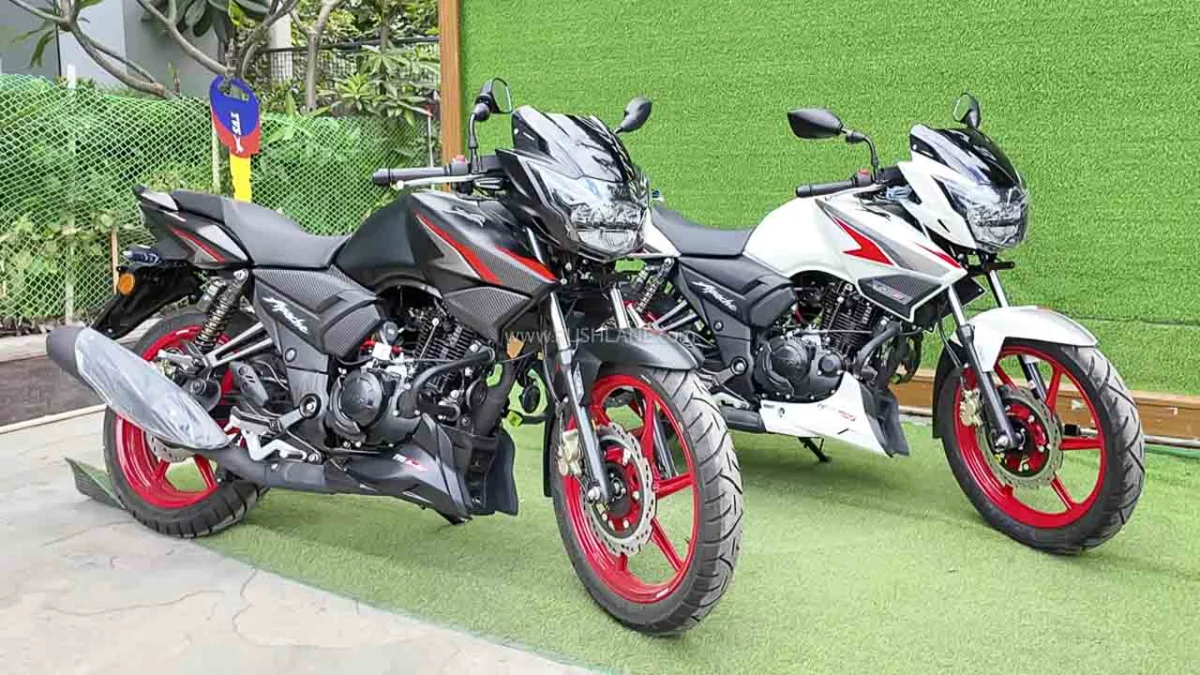
The Indian motorcycle market, particularly the 150cc to 200cc segment, continues to serve as the "sweet spot" for manufacturers and consumers alike. Positioned perfectly between the fuel-efficient mass-market commuters and the high-performance premium machines, this segment represents the aspirations of India’s growing middle class and young professional demographic. In August 2026, the segment demonstrated resilient growth, navigating through shifting consumer preferences and economic variables to post a Year-on-Year (YoY) increase of 7.51%.
With total sales reaching 1,76,483 units, the industry has seen a volume jump of over 12,000 units compared to the same period in 2025. This growth was spearheaded by the long-standing dominance of the TVS Apache series, a remarkable monthly recovery by the Bajaj Pulsar range, and the steady, unwavering demand for the Honda Unicorn.
Main Facts: A Segment in Transition
The 150cc-200cc motorcycle category is no longer just about getting from point A to point B; it is about doing so with style, power, and modern technology. The August 2026 sales data reveals several critical trends:
- Total Volume: The segment recorded 1,76,483 units in August 2026, up from 1,64,158 units in August 2025.
- Market Leadership: TVS Motor Company remains the undisputed king of this territory, with the Apache brand commanding a 31.23% market share.
- The Big Three: TVS Apache, Bajaj Pulsar, and Honda Unicorn collectively control 74% of the market, leaving the remaining 26% to be contested by Yamaha, Hero MotoCorp, KTM, and Suzuki.
- Growth Outliers: The Suzuki Gixxer recorded the highest percentage growth (91.03%), albeit on a lower base, while the Hero Xpulse 200 continued its upward trajectory as India’s favorite entry-level adventure tourer.
- Struggling Models: Formerly popular models like the Hero Xtreme 160 and Honda Hornet 2.0 saw significant double-digit declines, suggesting a consolidation of buyer interest toward more established or recently updated nameplates.
Chronology: From July Slump to August Stability
To understand the August 2026 performance, one must look at the immediate preceding months. July 2026 was a period of relative cooling for some brands, as the industry prepared for the onset of the festive season.
- Early August 2026: Dealerships began stocking up on popular models like the TVS Apache and Honda Unicorn to meet the expected demand from the "Shravan" month and upcoming regional festivals.
- Mid-August 2026: Bajaj Auto saw a significant surge in dispatches. After a relatively quiet July, where they sold 31,405 units in this segment, the company ramped up production to hit 40,013 units by the end of August—a sharp Month-on-Month (MoM) recovery of 27.41%.
- Late August 2026: The final tallies showed a marginal MoM growth of 0.35% for the entire segment. While this seems flat, it hides the internal volatility where some brands gained significantly at the expense of others.
Supporting Data: Detailed Model-Wise Performance
The Leaders: TVS, Bajaj, and Honda
TVS Apache Series:
The Apache brand continues to be the primary volume driver for TVS. Selling 55,123 units in August 2026, the range—which includes the RTR 160, 160 4V, 180, and 200 4V—grew by 22.39% YoY. Despite a slight MoM dip of 7.21%, the Apache’s ability to offer "racing DNA" at a competitive price point keeps it at the top of the leaderboard.
Bajaj Pulsar Range:
The Pulsar remains a household name in India. In the 150cc-200cc bracket (comprising the Pulsar 150, N160, NS160, and NS200), Bajaj sold 40,013 units. While this was a 6.93% drop YoY, the 27.41% MoM growth indicates a powerful comeback. The Pulsar added 8,608 units to its July tally, making it the biggest single contributor to the segment’s monthly recovery.

Honda Unicorn:
The Honda Unicorn is a phenomenon in the Indian market. Despite its conservative styling, its reputation for refinement and reliability earned it 35,394 sales in August 2026. This represents a 20.91% YoY growth. The Unicorn’s success proves that a significant portion of the Indian buyer base still prioritizes comfort and longevity over aggressive aesthetics.
The Premium Contenders: Yamaha and KTM
Yamaha Motor India:
Yamaha’s strategy focuses on the "premium-commuter" and "entry-sport" niches.
- Yamaha FZ: Sold 14,214 units. While YoY growth was flat (-0.76%), it saw a massive 43.40% MoM jump.
- Yamaha R15 & MT-15: These high-end 155cc bikes saw mixed results. The R15 grew 2.15% YoY (7,691 units), but the MT-15 fell 28.98% YoY (7,537 units).
- Yamaha XSR: The retro-styled XSR added a healthy 5,254 units to Yamaha’s total, helping the company maintain a strong fourth-place position in the segment.
KTM:
The KTM 160/200 Duke and RC series registered 2,654 units. This was a 21.43% YoY decline. KTM’s premium pricing and focused "Ready to Race" ergonomics continue to cater to a specific enthusiast niche, which appears to be facing stiff competition from more affordable performance offerings.
The Specialists: Hero and Suzuki
Hero MotoCorp:
Hero’s performance in this segment is a tale of two bikes. The Xpulse 200 is a resounding success, growing 45.44% YoY to 4,980 units. Conversely, the Xtreme 160 has struggled to find traction, with sales plummeting 84.99% YoY to just 310 units.
Suzuki:
The Gixxer series remains a cult favorite. In August 2026, it nearly doubled its sales from the previous year, jumping from 390 units to 745 units. While the volumes are small, the 91.03% growth suggests a renewed interest in Suzuki’s engineering.
Official Perspectives and Market Sentiment
While official statements from individual OEMs regarding the August figures are often reserved for quarterly earnings calls, industry analysts and dealership associations have provided context for these numbers.

Market Analysts’ View:
Experts suggest that the growth in the 150cc-200cc segment is driven by "upward migration." Buyers who previously owned 100cc or 125cc bikes are now looking for more power and better safety features like ABS (Anti-lock Braking System), which are standard in this category. Furthermore, the stabilization of semiconductor supplies has allowed manufacturers to maintain steady production of feature-rich models like the Apache and Pulsar.
Dealer Sentiment:
Reports from the Federation of Automobile Dealers Associations (FADA) indicate that consumer inquiries in the 150cc+ category have risen by 15% compared to last year. Dealers attribute this to the "aspirational" nature of these bikes. However, they also note that high interest rates on two-wheeler loans remain a hurdle for some entry-level buyers in the 150cc space.
The "Bajaj Factor":
Industry insiders point to Bajaj’s aggressive inventory management in August. The sharp MoM increase suggests that Bajaj successfully cleared older stock or successfully launched a refreshed variant of the Pulsar N160/NS series, which resonated immediately with the youth.
Implications: What This Means for the Future
The August 2026 data provides a roadmap for where the Indian two-wheeler industry is headed in the late 2020s.
1. Consolidation of Power
The fact that three models (Apache, Pulsar, Unicorn) control nearly three-quarters of the market suggests that brand equity is paramount. Newer entrants or struggling models will need more than just "good specs" to dethrone these giants; they will need extensive service networks and proven resale value.
2. The Rise of "Niche" Performance
The success of the Hero Xpulse 200 and the Yamaha XSR indicates that Indian riders are diversifying. There is a growing market for specialized motorcycles—adventure tourers and modern retros—within the 150cc-200cc frame. Manufacturers who fail to diversify their portfolios beyond standard "naked streetfighters" may lose out on this high-margin growth.

3. The Digital and Safety Push
The models that are growing (Apache, Pulsar, R15) are those that have embraced technology. Features like Bluetooth connectivity, turn-by-turn navigation, and dual-channel ABS are no longer "optional luxuries" but "mandatory expectations" for buyers in this segment.
4. Economic Resilience
The 7.51% YoY growth, despite inflationary pressures, suggests that the urban and semi-urban youth population considers a 150cc-200cc motorcycle a "essential lifestyle upgrade." This resilience is a positive sign for the broader Indian economy, indicating healthy discretionary spending.
5. The "Missing" Commuters
The disappearance of the Bajaj Avenger from the August dispatches (0 units) and the sharp decline of the Honda Hornet 2.0 and Hero Xtreme 160 highlight the brutal nature of this segment. If a product does not receive timely updates or fails to create a distinct identity, it is quickly sidelined by more aggressive competitors.
Conclusion
The 150cc-200cc motorcycle segment in August 2026 stands as a testament to the evolving Indian rider. With 1.76 lakh units sold, the segment is healthy, competitive, and increasingly sophisticated. As we move closer to the 2027 model year, the battle for supremacy between TVS, Bajaj, and Honda is expected to intensify, likely leading to more feature-packed and value-driven offerings for the Indian consumer. The growth of specialized bikes like the Xpulse also hints that the next phase of the Indian motorcycling revolution will be defined by "purpose-built" machines rather than "one-size-fits-all" commuters.
