

NEW DELHI – The Indian electric two-wheeler (E2W) industry has hit a significant milestone in its journey toward mass adoption. According to the latest retail data for April 2026, the segment recorded a staggering 60.73% year-on-year (YoY) growth, signaling a definitive shift in consumer preference from internal combustion engines (ICE) to sustainable mobility.
Despite a predictable month-on-month (MoM) dip following the high-volume fiscal year-end in March, the broader trajectory remains aggressively upward. With 1,48,740 units registered in April 2026, the industry is no longer in its "early adopter" phase; it has firmly entered the "early majority" stage of the market lifecycle.
Main Facts: A Robust Start to Fiscal Year 2026-27
The E2W sector’s performance in April 2026 serves as a bellwether for the Indian automotive industry. The total sales of 1,48,740 units represent a massive leap from the 92,538 units sold in April 2025. This growth is particularly impressive given the broader economic landscape and the gradual tapering of direct purchase subsidies that had historically propped up the market.
While the YoY figures are celebratory, the MoM data shows a 22.15% decline from the 1,91,067 units sold in March 2026. Industry veterans characterize this as a "seasonal correction." March traditionally sees a spike in sales due to corporate depreciation benefits, year-end targets, and aggressive promotional campaigns. The April dip is a standard industry phenomenon across all automotive segments in India.
Perhaps the most telling statistic is the market penetration rate. Electric two-wheelers now command a 7.8% share of the total two-wheeler market in India. To put this in perspective, just twelve months ago, in April 2025, that share stood at a modest 5.5%. This 230-basis-point increase in market share within a year highlights the eroding dominance of petrol-powered scooters and motorcycles.
Chronology: The Road to 1.48 Lakh Units
The journey to this record-breaking April began with a series of strategic pivots by both legacy manufacturers and EV startups over the last 18 months.
- Q3 2025: Infrastructure Breakthroughs: By late 2025, public charging infrastructure in Tier-1 and Tier-2 cities reached a critical mass, significantly reducing "range anxiety" for potential buyers.
- Q4 2025: Product Diversification: Major players like TVS and Bajaj expanded their portfolios to include more affordable, "base-trim" variants, bringing the entry price of high-speed electric scooters closer to their ICE counterparts.
- March 2026: The Fiscal Rush: The industry hit an all-time high of nearly 2 lakh units as consumers rushed to take advantage of closing financial year deals and rumors of impending price hikes.
- April 2026: The New Baseline: The current month’s data establishes a new baseline for the industry, where selling nearly 1.5 lakh units in a "slow" month is the new normal.
Supporting Data: OEM Performance Analysis
The competitive landscape of the E2W market has seen a dramatic reshuffling, with legacy manufacturers now dominating the top of the leaderboard.
TVS Motor Company: The Undisputed Leader
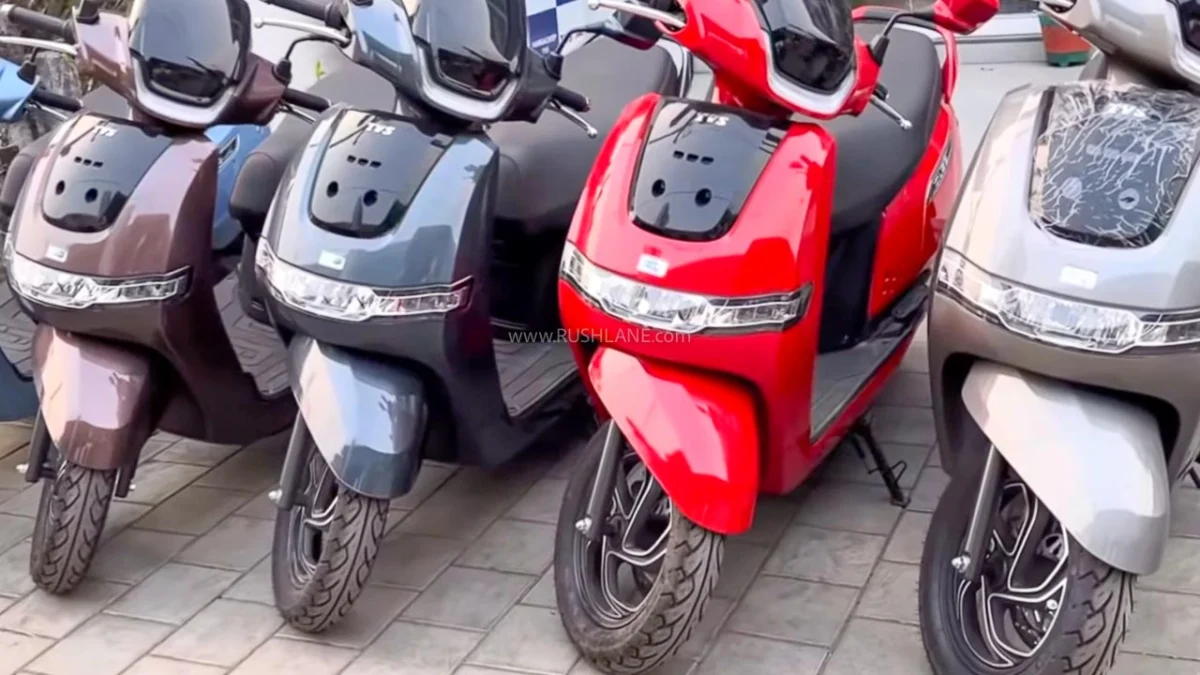
TVS Motor has successfully leveraged its brand trust and the popularity of the iQube series to retain the top spot. Selling 37,683 units in April 2026, the company posted an 88.64% YoY growth. With a 25.33% market share, one in every four electric two-wheelers sold in India now carries the TVS badge. The company’s success is attributed to its aggressive dealership expansion into rural markets and a robust supply chain that has avoided the bottlenecks seen in previous years.

Bajaj Auto: The Steady Climber
Bajaj Auto secured the second position with 32,898 units of the Chetak range. While it faced a 28.90% MoM decline, its YoY growth of 71.68% indicates that the Chetak has finally found its rhythm in the premium electric scooter segment. Bajaj’s strategy of focusing on build quality and a metallic body has resonated with a demographic that remains skeptical of plastic-heavy EV designs.
Ather Energy: The Tech Pioneer
Ather Energy continues to punch above its weight, securing third place with 27,034 units. Its 102.78% YoY growth is a testament to the success of its new model launches and the expansion of the ‘Ather Grid’ charging network. Ather now holds an 18.17% market share, proving that there is a significant market for performance-oriented, tech-laden electric scooters.
Hero MotoCorp (VIDA): The Growth Champion
Hero MotoCorp’s EV brand, VIDA, recorded the most explosive growth among the top five, with a 147.77% YoY increase. Selling 15,238 units, VIDA is finally benefiting from Hero’s massive distribution network. Although it currently sits in fourth place, its growth trajectory suggests it could challenge the top three by the end of the calendar year.
Ola Electric: The Outlier
In a surprising turn, Ola Electric, once the market leader, fell to fifth place with 12,171 units. The company was the only major player to show positive MoM growth (+20.29%), suggesting a recovery from a poor March. However, its YoY performance is concerning, with a 38.60% decline from April 2025. Analysts suggest that Ola’s drop in market share (now at 8.18%) is due to increased competition and a strategic shift toward more premium segments, which has alienated some budget-conscious buyers.
Emerging Players and Niche Success
The "Others" category, including Greaves Ampere, River Mobility, and BGauss, contributed a combined 10,567 units. River Mobility, in particular, saw a 301.88% YoY increase, albeit on a smaller base, highlighting the growing demand for "utility-focused" electric vehicles.
Official Responses and Industry Sentiment
While official statements from individual CEOs are often guarded, the consensus among industry bodies like the Society of Manufacturers of Electric Vehicles (SMEV) is one of cautious optimism.
A spokesperson for a leading legacy manufacturer, speaking on the condition of anonymity, stated: "The April numbers are a validation of our long-term EV strategy. We are no longer testing the waters; we are diving in. The MoM decline was expected, but the YoY growth proves that the Indian consumer is now looking at EVs as their primary vehicle, not just a secondary city runabout."
Market analysts at several top-tier firms have noted that the 7.8% market share is a "point of no return." According to automotive analyst Dr. Arvinder Singh, "When a new technology hits 5% market penetration, the growth curve usually becomes exponential. India has crossed that threshold. We expect E2W penetration to hit 15% by the end of 2027, driven by the parity in Total Cost of Ownership (TCO) compared to petrol vehicles."

Implications: What This Means for the Future
The April 2026 data has several deep-seated implications for the Indian economy and the environment:
1. The Decline of the ICE Scooter
With electric scooters capturing nearly 8% of the market, legacy ICE models are beginning to feel the pressure. Manufacturers who have been slow to pivot to electric are seeing their inventories pile up. This shift is likely to lead to a price war in the ICE segment as brands attempt to clear stock, further accelerating the transition as consumers weigh the long-term benefits of EVs.
2. Infrastructure as the New Battleground
The competition is shifting from "who has the best scooter" to "who has the best charging network." Companies like Ather and TVS are investing heavily in proprietary and interoperable charging stations. The government’s continued support for public charging infrastructure is expected to be the primary driver for the next 5 lakh units in sales.
3. Battery Localization and Pricing
The 60% YoY growth is also a result of more stable battery prices. As Indian manufacturers move toward domestic cell manufacturing, the reliance on imported lithium-ion cells is decreasing. This localization is expected to shield the Indian market from global supply chain shocks and currency fluctuations.
4. Environmental Impact
The sale of 1.48 lakh electric units in a single month is estimated to offset several thousand tons of CO2 emissions over the vehicles’ lifespans. This is a critical component of India’s commitment to its Net Zero goals, particularly in urban centers where air quality remains a perennial concern.
Conclusion: The Outlook for 2026
As India moves into the second quarter of the 2026-27 fiscal year, the outlook for the electric two-wheeler segment is exceptionally bright. While the MoM dip in April was a necessary market correction, the 60.73% YoY growth serves as a powerful indicator of a sector in its prime.
With rising fuel prices, an ever-expanding network of charging stations, and a plethora of new product launches scheduled for the festive season later this year, the E2W segment is poised to break more records. The dominance of legacy players like TVS and Bajaj suggests that the industry has matured, providing consumers with a blend of innovative technology and reliable after-sales service. For the Indian commuter, the question is no longer if they will go electric, but when.
