

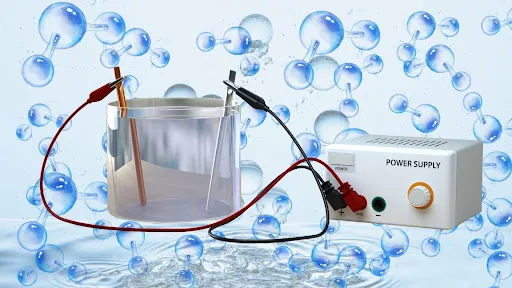
In a series of landmark developments that signal a transformative shift in the global energy landscape, India has positioned itself at the forefront of the "Hydrogen Economy." By merging advanced nuclear engineering with cutting-edge molecular chemistry, the nation is tackling the two greatest hurdles to sustainable energy: the high cost of production and the reliance on scarce precious metals.
Recently, the Indira Gandhi Centre for Atomic Research (IGCAR) in Kalpakkam, Tamil Nadu, inaugurated the world’s first nuclear-powered hydrogen production plant. Simultaneously, a research team at the Indian Institute of Technology (IIT) Bombay has unveiled a revolutionary, low-cost catalyst that could drastically reduce the capital expenditure required for green hydrogen electrolysis. Together, these breakthroughs represent a dual-pronged assault on carbon emissions, aiming to replace fossil fuels with a clean-burning alternative that emits only water vapor.
Main Facts: A New Paradigm for Clean Energy
The core of this energy revolution lies in the unique properties of hydrogen. As a fuel, hydrogen boasts an energy density nearly three times that of petrol, making it an ideal candidate for heavy-duty transport, aviation, and industrial processes like steel manufacturing and fertilizer production. However, because hydrogen does not exist in its pure form on Earth, it must be extracted from water ($H_2O$) or hydrocarbons.
The Kalpakkam Nuclear Milestone
The new facility at IGCAR is a departure from conventional "Green Hydrogen" production, which typically relies on solar or wind-generated electricity to power electrolyzers. Instead, the Kalpakkam plant utilizes nuclear-generated heat. This "Pink Hydrogen" approach is significantly more efficient than standard electrolysis because high-temperature thermal energy can assist in splitting water molecules, reducing the amount of electrical work required.
The IIT Bombay Catalyst Breakthrough
While the source of energy is one half of the equation, the efficiency of the extraction process is the other. Researchers at IIT Bombay, led by Dr. Savi Chaudhary and Prof. Ramaswamy Murugavel, have developed a bifunctional catalyst composed of earth-abundant materials: cobalt, nickel, phosphate, and exfoliated graphite. This material replaces the "gold standard" catalysts—platinum, ruthenium, and iridium—which are prohibitively expensive and rare, often acting as a bottleneck for large-scale hydrogen adoption.
Chronology: The Road to the Hydrogen Frontier
The journey toward these breakthroughs has been defined by decades of incremental progress in nuclear physics and material science, culminating in the current accelerated phase of India’s National Green Hydrogen Mission.
- The Conceptualization of the Hydrogen Mission: Recognizing the volatility of global oil markets and the urgency of climate change, the Indian government launched the National Green Hydrogen Mission in early 2023. The goal was clear: to make India a global hub for the production, usage, and export of Green Hydrogen.
- The Nuclear Integration (2023–2024): Engineers at IGCAR began pivoting toward thermal-assisted hydrogen production. By integrating hydrogen units with nuclear reactors, they sought to utilize the massive thermal output of the Kalpakkam facility, which was previously treated as a byproduct.
- The Catalyst Discovery (Late 2024): At IIT Bombay, the focus shifted toward solving the "kinetic barrier" problem of water splitting. Traditional electrolysis requires a high "overpotential"—extra energy beyond the theoretical minimum—to kickstart the reaction. The team spent months experimenting with molecular precursor engineering to find a stable, non-noble metal alternative.
- The Inauguration and Publication (Recent): The Kalpakkam plant was officially commissioned, marking a global first. Concurrently, the IIT Bombay team published their findings in the journal Small, detailing the synthesis of their cobalt-nickel phosphate catalyst.
Supporting Data: Engineering Efficiency and Durability
To understand the magnitude of the IIT Bombay discovery, one must look at the technical specifications of the water-splitting process. Electrolysis involves two simultaneous reactions: the Hydrogen Evolution Reaction (HER) at the cathode and the Oxygen Evolution Reaction (OER) at the anode.
Overcoming the Kinetic Barrier
The OER is notoriously slow and energy-intensive. Traditionally, iridium oxide is used to speed it up, but its cost is astronomical. The IIT Bombay team’s catalyst—a combination of cobalt and nickel phosphates on a graphite support—showed remarkable performance:
- Bifunctionality: Unlike most materials that excel at only one side of the reaction, this new catalyst efficiently drives both HER and OER.
- Amorphous Structure: Unlike crystalline materials with rigid atomic lattices, the new catalyst is amorphous (disordered). This randomness creates a higher density of "active sites"—microscopic nooks and crannies where water molecules can dock and split.
- Stability Metrics: In stress tests, the catalyst operated continuously for 72 hours with negligible degradation. In the world of electrochemistry, such durability in harsh, alkaline environments is a significant milestone for non-precious metals.
The Role of Exfoliated Graphite
The researchers used atomically thin layers of carbon, known as exfoliated graphite, as a conductive "backbone." This graphite support serves two purposes: it ensures that electrons move quickly through the material (enhancing charge transport) and it prevents the cobalt-nickel particles from clumping together, ensuring the maximum surface area is available for the reaction.
Official Responses: Insights from the Architects of the Breakthrough
The researchers involved emphasize that this is not just a laboratory success, but a scalable industrial solution.
Dr. Savi Chaudhary, the study’s first author, highlighted the shift in methodology:
“The primary motivation was to develop an efficient and durable earth-abundant catalyst for overall water splitting. The molecular precursor approach is advantageous because it allows precise control over the composition and homogeneity of the resulting material, while enabling its conversion into the active catalyst under relatively mild conditions.”
Chaudhary also noted the serendipitous discovery of the material’s structure:
“We initially anticipated that the complexes would generate crystalline phosphate materials. Instead, an amorphous Co-Ni phosphate phase was formed with excellent homogeneity. Interestingly, the combination of the amorphous mixed-metal phosphate and exfoliated graphite resulted in significantly enhanced electrocatalytic activity.”
Prof. Ramaswamy Murugavel, the corresponding author, explained the chemistry behind the catalyst’s resilience:
“The surface reconstruction highlighted an important feature of phosphate-based catalysts: under catalytic conditions, the surface reconstructs into more active oxyhydroxide species while the underlying phosphate framework helps maintain chemical stability and structural integrity.”
He further added that the synergy between the metals was key:
“The combination of cobalt and nickel provides bifunctional activity toward both HER and OER, while the conductive graphite support enhances charge transport and promotes efficient utilization of the active material.”
Implications: Powering a Sustainable Future
The convergence of nuclear-powered production and low-cost catalyst technology has profound implications for India and the world.
1. Decarbonizing "Hard-to-Abate" Sectors
Industries like steel, cement, and heavy shipping cannot easily be powered by batteries due to weight and energy density requirements. Green hydrogen produced via the Kalpakkam method or using IIT Bombay’s catalysts offers a drop-in replacement for coking coal and heavy fuel oil, potentially slashing industrial carbon footprints by up to 90%.
2. Economic Sovereignty and Cost Reduction
Currently, the cost of green hydrogen is roughly $3–$6 per kilogram. To compete with fossil fuels, this needs to drop below $2 per kilogram. By eliminating the need for expensive platinum and iridium, the IIT Bombay catalyst significantly lowers the capital expenditure (CAPEX) for electrolyzer manufacturers. Furthermore, utilizing nuclear heat at Kalpakkam improves the thermodynamic efficiency, lowering the operational expenditure (OPEX).
3. A New Era of Material Science
The "molecular precursor engineering" used by the IIT Bombay team provides a blueprint for future material design. This "bottom-up" approach—where specific molecules are designed as building blocks—could be applied to create catalysts for carbon capture, fuel cells, and advanced battery chemistries.
4. Global Leadership in "Pink Hydrogen"
By successfully launching a nuclear-to-hydrogen plant, India has demonstrated that nuclear energy can be more than just a source of baseload electricity. It can be a versatile tool for chemical synthesis. This positions India as a leader in "Pink Hydrogen" technology, offering a template for other nuclear-capable nations to diversify their energy output.
Conclusion
The inauguration of the Kalpakkam plant and the breakthrough at IIT Bombay represent more than just scientific achievements; they are the pillars of a new energy security strategy. By leveraging its domestic expertise in nuclear physics and chemical engineering, India is proving that the transition to a zero-emission future does not have to be prohibitively expensive. As these technologies scale from the lab and pilot plants to national infrastructure, the dream of a "hydrogen-powered society" moves closer to reality, promising a cleaner, more resilient world for generations to come.
