

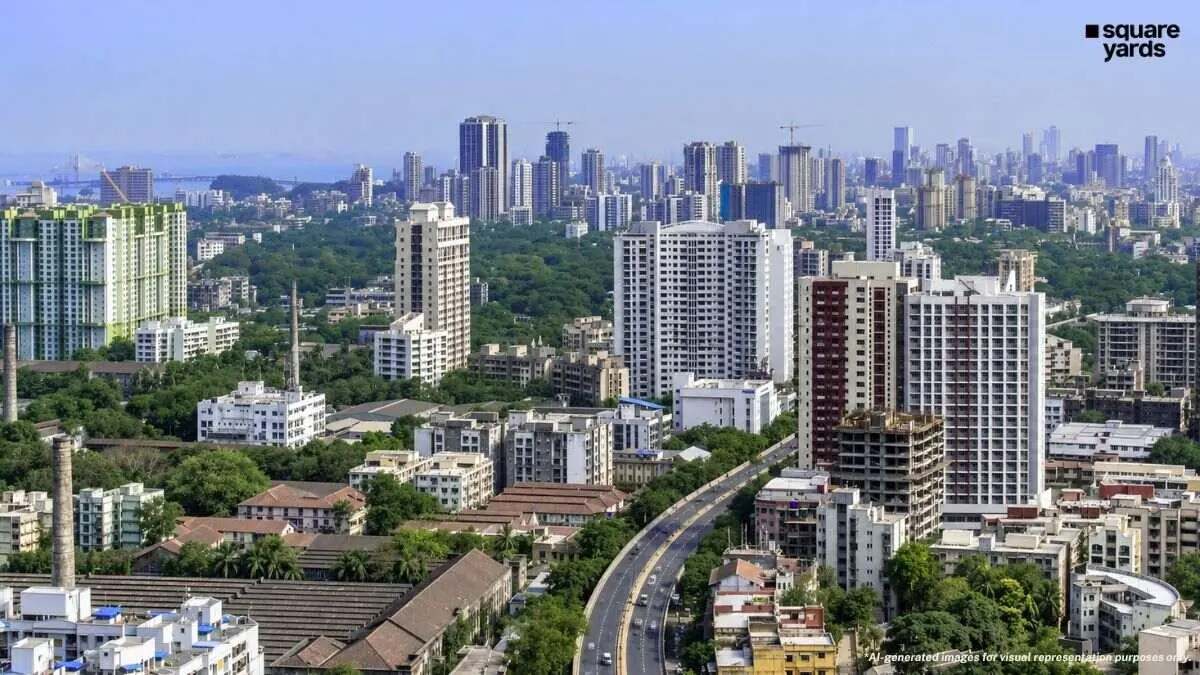
The Indian real estate landscape has crossed a historic threshold, signaling a profound shift in institutional investor confidence and sectoral diversification. According to the latest comprehensive report by CBRE, India’s real estate market recorded its highest-ever quarterly investment in Q3 2026, attracting a staggering $9.5 billion in equity capital. This surge is not merely a quantitative increase but a qualitative evolution, as traditional office and residential assets are now being joined—and in some cases, surpassed—by technology-driven infrastructure like data centers.
This capital infusion comes at a pivotal moment for the Indian economy. As global corporations seek to de-risk their supply chains and capitalize on India’s digital transformation, the physical infrastructure required to support these ambitions is undergoing a massive expansion. The investment reflects a maturing market where Delhi-NCR, Mumbai, and Chennai continue to dominate, yet the nature of the assets being acquired is shifting toward long-term, yield-generating tech infrastructure.
I. Chronology of a Record-Breaking Year: From Steady Growth to Exponential Surge
The $9.5 billion invested in Q3 2026 is the culmination of a momentum that has been building throughout the year. The first nine months of 2026 have seen a total of $18.6 billion in capital flowing into the sector, nearly eclipsing previous annual records.
- Q1 & Q2 2026: The year began with a steady focus on "Grade A" office spaces and industrial warehousing, driven by the post-pandemic stabilization of hybrid work models and the continued boom in e-commerce.
- Q3 2026 (The Turning Point): July through September marked a historic peak. The quarter was characterized by massive "mega-deals," particularly in the data center and development land segments.
- Late September 2026: The quarter closed with high-profile land acquisitions in the Delhi-NCR and Mumbai regions, setting the stage for a robust project pipeline for 2027 and beyond.
This chronological progression indicates that investors are moving away from speculative plays and toward strategic, large-scale acquisitions that align with India’s broader digital and urban development goals.
II. Supporting Data: The Sectoral and Regional Breakdown
The Q3 investment surge was driven by a specific set of sectors and geographies. Analyzing these numbers reveals the underlying health of the Indian property market.
1. The Dominance of Data Centers
In a landmark shift, data centers emerged as the primary driver of investment, accounting for 57% of the total capital deployed in Q3. Together with built-up offices and land for development, these three categories represented 91% of all investment activity. The prioritization of data centers reflects the "Digital India" push and the increasing requirement for localized data storage and processing power.
2. Office Leasing and Absorption
Despite the global scrutiny of office space, the Indian market remains resilient:
- Total Leasing: 18.7 million square feet (msf) was leased across India in Q3 2026, a 9% year-on-year (YoY) increase.
- Delhi-NCR Outperformance: The region saw a dramatic spike, with 3.3 msf leased—more than double the 1.6 msf recorded in Q3 2025.
- Rental Growth: On Gurugram’s prestigious Golf Course Road, office rents surged by 26% YoY, reaching Rs 100 per square foot (psf).
3. Residential Price Escalation
The synergy between commercial investment and residential demand is becoming more pronounced.
- Sales Volume: Housing sales across the top seven Indian cities grew by 3% YoY.
- Price Appreciation: In Gurugram, average home prices reached Rs 23,550 psf, a 10.2% increase from the previous quarter.
- Emerging Hubs: In Noida’s Sector 150, asking prices climbed from Rs 11,950 psf in late 2025 to Rs 12,300 psf by mid-2026.
4. Regional Concentration
Three major markets—Mumbai, Delhi-NCR, and Chennai—captured 53% of the total Q3 investment. While Delhi-NCR, Bengaluru, and Hyderabad saw positive leasing trends, Mumbai, Pune, and Chennai experienced slight declines in office absorption, highlighting the importance of micro-market selection for developers.
III. The Data Center Revolution: Driving a New Housing Ecosystem
The most significant takeaway from the Q3 report is the emergence of data centers as a cornerstone of real estate investment. While data centers are often viewed as "sterile" environments with low on-site headcount, their economic ripple effect is substantial.
The 195 Million Sq. Ft. Opportunity
Analysis by Square Yards suggests that the expansion of India’s data center capacity could generate a demand for up to 195 million square feet of housing by 2030. This demand is not necessarily driven by the data center employees themselves, but by the ancillary ecosystems they create: logistics providers, technical support firms, security services, and the broader commercial activity that follows high-tech infrastructure.
The "5-15 KM" Radius
The impact on residential real estate is expected to be concentrated within a 5-15 km radius of major data center hubs. Cities like Mumbai, Pune, Hyderabad, and Visakhapatnam are identified as high-growth zones. As data centers require robust power and fiber-optic connectivity, the infrastructure upgrades in these areas often make them more attractive for residential and mixed-use developers, eventually leading to the creation of "smart townships."
IV. Land Acquisitions: Building the Pipeline of Tomorrow
Land and development site acquisitions accounted for a massive share of the Q3 capital deployment. Approximately 72% of the capital used for land purchases was earmarked for three specific uses:
- Grade A Office Space: To meet the 9% growth in leasing demand.
- Residential Projects: To capitalize on the 3% growth in sales and the rising prices in premium corridors.
- Data Center Sites: To secure the physical footprint needed for the digital boom.
For the average homebuyer, this influx of capital into land acquisitions is a double-edged sword. On one hand, it ensures a steady supply of new projects, providing more choices in the luxury and mid-income segments. On the other hand, the high cost of land acquisition—exemplified by the price hikes in Gurugram and Noida—suggests that new launches are likely to be priced at a premium.
However, industry experts note that with unsold inventory still high in certain pockets, the increased competition among developers could lead to more consumer-friendly payment plans and value-added amenities as builders vie for buyers in a crowded market.
V. Official Perspectives and Industry Sentiment
While the numbers are record-breaking, industry leaders urge a nuanced interpretation of the data. CBRE’s analysis highlights that the surge in equity capital is a testament to India’s "structural resilience." The shift toward data centers and land acquisitions indicates that institutional investors—including global sovereign wealth funds and private equity firms—are taking a long-term view of the Indian story.
Square Yards’ research reinforces this, pointing out that the correlation between commercial growth and residential value is tightening. The 26% rent hike on Golf Course Road is a prime example of how high-quality commercial development acts as a "value anchor" for the surrounding residential property.
However, there is a cautionary note regarding the "mixed bag" performance of cities like Mumbai and Pune in the office sector. Analysts suggest that local vacancy levels and construction timelines will be the "true north" for developers. The investment surge does not guarantee a uniform rise in prices; rather, it creates a "K-shaped" recovery where premium, well-connected localities thrive while stagnant areas may face price corrections.
VI. Implications for Investors, Homebuyers, and the Economy
The record-breaking Q3 2026 investment figures have several far-reaching implications:
1. For Institutional Investors
The diversification into data centers offers a hedge against the volatility of the traditional retail and office sectors. As India moves toward stricter data localization laws, the demand for these assets is virtually guaranteed, providing stable, long-term yields.
2. For Homebuyers
Prospective buyers should look beyond traditional residential hubs. The "Data Center Ripple Effect" suggests that emerging corridors in cities like Visakhapatnam and the outskirts of Hyderabad may offer significant capital appreciation over the next five years. However, with asking prices rising in established areas like Noida Sector 150, the window for "entry-level" investment in prime NCR localities is closing.
3. For the Broader Economy
The $18.6 billion invested year-to-date acts as a massive multiplier for the construction and services industries. The development of 18.7 msf of office space and the accompanying data centers will create thousands of jobs in construction, facility management, and IT services, further fueling the demand for housing.
4. The Supply-Demand Equilibrium
The actual impact of this $9.5 billion surge will depend on execution. The conversion of land acquisitions into "ready-to-move-in" inventory takes years. If developers can synchronize their launches with the growing demand from the tech and service sectors, the market will remain healthy. If there is a lag, we may see a temporary spike in rentals and property prices due to a supply crunch in high-demand micro-markets.
Conclusion: A Market in Transition
The third quarter of 2026 will likely be remembered as the moment India’s real estate market matured into a global institutional powerhouse. With $9.5 billion in a single quarter and a clear pivot toward the digital economy via data centers, the sector is no longer just about "bricks and mortar." It is now the backbone of India’s technological and urban evolution.
While the "Big Three"—Mumbai, Delhi-NCR, and Chennai—continue to lead the charge, the true story lies in the diversification of assets and the rising value of land in strategic corridors. For stakeholders, the message is clear: the opportunities are vast, but success will require a granular understanding of local demand, infrastructure connectivity, and the rapidly changing needs of a digital-first workforce.
