

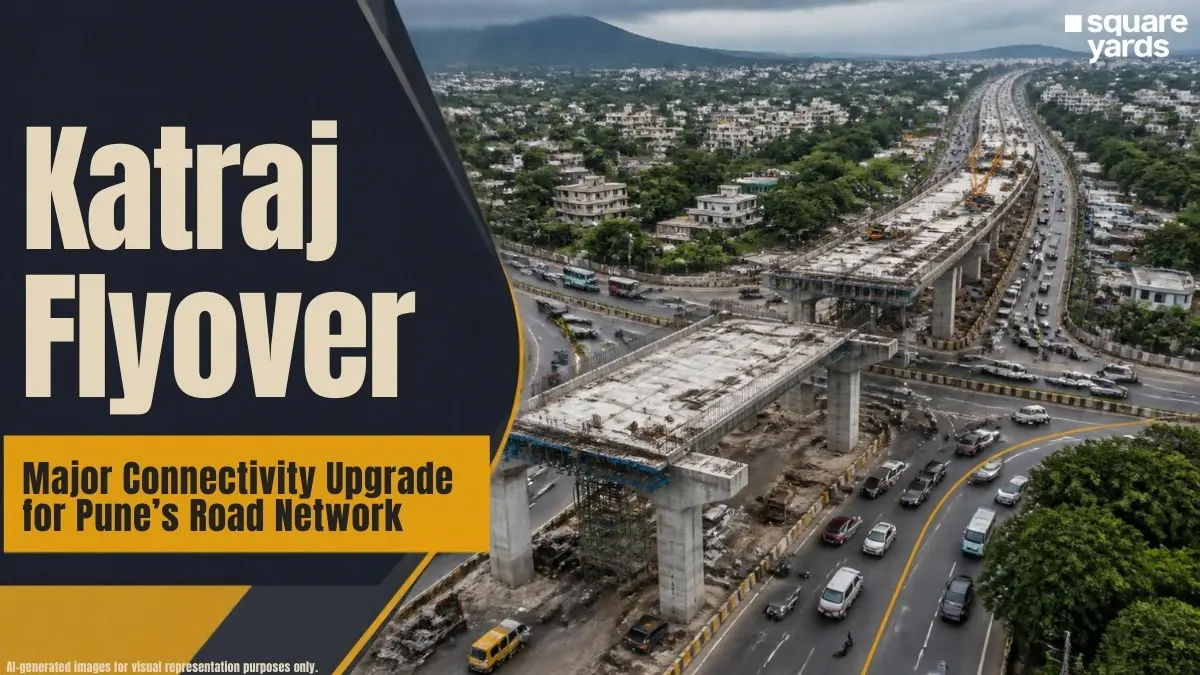
PUNE – The skyline of Southern Pune is undergoing a dramatic structural shift as the National Highways Authority of India (NHAI) and the Pune Municipal Corporation (PMC) accelerate efforts on the Katraj Junction flyover. Once a notorious bottleneck for both local commuters and interstate logistics, Katraj Junction is being reimagined as a high-speed conduit connecting the Bengaluru-Mumbai bypass with the burgeoning eastern suburbs.
As of October 2026, the project has entered a critical phase, with updated timelines and a broader scope that promises to redefine the real estate and economic landscape of the region. This comprehensive report explores the technicalities, the timeline shifts, and the long-term implications of this massive infrastructure undertaking.
1. Main Facts: A Six-Lane Engineering Solution to Urban Gridlock
The centerpiece of this infrastructure overhaul is a state-of-the-art, six-lane flyover designed to span the chaotic Katraj Junction. Situated on National Highway 548DD, the project is officially recorded at kilometer 3/880 of the expansive route linking Vadgaon, Katraj, Kondhwa, Mantarwadi Chowk, Loni Kalbhor, Theur Phata, and Lonikand.
Key Project Specifications:
- Structure: A six-lane elevated corridor designed for heavy-duty highway traffic.
- Primary Objective: To provide a seamless link between the Katraj-Kondhwa Road and the Bengaluru-Mumbai Bypass.
- Strategic Function: The flyover acts as a "bypass within a bypass," allowing vehicles coming from the Pune-Solapur National Highway to transition toward Mumbai or Satara without navigating the congested surface-level traffic of Katraj’s inner roads.
- Managing Agency: A collaborative effort between the NHAI (responsible for the flyover and highway integration) and the PMC (responsible for the arterial road widening).
The flyover is not merely a local bridge but a vital cog in the national highway machinery. By elevating transit traffic, the project aims to separate long-distance freight and passenger vehicles from the localized "stop-and-go" traffic that currently plagues the junction.
2. Chronology: Navigating Delays and Revised Deadlines
The journey of the Katraj flyover has been marked by shifting targets, reflecting the complexities of urban construction in a densely populated metropolitan area.
- December 2025: A formal response from the Ministry of Road Transport and Highways (MoRTH) initially set a completion target of June 2026. This optimistic deadline assumed rapid land acquisition and utility shifting.
- September 2026: A high-level site inspection was conducted by PMC and NHAI officials. This audit revealed that while progress was steady, several "last-mile" hurdles—specifically involving land parcels and electrical infrastructure—necessitated a timeline revision.
- October 2026 (Current Status): NHAI Executive Engineer Shruti Naik officially confirmed a new target of December 2026 for the flyover.
- Looking Ahead: While the flyover is expected to be operational by late 2026, the ancillary road widening projects have been pushed further. The 50-meter widening of Katraj-Kondhwa Road is now slated for March 2027, while the full-scale 84-meter development is projected for March 2028.
This chronological progression highlights a common challenge in Indian infrastructure: the "phased realization" of projects where the core structure (the flyover) precedes the completion of the supporting road network.
3. Supporting Data: Timelines and Technical Hurdles
To understand the scale of the project, one must look at the bifurcated timelines. The authorities have clarified that the "Katraj Flyover" and the "Katraj-Kondhwa Road Widening" are distinct projects with separate budgetary and logistical requirements.
Project Timeline Overview
| Project Component | Current Status | Revised Completion Target |
|---|---|---|
| Six-Lane Katraj Junction Flyover | Final structural phases | December 2026 |
| 50-Meter Road Widening (Katraj-Kondhwa) | Land acquisition ongoing | March 2027 |
| 84-Meter Full Road Development | Planning and legal stage | March 2028 |
| Khadi Machine Chowk Extension | Proposed / Planning | 2028 and beyond |
Technical Bottlenecks
The September 2026 inspection identified specific obstacles that could potentially threaten the December 2026 deadline if not addressed immediately:
- Land Acquisition: Ten specific properties essential for the road’s expansion were found to be outside the initial acquisition net. Negotiations are currently being fast-tracked.
- Utility Relocation: Numerous high-tension electricity poles and transformers remain in the path of the proposed grade separator.
- Grade Separator Coordination: The synchronization between the flyover’s pillars and the underground grade separator requires precision engineering to avoid structural conflicts.
4. Official Responses: A Call for Accelerated Coordination
The recent site review served as a catalyst for official action. NHAI and PMC leadership have emphasized that the "siloed" approach to construction must end to meet the end-of-year target.
NHAI Executive Engineer Shruti Naik has been vocal about the December 2026 deadline, framing it as a non-negotiable target to alleviate the mounting public pressure regarding traffic congestion. Naik’s team is focusing on the structural completion of the six lanes, ensuring that the flyover can carry load even if the surface-level road widening continues into the following year.
PMC Officials have meanwhile been tasked with the "human element" of the project—land acquisition. During the September review, directives were issued to the land estate department to initiate direct dialogues with the owners of the 10 identified properties. The goal is to prevent legal stay orders that have historically stalled similar projects in the Pune Municipal limits.
Furthermore, the Maharashtra State Electricity Distribution Company Limited (MSEDCL) has been pulled into the fold. Officials have demanded a strict schedule for the removal of transformers that currently obstruct the footprint of the grade separator.
5. Implications: Reshaping Southern Pune’s Future
The completion of the Katraj flyover is expected to trigger a domino effect across several sectors, from logistics to residential real estate.
Highway Connectivity and Logistics
The most immediate beneficiary will be the logistics sector. Currently, trucks moving from the Solapur-Telangana belt toward the Mumbai ports must crawl through the Katraj-Kondhwa stretch. The new flyover provides a direct "jump" onto the Bengaluru-Mumbai bypass. This reduces fuel consumption, wear and tear on heavy vehicles, and, most importantly, transit time.
Real Estate: The "Southward Shift"
Real estate analysts are keeping a close watch on five key micro-markets: Katraj, Kondhwa, Undri, Mohammed Wadi, and NIBM.
- Katraj: As the immediate site of the flyover, Katraj will transition from a "transit bottleneck" to a "connectivity hub." This could lead to a revitalization of older commercial properties.
- Undri and Mohammed Wadi: These areas have long been popular for their relatively affordable luxury housing. However, the "Kondhwa traffic" was a major deterrent for buyers. The flyover and the subsequent 50-meter road widening will significantly reduce the commute to the Mumbai-Bangalore highway, making these areas more attractive to IT professionals working in Hinjewadi or Baner.
- NIBM and Lulla Nagar: These established residential pockets will see improved "exit routes." Residents will no longer be trapped by the Katraj Junction congestion when trying to leave the city for weekend trips toward Mahabaleshwar or Mumbai.
A Word of Caution for Investors
While infrastructure usually bolsters property values, experts warn that the impact is rarely instantaneous. The "infrastructure premium" is often already baked into current prices. The real value for homeowners will be "livability"—reduced noise pollution, better air quality (due to less idling traffic), and predictable commute times.
6. The Broader Vision: Pune’s Growing Road Network
The Katraj project is not an isolated development; it is a vital link in a larger vision for Pune’s metropolitan road network.
- The 9-km Extension: The PMC is planning a significant extension from Khadi Machine Chowk to Wadki Chowk. This will create a secondary link between the Mumbai-Satara and Solapur highway corridors, effectively creating a "mini-ring road" for the southern suburbs.
- NH 548DD Significance: This highway is becoming the backbone of eastern and southern Pune, linking the industrial hubs of Loni Kalbhor with the residential hubs of Katraj.
Conclusion
As the December 2026 deadline approaches, the Katraj Junction flyover stands as a symbol of Pune’s transition into a mature "highway city." While land acquisition and utility shifting remain the final hurdles, the commitment from the NHAI and PMC suggests that the era of the "Katraj Crawl" may finally be coming to an end. For the residents of Southern Pune, the flyover represents more than just concrete and steel—it represents the gift of time and the promise of a more connected future.
