

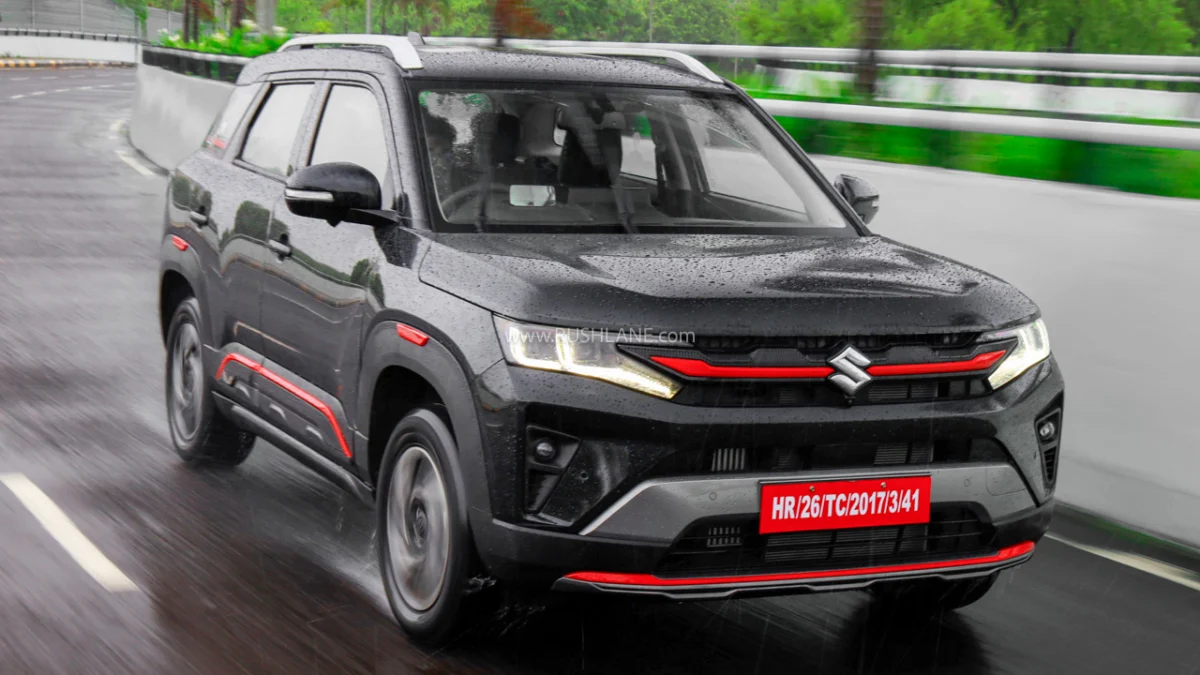
The Indian automotive landscape has undergone a seismic shift over the past decade, but perhaps no era has been as transformative as the mid-2020s. As of July 2026, the sub-4 metre SUV segment remains the undisputed engine of growth for the domestic passenger vehicle industry. According to the latest retail and wholesale data, the segment recorded a staggering 1,16,552 units in sales, marking a 34.67% Year-on-Year (YoY) growth compared to the 86,544 units sold in July 2025.
This surge is not merely a statistical anomaly but a reflection of evolving consumer preferences, where the "SUV-first" mindset has moved from a premium aspiration to a mass-market necessity. With a Month-on-Month (MoM) increase of 5.80%, adding 6,391 units over June 2026, the industry is witnessing a consolidation of power among top-tier manufacturers while simultaneously welcoming aggressive new entrants.
The Core Narrative: Tata and Maruti’s Duopoly
The headline of July 2026 is the continued dominance of Tata Motors and Maruti Suzuki. Together, these two giants accounted for nearly 61% of all sub-4 metre SUV sales in the country.
Tata Motors, bolstered by its "twin-pillar" strategy involving the Punch and the Nexon, retailed a combined 38,784 units. This represents a 64.27% YoY growth, a testament to the brand’s ability to capture both the micro-SUV and the premium compact SUV buyer. Maruti Suzuki followed closely with 32,056 units, driven by the explosive popularity of the Fronx and the steady, albeit slightly declining, volumes of the venerable Brezza.
Chronology of Market Evolution (2025–2026)
To understand the July 2026 figures, one must look at the trajectory of the market over the previous 18 months.
- Early 2025: The Micro-SUV Explosion: The segment saw a massive pivot toward entry-level SUVs as consumers traded up from premium hatchbacks. The Tata Punch became the primary beneficiary of this trend.
- Late 2025: Feature Democratization: Manufacturers began introducing Level 2 ADAS, ventilated seats, and panoramic sunroofs into sub-4m vehicles, blurring the lines between compact and mid-size SUVs.
- Q1 2026: The Powertrain Shift: With stricter emission norms looming, brands like Maruti Suzuki reintroduced performance-oriented engines, such as the "Boosterjet" in the Brezza, to cater to enthusiasts.
- Q2 2026: Electrification Enters the Mainstream: The launch of the Kia Syros EV and the updated Nexon EV redefined the value proposition for urban commuters.
- July 2026: The Peak Performance: The current month represents the culmination of these trends, with the highest-ever recorded volume for the sub-4m category in a single month.
Supporting Data: A Model-by-Model Breakdown
The Leaders: Tata Punch and Maruti Fronx
The Tata Punch continues its reign at the top of the leaderboard. Selling 21,313 units in July 2026, it nearly doubled its performance from July 2025 (10,785 units), posting a 97.62% YoY growth. The Punch’s success is attributed to its 5-star safety rating and the availability of multiple powertrains, including Petrol, CNG, and Electric.

The Maruti Fronx emerged as the "dark horse" turned "front-runner." It recorded the most significant monthly gain, with sales jumping to 19,473 units—a massive 48.25% MoM increase from June’s 13,135 units. The Fronx’s crossover styling and Maruti’s expansive service network have made it a favorite among younger, urban demographics.
The Mid-Tier Contenders
The Tata Nexon remains a formidable force, ranking third with 17,471 units. While it saw a 36.23% YoY growth, it experienced a slight 4.71% MoM dip, likely due to internal competition from the Punch and the anticipation of minor model-year updates.
The Maruti Brezza, recently updated with a refined "Boosterjet" engine option, climbed to fourth place with 12,055 units. While its MoM growth was a healthy 21.29%, its YoY figures showed a 14.29% decline compared to the 14,065 units sold in July 2025. Analysts suggest this is due to the Fronx cannibalizing some of the Brezza’s traditional buyer base.
Hyundai’s Venue rounded off the top five with 11,095 units. It maintains a steady trajectory with 37.76% YoY growth, serving as the bedrock of Hyundai’s SUV portfolio in India.
The Competitive Fringe
The battle for the sixth to tenth spots remains fierce:
- Mahindra XUV 3XO: Reached 9,429 units. While up 30.27% YoY, it slipped 6.30% MoM as supply chain constraints for its high-spec AX7 variants persisted.
- Kia Sonet: Closely followed with 8,913 units. It recorded a 16.86% YoY growth but faced a minor 3.44% MoM decline.
- Hyundai Exter: Reported 6,810 units. Despite a 34.19% YoY increase, it saw a notable 16.48% drop from June, indicating a potential cooling of demand in the micro-SUV sub-segment.
- Skoda Kylaq: The European entrant is building steady momentum with 3,727 units (up 10.36% YoY).
- Toyota Taisor: Managed 2,470 units, a 46.41% YoY improvement, benefiting from the shared platform with the Maruti Fronx.
Emerging Players and Niche Models
The Kia Syros is the most significant mover in the lower half of the table. With 1,303 units sold, it grew by 56.24% YoY and a staggering 64.94% MoM. This growth is largely credited to the recent launch of the Syros EV, which has seen strong adoption in southern and western India.

Conversely, the Maruti Jimny (528 units) and Renault Kiger (503 units) remain niche offerings. While both showed high YoY percentage gains, their low absolute volumes suggest they are struggling to break into the mainstream consciousness of the value-conscious Indian buyer.
Industry Perspectives and Official Responses
While official statements from the Society of Indian Automobile Manufacturers (SIAM) emphasize the robust health of the industry, individual OEM representatives hint at a more complex underlying reality.
A senior executive at Tata Motors noted, "Our dominance in the sub-4m space is a result of democratizing premium features. The Punch isn’t just a car; it’s a lifestyle choice for the first-time buyer who refuses to compromise on safety or road presence."
Meanwhile, a spokesperson for Maruti Suzuki addressed the Brezza’s YoY decline: "We are seeing a shift in the portfolio. While the Brezza remains our core SUV offering, the Fronx is capturing a new type of customer—one who values design and ‘sportiness’ over traditional boxy SUV proportions. Our total SUV market share is higher than ever."
Industry analysts from leading consultancies suggest that the 34.67% YoY growth is also driven by improved semiconductor availability compared to the previous year, allowing OEMs to finally clear long-standing backlogs for popular models like the XUV 3XO and the Kia Sonet.
Strategic Implications for the Future
The July 2026 data points toward several critical trends that will define the remainder of the decade:

1. The Death of the Premium Hatchback?
The exponential growth of the Tata Punch and Hyundai Exter suggests that the ₹7 lakh to ₹10 lakh price bracket is now almost entirely owned by SUVs. Traditional hatchbacks are being pushed into the "budget" category, while SUVs have become the default choice for the middle class.
2. Multi-Powertrain Strategies are Mandatory
The success of the Kia Syros (following its EV launch) and the Tata Nexon (available in Petrol, Diesel, and EV) proves that consumers want choice. Manufacturers who rely solely on a single fuel type—such as Nissan with the Magnite—are finding it increasingly difficult to compete for volume.
3. Consolidation at the Top
With Tata and Maruti controlling 61% of the market, smaller players like Nissan, Renault, and even Skoda face an uphill battle. To survive, these brands must either offer a significantly superior tech package or compete aggressively on price—a difficult feat given the rising costs of raw materials and regulatory compliance.
4. The Rise of "SUV-Coupes" and Crossovers
The performance of the Maruti Fronx and Toyota Taisor indicates that the Indian consumer is becoming more sophisticated. There is a growing appetite for vehicles that offer SUV ground clearance but with sleeker, more aerodynamic designs. We expect more manufacturers to explore this "sub-segment within a segment" in 2027.
Conclusion
The sub-4 metre SUV segment in July 2026 stands as a microcosm of the Indian economy: resilient, aspirational, and increasingly competitive. As total sales cross the 1.16 lakh mark, the message to manufacturers is clear—the SUV is no longer a luxury; it is the standard. For Tata Motors and Maruti Suzuki, the challenge will be maintaining their massive market share against a tide of new electric offerings and European entrants. For the consumer, this competition is a boon, resulting in safer, more technologically advanced, and more diverse vehicle options than ever before.
