

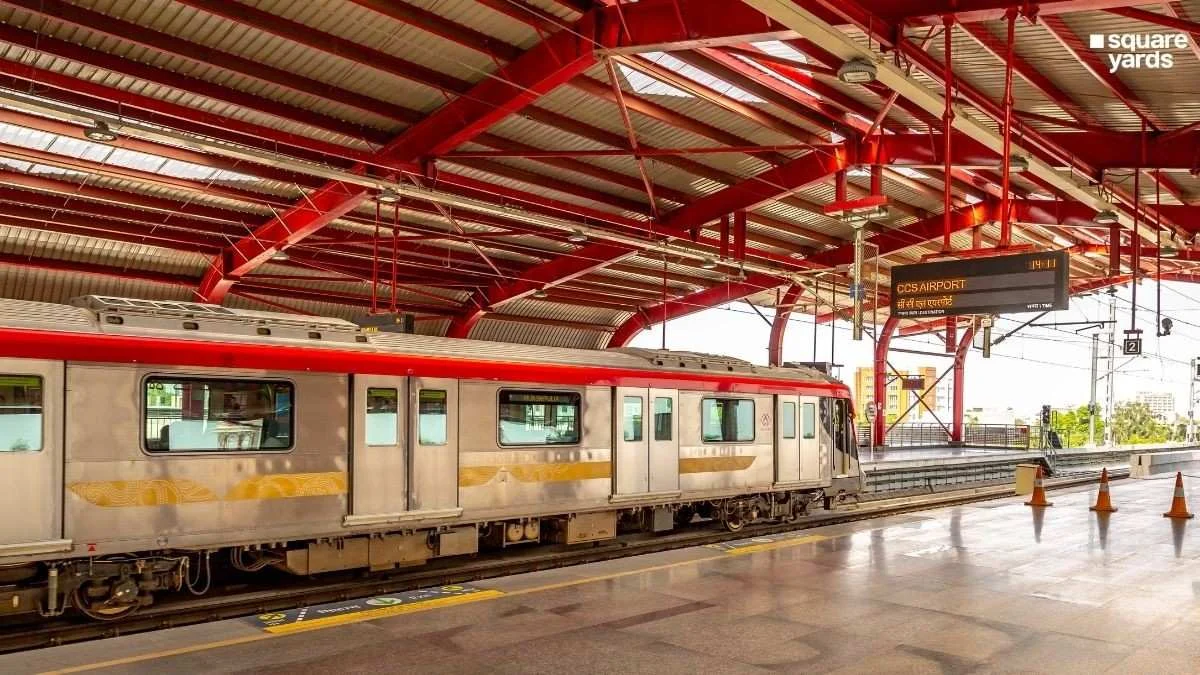
LUCKNOW – In a move set to redefine the geographical and economic landscape of Uttar Pradesh’s capital, the state government has unveiled an ambitious roadmap to transform Lucknow into a hyper-connected metropolis. Under a newly proposed Comprehensive Mobility Plan (CMP), the city is bracing for a massive Metro rail expansion featuring 12 new corridors. This strategic initiative aims to bridge the gap between the historic city center and its rapidly expanding peripheries, including satellite towns like Barabanki and emerging growth hubs like Mohanlalganj.
The proposed expansion, estimated to cost approximately ₹30,000 crore, represents one of the largest infrastructure undertakings in the state’s history. Spanning a total length of 170.37 km, the project is designed to transition Lucknow from a city-centric transit system to a regional mobility powerhouse, facilitating the seamless movement of millions of residents, students, and professionals.
I. The Strategic Vision: A 170-Kilometer Transit Revolution
The cornerstone of this expansion is the identification of 12 distinct corridors that align with Lucknow’s projected population growth and urban sprawl. Unlike the existing North-South corridor, which primarily serves the central spine of the city, the new network is designed to penetrate deep into residential clusters, institutional zones, and healthcare hubs.
Technical Specifications and Layout
Of the total 170.37 km planned, the vast majority—149.87 km—will consist of elevated tracks. This approach is intended to minimize land acquisition hurdles and accelerate construction timelines. However, acknowledging the density of certain historic and central areas, a 20-km stretch will be developed underground. This hybrid model ensures that while the outskirts benefit from cost-effective elevated transit, the city’s architectural heritage and congested urban cores remain undisturbed.
Connecting the "State Capital Region"
The expansion is not merely about internal city travel; it marks the beginning of a "State Capital Region" (SCR) mobility framework. By extending lines to Barabanki and Mohanlalganj, the Uttar Pradesh Metro Rail Corporation (UPMRC) is following the successful model of the Delhi-NCR region, where the Metro acted as a catalyst for the development of satellite cities like Noida and Gurugram.
II. Chronology of Development: From Phase 1A to the CMP
The journey of the Lucknow Metro has been one of incremental success, but the new CMP represents a quantum leap.
- Phase 1A (The Foundation): The operational 22.8-km North-South corridor (CCS Airport to Munshipulia) established the Metro as a reliable alternative to road transport.
- Phase 1B Approval (The Immediate Step): In early 2025, the Union Cabinet approved the ₹5,801-crore Phase 1B corridor. This 11.165-km route connects Charbagh to Vasant Kunj, featuring 12 stations (7 underground and 5 elevated). It is specifically designed to decongest the "Old Lucknow" areas, including Aminabad and Chowk.
- The Comprehensive Mobility Plan (The Future): Following the Phase 1B approval, the UPMRC and state planners identified the 12 additional corridors to future-proof the city’s transit needs for the next two decades.
The current status of these 12 corridors is in the "proposal and identification" stage. UPMRC officials have confirmed that the next step involves securing formal state government approval, after which Detailed Project Reports (DPRs) will be drafted for each specific route.
III. Supporting Data: The 12-Corridor Breakdown
The proposed network is a complex web of interconnected routes. Below is the detailed breakdown of the corridors that will form the backbone of Lucknow’s future transit:
The Northern and Western Links
- Rajajipuram to IIM Road (18 km): A critical link connecting the dense residential pockets of Rajajipuram to the premier educational and emerging housing clusters along IIM Road.
- Vasant Kunj to IIM Road (12 km): This route will create a loop in the northern sector, supporting the rapid residential development witnessed in these areas over the last five years.
- Rajajipuram to Musabagh (5.98 km): A shorter, localized route aimed at improving last-mile connectivity in Western Lucknow.
- Munshipulia to Jankipuram (6.5 km): An extension that addresses the long-standing demand of residents in Jankipuram, one of the city’s largest residential colonies.
The Southern and Institutional Corridors
- CCS Airport to Kalli Paschim (15.5 km): Strengthening the "Airport Zone," this line will facilitate easier access for travelers and workers in the southern industrial and residential belts.
- CG City to SGPGI (9.8 km): Perhaps the most socially significant route, it connects the new administrative hub of CG City with the Sanjay Gandhi Post Graduate Institute of Medical Sciences (SGPGI), a lifeline for healthcare in North India.
- Kalli Paschim to Mohanlalganj (7.2 km): This corridor signals the expansion into the southern periphery, where large-scale townships are currently under development.
The Eastern and Regional Arteries
- Indira Nagar to Anora Kala (9.66 km) & Anora Kala to Barabanki (14.43 km): Combined, these routes represent a major regional breakthrough, bringing the neighboring district of Barabanki within commuting distance of Lucknow’s commercial center.
- Indira Nagar to CG City (11.5 km): This connects the established markets of Indira Nagar with the Sultanpur Road growth corridor.
- Vasant Kunj to Kalli Paschim (34.8 km): The longest single corridor in the plan, it will serve as a "Grand Arc," linking the Outer Ring Road and Rae Bareli Road, effectively encircling the city’s western and southern flanks.
- Anora Kala to Kalli Paschim (25 km): A cross-city link that integrates the eastern and southern development zones.
IV. Official Responses and Implementation Strategy
The Uttar Pradesh Metro Rail Corporation (UPMRC) has emphasized that this expansion is a proactive response to urban evolution. Speaking to the media, officials noted that the corridors were not chosen arbitrarily but were the result of sophisticated travel demand modeling and satellite mapping of urban expansion.
"The identification of these 12 corridors is based on the projected travel demand for the year 2030 and beyond," an official stated. "Our goal is to ensure that by the time these residential and commercial hubs reach peak density, the infrastructure is already in place to support them."
The state government’s role is currently pivotal. While the corridors are identified, the release of funds for DPR preparation is the next milestone. Sources within the administration suggest that the project will likely be funded through a mix of state and central equity, along with soft loans from international agencies like the European Investment Bank (EIB), which has previously funded Lucknow’s Metro projects.
V. Implications: Real Estate, Economy, and Lifestyle
The announcement has sent ripples through Lucknow’s real estate market. Historically, the commencement of Metro work in India has led to a 15–20% appreciation in property values within a 1-km radius of the stations.
Real Estate Projections
Data from Square Yards indicates that the areas along the proposed corridors are already seeing a shift in investor sentiment. As of 2026, average property prices in these emerging zones are projected as follows:
- Mohanlalganj: Rs 6,450/sq. ft (Driven by large land parcels and new-age townships).
- IIM Road: Rs 6,000/sq. ft (Due to proximity to educational hubs).
- Sultanpur Road: Rs 5,500/sq. ft (A major commercial and residential growth axis).
- Jankipuram: Rs 5,200/sq. ft (Steady demand from end-users).
- Anora Kala: Rs 3,500/sq. ft (Currently an entry-level market with high growth potential).
Socio-Economic Impact
Beyond real estate, the expansion is expected to have three major impacts:
- Decongestion and Environmental Health: By shifting a significant portion of the population from private vehicles to the Metro, the city expects a measurable reduction in carbon emissions and a decrease in the "traffic fatigue" that currently plagues routes like Sultanpur Road and Sitapur Road.
- Access to Healthcare and Education: The direct links to SGPGI and IIM Road democratize access to world-class services, making it easier for those living in peripheral areas to reach these institutions without relying on expensive private transport.
- Employment Opportunities: The construction phase alone is expected to generate thousands of jobs, while the operational phase will create a permanent ecosystem of retail and service-sector opportunities around the new stations.
Conclusion: A City in Transition
Lucknow is no longer just a city of "Nawabs and Kebabs"; it is transforming into a modern economic engine. The ₹30,000-crore Metro expansion plan is the clearest signal yet that the state government intends to position Lucknow as a premier investment destination. By integrating regional towns and peripheral growth zones into a unified transit network, the city is laying the tracks for a more inclusive, efficient, and prosperous future. As the project moves from the planning board to the ground, it will undoubtedly remain the focal point of Uttar Pradesh’s infrastructure narrative.
