

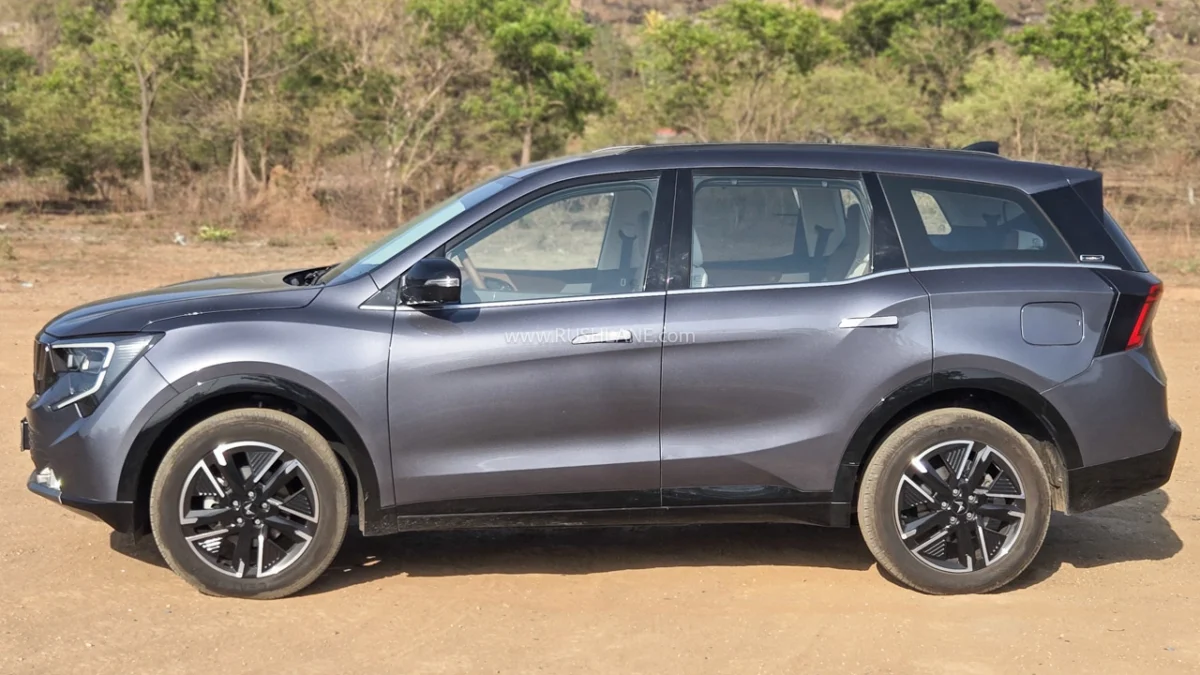
The Indian automotive landscape in 2026 continues to be defined by a singular, overwhelming trend: the insatiable appetite for mid-size SUVs. Specifically, the segment measuring between 4.5 meters and 4.8 meters—often referred to as the "executive" or "D-segment" SUV category—has become the primary battleground for domestic giants and global stalwarts alike. As the June 2026 sales figures and the cumulative Quarter 2 (Q2) data emerge, the narrative is one of clear market consolidation, a rapid pivot toward electrification, and the absolute hegemony of Mahindra & Mahindra.
Main Facts: A Segment in Ascent
In June 2026, the 4.5m to 4.8m SUV segment recorded total sales of 37,763 units. This represents a robust Year-on-Year (YoY) growth of 29.29% compared to the 29,209 units sold in June 2025. While the annual trajectory remains steeply upward, the market experienced a slight cooling on a Month-on-Month (MoM) basis, declining by 4.87% from the 39,698 units sold in May 2026. This minor dip is largely attributed to seasonal fluctuations and specific supply chain disruptions affecting key players.
The most striking takeaway from the June data is the sheer dominance of Mahindra. The homegrown manufacturer now captures over 77% of the total market share in this specific size bracket. By leveraging a multi-pronged strategy that includes rugged body-on-frame legends, tech-laden monocoque SUVs, and a burgeoning electric vehicle (EV) portfolio, Mahindra has created a nearly impenetrable fortress in the mid-size segment.
Meanwhile, Tata Motors has emerged as the most significant challenger in terms of growth velocity, largely driven by the successful integration of electric drivetrains into its flagship Harrier and Safari brands. Conversely, traditional heavyweights like Toyota and Hyundai have faced headwinds, ranging from aging product cycles to unforeseen industrial accidents.
Chronology: The Q2 2026 Performance Arc
To understand the June results, one must look at the broader context of the second quarter (April–June 2026). The segment began the quarter with high momentum in April, fueled by new year model refreshes and a stable economic outlook.

- April 2026: The segment saw a surge in bookings for the newly expanded Mahindra XEV range and the Tata Harrier EV.
- May 2026: Sales peaked at nearly 40,000 units, the highest monthly volume for the segment in recent history.
- June 2026: A period of stabilization followed. While Mahindra and Tata maintained high volumes, Hyundai suffered a significant blow due to a fire at a major component supplier’s facility, leading to a drastic reduction in Alcazar production.
Cumulatively, Q2 2026 saw sales reach 1,14,515 units, a significant 23.87% increase over the 92,448 units recorded in Q2 2025. This quarterly performance underscores the fact that Indian consumers are increasingly "trading up" from sub-compact and compact SUVs to the more spacious and prestigious 4.5m+ category.
Supporting Data: The Winners and Losers
The Mahindra Triple-Threat
Mahindra’s success is built on three pillars:
- Mahindra Scorpio (N and Classic): The undisputed king of the segment. In June 2026, it sold 14,097 units, a 10.65% YoY increase. It alone commands a 37.33% market share. Its rugged appeal remains unmatched in semi-urban and rural markets, while the ‘N’ variant continues to draw urban buyers.
- Mahindra XUV7XO: An evolution of the iconic XUV700, the 7XO secured the second spot with 9,244 units. Its 43.65% YoY growth indicates that its suite of Advanced Driver Assistance Systems (ADAS) and premium interiors continue to resonate with luxury-seeking families.
- Mahindra XEV 9S: The brand’s premium electric offering secured third place in the segment with 4,018 units. This is a pivotal achievement, as it proves that Mahindra can successfully transition its internal combustion engine (ICE) loyalists to electric mobility.
Tata’s Electric Resurgence
Tata Motors has effectively used electrification to revitalize its presence. The Harrier / Harrier EV range saw a staggering 135.27% YoY growth in June, delivering 2,962 units. The addition of the EV variant has not only boosted volumes but has also improved the brand’s "green" credentials. The Tata Safari also posted a healthy 37.85% YoY gain, moving 1,271 units, proving that the three-row SUV market remains fertile.
The Struggles of the Veterans
- Toyota Fortuner: Once the invincible leader of the premium end, the Fortuner is showing signs of fatigue. June sales stood at 2,514 units, an 8.35% YoY decline. With a price point that has steadily climbed, it is facing stiff competition from more technologically advanced rivals.
- Hyundai Alcazar: The Alcazar had a disastrous June, with sales plummeting 74.11% YoY to just 304 units. However, this was not due to a lack of demand but a force majeure event (supplier fire) that halted production.
- MG Hector: The Hector and Hector Plus remained steady with 950 units (+25.50% YoY), maintaining a loyal but niche following.
Premium and Low-Volume Players
The bottom of the table shows a mix of niche success and stagnation. The Volkswagen Tiguan grew by 840% YoY, though this is deceptive as it rose from a base of just five units in June 2025 to 47 units in 2026. The newly launched Volkswagen Tayron added 43 units, marking its first full month on the market. Meanwhile, the Jeep Compass (117 units) and Jeep Meridian (84 units) continue to struggle to find volume in a market dominated by domestic giants.
Official Context: Supply Chains and Market Shifts
Industry analysts point to two major factors influencing these numbers: supply chain resilience and powertrain diversity.

The Hyundai Incident:
Hyundai India officially confirmed that the sharp decline in Alcazar sales was the direct result of a fire at a Tier-1 supplier’s warehouse. This disrupted the flow of critical interior components. However, the company has stated that production is "back on track" as of July, and they expect to clear the backlog of bookings by the end of the third quarter.
The EV Pivot:
The data highlights a massive shift toward EVs in the mid-size segment. Unlike the sub-4m segment, where price sensitivity is paramount, buyers in the 4.5m to 4.8m segment are more willing to pay a premium for electric drivetrains. Mahindra’s XEV series and Tata’s Harrier EV accounted for a combined volume of over 7,000 units in June alone, signaling that the "tipping point" for electric SUVs in India may have arrived sooner than expected.
Implications: What This Means for the Future
The June 2026 sales report carries several long-term implications for the Indian automotive industry:
1. The "Mahindra-Tata" Duopoly:
With Mahindra holding over 77% share and Tata showing triple-digit growth in specific models, the mid-size SUV segment is becoming a domestic duopoly. Global players like Toyota, Skoda, and Volkswagen are increasingly being relegated to the fringes, serving niche enthusiasts rather than the mass-premium market.
2. The Decline of the "Old Guard":
The Toyota Fortuner’s decline suggests that "ruggedness" and "reliability" are no longer enough to justify premium pricing. Modern consumers demand connectivity, autonomous features, and fuel efficiency (or electrification). If Toyota does not introduce a significant hybrid or electric update to the Fortuner soon, it risks losing its remaining foothold.

3. Capacity and Resilience:
The Hyundai supplier fire serves as a cautionary tale for the industry. As SUVs become more complex, with more electronic and specialized components, the vulnerability of the supply chain increases. Manufacturers are likely to move toward "multi-sourcing" critical components to avoid such catastrophic volume drops in the future.
4. Segment Expansion:
Despite the slight MoM decline, the 29% YoY growth suggests that the 4.5m to 4.8m segment is nowhere near its ceiling. As the Indian middle class expands and infrastructure improves, the demand for vehicles that can double as urban commuters and long-distance tourers will only grow.
Conclusion:
June 2026 has solidified Mahindra’s position as the titan of the Indian SUV market. However, the rapid ascent of Tata’s EV portfolio and the entry of new models like the VW Tayron suggest that the battle is far from over. As we head into the second half of 2026, the focus will shift from mere "sales numbers" to "technological superiority," with electrification and software-defined features becoming the primary drivers of consumer choice. For now, the Scorpio and XUV7XO remain the benchmarks, but in this fast-evolving segment, no lead is ever permanent.
