

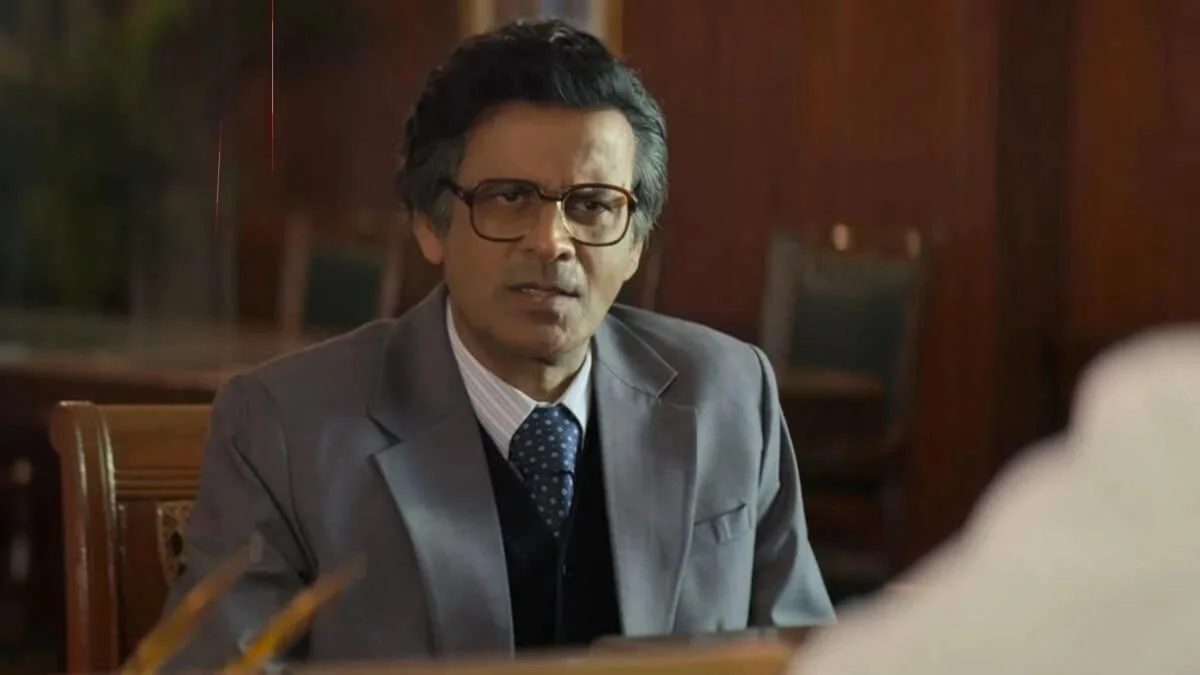
Mumbai, India – In the nuanced world of cinematic performance, language and diction are not mere tools; they are potent conduits of character, culture, and historical authenticity. Acclaimed actor Manoj Bajpayee, known for his profound immersion into every role, has once again demonstrated this commitment with his upcoming film, "Governor." Set against the tumultuous backdrop of India’s economic liberalization in the 1990s, the film demands not only a powerful portrayal of a pivotal figure but also a precise articulation that resonates with the era and the character’s regional roots. Bajpayee’s meticulous approach to perfecting his diction for the titular role underscores his dedication to verisimilitude and his deep-seated respect for the power of language in storytelling.
The film, helmed by director Chinmay Mandlekar and produced by Vipul Amrutlal Shah under the Sunshine Pictures banner, promises a gripping narrative exploring a significant, yet often overlooked, chapter of India’s modern economic history. While the trailer has already ignited considerable interest for its depiction of political intrigue and institutional drama, it is Bajpayee’s personal journey in embodying the Governor that has become a focal point of discussion. The actor, himself hailing from Bihar, expressed a palpable sense of apprehension and responsibility regarding the linguistic nuances of his character, a testament to his understanding that even minor inaccuracies in accent or pronunciation can detract from the overall integrity of a performance and the narrative it serves.
The Weight of Words: Bajpayee’s Linguistic Vigilance
Manoj Bajpayee’s dedication to authenticity in his craft is widely recognized. For "Governor," this meant a deep dive into the specific linguistic landscape that his character would inhabit. The actor confessed to feeling "very scared and nervous" about getting the language "right." This anxiety stems from a personal conviction that misrepresenting regional dialects or accents can be profoundly jarring for audiences, particularly for those who share that linguistic heritage.
"Actors, especially people like me, I don’t like to go wrong with language and diction," Bajpayee stated in a recent interaction. "I am from Bihar. So, I know how much I get offended with language being wrongly spoken." This personal anecdote highlights a broader artistic principle: the importance of respecting the cultural and regional identity embedded within language. For Bajpayee, it’s not just about delivering lines; it’s about inhabiting a persona whose voice carries the weight of their upbringing and environment.
The challenge in "Governor" was to balance this authenticity with the demands of a Hindi-language film. Bajpayee elaborated on this delicate equilibrium: "So, it is better to go to the minimum, I always say because you are making it in Hindi. You need to play up the essence of that language. However, you are not supposed to be completely indulgent about the accent because it will take away the attention from the matter." This approach emphasizes a strategic use of regional inflections – enough to evoke the character’s background and add a layer of realism, but not so much as to become a caricature or a distraction from the film’s central themes of economic policy and governance. The aim, as Bajpayee explained, was to "keep a lot of measured things in this, the culture behind the language." This suggests a nuanced performance where the character’s linguistic choices are not arbitrary but are informed by the socio-cultural context of the time and place.
A Nation at a Crossroads: The 1990s Economic Crisis as a Cinematic Canvas
"Governor" is more than just a character study; it is a historical drama that plunges into one of the most critical junctures in India’s post-independence economic journey. The early 1990s marked a period of profound transformation for India, moving from a protected, socialist-leaning economy to one embracing liberalization, privatization, and globalization. This transition was not without its seismic shocks. The country faced a severe balance of payments crisis, a sharp decline in foreign exchange reserves, and widespread economic instability. It was a time when tough decisions were made in hushed government chambers, decisions that would irrevocably shape the nation’s future.
The film, by focusing on a Governor, likely delves into the intricate workings of state-level governance during this national crisis. Governors in India, while constitutional heads, often play a crucial role in state administration, particularly in times of political flux or during the implementation of significant policy changes. Their perspectives, decisions, and interactions with central authorities and state governments can significantly influence the trajectory of events. By setting the narrative within this context, "Governor" has the potential to offer a compelling exploration of the human element behind the economic reforms that redefined India.
The trailer’s promise of "political tension, power struggles, and institutional drama" suggests that the film will not shy away from the complexities and potential controversies of this era. The economic liberalization, while ultimately credited with spurring growth, also brought about social stratification and had diverse impacts across different sections of society. A film that captures this period authentically would likely touch upon these multifaceted consequences, offering a rich tapestry of human experiences against a backdrop of national economic recalibrations.
The Art of Subtlety: Crafting a Governor’s Voice
Bajpayee’s focus on diction for "Governor" is not an isolated incident in his career but rather a consistent thread in his meticulous preparation. The actor has a reputation for disappearing into his characters, and his linguistic choices are a significant part of this process. Whether it’s the raw intensity of a gangster in "Gangs of Wasseypur" or the quiet desperation of a man in "Aligarh," Bajpayee’s vocal performances are as compelling as his physical ones.
In "Governor," the role of a constitutional head likely demands a certain gravitas and measured tone. However, the specific regional background of the character, as hinted by Bajpayee, adds another layer of complexity. The challenge lies in conveying this regional essence without resorting to stereotypical portrayals or allowing the accent to overshadow the character’s authority and the gravity of the situations he faces. This is where Bajpayee’s philosophy of "going to the minimum" becomes crucial. It suggests an intelligent application of linguistic cues, using them to subtly inform the audience about the character’s origins and worldview, rather than making them a dominant feature of the performance.
The collaboration with director Chinmay Mandlekar and producer Vipul Amrutlal Shah is also noteworthy. Mandlekar, known for his work in Marathi cinema, brings a keen eye for storytelling and character development. Shah, a seasoned producer with a track record of commercially successful and critically acclaimed films, provides the backing and vision to bring such ambitious projects to fruition. Their collective effort, combined with Bajpayee’s commitment, suggests a film that aims for both artistic integrity and narrative impact.
Behind the Scenes: The Making of "Governor"
The production of "Governor" involves a talented ensemble of individuals who are integral to bringing this historical drama to life. The screenplay, penned by Suvendu Bhattacharyjee, Saurabh Bharat, Ravi Asrani, and Vipul Amrutlal Shah, is expected to weave a compelling narrative that captures the essence of the 1990s economic crisis and the role of a Governor within it.
Adding to the film’s artistic depth is the involvement of lyricist Javed Akhtar and music composer Amit Trivedi. Akhtar, a legendary figure in Indian cinema, brings his poetic prowess to the lyrics, likely imbuing the film with emotional resonance and thematic depth. Trivedi, known for his versatile and innovative musical compositions, is expected to create a soundtrack that complements the film’s historical setting and dramatic tension, perhaps incorporating melodies that evoke the spirit of the era or underscore the emotional journeys of the characters.
The film is slated for a theatrical release on June 12, 2026, giving audiences ample time to anticipate its arrival. The release date positions "Governor" as a significant cinematic event, poised to engage viewers with a story that is both historically relevant and dramatically engaging.
Implications and Expectations: "Governor" and the Legacy of the 1990s Reforms
"Governor" arrives at a time when India continues to grapple with the long-term implications of the 1990s economic reforms. While these reforms are widely credited with lifting millions out of poverty and integrating India into the global economy, they also led to increased inequality and new socio-economic challenges. A film that delves into this period offers an opportunity to reflect on these transformations, to understand the decisions made, and to consider their enduring impact on the nation.
For Manoj Bajpayee, "Governor" represents another opportunity to showcase his exceptional talent and his commitment to portraying complex characters with authenticity. His dedication to perfecting his diction is a micro-level example of the macro-level shifts that India underwent in the 1990s – a period characterized by careful deliberation, strategic adjustments, and a profound awareness of the consequences of every action.
As audiences await the release of "Governor," the anticipation is not just for a compelling story or a powerful performance, but for a deeper understanding of a pivotal era in India’s history, brought to life through the meticulous craft of one of its most respected actors. Bajpayee’s insistence on linguistic accuracy serves as a powerful reminder that in cinema, as in life, the way something is said can be as important as what is said, shaping our perception and our connection to the narrative. The "culture behind the language" that Bajpayee strives to preserve is, in essence, the soul of the story he is helping to tell.
