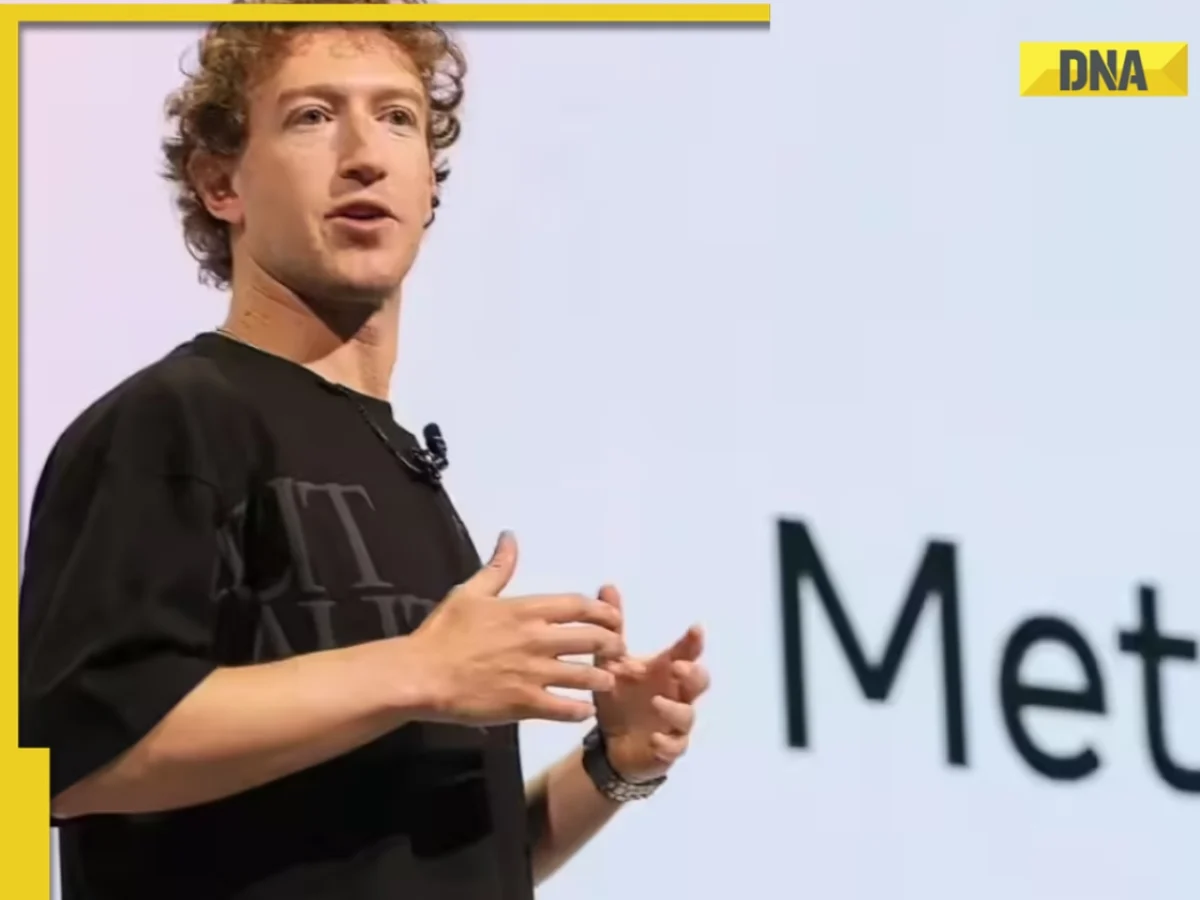
MENLO PARK, CA – Meta Platforms, Inc., the global technology giant behind Facebook, Instagram, and WhatsApp, is reportedly poised to undertake another substantial workforce reduction, potentially impacting up to 20% of its current employees. This move, which could see approximately 16,000 individuals departing the company, marks a significant strategic shift aimed at offsetting the escalating costs associated with its aggressive investment in artificial intelligence infrastructure and enhancing operational efficiency through AI-assisted processes.
As of December 31, Meta’s global workforce stood at nearly 79,000 employees. Should the proposed 20% reduction materialize, it would represent the company’s largest single workforce reduction since its extensive "year of efficiency" restructuring initiatives carried out across 2022 and 2023. While sources close to the development, who spoke anonymously due to the sensitive nature of the discussions, have indicated that no definitive date has been set for the cuts and the precise magnitude remains unfinalized, the plans are reportedly being communicated to senior leadership within the organization.
The potential layoffs underscore a paradoxical yet increasingly common trend in the technology sector: companies are simultaneously investing billions into cutting-edge AI technologies and streamlining their human capital, often citing AI itself as a tool for improved productivity and a driver for necessary cost adjustments. This strategic re-evaluation reflects Meta CEO Mark Zuckerberg’s unwavering commitment to generative AI, a pivot that demands immense capital expenditure while simultaneously seeking greater leaness in its operational framework.
Main Facts: A Glimpse into Meta’s Restructuring Plans
The core of the current news revolves around Meta’s internal discussions regarding a substantial scaling back of its workforce. The estimated 20% cut translates to a potential reduction of around 16,000 roles, a figure that would reshape the company’s operational landscape significantly. This decision is not merely a reaction to economic headwinds, but a proactive measure deeply intertwined with Meta’s long-term strategic vision, particularly its ambitious foray into artificial intelligence.
)
At the heart of the rationale lies the imperative to manage soaring costs associated with building out a robust AI infrastructure. Developing and deploying generative AI capabilities requires massive investments in data centers, specialized hardware (like advanced GPUs), and the acquisition of top-tier AI talent. While Meta has been aggressively pursuing the latter through lucrative compensation packages, the broader workforce is being scrutinized for areas where efficiency can be gained, potentially through automation or by simply reducing overhead.
Reuters, citing unnamed sources familiar with the internal deliberations, was among the first to report on these developing plans. These sources confirmed that while the exact details are still fluid – including the precise number of affected employees and the timeline for implementation – the directive to begin planning for such reductions has been conveyed by top executives to senior leaders across various departments. The anonymity of these sources highlights the sensitive and internal nature of these discussions, preceding any official public announcement from Meta itself.

This potential round of layoffs would be particularly notable given its scale. Meta’s previous "year of efficiency" saw significant reductions, but a 20% cut from its December 31 headcount would surpass those individual rounds, making it the most extensive single-phase reduction in the company’s recent history. It signals a deeper, more structural re-evaluation of its operational model and resource allocation in an era increasingly dominated by AI innovation.
Chronology: From Hypergrowth to Efficiency and AI Pivot
To fully grasp the significance of the impending layoffs, it’s essential to contextualize them within Meta’s recent corporate history, marked by periods of aggressive expansion, subsequent market corrections, and a profound strategic realignment.
)
The Pandemic-Fueled Hiring Spree (2020-2021): Like many tech companies, Meta (then Facebook) experienced unprecedented growth during the COVID-19 pandemic. With billions of people confined to their homes, reliance on digital platforms surged, leading to a rapid expansion of its workforce. The company hired thousands of employees, anticipating sustained growth in its user base and advertising revenue, alongside its nascent metaverse ambitions. This period saw a significant increase in operational expenditure and headcount across various divisions, from engineering to product development and sales.
The "Year of Efficiency" (2022-2023): The tide began to turn in late 2021 and intensified in 2022. Several factors converged: a slowdown in advertising revenue growth due to economic uncertainties, increased competition from platforms like TikTok, privacy changes impacting targeted advertising (particularly Apple’s iOS tracking changes), and significant losses accumulating from its Reality Labs division (responsible for metaverse development).
)
In response, Mark Zuckerberg declared 2023 the "year of efficiency." This period saw two major rounds of layoffs:
- November 2022: Meta announced the layoff of approximately 11,000 employees, representing about 13% of its workforce at the time. Zuckerberg took responsibility, admitting he had "overinvested" during the pandemic boom. The focus was on flattening the organizational structure and reducing non-essential projects.
- March 2023: A second wave of layoffs was announced, impacting an additional 10,000 employees. This round specifically targeted project managers, engineers, and various other roles across the company. Zuckerberg emphasized that the goal was to "make our organization flatter, so decision-making can happen faster, and to remove some layers of middle management to improve communication." He reiterated the commitment to building a leaner, more efficient company.
These previous rounds were largely driven by a need to cut costs and streamline operations after a period of over-hiring and in the face of a slowing economy and metaverse-related losses. They represented a significant course correction from the rapid expansion of the pandemic years.
)
The AI Pivot (2023-Present): While the "year of efficiency" was underway, a new strategic imperative was rapidly gaining momentum: artificial intelligence, particularly generative AI. Zuckerberg began to shift the narrative, emphasizing AI as the next frontier for Meta, alongside (and increasingly intertwined with) the metaverse.
This pivot involves a multi-pronged approach:
)
- Massive Investment in AI Infrastructure: Building the computational power required for advanced AI models demands enormous capital. This includes constructing and expanding data centers, purchasing thousands of specialized GPUs, and developing proprietary AI hardware and software. These are costs that dwarf traditional IT infrastructure expenses.
- Aggressive Talent Acquisition: To lead this charge, Meta has been on a hiring spree for top-tier AI researchers and engineers. The company has reportedly offered "huge pay packages, some worth hundreds of millions of dollars over four years," to attract the best minds to its new "superintelligence team." Acquisitions of specialized AI startups like Manus and Moltbook further bolster its capabilities.
- Integration Across Products: The vision is to embed AI deeply into all of Meta’s core products – enhancing content recommendations on Facebook and Instagram, powering smarter messaging features in WhatsApp, and even building more realistic and interactive experiences within its metaverse platforms.
The current proposed layoffs, therefore, are not a repeat of the "year of efficiency" driven solely by a market correction. Instead, they represent a strategic maneuver to fund and facilitate the AI pivot. The company is essentially reallocating resources, shedding roles that are deemed less critical or potentially automatable, to free up capital and focus talent on its highest-priority growth area: artificial intelligence. It’s a re-evaluation of where human capital is most effectively deployed in an AI-first future.
Supporting Data: Financial Pressures, AI’s Dual Impact, and Industry Trends
Understanding the forces compelling Meta to consider such extensive layoffs requires examining its financial landscape, the evolving role of AI in the workplace, and the broader trends observed across the tech industry.
)
Meta’s Financial Performance and AI Costs:
While Meta has shown signs of financial recovery in recent quarters, particularly in its core advertising business, the costs associated with its strategic bets remain substantial. The Reality Labs division, Meta’s metaverse unit, continues to report significant operating losses, draining billions of dollars annually. For instance, Reality Labs lost $3.7 billion in Q3 2023 and $4.65 billion in Q4 2023, bringing its full-year 2023 losses to over $16 billion. While these losses are expected as part of long-term investment, they underscore the need for fiscal discipline elsewhere.
The aggressive push into generative AI adds another layer of financial pressure. Building and maintaining the necessary infrastructure—data centers, specialized AI chips (like NVIDIA’s GPUs), and advanced cooling systems—is incredibly capital-intensive. Meta’s capital expenditures (CapEx) have been substantial, and Zuckerberg has signaled that these investments will continue to grow. He recently stated that the company would need to spend "billions of dollars" on AI infrastructure and that its AI roadmap involved building "massive computing infrastructure." This heavy investment in AI, while crucial for future growth, necessitates cost-cutting in other operational areas to maintain profitability and appease investors. The current layoffs are a direct attempt to offset these rising AI infrastructure costs.
)
AI’s Impact on the Workforce: A Transformative Shift:
The narrative around AI’s impact on jobs is complex, moving beyond simple job displacement to a more nuanced view of job transformation. A report by Morgan Stanley, cited in the original article, suggests that the long-term impact of AI on employment may be less severe than many fear. The report posits that while certain roles or tasks within roles will undoubtedly be automated, most workers are "unlikely to be permanently left behind." Instead, the expectation is a significant "shift into new types of jobs, including roles that do not yet exist."
This perspective aligns with historical technological shifts. Just as the industrial revolution changed the nature of agricultural and manufacturing work, AI is poised to redefine "white-collar roles that rely on computers." Tasks involving data analysis, content generation, coding assistance, customer service, and administrative support are particularly susceptible to automation or augmentation by AI. The implication for companies like Meta is that a substantial portion of its existing workforce, particularly in non-core AI development roles, might find their functions either partially or entirely absorbed by AI systems, or radically changed to incorporate AI tools. This necessitates a smaller, more specialized human workforce focused on managing, training, and leveraging these AI systems, rather than performing repetitive or easily automatable tasks.
)
Broader Tech Industry Layoffs: A Sector-Wide Trend:
Meta’s proposed layoffs are not an isolated incident but rather indicative of a broader trend sweeping across the technology sector. The past few years have seen a wave of workforce reductions at major tech companies, driven by a combination of post-pandemic recalibration, economic uncertainty, and increasingly, strategic shifts towards AI.
- Oracle: The US tech giant has reportedly planned to cut 20,000 to 30,000 jobs. This massive restructuring is explicitly linked to its strategy to expand its AI data center capacity, demonstrating a similar rationale to Meta’s – shedding non-core roles to invest in AI infrastructure.
- Amazon: The e-commerce and cloud computing behemoth recently announced layoffs affecting 16,000 employees. While Amazon’s reasons are multifaceted, including optimizing various divisions, a significant portion of these cuts are also framed as part of its AI restructure plan, as the company invests heavily in generative AI for its AWS cloud services and consumer products.
- Google, Microsoft, Salesforce, and Others: Numerous other tech titans have also conducted significant layoffs. Google parent Alphabet cut thousands of jobs in early 2023, with CEO Sundar Pichai acknowledging over-hiring during the pandemic. Microsoft also announced thousands of layoffs, even as it made massive investments in AI through its partnership with OpenAI. Salesforce, Spotify, and many other companies have similarly scaled back their workforces, citing efficiency, economic conditions, and a refocus on core strategic priorities, which increasingly include AI.
This sector-wide phenomenon suggests that the tech industry is undergoing a fundamental transformation. Companies are moving from a growth-at-all-costs mentality to one of "efficient growth," where strategic investments in areas like AI are balanced by aggressive cost-cutting elsewhere. The collective experience of these companies provides a strong backdrop for Meta’s current decisions, illustrating that the pursuit of AI leadership often comes hand-in-hand with a leaner, more focused organizational structure.
)
Official Responses: Navigating Uncertainty and Strategic Silence
As of the current reports, Meta Platforms, Inc. has not issued an official public statement regarding the potential new round of layoffs. This silence is typical for companies in the midst of internal deliberations of this magnitude, especially when the details such as the exact numbers and timelines are still being finalized. The information available has primarily emerged from anonymous sources close to the company, indicating that the discussions are internal and sensitive.
Internal Communications and Anonymity:
The Reuters report explicitly stated that "top executives have recently signaled the plans to other senior leaders at Meta and told them to begin planning how to pare back." This suggests that the initial phase of communication is cascading down the management hierarchy, preparing department heads for the difficult task of identifying roles for reduction. The sources for these reports spoke anonymously precisely because they "were not authorized to disclose the cuts." This highlights the confidentiality surrounding these strategic decisions and the company’s controlled communication strategy.
)
The lack of an official statement at this stage allows Meta flexibility. It provides time for leadership to refine the scope of the layoffs, determine specific departments or projects to be affected, and prepare a comprehensive plan for execution and communication to employees. Premature public announcements can lead to widespread panic, speculation, and potential talent drain before the company is ready to manage the fallout.
Mark Zuckerberg’s Past Rhetoric and Future Vision:
While there’s no official comment on these specific layoffs, Mark Zuckerberg’s previous statements offer insight into the company’s strategic mindset. His declaration of the "year of efficiency" in 2023 was not just a one-off response to a difficult year but a philosophical shift. He articulated a vision for a "leaner, more effective Meta" where resources are channeled into the highest-priority areas. This philosophy provides the overarching context for the current considerations.
)
Furthermore, Zuckerberg has been increasingly vocal about Meta’s future being intrinsically linked to AI. He has spoken extensively about the need to build "general intelligence" and has outlined ambitious plans for AI integration across all of Meta’s products. His unwavering focus on generative AI, coupled with the acknowledgment of its immense infrastructure costs, sets the stage for decisions that prioritize AI investment above all else, even if it means further workforce reductions in other areas.
The current strategic silence is a deliberate choice, allowing Meta to navigate a period of intense internal planning before facing public scrutiny and employee concerns. When an official announcement is made, it is expected to be framed within the context of Meta’s long-term AI strategy, its commitment to efficiency, and its vision for sustainable growth in a rapidly evolving technological landscape.
)
Implications: Reshaping Meta, the Workforce, and the Tech Landscape
The potential for another large-scale layoff at Meta carries profound implications, not only for the company and its employees but also for the broader tech industry and the evolving relationship between human labor and artificial intelligence.
Impact on Meta’s Culture and Future Strategy:
A 20% workforce reduction would fundamentally reshape Meta. While ostensibly aimed at improving efficiency and funding AI, such drastic measures can have complex internal ramifications.
)
- Employee Morale and Retention: Successive rounds of layoffs can severely impact employee morale, foster job insecurity, and potentially lead to a "brain drain" as talented individuals seek more stable environments. Retaining top talent, especially those not directly involved in AI development, could become a significant challenge.
- Innovation and Product Development: While AI is the focus, a leaner workforce in other departments might slow down product development cycles in non-AI areas or strain existing teams. The balance between hyper-focusing on AI and maintaining the quality and pace of innovation across its vast product portfolio (Facebook, Instagram, WhatsApp, Messenger, Reality Labs) will be critical.
- Operational Efficiency vs. Capacity: While the goal is efficiency, reducing headcount too aggressively without sufficient AI tools in place could lead to overburdened teams, reduced capacity, and potential burnout. The success of this strategy hinges on AI truly delivering the promised efficiency gains quickly.
- Investor Confidence: Historically, Wall Street often reacts positively to layoff announcements, viewing them as signs of cost control and fiscal discipline. However, sustained rounds of cuts could eventually signal underlying structural issues or an inability to manage growth effectively. The market will closely watch if these cuts translate into improved profitability and accelerated AI progress.
Implications for the Workforce and the Future of Work:
Meta’s actions resonate far beyond its Menlo Park campus, offering a glimpse into the future of work in the age of AI.
- The "AI-Ready" Workforce: These layoffs underscore the growing divide between "AI-ready" skills and those that are becoming increasingly automatable. The emphasis on attracting top AI talent with massive compensation packages, while shedding other roles, highlights a strategic re-prioritization of human capital.
- Reskilling and Upskilling Imperative: For employees impacted by such cuts, and for the broader workforce, the need for continuous reskilling and upskilling in AI-adjacent fields becomes paramount. The Morgan Stanley report’s prediction of workers shifting into new types of jobs necessitates robust educational and training infrastructures, both within companies and at a societal level.
- The Psychological Toll: Layoffs, regardless of the reason, inflict a significant psychological toll on those affected and those who remain. The stress of job hunting, financial uncertainty, and survivor’s guilt can have lasting effects.
- Ethical Considerations: As AI becomes a direct driver of job displacement, ethical questions around corporate responsibility, societal safety nets, and the equitable distribution of AI’s economic benefits will become increasingly prominent.
Broader Industry Trends and the AI Revolution:
Meta’s moves are not isolated but reflect a deepening trend across the tech industry, signaling a new phase of the AI revolution.
)
- AI as a Cost Center and Cost Saver: Companies are grappling with the dual nature of AI: it’s an enormous cost center for infrastructure and talent, but also a potential cost-saver through automation and efficiency gains. The current layoffs illustrate this delicate balancing act.
- The Automation of White-Collar Jobs: The explicit mention of automating "white-collar roles that rely on computers" confirms that AI’s impact is extending beyond manufacturing or blue-collar work, reaching into traditionally secure professional domains.
- Leaner, More Focused Tech Companies: The era of "move fast and break things" with seemingly endless resources may be giving way to a more disciplined, strategically focused approach. Tech companies are increasingly prioritizing core competencies and high-impact areas, shedding anything deemed peripheral.
- The Pace of Change: The speed at which AI is transforming the industry is unprecedented. The fact that companies are making such significant workforce adjustments now to prepare for future AI capabilities suggests a profound and rapid shift in operational paradigms.
In conclusion, Meta’s potential workforce reduction is more than just a cost-cutting exercise; it is a strategic repositioning for an AI-first future. It reflects a calculated gamble to invest heavily in the technology deemed most critical for long-term growth, even if it means painful short-term adjustments to its human capital. The outcome of this strategy will not only determine Meta’s trajectory but also serve as a critical case study for how the global economy adapts to the transformative power of artificial intelligence.