

SEO Keywords: Samsung, AI boom, semiconductor, strike averted, wage deal, SK Hynix, labor relations, profit sharing, high-bandwidth memory (HBM), DRAM, NAND Flash, talent drain, shareholder lawsuit, South Korea tech.
SEO Description: Samsung’s unprecedented wage deal, fueled by the AI boom, averted a major strike and committed $26.6 billion to its chip division. Learn how rival SK Hynix’s payouts influenced negotiations, the internal divisions over compensation, and the deal’s landmark implications for global tech labor and wealth distribution in the AI era.
SEO Samsung’s AI Profit-Sharing Deal: Averting Strike, Setting Precedent Amidst Tech’s Booming Demand
Introduction: The Unprecedented Nexus of AI Prosperity and Labor Unrest
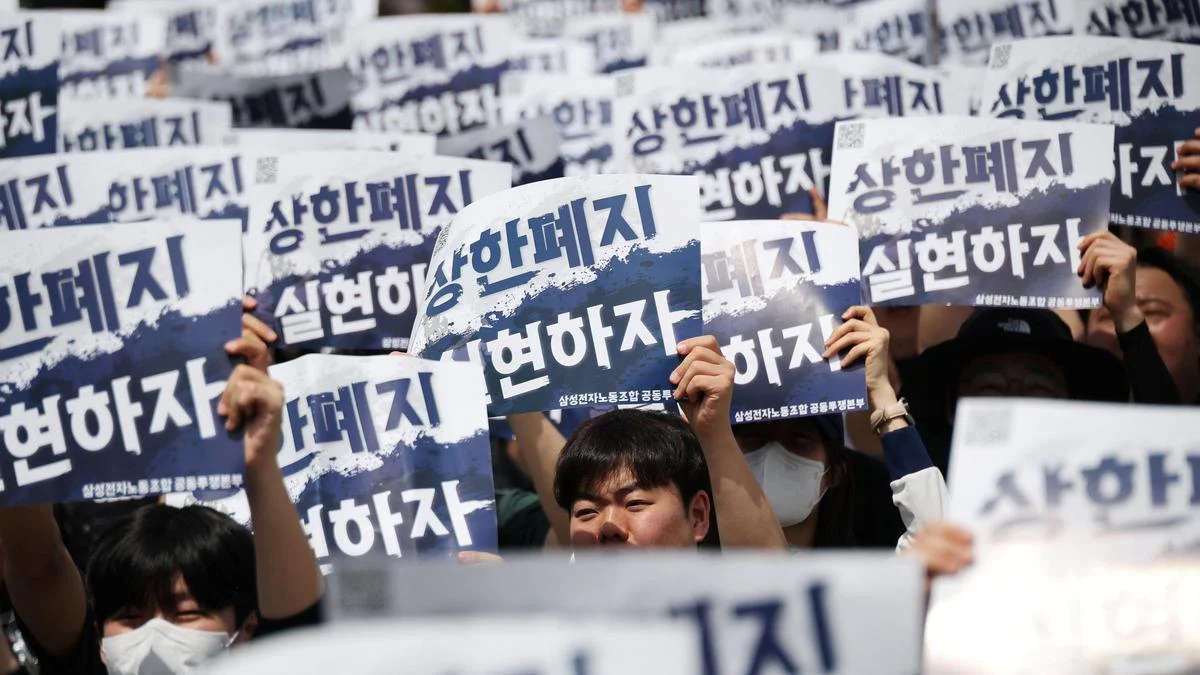
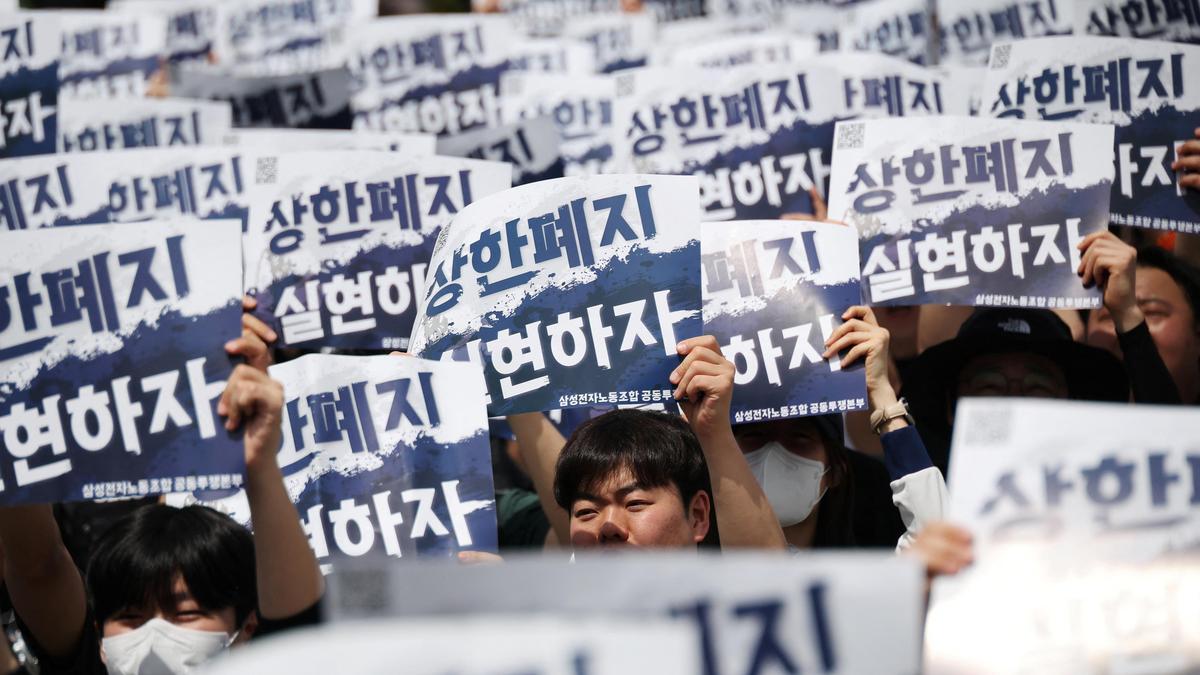
The global technology landscape is currently undergoing a seismic shift, propelled by the insatiable demand for Artificial Intelligence infrastructure. At the heart of this revolution stands Samsung Electronics, a South Korean conglomerate whose semiconductor division has become an indispensable cog in the AI machine. The company recently reported a record-breaking year, with its memory chips experiencing unprecedented demand, pushing profitability to stratospheric new heights. Yet, amidst this era of unparalleled financial success, Samsung found itself teetering on the brink of an industrial crisis. Tens of thousands of its employees, feeling sidelined from the company’s newfound riches, were preparing for an 18-day strike – an action that threatened to send catastrophic ripples through an already strained global supply chain.
However, in a dramatic eleventh-hour development on May 27, 2026, a landmark agreement was forged between Samsung’s management and its tenacious union. This last-minute deal not only pulled the world’s largest memory chipmaker back from the precipice of a debilitating work stoppage but also established a groundbreaking precedent for profit-sharing in the rapidly evolving AI economy. The core of the agreement sees Samsung committing to distribute approximately $26.6 billion to its semiconductor division employees over the next decade, a move that has significant implications not just for its workforce but for the broader industry’s approach to wealth distribution in the age of artificial intelligence.
The Genesis of Discontent: A Record Year, Unequal Rewards
The narrative of Samsung’s recent labor dispute is deeply intertwined with the meteoric rise of Artificial Intelligence. The generative AI boom, spearheaded by breakthroughs in large language models and advanced computing, has created an explosive demand for specialized hardware, particularly high-performance memory chips. Samsung, a global leader in the production of Dynamic Random Access Memory (DRAM) and NAND Flash memory, found its products more central than ever to the construction of every AI data center on the planet. This surge in demand translated directly into record revenues and profits for the company’s semiconductor division, solidifying its pivotal role in the global tech ecosystem.
Despite these unprecedented financial windfalls, a palpable sense of discontent simmered among a significant portion of Samsung’s workforce. Employees, particularly those on the factory floors responsible for manufacturing these highly sought-after chips, felt their contributions were not adequately reflected in their compensation. While the company celebrated record profitability, the perceived lack of equitable distribution of these gains ignited a collective frustration that coalesced into organized labor action. The prospect of a prolonged strike by tens of thousands of workers was not merely a threat to Samsung’s immediate production schedules; it represented a profound challenge to the stability of an already precarious global technology supply chain, which relies heavily on these critical components. The potential disruption loomed large, threatening to exacerbate existing bottlenecks and significantly delay the rollout of essential AI infrastructure worldwide.
The Rivalry that Sparked Action: The SK Hynix Precedent
What truly galvanized Samsung’s workers and amplified their demands was a direct comparison with the compensation practices of its formidable domestic rival, SK Hynix. In the intensely competitive memory chip market, SK Hynix has carved out a crucial niche, particularly in the production of High-Bandwidth Memory (HBM) chips. These advanced memory modules are indispensable components in the most powerful AI accelerators, such as those manufactured by Nvidia, giving SK Hynix a strategic advantage in the current AI gold rush.
Last year, SK Hynix set a new benchmark for employee incentives by agreeing to allocate a substantial 10% of its annual operating profit to a bonus pool, notably without any ceiling on the payout. This progressive approach yielded extraordinary results for its employees. Based on current projections for 2026, SK Hynix workers stand to collect upwards of $460,000 per person in bonuses – a figure that significantly overshadowed any compensation package Samsung’s management had initially offered its staff. This stark disparity became a powerful negotiating tool for Samsung’s union, fueling the argument that their contributions, equally vital to the AI boom, deserved comparable recognition.
The allure of SK Hynix’s more generous profit-sharing model proved irresistible to some of Samsung’s top talent. Union chair Choi revealed a sobering statistic: approximately 200 Samsung employees had already defected to SK Hynix within the preceding four months. This "talent drain" was a critical turning point in the labor negotiations. The exodus of skilled personnel, particularly in such a specialized and high-demand field, significantly shifted the dynamic, empowering the union and compelling Samsung’s management to acknowledge the tangible threat of losing irreplaceable expertise. The competitive landscape for talent, as much as for market share, was forcing Samsung to reconsider its traditional compensation strategies.
Chronology of Negotiations and Resolution
The path to the May 27 agreement was fraught with tension and marked by escalating demands. The National Samsung Electronics Union (NSEU), representing a significant portion of the company’s workforce, had initially put forth ambitious proposals. Their primary demands included a 15% share of the company’s operating profits for employees and, crucially, the removal of an existing cap on one component of the bonus structure. This cap was seen as a major impediment to employees fully benefiting from the company’s surging profitability.
As the deadline for the proposed strike loomed closer, the standoff intensified. Public statements from union leaders grew more strident, emphasizing the workers’ resolve to halt production if their demands were not met. Internally, Samsung’s management faced immense pressure from various stakeholders – not only to avoid a costly strike that would damage its reputation and bottom line but also to retain its highly skilled workforce in a fiercely competitive market. The global tech community watched closely, aware of the potential domino effect a Samsung strike could have on the intricate web of semiconductor supply chains.
The breakthrough came just days before the planned industrial action. Following intensive, round-the-clock negotiations, a tentative agreement was reached. This deal was then put to a vote among the union members on May 27, where it was overwhelmingly approved by a margin of 74%. The final agreement saw Samsung’s management settle on a 10.5% share of annual operating profit to be distributed in stock, supplemented by a further 1.5% in cash. While this percentage was slightly lower than the union’s initial 15% demand, it was notably higher than SK Hynix’s rate, albeit with certain conditions attached regarding profit targets. Crucially, the union also secured the removal of the existing cap on a bonus component, addressing a key point of contention. Union chair Choi, while acknowledging that the deal wasn’t a complete victory, urged members to accept it as a significant step forward, primarily because it addressed the immediate threat of talent loss and secured a substantial, long-term commitment from the company.
Dissecting the Deal: Benefits and Lingering Divides
The newly brokered deal represents a monumental financial commitment from Samsung. The estimated $26.6 billion allocated for distribution over a decade is a substantial sum, particularly for the employees within its semiconductor division. Based on projected 2026 operating profits, this translates to an impressive average payout of around $340,000 per employee in this highly critical unit. These men and women, who are at the forefront of manufacturing the memory chips that are, without hyperbole, among the most strategically valuable manufactured objects on earth, are finally seeing a direct and significant share of the AI boom’s profits. The bonus structure, comprising 10.5% of annual operating profit in stock and 1.5% in cash, is designed to run for a decade, contingent on Samsung meeting its ambitious profit targets. Analysts project the company’s growth to be seven-fold this year alone, indicating the potential for these payouts to be consistently high.
However, the celebratory mood within the semiconductor division is not uniformly shared across Samsung’s vast empire. A closer examination of the deal reveals stark disparities in compensation across different business units, which threaten to sow new seeds of internal discontent. While semiconductor employees stand to receive an average of $340,000, workers in Samsung’s mobile division will see a comparatively meager average of approximately $4,000. Employees in the LSI division, responsible for designing the company’s proprietary chips – a highly skilled and crucial role – are in line for around $100,000. These significant discrepancies highlight a fundamental challenge for Samsung’s management: how to assuage the feelings of unfairness among divisions that perceive their contributions as equally vital, even if not directly tied to the immediate AI chip boom. This internal schism could prove to be a more persistent problem than the external threat of a strike.

Adding another layer of complexity, Samsung is also facing a legal challenge from its shareholders. Some investors argue that the payout to employees is excessively generous, potentially eroding shareholder value. This legal battle, which will play out in Korean courts, pits the company’s long-term strategy of talent retention and labor harmony against the immediate financial interests of its shareholders. The outcome of this lawsuit could set another important precedent regarding corporate responsibility, employee compensation, and shareholder rights in the rapidly evolving tech sector.
Broader Implications and Future Outlook
Despite the internal complexities and shareholder scrutiny, the Samsung wage deal stands as a truly landmark agreement, reverberating far beyond the confines of its Korean headquarters. For the first time, a major semiconductor manufacturer has made a structural, multi-year commitment to directly share the profits generated by the AI boom with the workers on its factory floors. This move represents a tangible answer to the considerable energy the AI industry has spent debating how its unprecedented wealth should be distributed. While discussions about AI’s societal impact and economic benefits often remain theoretical, Samsung’s agreement offers a practical, real-world model for equitable profit-sharing.
Crucially, the deal also serves as a strategic bulwark against the ongoing "talent war" in the high-tech sector. By significantly improving compensation and ensuring a long-term stake in the company’s success, Samsung aims to stem the flow of its highly skilled employees to competitors like SK Hynix. In an industry where specialized knowledge and experience are paramount, retaining talent is not merely a matter of good HR practice; it is a critical component of maintaining market leadership and ensuring the stability of vital supply chains. The agreement underscores the growing recognition that the human capital behind technological innovation is as valuable as the intellectual property itself.
Furthermore, this agreement signals a potentially evolving landscape of labor relations within the global technology industry. Historically, the tech sector, particularly in its higher echelons, has not been heavily unionized. However, as the industry matures and its workforce grows, the collective bargaining power of employees is becoming increasingly evident. Samsung’s deal could embolden workers in other major tech companies to demand a larger share of the profits, especially in sectors experiencing exponential growth due to AI. It highlights a shifting power dynamic, where the indispensable nature of skilled labor in a highly specialized field can exert significant influence over corporate policy. The challenges for Samsung will now be to manage the internal equity perceptions, ensure consistent profitability to sustain the bonuses, and navigate the legal and ethical considerations raised by shareholders.
Conclusion
The resolution of Samsung’s potential strike marks a pivotal moment for the technology industry. The agreement, born out of record AI-driven profits and intense competitive pressures from rivals like SK Hynix, represents a significant victory for labor, ensuring that frontline workers directly benefit from the company’s success. While the internal disparities in compensation across Samsung’s divisions and the looming shareholder lawsuit present ongoing challenges, the overall impact of this deal cannot be overstated. It provides a concrete framework for how the immense wealth generated by the AI revolution can be distributed more equitably, addressing both the immediate threat of talent drain and the broader societal debate on economic fairness.
As the AI era continues to unfold, Samsung’s landmark handshake with its workers’ union offers a compelling blueprint. It demonstrates that sustained profitability, talent retention, and labor harmony are not mutually exclusive but rather interdependent pillars of long-term success. This deal is not merely a fairy-tale ending but a pragmatic and unprecedented step towards reshaping compensation practices and fostering more sustainable labor relations in the rapidly accelerating world of high technology. The eyes of the global tech industry will undoubtedly remain fixed on Samsung, observing how this ambitious experiment in profit-sharing navigates the complexities of corporate governance, employee morale, and market dynamics in the years to come.
