

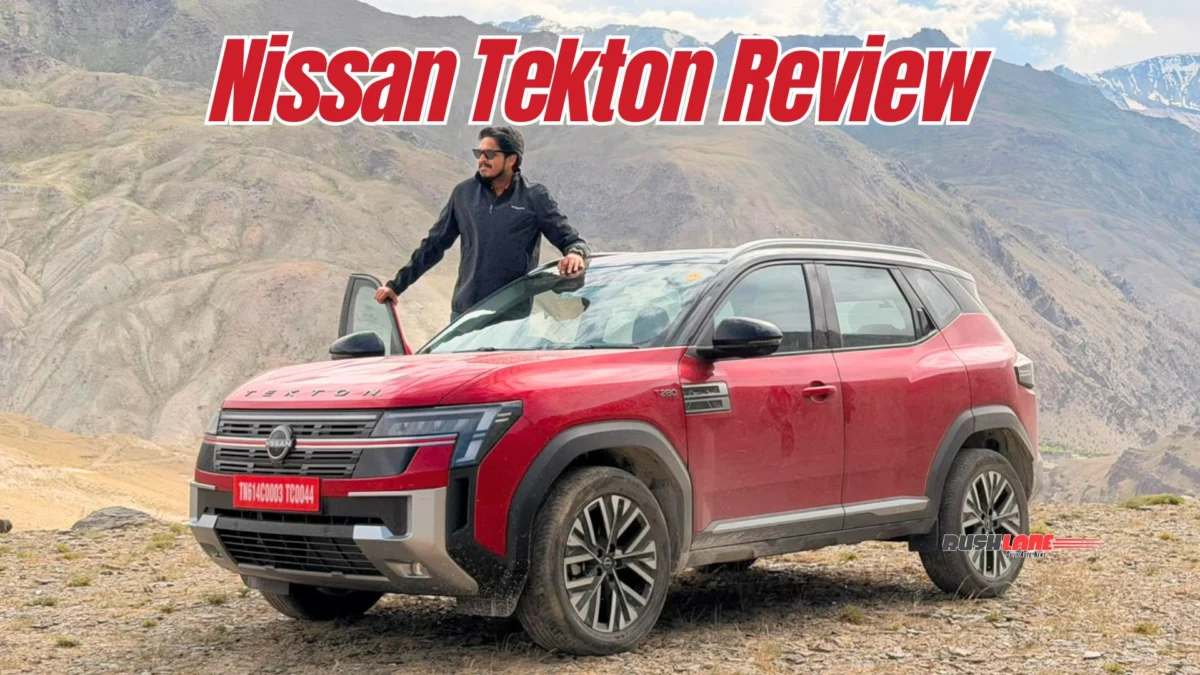
Introduction: A Statement of Confidence
In the high-stakes arena of the Indian mid-size SUV market, manufacturers rarely leave anything to chance. However, Nissan Motor India has recently executed a launch strategy that borders on the audacious. To prove the mettle of their latest offering, the Nissan Tekton, the company organized a grueling 700-kilometer media drive traversing some of the world’s most treacherous and demanding terrains—the route from Chandigarh to Leh.
This three-day expedition across the Himalayas was not merely a marketing exercise; it was a trial by fire. By subjecting the Tekton to thin air, sub-zero temperatures, and broken mountain passes, Nissan aimed to demonstrate a level of engineering confidence that few competitors dare to display. Having spent significant time behind the wheel in these extreme conditions, we examine whether the Tekton is a genuine contender for the segment throne or merely a polished sibling to the Renault Duster.

Main Facts: Pricing, Variants, and Market Positioning
The Nissan Tekton enters a crowded segment with a clear pricing hierarchy designed to challenge both established leaders and budget-conscious alternatives.
The range begins at an aggressive ₹10.49 lakh (Ex-showroom) for the base Visia variant, which is powered by the T160 1.0-liter Turbo Petrol engine mated to a 6-speed manual transmission. At the pinnacle of the lineup sits the Tekna+ variant, priced at ₹18.59 lakh (Ex-showroom). This top-tier trim features the more potent T280 1.3-liter Turbo Petrol engine paired with a sophisticated 6-speed wet Dual-Clutch Transmission (DCT).

Nissan has positioned the Tekton as the "sophisticated" alternative in the mid-size SUV space. While it shares its underpinnings with the Renault Duster, the Tekton aims for a more premium aesthetic, evidenced by its unique fascia, high-tech interior color palettes, and a 5-star Bharat NCAP safety rating—a crucial credential in the modern Indian automotive landscape.
Chronology of the Drive: From the Plains to the Peaks
The journey began in the manicured streets of Chandigarh, where the Tekton first showcased its urban civility. In the initial leg, the SUV’s refinement and low-speed ride quality were the primary focus. However, as the convoy moved toward Manali and began the ascent toward the Rohtang and Atal Tunnels, the narrative shifted toward power delivery and thermal management.

By the second day, the terrain transitioned into the high-altitude deserts of Lahaul and Spiti. Here, the 700-kilometer route tested the Tekton’s suspension travel and chassis rigidity. The final leg involved crossing high mountain passes like Bara-lacha la and Lachung La, where the altitude exceeds 15,000 feet. In these conditions, where oxygen levels are low and the air is thin, the turbochargers were forced to work overtime. The drive concluded in Leh, providing a comprehensive data set on how the vehicle handles extreme elevation changes, varying fuel quality, and relentless road vibrations.
Design and Aesthetics: Distinguishing Identity
One of the most significant challenges for Nissan was avoiding the "rebadging" stigma that followed the Nissan Terrano and Renault Duster duo a decade ago. With the Tekton, the designers have largely succeeded.

Exterior Sophistication
The Tekton discards the rugged, utilitarian look of the Duster in favor of a more "classy and elegant" aesthetic. The front fascia is entirely unique, featuring sophisticated lighting elements and a more streamlined grille. A standout design choice is the use of red horizontal accents on both the front and rear, which injects a sense of sportiness into the SUV’s silhouette.
The vehicle sits on 18-inch alloy wheels wrapped in 225-section tires, providing a planted stance. At the rear, the C-shaped connected LED tail light signature creates a modern light graphic that is instantly recognizable. While the "TEKTON" badging on the rear might feel slightly oversized to some, the overall exterior package feels more premium than its Renault counterpart.

Interior Ambience and Quality
Inside, Nissan has opted for a bold Burgundy and White color scheme. The white upholstery significantly enhances the "airy" feel of the cabin, though Indian owners may find it a challenge to maintain against dust and grime. The use of Rose Gold accents on the dashboard adds a layer of "wow factor" that is often missing in this segment.
The fit and finish are exemplary. Despite 700 kilometers of relentless rattling over stones and craters, the cabin remained free of squeaks. Soft-touch materials are present on key touchpoints, although they are not as extensive as some might hope for at the ₹18 lakh price point.

Performance and Powertrain: The T280 Edge
The heart of the Tekton experience is the T280 1.3-liter 4-cylinder Turbo Petrol engine. Producing 163 PS, it is currently the most powerful engine in its class.
The DCT Experience
During our drive, the 6-speed wet Dual-Clutch Transmission (DCT) proved to be the star of the show. Unlike the manual version—which has been criticized for an unpredictable clutch bite point—the DCT offers seamless, intuitive shifts. It manages to keep the engine in its power band effectively, downshifting with enough urgency to facilitate overtakes on narrow mountain roads.

High-Altitude Behavior
In the thin air of the Himalayas, some turbo lag was inevitable. However, the engine’s "intake howl" and the audible "turbo blow-off" sounds provided an engaging soundtrack for the climb. The Tekton achieves a 0-100 km/h sprint in under 10 seconds, a figure that remains impressive even when factoring in the power loss associated with high altitudes.
Drive Dynamics: A "Sporty Hatchback" Feel
Perhaps the most surprising aspect of the Tekton is its handling. Nissan has tuned the steering and suspension to offer a level of precision that makes the SUV feel smaller than it is.

- Steering Modes: The vehicle features two steering modes. The "Hard Mode" adds a satisfying weight to the wheel, which was particularly useful on the winding switchbacks of the Leh-Manali highway.
- Suspension: The ride quality is "indestructible." It absorbs sharp ruts and broken patches with a level of composure that recalls the legendary B0 platform of the old Duster and Captur, yet it feels more modern and less "bouncy."
- Braking: The braking performance is progressive, though we noted that a bit more initial "bite" would be welcome during steep descents.
Supporting Data: Technical Specifications at a Glance
| Feature | Specification |
|---|---|
| Base Engine | 1.0L 3-cyl Turbo Petrol (T160) |
| Top Engine | 1.3L 4-cyl Turbo Petrol (T280) |
| Max Power (T280) | 163 PS |
| Transmission Options | 6-speed MT / 6-speed Wet DCT |
| Safety Rating | 5-Star Bharat NCAP |
| Infotainment | 10.1-inch with Google Built-in |
| Instrument Cluster | 10.25-inch Full Digital |
| Boot Space | Up to 700 Liters (Loaded to roof) |
| Wheels | 18-inch Alloys |
Official Responses and Safety Tech
Nissan Motor India officials have emphasized that the Tekton was developed with a "safety-first" mindset. The inclusion of Level-2 ADAS (Advanced Driver Assistance Systems) as a standard or near-standard feature in higher trims is a testament to this.
During the 700km drive, the ADAS system was tested in real-world Indian conditions. Unlike some systems that are overly sensitive and prone to "phantom braking" in chaotic traffic, the Tekton’s suite felt well-calibrated. Furthermore, Nissan has included a "one-touch" button to disable all ADAS functions—a thoughtful inclusion for drivers navigating exceptionally unpredictable rural roads.

Implications: Can Nissan Reclaim the Segment?
The launch of the Tekton represents a pivot for Nissan in India. For years, the brand relied heavily on the Magnite to sustain its volumes. The Tekton moves the brand into a higher-margin, more prestigious territory.
The Competitive Landscape
The Tekton faces stiff competition from the Hyundai Creta, Kia Seltos, and its own cousin, the Renault Duster. While the Creta and Seltos offer more "gadgetry" (such as more extensive ambient lighting or branded audio systems), the Tekton counters with superior driving dynamics and a more robust mechanical feel.

The Verdict for Buyers
Should you buy one? If your priority is rear-seat legroom or a plush, "living room" interior, some rivals might serve you better. The Tekton’s rear space is adequate but not class-leading. However, if you are a driver who values mechanical honesty, a powerful engine-gearbox combination, and a chassis that can handle the worst roads in India without breaking a sweat, the Tekton is a formidable choice.
Conclusion
After 700 kilometers of relentless testing across the Himalayas, the Nissan Tekton has proven that it is more than just a styling exercise. It is a rugged, high-performance SUV that brings a sense of European driving dynamics to a Japanese badge. Nissan’s confidence in the product—demonstrated by the sheer scale of the media drive—appears well-founded. As the SUV hits showrooms, its success will ultimately depend on whether Indian consumers value "go-anywhere" capability over "feature-heavy" fluff. On the evidence of the Chandigarh-to-Leh expedition, the Tekton has the hardware to back up its ambitions.
