Introduction: A Shifting Landscape in Indian White-Ball Cricket
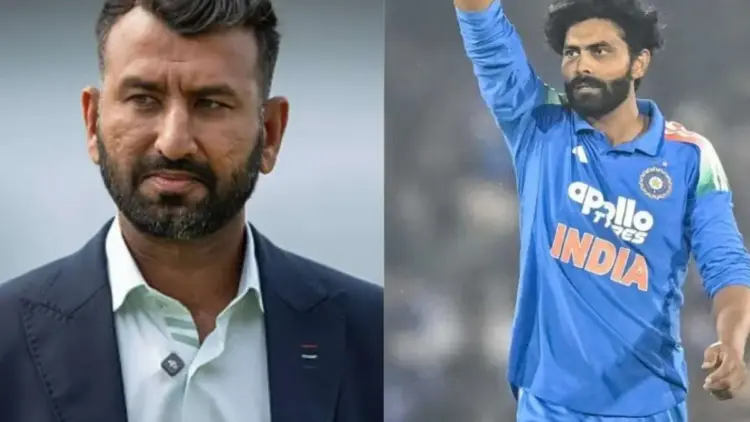
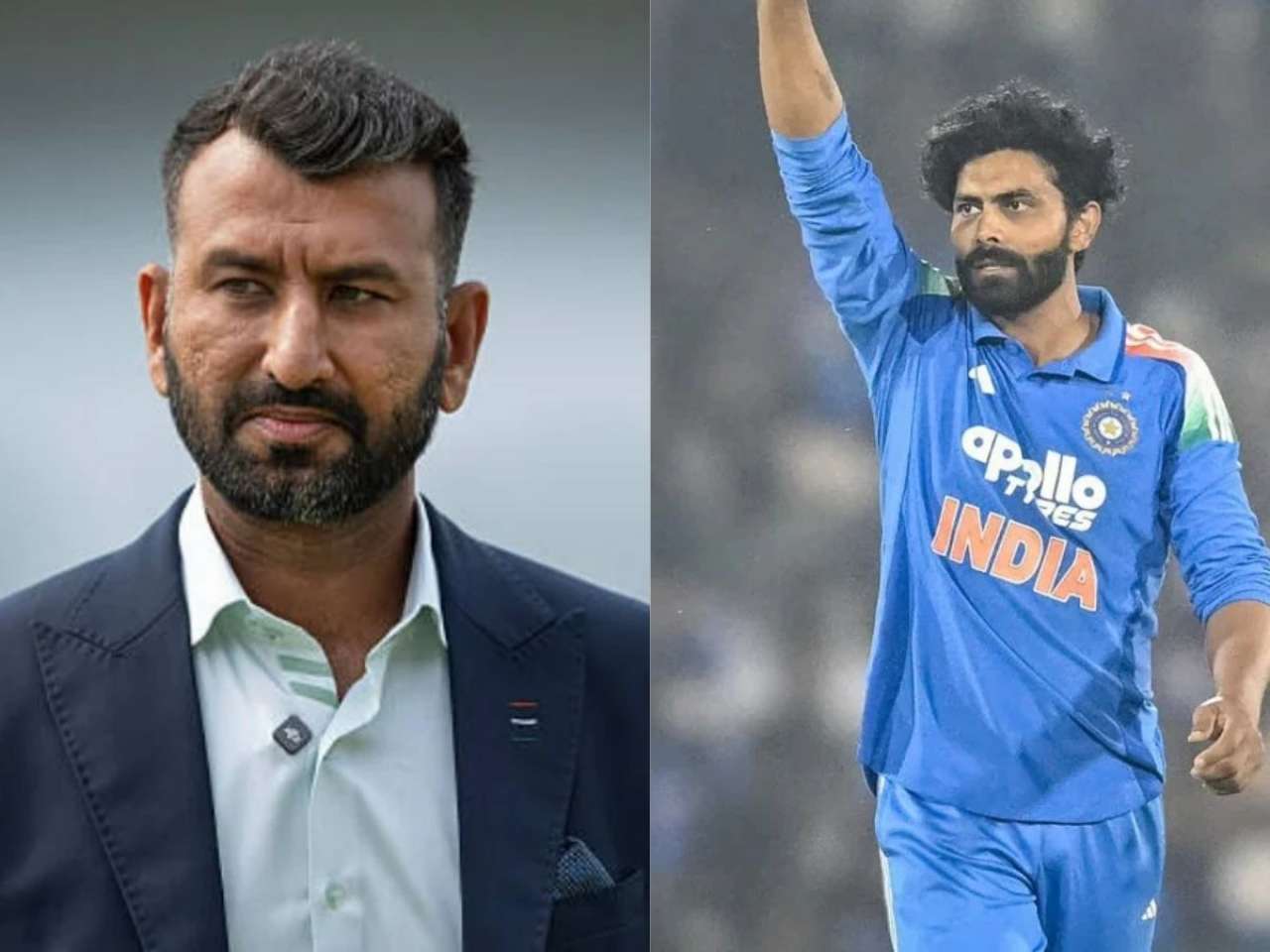
The intricate tapestry of Indian cricket is constantly reweaving itself, with established stars making way for emerging talents in a relentless cycle of evolution. In a recent pronouncement that has sent ripples through the cricketing fraternity, former India batter Cheteshwar Pujara has offered a candid and compelling perspective on the future of one of India’s most celebrated all-rounders, Ravindra Jadeja, in the One Day International (ODI) format. Pujara, renowned for his astute understanding of the game, suggests that Jadeja’s illustrious white-ball journey might be approaching its twilight, identifying fellow left-arm spin all-rounder Axar Patel as the heir apparent to this crucial role within the national setup.
This declaration arrives at a pivotal juncture for Indian cricket, with the next ODI World Cup in South Africa, Zimbabwe, and Namibia looming on the horizon in 2027. The selection committee and team management are undoubtedly engaged in a meticulous process of identifying core players and fine-tuning combinations for this marquee event. Pujara’s insights underscore the intensity of this strategic planning, highlighting the cut-throat competition for every spot, especially in a team as talent-rich as India’s. The debate surrounding India’s primary spinning all-rounder slot is not merely about individual players but about the tactical blueprint India intends to deploy on the global stage.
The Veteran’s Verdict: Pujara’s Unfiltered Assessment
Cheteshwar Pujara’s reputation as a Test specialist often overshadows his deep analytical understanding of all formats of the game. His recent comments, delivered with characteristic frankness, reveal a discerning eye for selection dynamics and player management. Pujara’s conviction stems from what he perceives as a clear strategic shift by the Indian team management, signaling a potential change of guard in the ODI squad.
A Calculated Exclusion: The New Zealand Series as a Litmus Test
The immediate catalyst for Pujara’s strong belief appears to be Ravindra Jadeja’s conspicuous absence from India’s squad for the five-match ODI series against New Zealand. In a squad that saw Axar Patel being preferred, Pujara views this omission as more than just a rotational decision; he interprets it as a definitive signal from the selectors. "I believe so," Pujara stated unequivocally, referring to his prediction about Jadeja’s ODI future. "Because if you want to keep Ravindra Jadeja in ODI cricket, then he should have been selected [for the New Zealand series]."
For Pujara, the New Zealand series serves as a critical indicator. In the lead-up to a World Cup, every ODI match becomes an opportunity to test combinations, assess form, and build cohesion. The fact that Jadeja, a seasoned campaigner and proven match-winner, was bypassed in favour of Axar Patel speaks volumes about the team’s current priorities and long-term vision. It suggests a deliberate effort to provide Axar with an extended run and greater exposure, thereby cementing his position as the primary spin all-rounder in the ODI format.
Age, Format Focus, and the T20I Precedent
Pujara delved deeper into the rationale behind his prediction, touching upon factors such as age and a potential directive for Jadeja to streamline his focus across formats. "I’m sure it was communicated to him that he might not be selected because Axar Patel has been the main all-rounder in ODI cricket and is being given more opportunities," Pujara articulated, hinting at behind-the-scenes conversations that often shape a player’s career trajectory.
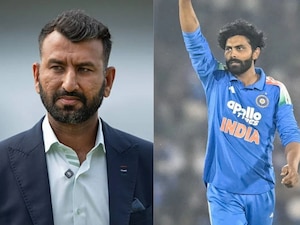
At 35 years old (as of late 2023/early 2024 when such discussions would typically occur, anticipating the 2027 World Cup), Jadeja is undeniably in the latter half of his career. While his fitness remains exemplary, and his skill set undiminished, the demands of playing all three formats at the international level can be taxing. Pujara surmised that the team management might have advised Jadeja to concentrate his energies on Test cricket, where his unique blend of left-arm spin, resilient batting, and exceptional fielding continues to be invaluable. "Looking at his age, I feel the team management might have told him that he is now only a part of Test cricket, so he should focus there, and that they are not looking at him for white-ball cricket," Pujara told JioStar, as quoted by IANS.
Furthermore, Pujara drew a parallel with Jadeja’s earlier decision to retire from T20 Internationals, framing it as a precedent for his potential white-ball exit. "So, it could be the end of the road because, obviously, he has retired from T20 Internationals. I feel he might not be selected just for the ODIs," he concluded, suggesting a gradual, strategic phasing out of the shorter formats to prolong his Test career and manage workload effectively. This perspective paints a picture of a well-thought-out transition, rather than an abrupt dismissal.
The Rise of Axar Patel: A New Era Dawning?
If Pujara’s prophecy holds true, then Axar Patel is poised to inherit one of the most critical roles in India’s ODI setup. His journey to this potential prominence has been one of perseverance, consistent performance, and a timely acquisition of skills that align perfectly with the modern demands of white-ball cricket.

A Like-for-Like Replacement with a Modern Edge
Axar Patel presents a compelling case as a successor to Ravindra Jadeja. Functionally, he is a like-for-like replacement: a left-arm orthodox spinner who can control the middle overs, a capable lower-order batsman who can accelerate the scoring rate, and an athletic fielder. However, there are nuances that distinguish him and potentially make him a preferred choice in the current cricketing landscape.
Axar’s bowling, while perhaps lacking the sheer bite and trajectory variations of Jadeja’s at his peak, is relentlessly accurate and economical. He bowls a tight line and length, choking the flow of runs and building pressure, which often leads to wickets. His flat trajectory makes it difficult for batsmen to hit through the line, forcing them to take risks. With the bat, Axar has steadily improved, transforming from a handy contributor to a genuine match-finisher. His ability to strike big boundaries under pressure, coupled with his calm temperament, has been a significant asset for India in recent times.
Seizing the Moment: Performances Under Pressure
Axar’s rise hasn’t been accidental; it’s a culmination of seizing opportunities with both hands. His performances, particularly when Jadeja has been unavailable due to injury or rest, have been instrumental in solidifying his position. He has often delivered crucial spells, breaking partnerships or containing run rates during pivotal phases of the game. With the bat, he has demonstrated an increasing penchant for turning the tide, scoring quickfire cameos that have propelled India to competitive totals or chased down challenging targets. For instance, his ability to hit sixes down the ground and manipulate the field has become a notable feature of his batting, providing India with a reliable power-hitter at number seven or eight. His consistency in both departments has convinced the selectors that he is ready for an expanded role, especially with the 2027 World Cup in mind.

The Counter-Narrative: Abhishek Nayar’s "Insurance Policy" Theory
While Pujara’s assessment leans towards a definitive end for Jadeja in ODIs, not everyone shares this absolute view. Abhishek Nayar, a former India batting coach and astute observer of the game, offers a more nuanced perspective, positioning Jadeja as a vital contingency plan rather than an entirely discarded asset.
Jadeja as the Invaluable Backup
Nayar acknowledges Axar Patel’s current ascendancy but stresses Jadeja’s enduring importance. He posits that while Axar is the "frontrunner," Jadeja remains India’s indispensable "insurance policy." "The valid question right now would be: After Axar, who is the frontrunner? Currently, the frontrunner is Axar Patel, and after him, Jaddu is still your insurance policy," Nayar stated on the same show.
This "insurance policy" theory is rooted in Jadeja’s unparalleled experience, his proven ability to perform under extreme pressure on the biggest stages, and his readiness to step in seamlessly if required. Should Axar Patel face an injury setback before a major tournament like the World Cup, Jadeja would undoubtedly be the first call-up. His match fitness, international experience across continents, and established rapport with the team make him an irreplaceable backup option. Nayar’s view highlights the practicalities of squad selection, where depth and experienced alternatives are crucial, especially in a long and demanding tournament.

The Depth Dilemma: Beyond Axar and Jadeja
Nayar also implicitly points to a broader challenge for Indian cricket: the relative scarcity of high-quality, like-for-like left-arm spin all-rounders beyond Axar and Jadeja. While India’s domestic circuit is a hotbed of talent, finding another player who combines economical left-arm spin, effective lower-order batting, and elite fielding prowess is a significant ask. This lack of immediate alternatives further solidifies Jadeja’s position as a crucial reserve. Even if he isn’t in the primary XI, his presence within the broader pool of players provides invaluable security, preventing a potential crisis if the first-choice option becomes unavailable. This perspective ensures that while the focus shifts to Axar, Jadeja’s vast contributions and potential utility are not entirely overlooked.
Chronology of the All-Rounder Debate
The discussion around India’s spin all-rounder slot is not a recent phenomenon but rather an evolving narrative shaped by player performances, injuries, and strategic shifts over several years.
Jadeja’s Journey: From Emerging Talent to World-Class All-Rounder
Ravindra Jadeja’s ODI journey began in 2009, and he quickly established himself as a dynamic presence. Initially known for his accurate left-arm spin and electric fielding, he steadily honed his batting skills, transforming into a genuine all-rounder capable of winning matches with both bat and ball. His peak years saw him become an integral part of India’s white-ball plans, particularly after the 2011 World Cup triumph. He played a pivotal role in India’s 2013 Champions Trophy victory, emerging as the tournament’s leading wicket-taker. Throughout the 2010s, Jadeja was a consistent fixture, his utility value – controlling the middle overs with the ball, adding quick runs at the death, and saving countless runs in the field – making him almost indispensable. His performances in the 2019 World Cup, particularly his semi-final heroics against New Zealand, further cemented his reputation as a big-match player.

Axar’s Ascent: Patience Rewarded
Axar Patel’s international career began somewhat earlier, with his ODI debut in 2014, but his path has been less linear. He initially showed promise but often found himself on the fringes, sometimes playing as a specialist spinner, at other times as a backup. His lack of consistent opportunities, partly due to Jadeja’s consistent presence, meant he had to bide his time. However, Axar consistently performed in domestic cricket and the Indian Premier League (IPL), continuously refining his skills, particularly his batting. His re-entry into the national setup in recent years has been marked by a significant improvement in his batting prowess, allowing him to be seen not just as a bowler but as a genuine all-rounder. This sustained domestic performance and a clear enhancement of his offensive batting game have been key to his recent success.
Recent Selections and Squad Dynamics
The true shift in dynamics became more apparent in the last two to three years. Jadeja’s recurring injury issues, though not career-threatening, often led to his temporary absence from squads. These windows of opportunity proved crucial for Axar Patel. The selection committee, in its quest to build a robust squad for future World Cups, began to invest more heavily in Axar. They provided him with extended runs in series where Jadeja was either rested or recovering. This consistent backing allowed Axar to build confidence and deliver match-winning performances, particularly in critical home series. The decision to select Axar over Jadeja for the crucial New Zealand ODI series is the latest and most significant indicator of this evolving strategy, signaling a clear intent to prioritize Axar as the primary option for the upcoming World Cup cycle, leading up to 2027.
Supporting Data and Performance Metrics
A thorough analysis of the spin all-rounder position necessitates a look at the statistical contributions of both players, offering quantitative backing to the qualitative arguments.

Batting Statistics: A Comparison
Ravindra Jadeja, throughout his ODI career, has shown remarkable improvement as a batsman. With an ODI batting average hovering around 32 and a strike rate typically above 85, he has evolved into a reliable lower-order batter capable of building innings or providing quick impetus. His ability to anchor the tail or launch an assault has been crucial for India. He has several half-centuries and has often been the architect of crucial partnerships.
Axar Patel, on the other hand, has a slightly lower career average (around 20-22) but his recent performances have significantly boosted these numbers. His strike rate, often in the high 90s or even above 100 in recent impactful innings, reflects his aggressive intent. Crucially, Axar has demonstrated a more consistent ability to hit boundaries, particularly sixes, in high-pressure situations, which is a valuable asset in the modern ODI game. While Jadeja’s batting often involves more finesse and placement, Axar provides raw power and quick scoring, a quality increasingly sought after in the lower-middle order.
Bowling Statistics: Spin Prowess
As left-arm orthodox spinners, both players are primarily tasked with controlling the middle overs. Ravindra Jadeja boasts an excellent career ODI bowling average (around 37) and an economy rate (sub 5.00) that speaks volumes about his control. He has over 200 ODI wickets, a testament to his wicket-taking ability alongside his parsimony. His subtle variations in pace and trajectory, coupled with his ability to exploit turning pitches, have made him a formidable opponent.

Axar Patel also maintains an impressive economy rate (often around 4.50-4.80) and a respectable bowling average (around 30-32). While his wicket tally might be lower due to fewer matches, his impact has been significant. Axar relies more on consistent line and length, variations in flight, and an ability to bowl quickly through the air. He tends to be less prone to leakage of runs, building pressure effectively. His bowling style often leads to false shots as batsmen try to break the shackles.
Fielding Excellence: The Unquantifiable Impact
Fielding, while not always captured by traditional statistics, is a game-changing aspect where Ravindra Jadeja stands almost unparalleled in world cricket. His agility, anticipation, rocket arm, and acrobatic catches have saved countless runs and created numerous breakthroughs. He sets a benchmark for fielding excellence that few can match. His impact on the overall energy and confidence of the team in the field is immeasurable.
Axar Patel is also a competent and athletic fielder. He is safe under the high ball, quick across the ground, and possesses a strong arm. While he may not possess the same extraordinary, highlight-reel quality as Jadeja, he is a reliable and consistent contributor in the field, ensuring that the team’s standards remain high. However, the sheer presence and impact of Jadeja as a fielder are truly unique and something that any successor would struggle to replicate fully.

Fitness and Injury Concerns
Ravindra Jadeja’s career, particularly in recent years, has been punctuated by several injury layoffs, notably to his knee and thumb. While he has always returned with renewed vigour, these injuries have undeniably impacted his availability for certain series and tournaments. The management’s cautious approach with his workload, especially considering his importance in Test cricket, might be a contributing factor to his reduced white-ball assignments. Axar Patel, on the other hand, has generally enjoyed a more consistent run of fitness, allowing him to be a more reliably available option for selection. The ability to remain consistently fit and available is a significant factor in long-term strategic planning, especially for multi-format players.
The Silence from the Board: Official Responses (or Lack Thereof)
In the high-stakes world of international cricket, official communication from governing bodies and selection committees regarding individual player futures is often sparse and carefully worded. This general policy of non-disclosure often leaves room for speculation and expert analysis, as seen with Pujara’s comments.
BCCI’s Stance: A Policy of Non-Disclosure?
The Board of Control for Cricket in India (BCCI) and its selection committee typically adhere to a policy of not publicly detailing the specific reasons behind player omissions or elaborating on their long-term plans for individual cricketers. Statements usually focus on team composition, tactical requirements, or simply cite "rest" or "workload management" for high-profile absentees. This approach aims to protect player privacy, maintain squad morale, and avoid unnecessary media sensationalism.

In the context of Pujara’s remarks about Jadeja, the absence of an official BCCI statement neither confirms nor denies his speculation. Instead, it aligns with the board’s standard operating procedure. The silence, in this case, can be interpreted in multiple ways: it could mean that Pujara’s assessment is indeed accurate, and the board simply prefers to manage such transitions discreetly. Alternatively, it could mean that the board has a different perspective but chooses not to engage in public debate with former players. Regardless, the lack of an explicit denial from official channels often lends more weight to informed speculation.
Player Communication: Behind Closed Doors
It is widely understood that critical discussions about a player’s role, future, and workload management often occur privately between the player, the captain, the coach, and the chief selector. These candid conversations, as alluded to by Pujara, are essential for transparency within the team and for helping players understand their standing. If, as Pujara suggests, Jadeja has indeed been communicated with regarding a shift in focus to Test cricket, such a conversation would have taken place away from the glare of media scrutiny. This private dialogue allows for a more personal and respectful handling of sensitive career decisions, ensuring that players feel valued even as the team’s strategic direction evolves.
Implications for India’s World Cup Aspirations and Player Futures
The potential shift from Ravindra Jadeja to Axar Patel as India’s primary ODI spin all-rounder carries significant implications, not only for the players involved but also for India’s strategic approach to the 2027 World Cup and beyond.

Team Balance and Strategic Flexibility
The choice of spin all-rounder profoundly impacts the overall team balance. Both Jadeja and Axar offer control and batting depth, but their subtle differences can influence strategic decisions. Axar’s slightly more attacking batting style in the lower order might allow India to play an extra specialist bowler or deepen their batting lineup, offering more flexibility. His economy rate, combined with his ability to pick up crucial wickets, provides the captain with a reliable option in the middle overs. The team management might be looking for a player who can consistently deliver under pressure with both bat and ball, and Axar’s recent form suggests he fits that bill. The potential transition signals a strategic long-term commitment to building a squad around players who are in their prime or ascending, ensuring continuity and peak performance for the next World Cup cycle.
The Road Ahead for Ravindra Jadeja
If Pujara’s prediction of an ODI exit holds true, it marks a significant turning point in Ravindra Jadeja’s career. However, it by no means signifies the end of his international journey. Instead, it would likely solidify his status as a premier Test cricketer, allowing him to focus entirely on the format where he continues to be indispensable. His performances in Test cricket, both at home and away, have been phenomenal, and his experience will be vital for India in the World Test Championship cycles. This focused approach could prolong his Test career, enabling him to continue breaking records and contributing significantly to India’s red-ball success. His legacy in white-ball cricket is already secure, etched in numerous match-winning performances and a reputation as one of the finest all-rounders of his generation.
Axar Patel’s Golden Opportunity
For Axar Patel, this potential transition represents a golden opportunity to cement his place as a multi-format star. The pressure and expectations will undoubtedly increase, but he has demonstrated the temperament and skill set to thrive under such conditions. His consistent performances will be crucial in repaying the faith shown by the selectors. The upcoming World Cup cycle, culminating in the 2027 tournament, will be his chance to step out of Jadeja’s shadow and carve his own identity as India’s premier spin all-rounder, leading the charge for the next generation.

The 2027 World Cup Vision: Building for the Future
The decisions being made now are intrinsically linked to India’s vision for the 2027 World Cup. By investing in Axar Patel, the selectors are likely looking at a player who will be in his prime during that tournament. This forward-thinking approach is essential for building a cohesive and dominant squad. The emphasis on youth, coupled with sustained performance, ensures that India remains competitive on the global stage, continually evolving its strategy and personnel to stay ahead of the curve. The upcoming ODI series against New Zealand, and subsequent matches, will be crucial testing grounds for these new combinations and the unfolding strategic blueprint.
Conclusion: A New Chapter Unfolds
Cheteshwar Pujara’s forthright assessment regarding Ravindra Jadeja’s ODI future and his anointing of Axar Patel as successor marks a significant moment in the ongoing narrative of Indian cricket. While Abhishek Nayar’s "insurance policy" theory offers a vital counterpoint, the underlying sentiment points towards an undeniable strategic shift within the team management. The increasing opportunities afforded to Axar Patel, juxtaposed with Jadeja’s selective omissions, suggest a deliberate move towards building a squad with a long-term vision for the 2027 World Cup.
This potential transition, if it fully materializes, underscores the relentless churn of international cricket, where even world-class performers eventually make way for new talent. For Ravindra Jadeja, it might signify a graceful pivot to focus solely on his enduring excellence in Test cricket, further solidifying his legacy. For Axar Patel, it heralds a new chapter, a golden opportunity to establish himself as the fulcrum of India’s white-ball spin attack. As India embarks on its preparatory journey for the next global showpiece, these strategic choices will be meticulously scrutinized, shaping the team’s balance, dynamics, and ultimately, its aspirations for cricketing glory. The evolving landscape of Indian cricket promises to remain as captivating and competitive as ever.