A Golden Chapter Etched in Indian Sports History
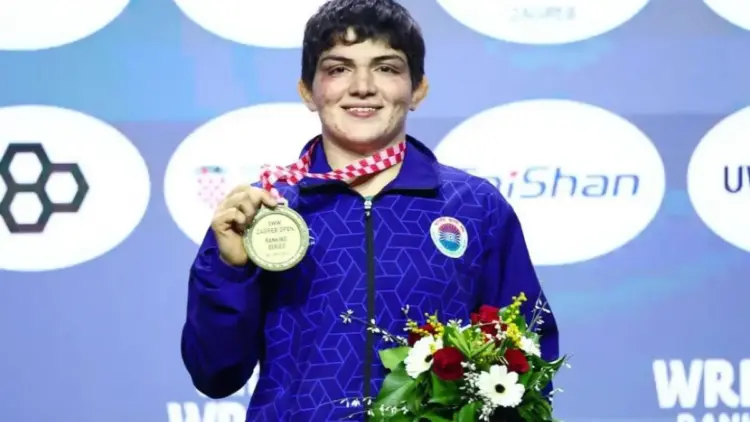
Astana, Kazakhstan – In a monumental triumph that reverberated across the global sporting landscape and ignited fervent celebrations back home, Manisha Bhanwala has etched her name into the annals of Indian sports history. On a memorable Friday, October 30, 2026, the 29-year-old wrestler became the first Indian woman ever to clinch a World Wrestling Championship gold medal, securing a spectacular victory in the 59kg category. This historic achievement in Astana marks an unparalleled milestone for Indian wrestling, elevating Bhanwala to the status of a national icon and inspiring a new generation of aspiring athletes.
The journey to this unprecedented gold was a testament to grit, resilience, and unwavering determination. In a fiercely contested final bout, Manisha Bhanwala showcased nerves of steel and tactical brilliance to overcome A. Elizabeth Nette of the United States with a decisive 8-6 scoreline. While the 59kg division is not an Olympic weight class, the significance of this victory transcends categories, firmly establishing India’s rising prowess in women’s wrestling on the international stage. This groundbreaking win not only crowns Manisha as a world champion but also signals a remarkable resurgence for the Indian women’s wrestling contingent following a period of introspection and strategic recalibration.
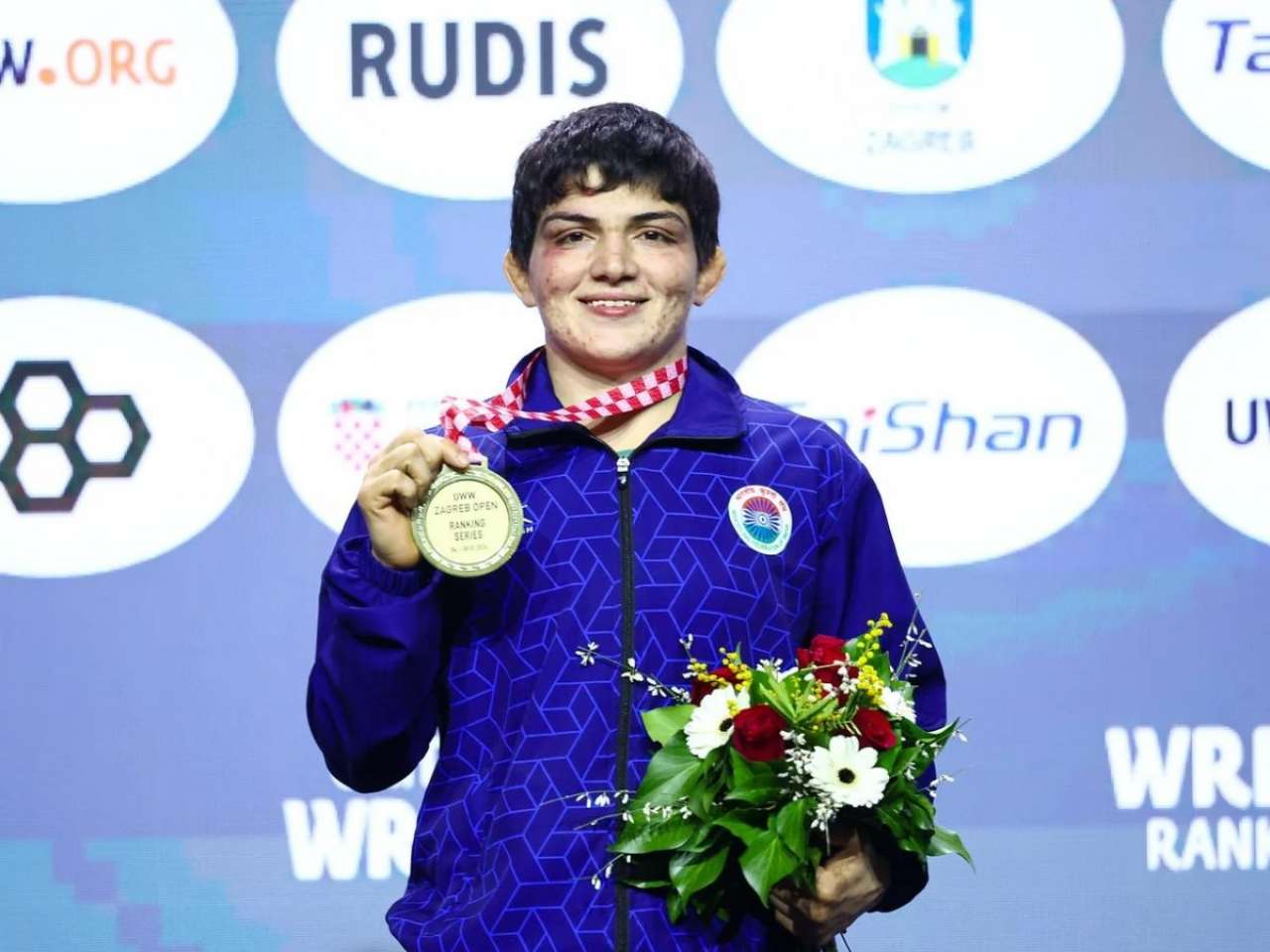
The roar of the crowd in Astana, the triumphant raising of the Indian flag, and the sheer elation on Manisha’s face captured the essence of a dream realized – a dream nurtured through years of relentless training, sacrifices, and an unyielding belief in her abilities. Her achievement is a beacon of hope and a powerful affirmation of the potential residing within Indian female athletes, destined to inspire countless others to pursue their ambitions on the grandest stages.
Chronology of a Champion: Manisha Bhanwala’s Ascent to Gold
Manisha Bhanwala’s path to becoming a world champion is a compelling narrative of perseverance, strategic evolution, and the culmination of years of dedicated effort. Born and raised in Jind, Haryana – a hotbed of Indian wrestling talent – Manisha’s journey began early, steeped in the rigorous discipline and traditional values of the sport.
Early Life and Introduction to Wrestling
Hailing from a region where wrestling is not merely a sport but a way of life, Manisha was introduced to the ‘akhara’ (traditional wrestling arena) at a young age. Like many athletes from Haryana, her early training was characterized by intense physical conditioning, strict dietary regimens, and an unwavering focus on mastering fundamental techniques. The initial years were challenging, marked by fierce competition at local and state levels, where she began to hone her skills and develop a distinctive style. Her family, recognizing her innate talent and passion, provided crucial support, often making significant sacrifices to facilitate her training and participation in various tournaments. These formative years laid the bedrock for her future international success, instilling in her the mental fortitude and physical endurance required for elite-level wrestling.
Career Progression and International Exposure
As Manisha progressed through the junior ranks, her performances began to draw attention. She competed in numerous national championships, consistently demonstrating her potential across various weight categories, from 57kg to 65kg. Her first foray onto the international stage came in her early twenties, participating in several Asian and World Championship events. While initial appearances did not yield medals, they provided invaluable exposure to the global standards of wrestling. Each tournament, irrespective of the outcome, served as a crucial learning experience, allowing her to adapt to different wrestling styles, analyze international competitors, and refine her strategies under pressure. She participated in three prior World Championships, gaining critical experience that would prove pivotal in her Astana campaign. This period was characterized by incremental improvements, a deepening understanding of competitive psychology, and a relentless pursuit of perfection in her technique.

The Road to Astana: Strategic Shifts and Resurgence
The year 2026 presented Manisha with both challenges and opportunities. Her performance at the preceding Asian Games was a moment of introspection for the entire Indian wrestling contingent, including Manisha herself. Competing in the 57kg Olympic weight class, she faced a formidable opponent in Japan’s Akari Fujinami in the quarterfinals, ultimately falling short of a medal. This setback, however, proved to be a catalyst for a crucial strategic decision.
Under the guidance of her coaches and support staff, Manisha made the calculated choice to move up to the 59kg category for the World Championships in Astana. This decision was driven by several factors: optimizing her physical condition, leveraging her strengths against a different pool of competitors, and avoiding direct competition with some of the more established athletes in the highly competitive Olympic categories. This strategic shift was a bold move, demonstrating her adaptability and willingness to take calculated risks for success. Her training intensified, focusing on specific tactical adjustments suited for the 59kg division, and a renewed sense of purpose permeated her preparations.

Dominance in Astana: The Path to the Final
Manisha’s campaign in Astana was nothing short of dominant, a clear indication that her strategic shift had paid off handsomely. Each match leading to the final was a masterclass in controlled aggression and tactical superiority:
- Quarterfinals: Manisha faced Laurence Beauregard, a formidable opponent and a bronze medalist from a previous World Championship. Instead of a drawn-out battle, Manisha showcased her power and precision, executing a swift takedown followed by a decisive pin. This victory, secured "without much fuss," sent a clear message to her competitors: Manisha Bhanwala was in peak form and meant business.
- Semifinals: Her next challenge came from Mongolia’s Bolortuya Khurelkhuu. This bout required a more nuanced approach, with Manisha skillfully navigating her opponent’s attacks and capitalizing on openings. She demonstrated excellent defensive skills coupled with timely offensive bursts, securing a comfortable win that cemented her place in the final.
- Another Pin, Another Victory: Before the semifinals, Manisha also delivered a commanding performance against Kazakhstan’s Altyn Shagayeva, pinning her local opponent to the mat. These consecutive victories, particularly the pins against experienced wrestlers, highlighted her explosive power and tactical acumen, building immense confidence as she approached the gold medal match.
The Gold Medal Bout: A Display of Unyielding Spirit
The final match against A. Elizabeth Nette from the United States, a decorated Pan American champion, was a true test of Manisha’s mental and physical prowess. The bout began intensely, with Nette establishing an early lead. By the end of the first period, Manisha found herself trailing significantly, 1-5. For many athletes, such a deficit could be demoralizing, but Manisha Bhanwala demonstrated the heart of a true champion.

"Honestly, she didn’t let that shake her," the commentator noted, capturing the essence of her comeback. She regrouped during the break, absorbing her coach’s instructions and recalibrating her strategy. Emerging with renewed vigor in the second period, Manisha launched a series of relentless and sharp attacks. She focused on quick takedowns, exploiting Nette’s defensive vulnerabilities, and executing precise maneuvers to score crucial points. The momentum gradually shifted in her favor. With each point scored, her confidence surged, and Nette’s defenses began to crack under the relentless pressure. In a thrilling display of athleticism and tactical brilliance, Manisha flipped the match on its head, ultimately securing an 8-6 victory. The final whistle brought with it an explosion of emotion, signifying not just a win, but the realization of a lifelong dream and a historic moment for Indian sports.
Supporting Data: The Broader Context of Indian Wrestling
Manisha Bhanwala’s gold medal is not an isolated incident but a significant marker in the evolving narrative of Indian wrestling, particularly for women. It stands as a testament to the growing infrastructure, coaching expertise, and sheer talent emerging from the nation.

The Rise of Indian Women’s Wrestling
For decades, Indian wrestling was predominantly a male-dominated sport. However, the early 21st century witnessed a transformative shift, largely spearheaded by pioneering athletes like the Phogat sisters and Sakshi Malik, who famously secured an Olympic bronze medal in Rio 2016. Their success broke significant societal barriers and inspired a generation of young girls to take up the sport. Prior to Manisha’s achievement, the landscape of Indian women’s wrestling at the World Championships included notable milestones:
- Anshu Malik (2021): The only other Indian woman to reach a World Championships final, securing a silver medal in the 57kg category. Her performance was a harbinger of the potential that lay ahead.
- Vinesh Phogat: One of India’s most celebrated wrestlers, Phogat has earned two bronze medals at the World Championships, demonstrating consistent performance at the elite level in Olympic weight classes.
- Antim Panghal: A rising star, Panghal has also secured two bronze medals at the World Championships, both notably in Olympic weight categories, marking her as a strong contender for future Olympic glory.
- This Event’s Success: In Astana, beyond Manisha’s gold, India’s women wrestlers showcased remarkable depth. Neelam Sirohi (50kg) and Kajal Dhochak (76kg) both reached the finals in Olympic weight categories, ultimately taking home silver medals. This collective performance underscores the breadth of talent now present in the national squad.
These achievements collectively paint a picture of a sport rapidly gaining ground, challenging traditional norms, and consistently producing world-class athletes.

The Significance of the 59kg Category
While the 59kg category is not an Olympic weight class, its importance in the broader wrestling ecosystem cannot be overstated. Non-Olympic categories provide crucial competitive opportunities for athletes who might be slightly outside the Olympic weight parameters or are in developmental stages. These categories:
- Develop Talent: They allow wrestlers to compete at the highest international level, gain valuable experience, and refine their skills without the immense pressure of direct Olympic qualification. This exposure is vital for nurturing future Olympic medalists.
- Provide a Pathway: For athletes like Manisha, who might be between Olympic weight classes (e.g., 57kg and 62kg), the 59kg category offers a natural competitive space. It allows them to maintain peak competitive form and explore options for future Olympic cycles, potentially adjusting their weight to fit an Olympic category.
- Showcase Depth: Success in these categories demonstrates the overall strength and depth of a nation’s wrestling program, proving that talent extends beyond just the Olympic divisions.
Manisha’s decision to compete in the 59kg category, particularly after a challenging Asian Games in an Olympic weight class, proved to be a shrewd tactical move, allowing her to capitalize on her strengths and achieve a historic breakthrough.

Historical Context: India’s World Wrestling Champions
Manisha Bhanwala’s gold places her in an elite club of Indian wrestling world champions. Prior to her victory, India had only one senior world champion in freestyle wrestling:
- Sushil Kumar (2010): The two-time Olympic medallist made history by winning gold in the 66kg category at the 2010 World Championships in Moscow. He remains the sole Indian male world champion.
- Bajrang Punia (2018): A prominent figure in Indian wrestling, Punia reached the final at the 2018 World Championships in Budapest but had to settle for a silver medal.
Manisha’s achievement now expands this exclusive club, making her the first woman and only the second Indian overall to win a senior World Championship gold in freestyle wrestling. This remarkable feat underscores the rarity and magnitude of her accomplishment, cementing her legacy alongside India’s most celebrated wrestling stars.

Official Responses and Widespread Acclaim
The news of Manisha Bhanwala’s historic gold medal sent ripples of excitement and pride across India, prompting a wave of congratulations from official bodies, political leaders, and the sporting fraternity.
Wrestling Federation of India (WFI)
The Wrestling Federation of India (WFI) was among the first to extend its heartfelt felicitations. A spokesperson for the WFI expressed immense pride in Manisha’s achievement, stating, "This is a truly historic moment for Indian wrestling. Manisha Bhanwala has not only won a gold medal but has also shattered a significant barrier. Her dedication and perseverance are an inspiration to all. This victory validates the efforts we are putting into nurturing women’s wrestling talent across the country. We will ensure she receives all the necessary support to continue her journey and aim for future Olympic glory." The WFI also highlighted the overall performance of the women’s team, acknowledging the silver medals won by Neelam Sirohi and Kajal Dhochak as indicators of a promising future.

Government and Sports Ministry
The Indian government and the Ministry of Youth Affairs and Sports promptly recognized Manisha’s monumental feat. The Hon’ble Prime Minister, in a tweet, congratulated Manisha, stating, "A golden moment for Indian sports! Heartiest congratulations to Manisha Bhanwala on becoming the first Indian woman to win a World Wrestling Championship gold. Her tenacity and talent have made the nation proud. This victory will inspire countless young girls to pursue their dreams in sports."
The Union Minister for Youth Affairs and Sports also released an official statement, emphasizing the government’s commitment to promoting sports and women’s participation. "Manisha’s gold medal is a shining example of what our athletes can achieve with hard work and determination. The Sports Ministry is dedicated to providing world-class facilities and support to our wrestlers, and we will continue to invest in their training and development. Manisha Bhanwala is a true role model, and her success will undoubtedly fuel the growth of wrestling in India." Discussions regarding a special felicitation ceremony and potential financial rewards for Manisha are reportedly underway.

Coaches and Teammates
Manisha’s coaches, who have been instrumental in her journey, expressed their overwhelming joy and pride. One of her long-time coaches, requesting anonymity, shared insights into her character: "Manisha is an incredibly disciplined and hardworking athlete. She has faced numerous challenges, but her spirit has never wavered. The decision to switch to 59kg was a calculated risk, and she executed it perfectly. Her comeback in the final shows her mental strength – she truly believes in herself."
Her teammates, who witnessed her rigorous training firsthand, also celebrated her success. "We are all incredibly proud of Manisha Didi," said a fellow wrestler. "She works tirelessly, and this gold is a reward for all her sacrifices. Her victory motivates all of us to push harder and aim for the top." Such sentiments from her inner circle underscore the deep respect and admiration she commands within the wrestling community.

International Recognition
While primarily celebrated in India, Manisha’s victory also garnered attention from international wrestling bodies and media, recognizing the breakthrough moment for a nation with a growing presence in the sport. UWW (United World Wrestling) likely featured her victory prominently, highlighting the fierce competition and the emergence of new champions on the global stage.
Implications: A Golden Future for Indian Wrestling
Manisha Bhanwala’s historic gold medal carries profound implications, not just for her personal career but for the broader landscape of Indian wrestling and women’s sports in the country.

Boost for Indian Women’s Wrestling and Grassroots Development
This gold medal is an unparalleled boost for Indian women’s wrestling. It provides tangible proof that Indian female athletes can stand at the pinnacle of global competition. This success will undoubtedly:
- Inspire Young Girls: Manisha’s story will resonate deeply with young girls, especially in rural areas, who often face societal barriers to pursuing sports. Her achievement provides a powerful role model, demonstrating that dedication and talent can overcome adversity and lead to international recognition.
- Increase Participation: The heightened visibility and prestige associated with a World Championship gold will likely lead to an increase in girls taking up wrestling at the grassroots level. More parents might be willing to support their daughters’ sporting ambitions, viewing wrestling as a viable career path.
- Attract Funding and Resources: Success often attracts greater investment. The government, corporate sponsors, and private organizations may be more inclined to channel resources into wrestling academies, training facilities, and coaching programs, particularly for women, ensuring a stronger pipeline of talent.
Manisha’s Future and Olympic Aspirations
While the 59kg category is non-Olympic, Manisha Bhanwala’s future is now brighter than ever. Her world title firmly establishes her as an elite athlete, opening doors to various opportunities:

- Olympic Transition: Manisha, at 29, possesses the experience and skill to potentially transition into an Olympic weight class, such as 57kg or 62kg, for the next Olympic cycle. Her success in 59kg demonstrates her capacity to adapt and compete at the highest level. The challenge would be managing weight and adapting to the specific competitive landscape of an Olympic category.
- Endorsements and Sponsorships: Her status as a world champion will attract significant endorsement deals and sponsorships, providing financial stability and allowing her to focus entirely on her training without external pressures.
- Role Model Status: Manisha will undoubtedly become a leading voice and ambassador for women’s sports in India, inspiring future generations and advocating for greater opportunities for female athletes.
Broader Sporting Landscape and National Pride
Manisha’s gold medal contributes significantly to India’s growing stature in the global sporting arena. In a nation where cricket often dominates the headlines, achievements in individual sports like wrestling highlight the diversity of Indian sporting talent. Such victories foster immense national pride, bringing people together in celebration and reinforcing a sense of collective achievement. It signals to the world that India is a serious contender across a wider spectrum of sports, moving beyond traditional strengths.
Social Impact: Challenging Gender Norms
Beyond the medals and accolades, Manisha Bhanwala’s victory carries profound social implications. In a society that has historically grappled with gender inequality, her success serves as a powerful testament to women’s strength, capability, and determination. It challenges conventional gender roles and stereotypes, empowering women to pursue their passions, break barriers, and achieve greatness in fields traditionally dominated by men. Her journey underscores the importance of equal opportunities and the transformative power of sports in fostering social change and empowerment.

In conclusion, Manisha Bhanwala’s historic gold medal at the World Wrestling Championships is more than just a sporting triumph; it is a landmark moment that will resonate for years to come. It marks the dawn of a new era for Indian women’s wrestling, solidifies India’s growing presence on the global sporting stage, and, most importantly, provides an enduring source of inspiration for countless aspiring athletes across the nation. Her name will forever be synonymous with courage, resilience, and the relentless pursuit of excellence.