

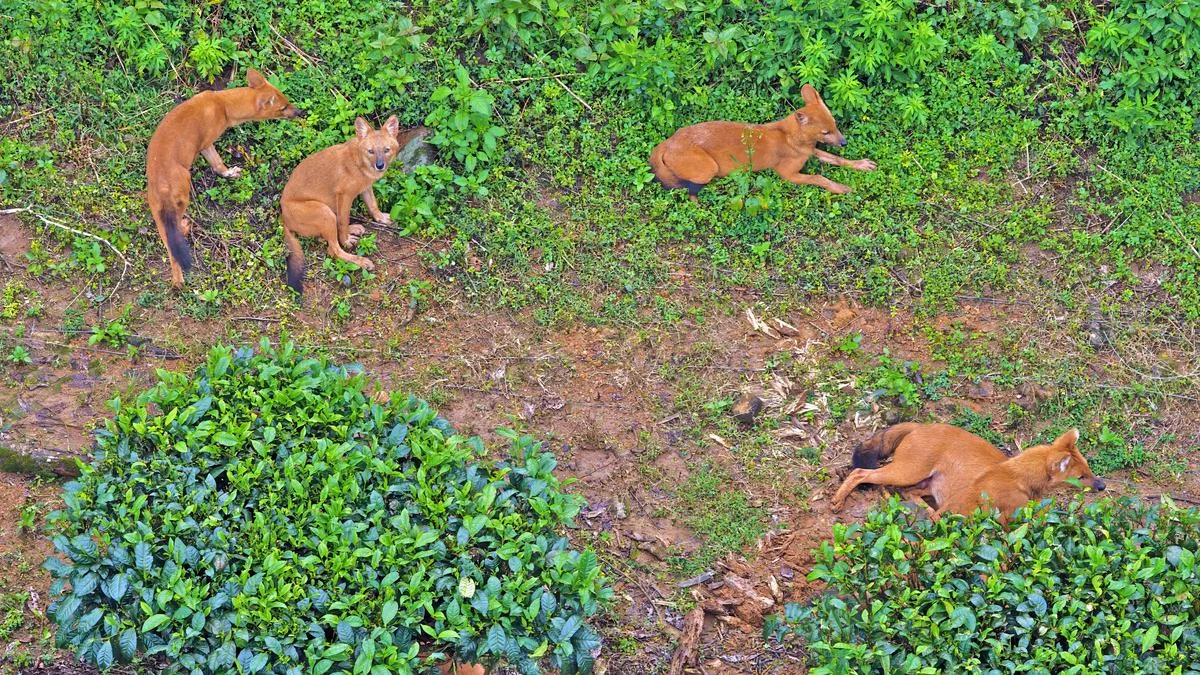
New documentary series challenges Western narratives, highlighting the deep, often overlooked, interdependencies between people and nature across India’s diverse landscapes.
In a nation where wildlife and humanity are inextricably intertwined, a new six-part documentary series, "Shared Spaces," is set to redefine how we perceive and narrate the stories of India’s wild inhabitants. Spearheaded by acclaimed environmental journalist Bahar Dutt and filmed by Emmy-nominated wildlife filmmaker Vijay Bedi, the series deliberately subverts the conventional natural history format, moving beyond idyllic depictions of untouched wilderness to explore the complex, multidimensional relationships that exist within human-impacted environments.
"Shared Spaces" is not just a collection of wildlife footage; it’s a profound exploration of coexistence, a concept deeply embedded in India’s cultural and ecological fabric. As Bahar Dutt observes, "In India, wildlife exists in a sea of humanity. Still, their stories are often told as if human beings are outside nature." This perspective, she argues, is a relic of a Western cultural lens that often separates humanity from the natural world. "Shared Spaces" endeavors to dismantle this exclusionary worldview, presenting a narrative that is rooted in the reality of shared habitats.

Challenging Conventional Narratives: A New Lens on Wildlife Filmmaking
Vijay Bedi, reflecting on the series’ core philosophy, explains the departure from the typical natural history documentary: "We tried to step away from the typical natural history format: blue-chip films being produced across the globe, which showcase animals living in beautiful forests." Instead, "Shared Spaces" is "told in the larger context of human-impacted wild spaces." This fundamental shift in approach allows for a more nuanced and authentic portrayal of wildlife in India, a country where pristine wilderness is a rare commodity, and encounters between humans and animals are commonplace.
The series is a testament to this philosophy, delving into a mosaic of India’s diverse landscapes – from the dense forests of the Northeast to the arid grasslands of Maharashtra, the majestic mountains to the sprawling coastlines. Each episode focuses on the intricate and often surprising ways in which people and wildlife navigate their shared territories. "The whole idea was also to look at different landscapes, beyond those inhabited by tigers," says Vijay. "We wanted to go to regions not talked about enough, with many untold stories… shifting the focus away from megafauna, going to the small, rarest creatures India has and trying to show a slice of wildlife as well as the people living alongside."
This deliberate choice to highlight lesser-known species and regions is a cornerstone of the series’ approach. By moving beyond the charismatic megafauna, "Shared Spaces" aims to foster a broader appreciation for India’s rich biodiversity and the myriad conservation challenges and successes that exist beyond the headlines.

A Tapestry of Human-Wildlife Interdependence
"Shared Spaces" unflinchingly examines the multifaceted relationships between humans and wildlife, revealing the complexities that arise when these two spheres intersect. The series explores a range of compelling narratives, including:
- Community Conservation Initiatives in the Northeast: The series shines a light on the remarkable efforts of local communities in regions like the Northeast, where traditional knowledge and modern conservation practices converge to protect unique ecosystems and their inhabitants. These stories underscore the vital role of community involvement in successful conservation.
- The Dog-Wildlife Conflict in Maharashtra: In the grasslands of Maharashtra, a controversial conflict between domestic dogs and wildlife unfolds, raising critical questions about the impact of human settlements and introduced species on native populations. This episode delves into the intricate dynamics of this human-wildlife interface.
- Ingenious Elephant Management in West Bengal: The series showcases innovative methods employed in West Bengal to manage human-elephant conflict. These solutions, often developed at the grassroots level, highlight the ingenuity and adaptability of communities living alongside these magnificent creatures.
- The Consequences of Hybridization: "Shared Spaces" also explores the broader ecological implications of wolves and dogs breeding, a phenomenon that blurs the lines between domestic and wild species and poses new challenges for conservation.
- Infrastructure Development vs. Ecological Sanctity: The series tackles the perennial dilemma of balancing infrastructure development with the preservation of ecological integrity. It probes whether these two seemingly opposing forces can truly coexist, and what sacrifices are made in the pursuit of progress.
Through these diverse narratives, Vijay Bedi emphasizes that the series aims to compel viewers to "think of shared spaces in a new way." Each film serves as a microcosm, illustrating the intricate dance of adaptation, conflict, and cooperation that defines life in India’s shared landscapes.
A Timely Exploration of Evolving Relationships
Sai Abishek, Head of Factual Entertainment, Lifestyle & Kids, South Asia at Warner Bros. Discovery, lauded "Shared Spaces" as the "natural starting point" for Animal Planet India’s new documentary anthology, "India: Epic Wild Stories." He articulated the series’ significance in the current ecological climate: "In a country as ecologically and culturally diverse as India, coexistence is shaped by geography, communities and everyday realities, making it a subject that deserves a thoughtful, multi-dimensional exploration."

Abishek highlighted the series’ timeliness, noting that these relationships are "currently being redefined by habitat fragmentation, climate change and the increasing overlap between human and natural ecosystems." He further elaborated that "Shared Spaces" excels at illustrating how these abstract environmental challenges translate into tangible impacts on human choices, wildlife pressures, and the remarkable ways both continue to adapt.
"Bahar Dutt’s deep understanding of India’s environmental landscape, combined with Vijay Bedi’s remarkable ability to capture the natural world with authenticity and cinematic depth, gives the series both credibility and emotional resonance," Abishek added, underscoring the potent synergy between the creative duo.
The Genesis of "Shared Spaces": A Collaborative Journey
The genesis of "Shared Spaces" can be traced back approximately four years when The Habitats Trust, a co-producer of the series alongside Bedi Universal, approached Vijay Bedi. What began as a conversation evolved into a collaborative endeavor that, as Bahar Dutt humorously recalls, involved "many arguments."

"I have my own way of storytelling, because I am more direct, and he is a visual guy who thinks that things need to be told at a slower pace," Dutt explained, acknowledging the creative friction that ultimately enriched the storytelling. "But now, looking back, I think each of these different ways of storytelling contributed to that creative process." Vijay Bedi chimed in, crediting Dutt’s "science background" for providing a crucial analytical edge to their storytelling. "She was looking at it in different ways; not just as a journalist and storyteller, but as someone trained in science to tell the right kind of story."
This fusion of journalistic insight and scientific rigor, combined with Bedi’s visual artistry, formed the bedrock of the series. The selection of stories was a meticulous process, guided by a commitment to nuanced storytelling and a refusal to villainize communities.
Curating Stories with Sensitivity and Scope
One of the most significant challenges faced by the filmmakers was the judicious selection of stories. Bahar Dutt emphasized their deliberate effort to avoid blaming local communities for conservation issues. "For instance, in one film titled ‘Save Our Sharks,’ which focuses on the Indian shark crisis, I did not want to villainise the small fisherman. Is he really the one to blame, or the giant trawlers who scoop up everything from the floor… or the various mega industries who are polluting the ocean and depleting marine diversity?" This question encapsulates the series’ commitment to identifying systemic issues rather than individual culpability.

Beyond this ethical consideration, the filmmakers prioritized a broad geographical and species-based representation. "We made sure that different landscapes across India, from the mountains to the desert, from a grand species like the tiger to a sea slug, had their moment to shine," Dutt stated. This commitment to inclusivity ensures that the series offers a comprehensive, rather than a selective, portrayal of India’s ecological tapestry.
Rigorous Research and Strategic Partnerships
The creation of "Shared Spaces" was not a spontaneous undertaking but a product of extensive research and deep engagement with various stakeholders. "We didn’t just write a script and go out and film," Vijay Bedi stressed. The team collaborated closely with organizations like The Habitats Trust, wildlife researchers, policymakers, the forest department, and local communities. This immersive approach allowed them to gather authentic narratives and ensure the accuracy of their presentations.
The series was fully developed before Animal Planet came on board at the beginning of 2026. This timing proved fortuitous, as Animal Planet was launching its "India: Epic Wild Stories" anthology, which aimed to showcase Indian wildlife filmmakers. "They were launching this larger series showcasing Indian wildlife filmmakers, so it was really good timing," Bahar Dutt remarked.

Cultivating Awe and Wonder: The Emotional Resonance of "Shared Spaces"
While "Shared Spaces" tackles complex conservation issues, it never loses sight of the intrinsic beauty and wonder of the natural world. The filmmakers masterfully weave in captivating moments of animal behavior, from the courtship rituals of salamanders set to delicate ballet music to elephants reveling in the waters of an island sanctuary. These visual spectacles are juxtaposed with the ingenuity of human adaptation, such as the concoction of unique deterrents to keep elephants away or the transformation of hunting cages into nesting sites for hill mynahs.
"The idea was to make these natural history sequences interesting to audiences so they can understand and relate to the species," Vijay Bedi explained. Bahar Dutt echoed this sentiment, stating, "We wanted these films to bring back the feeling of awe and wonder." In a hyper-visual world, she hopes that viewers will experience a moment of genuine amazement, perhaps even inspiring them to visit places like the Eaglenest Wildlife Sanctuary to witness the Bugun liocichla, an endangered bird that has become a beacon of successful community conservation, managed by the Bugun Tribe who have dedicated their land to its protection.
A Call for a New Conservation Lexicon
The series’ overarching ambition extends to fostering a broader understanding of the concept of "shared spaces" and, crucially, to evolving the language of conservation itself. Bahar Dutt noted a peculiar challenge she encountered while scripting: "For me, it is also about changing the language of conservation. Because other than the term ‘shared spaces’, I couldn’t find any other words. Conservation biology in its vocabulary is extremely exclusionary." This observation points to a need for a more inclusive and human-centric approach to environmental discourse.

The filmmakers express a strong desire for "Shared Spaces" to reach the very communities who inhabit these shared spaces and are most directly impacted by wildlife. The partnership with Animal Planet, which includes broadcasting the series in regional languages, is seen as a significant step towards achieving this goal. "The fact that Animal Planet has come on board and is making it in regional languages makes it easier for us," Dutt stated.
The immediate next step, she revealed, involves "small, non-commercial screenings for these communities we stayed with. We are going back." This commitment to community engagement underscores the series’ dedication to fostering genuine dialogue and understanding.
"Shared Spaces" is more than just a documentary series; it is a vital intervention in the ongoing conversation about humanity’s place within the natural world. By challenging prevailing narratives and offering a nuanced, empathetic portrayal of life in India’s shared spaces, Bahar Dutt and Vijay Bedi have created a powerful testament to the intricate, enduring, and ever-evolving relationship between people and wildlife.

India: Epic Wild Stories is currently being telecast on Animal Planet and will be available on the Discovery+ platform.
