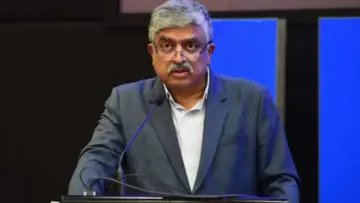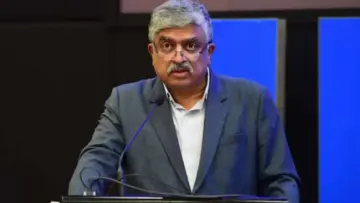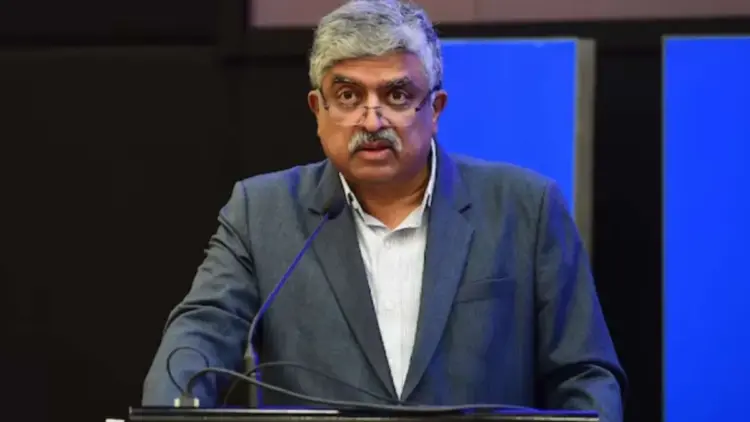
Bengaluru, India – October 14, 2026 – In a bold move to tackle the persistent menace of examination paper leaks, Nandan Nilekani, the visionary co-founder of Infosys and a pivotal figure in India’s digital transformation, has put forth a radical proposal: leveraging Artificial Intelligence (AI) to generate question papers at the eleventh hour. This innovative suggestion, unveiled at the prestigious Bloomberg New Economy Forum 2026, signals a significant shift in thinking towards a more secure and modern examination system, with a strong emphasis on transitioning to a fully computer-based testing (CBT) model.
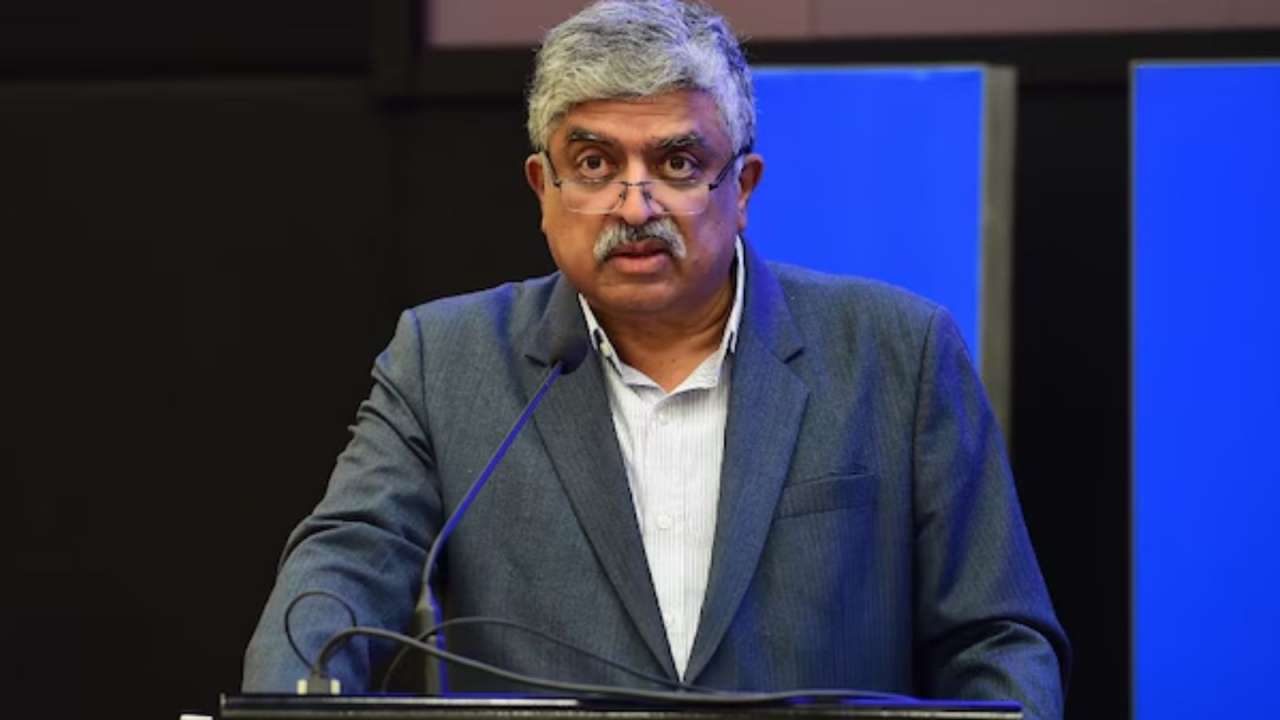
Nilekani, who is currently spearheading a six-member task force on exam reforms constituted by the central government in July, believes that the very nature of a pre-determined, static question paper creates an irresistible economic incentive for malpractice. His vision aims to dismantle this incentive structure by introducing an element of dynamic unpredictability into the examination process.
)
The AI Advantage: Disrupting the Leak Economy
The core of Nilekani’s proposal lies in the concept of a vast, meticulously curated question bank. Instead of printing and distributing static question papers weeks or months in advance, AI algorithms would be employed to assemble unique question sets for each examination, moments before it commences.

"Why do we need to have something called ‘a question paper’?" Nilekani posited at the forum, articulating the fundamental flaw in the current system. "Because that creates an economic incentive for it to be sold. One way to look at how to solve it is to have a massive bank of questions, and only at the last minute generate the question paper for the day."
)
This approach, if implemented successfully, could significantly disrupt the established ecosystem of paper leaks. The current modus operandi often involves a chain of individuals, from those involved in the printing process to intermediaries and finally, the students themselves, all motivated by the prospect of financial gain from leaked papers. By making the question paper a transient, dynamically generated entity, the opportunity for such leaks to occur and be exploited would be drastically curtailed.
)
However, Nilekani acknowledged that the viability of this AI-driven model hinges critically on a complete transition to computer-based testing. "This model would only be possible if exams are held in computer-based test mode," he stated. While he did not elaborate on the potential vulnerabilities of a massive question bank itself to leaks, the implication is that the secure digital environment of CBT would be better equipped to safeguard such a resource. The sheer volume and dynamic generation of questions would make it an exponentially more difficult task to intercept and disseminate a complete and relevant set of questions.
)
A Digital Reckoning: The Imperative of Computer-Based Testing
Nilekani’s advocacy for AI-generated papers is inextricably linked to his task force’s broader recommendation to adopt Computer-Based Testing (CBT) for all major examinations. This push for digitization is not merely about leveraging new technology; it is seen as a fundamental prerequisite for implementing advanced security measures like AI-driven question paper generation.
)
"The committee is looking at how to make sure all exams are done on CBT," Nilekani emphasized. "That requires a network of locations. We have 1,50,000 locations where young candidates can take a test and that needs to be expanded." The current infrastructure, while substantial, will likely need significant augmentation to accommodate the sheer volume of candidates appearing for national-level examinations if they are all to transition to a CBT format simultaneously.
)
The expansion of this network of testing locations presents a significant logistical challenge, particularly in a country with a pronounced digital divide. Nilekani’s statement, while forward-looking, did not explicitly address how this transition would be managed in remote and rural areas where internet connectivity can be sporadic and access to digital devices is limited. Bridging this digital gap will be paramount to ensuring equitable access to examinations for all students, irrespective of their geographical location or socio-economic background.
)
In response to these challenges, the National Testing Agency (NTA), the primary body responsible for conducting national-level entrance examinations, is reportedly collaborating with the All India Council for Technical Education (AICTE). Their joint effort is focused on identifying suitable IT infrastructure and government institutions that can be repurposed as standardized testing centers. A critical aspect of this collaboration is the deliberate avoidance of private testing centers, a move driven by concerns over the integrity and security of such facilities, which have sometimes been implicated in past leak incidents.
)
The Genesis of Reform: A Task Force Born of Crisis
The urgency behind Nilekani’s proposals is underscored by the circumstances of the task force’s formation. Established on July 26, 2026, the panel was a direct response to the escalating problem of paper leaks, a crisis that had reached a tipping point, leading to widespread student protests and even prompting the resignation of the then Union Education Minister, Dharmendra Pradhan.
)
The six-member task force, chaired by Nilekani, is a formidable assembly of expertise. Its members include S. Somanath, the former Chief of the Indian Space Research Organisation (ISRO), and Tapan Deka, the former Director of the Intelligence Bureau (IB). This diverse group brings together deep technical knowledge, intelligence gathering acumen, and a profound understanding of large-scale organizational management, all crucial for devising comprehensive exam reforms.
)
With a mandate to submit its report within three months of its formation, the task force has been working with remarkable alacrity. It has already conducted 18 internal meetings and engaged in extensive consultations with over 40 stakeholders. These stakeholders represent a broad spectrum of the examination ecosystem, including students, parents, and various exam conducting bodies such as the National Recruitment Agency (NRA), the Staff Selection Commission (SSC), and the Railway Recruitment Boards (RRB). The sheer volume of input gathered – over 50,000 suggestions from students and parents alone – highlights the pervasive concern and the deep-seated desire for a more robust and trustworthy examination system.
)
Implications and the Road Ahead: A Paradigm Shift
Nandan Nilekani’s proposals represent a paradigm shift in how India approaches its vast and complex examination system. The adoption of AI for question paper generation, coupled with a mandatory move to CBT, could fundamentally alter the landscape of academic and recruitment assessments.
)
Key Implications:
)
- Enhanced Security and Integrity: The primary benefit is a significant reduction in the incidence of paper leaks, thereby restoring faith in the fairness and credibility of examinations.
- Technological Advancement: This initiative would spur the adoption of advanced technologies like AI and cloud computing within the education and recruitment sectors, fostering innovation.
- Infrastructure Development: The push for CBT will necessitate substantial investment in digital infrastructure, potentially creating new opportunities for technology providers and network specialists.
- Addressing the Digital Divide: A critical challenge will be ensuring that the transition to CBT does not disenfranchise students from under-served regions. Proactive measures to expand digital access and literacy will be crucial.
- Redefining Assessment Methods: Beyond security, the move to CBT opens doors for more dynamic and adaptive assessment methods, potentially moving beyond rote memorization to evaluate higher-order thinking skills.
- Economic Impact: The disruption of the paper leak market, while positive for fairness, could have economic consequences for those involved in such illicit activities. Conversely, the legitimate technology and infrastructure sectors stand to benefit.
The path forward for implementing these reforms will undoubtedly be complex. It will require careful planning, substantial investment, and a collaborative effort involving government agencies, educational institutions, technology partners, and the student community. The success of Nilekani’s vision hinges not only on the technological feasibility of AI-generated papers and widespread CBT but also on the ability to create an inclusive and equitable digital infrastructure that serves all students.
)
The current system, riddled with leaks, has not only undermined the aspirations of countless deserving candidates but has also cast a long shadow of doubt over the meritocratic principles that should underpin educational and employment opportunities. Nandan Nilekani’s audacious proposals offer a glimpse into a future where technology is harnessed not just for efficiency, but for integrity, promising a more secure and equitable examination experience for generations to come. The coming months will be critical as the task force finalizes its recommendations and the nation grapples with the monumental task of modernizing its examination apparatus.