

GUWAHATI/BENGALURU – Northeast India, a region defined by its breathtaking landscapes and complex geological underpinnings, is currently the focus of a major scientific and social paradigm shift. As new seismic models provide a clearer picture of the Earth’s volatile crust beneath the Seven Sister States, conservationists are simultaneously pioneering a "local-first" approach to protecting the region’s world-renowned biodiversity. Together, these efforts represent a holistic strategy to secure the future of one of the planet’s most sensitive ecological and tectonic hotspots.
Main Facts: A Region Under Observation
Two major developments have recently emerged from the scientific and environmental communities regarding the Northeast. First, a groundbreaking seismic study has mapped how seismic waves lose energy—a process known as attenuation—as they traverse the Earth’s crust in Northeast India. This model is critical for the region, which sits atop some of the world’s most active fault lines. By understanding how the ground shakes and how energy dissipates, engineers can now design infrastructure that is specifically calibrated to the unique geological "fingerprint" of the area.
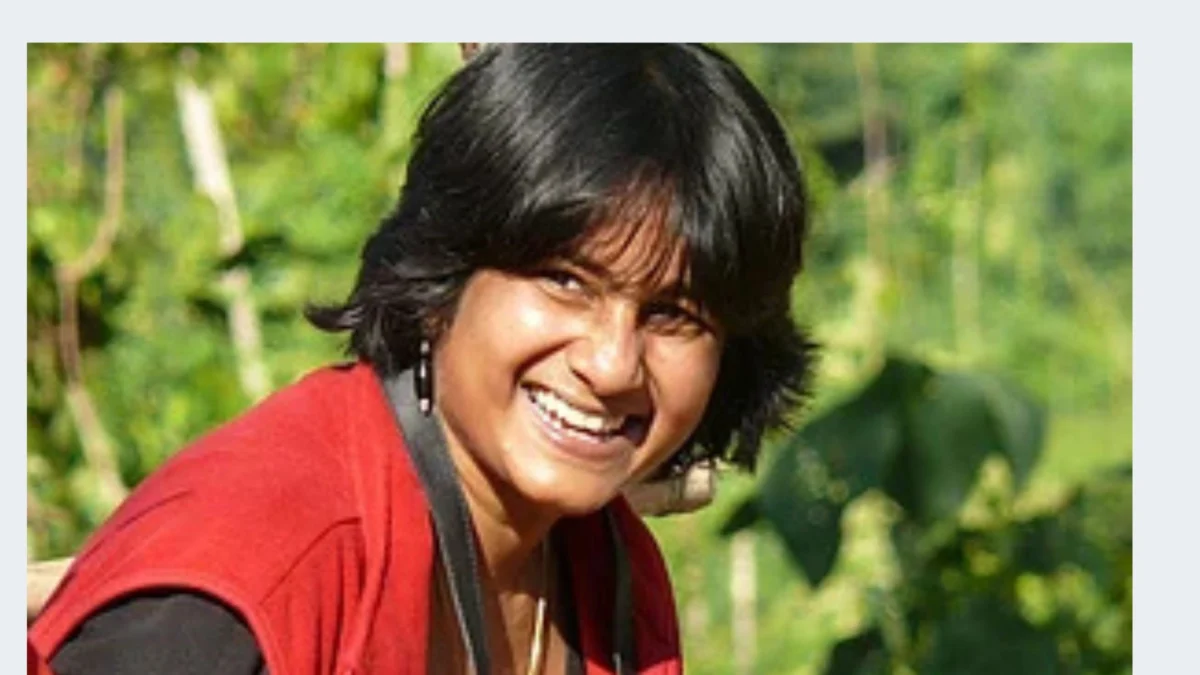
Parallel to these geological advancements is a renewed focus on the "human element" of environmental preservation. Dr. Aparajita Datta, Director of the Nature Conservation Foundation (NCF) and a member of the Ethical Conservation Alliance, has highlighted a three-decade-long journey of biodiversity conservation in the Eastern Himalayas. Central to this work is the philosophy of "Acting locally for global impact," a theme underscored by the United Nations for World Biodiversity Day.
The core of this conservation effort lies in Arunachal Pradesh, a megadiverse state where the NCF has moved away from traditional "top-down" protection models. Instead, they have fostered deep-rooted partnerships with indigenous communities, such as the Nyishi and Lisu, to protect "umbrella species" like the hornbill. This approach treats local residents not merely as beneficiaries of conservation, but as the primary architects and guardians of their own natural heritage.

Chronology: From Crisis to Collaborative Action
The evolution of these initiatives reflects a growing maturity in how India handles its most remote and sensitive borders.
The Geological Timeline:
For decades, Northeast India has been classified under Seismic Zone V—the highest risk category. However, the data used for building codes was often generalized. Over the last several years, researchers have moved toward more granular modeling. The recent study on seismic wave energy loss represents the culmination of years of data collection from regional seismic stations, aiming to provide a localized map of crustal activity that accounts for the intense pressure of the Indian Plate grinding against the Eurasian Plate.
The Conservation Timeline:
- Late 1990s – Early 2000s: Dr. Aparajita Datta begins her work in the Eastern Himalayas, focusing on hornbill research and the ecological health of the Pakke landscape.
- 2012: The Hornbill Nest Adoption Program (HNAP) is officially conceived. This was a pivotal moment where the focus shifted from purely academic research to community-based protection of hornbill nests outside the formal boundaries of the Pakke Tiger Reserve.
- 2015 – 2020: The NCF expands its scope, integrating native species nurseries and forest restoration projects. This period saw the formalization of the "PARTNERS" principles, ensuring that conservation remained ethical and inclusive.
- 2024 and Beyond: The focus has shifted toward the "Ethical Conservation Alliance" framework, emphasizing that learning is a reciprocal relationship between scientists and indigenous knowledge holders.
Supporting Data: The Magnitude of the Challenge
The necessity for these dual interventions is backed by stark environmental and geological data.

Seismic Vulnerability
Northeast India is one of the six most seismically active regions in the world. The study on energy loss (attenuation) reveals that the crust beneath the Brahmaputra Valley and the surrounding hills behaves differently than the Himalayan arc. High attenuation in certain zones suggests that seismic waves lose energy quickly but can cause intense localized shaking. This data is vital for the construction of dams, bridges, and urban high-rises in cities like Guwahati and Itanagar, where a major quake could have catastrophic consequences.
Biodiversity and the "Umbrella" Effect
Arunachal Pradesh is part of a global biodiversity hotspot. It is home to four species of hornbills: the Great Hornbill, the Wreathed Hornbill, the Oriental Pied Hornbill, and the Rufous-necked Hornbill.
- The HNAP Impact: Since 2012, the Hornbill Nest Adoption Program has protected dozens of nests that were previously at risk of being lost to logging or hunting.
- Economic Integration: The program provides direct employment to local "guardians." These individuals are paid to monitor nests, providing a stable income that competes with the short-term gains of illegal logging or wildlife trade.
- Restoration: The NCF’s native species nursery has successfully raised thousands of saplings, specifically choosing trees that are essential for hornbill nesting and feeding, thereby ensuring the long-term viability of the ecosystem.
Official Responses: Insights from the Frontlines
Dr. Aparajita Datta’s perspective challenges the traditional "fortress conservation" model, which often sought to exclude humans from protected areas.
"People are a fundamental and integral component of any effective conservation program," Dr. Datta emphasized during her recent interview. She argues against the notion that conservationists need to "educate" locals in a one-way street. "It’s not so much about educating… as much as understanding and learning together. This collaborative model ensures that conservation initiatives remain culturally appropriate, socially accepted, and grounded in local realities."

Regarding the ethical framework of their work, Dr. Datta points to the Ethical Conservation Alliance. This body advocates for a shift where community members shape conservation interventions based on their own experiences and priorities. "Having a conservation team composed largely of local community members strengthens trust and helps ensure that interventions are sensitive to local social and cultural contexts," she noted.
Governmental and scientific bodies involved in the seismic study have also noted that the new model will be integrated into the National Building Code (NBC) for the Northeast. This represents an official acknowledgement that "acting locally" also applies to engineering—designing for the specific soil and crustal conditions of the region rather than applying a blanket national standard.
Implications: A Sustainable Path Forward
The convergence of advanced seismology and ethical conservation has profound implications for the future of Northeast India.
1. Resilient Urbanization
As the "Act East" policy drives infrastructure development in the region, the seismic attenuation model will be the difference between life and death. By applying this data, the government can ensure that the massive investments in roads and hydropower projects are resilient to the inevitable "Big One."

2. The Power of "Umbrella Species"
The success of the hornbill programs proves that protecting a single charismatic species can have a "trickle-down" effect on the entire ecosystem. By saving the hornbill’s habitat, the NCF is effectively protecting the subterranean fungal networks, the insects, and the smaller mammals that share the same forest.
3. Economic Stability through Stewardship
The shift from an extraction-based economy (logging and hunting) to a stewardship-based economy provides a blueprint for other biodiversity hotspots. When local communities see tangible economic benefits from standing forests, the incentive for illegal exploitation diminishes.
4. Navigating Social Complexity
However, challenges remain. Dr. Datta acknowledges that social dynamics are "constantly evolving." Varying economic pressures and complex land governance systems mean that conservation is never a finished task. The reliance on the "PARTNERS" framework—a practical guide for promoting positive relationships—will be essential as the region faces the added pressures of climate change.
Conclusion
The Northeast is often described as the "frontier" of India, but it is more accurately the vanguard of a new way of living with the Earth. Whether it is by listening to the vibrations of the crust to build safer homes or listening to the Nyishi elders to save the Great Hornbill, the path forward is defined by a deep respect for local context. As Dr. Datta’s work and the new seismic models show, the most effective way to address global crises—be they earthquakes or extinction—is to start by rooting our solutions in the very soil we wish to protect.
