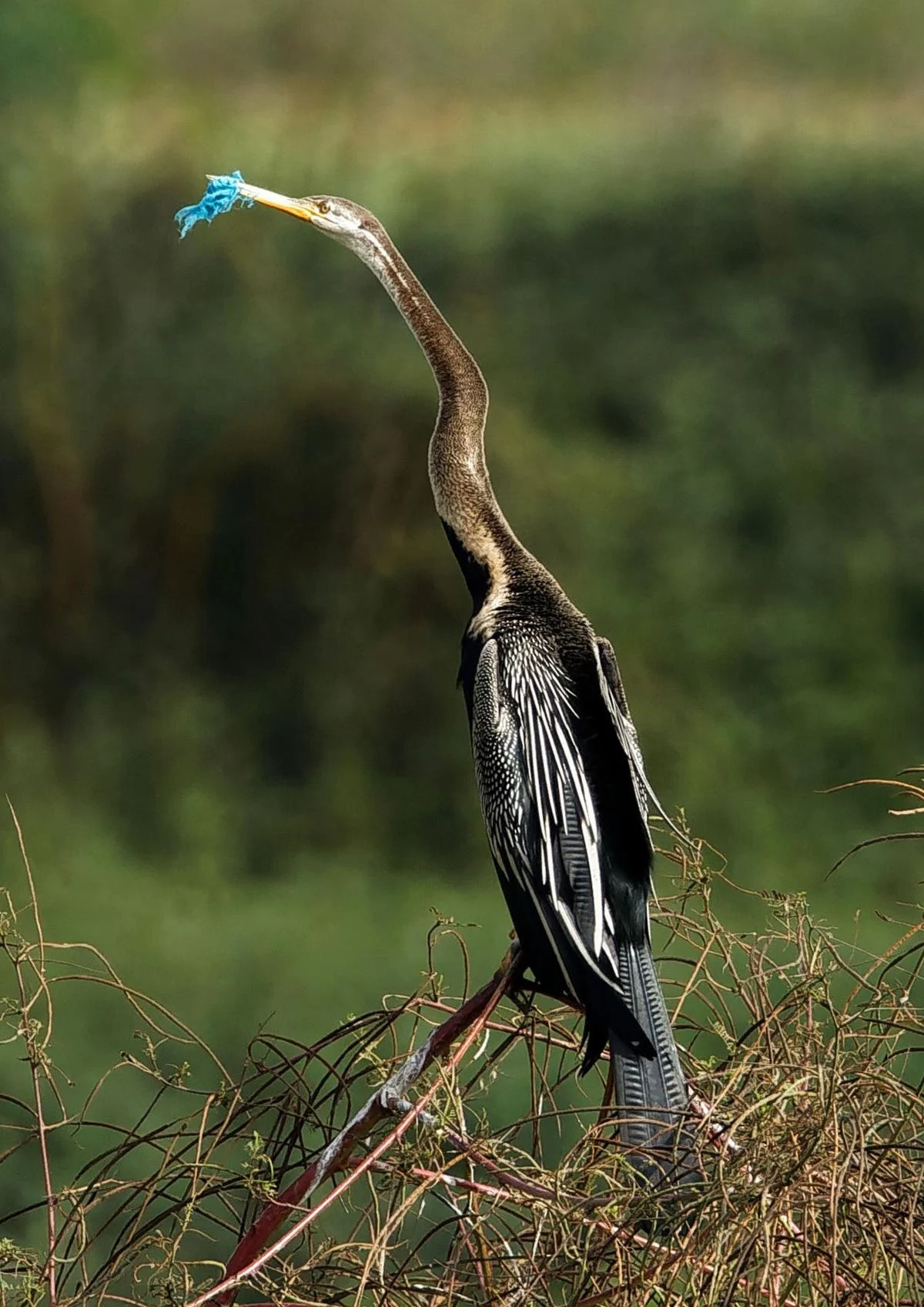
Bengaluru, India – August 29, 2026 – A disturbing trend is casting a dark shadow over Bengaluru’s urban lakes, with a specific and poignant vulnerability emerging for the Oriental Darter, also known as the snakebird. Birdwatchers and wildlife rehabilitators are sounding a grave alarm as an escalating number of these elegant water birds are falling victim to a pervasive and insidious threat: human-generated waste. The sharp, spear-like beaks, perfectly adapted for spearing fish, are becoming tragic traps, ensnaring these creatures in discarded debris and leading to starvation and death.
The Silent Scourge: A Bird in Distress
Renuka Selvamani, a dedicated birder and accomplished bird photographer, has been a regular observer at Doddanekundi Lake, a cherished urban wetland. Her observations, however, have shifted from the joy of spotting diverse avian life to a growing concern for their well-being. "I am seeing more cases of birds in distress," she states, her voice tinged with worry. The culprit, she identifies with certainty, is the relentless deluge of trash that humans carelessly deposit into these vital ecosystems.
The Oriental Darter ( Anhinga melanogaster ), with its distinctive long, slender neck and piercing beak, appears to be disproportionately affected. These birds, renowned for their unique hunting technique of impaling fish with their beaks, are finding their very survival mechanism turned against them.

"The darters are very sensitive because of their beaks, which get entangled in waste, such as the net used to pack onions," explains Renuka, who balances her passion for nature with her profession as a data scientist with the Expedia Group. The consequences of such entanglement are dire. Unable to hunt or feed themselves effectively, these birds are left to face a slow and agonizing death by starvation. "I have seen three birds whose beaks have been tied like this," she laments, a stark testament to the immediate and visible impact of the problem.
A City-Wide Crisis: Beyond Doddanekundi
The plight of the darters is not an isolated incident confined to Doddanekundi Lake. Jayanthi Kallam, the Executive Director of the Avian and Reptile Rehabilitation Centre (ARRC) in Horamavu, confirms a widespread and alarming surge in distressed darters reported from at least ten lakes across the city. Her organization has documented sightings and rescue efforts at numerous beloved Bengaluru water bodies, including Jakkur, Yelahanka, Rachenahalli, Hesarghatta, Sampengahalli, Lalbagh, and Chelkere, among others. This geographical spread indicates a systemic issue rather than a localized problem.
A Pattern of Peril: The Escalating Numbers
While the vulnerability of darters to urban pollution is not entirely new – their specialized beaks have always posed a challenge when faced with the sheer volume of garbage inundating the city’s water bodies – the number of affected birds has seen a significant and troubling increase this year.

"We would get a couple of birds every year," Jayanthi recalls. "But this year, we are seeing a sudden surge in the numbers." The ARRC now reports at least one case of a distressed darter every week, a stark escalation from previous years. This trend is further corroborated by the growing reports from various birdwatching and lake conservation groups operating within the city. "A lot of bird watching groups and lake groups are reporting more and more sightings," she adds, underscoring the collective concern within the environmental community.
The Culprits: Common Debris, Uncommon Danger
Certain types of refuse, Jayanthi highlights, are proving to be particularly hazardous to these birds. Discarded plastic wrappers, fragmented fishing nets, and, perhaps most surprisingly, religious offerings are emerging as major threats.
"People who discard puja cloth don’t even realize the dangers of it," Jayanthi states, her voice conveying a sense of frustration at the lack of awareness. "But these tiny pieces of cloth, bright in colour, end up attracting the birds." The sharp edges and flexible nature of these fabrics allow them to easily become entangled around the darter’s delicate beak.

The mechanics of the darter’s anatomy make their predicament even more desperate. "Unlike some birds, like raptors, for instance, who can lift their legs and clean their beak, darters are not built like that," Jayanthi explains. "They will wiggle and shake their head, but it is very difficult for them to get something out once it is stuck." Their attempts to free themselves often only serve to tighten the entanglement, leading to further injury and distress.
The Challenge of Rescue: A Race Against Time
The very nature of these birds, while beautiful, adds another layer of complexity to rescue operations. As flighted birds, their mobility makes them difficult to approach and capture. "We have a team dedicated to this… use a motorised boat, drone tracking and binoculars," Jayanthi describes the meticulous efforts involved. However, the inherent caution of these avian creatures poses a significant hurdle. "Because these are flighted birds, if you intervene too soon, they simply go away."
By the time a distressed darter can be successfully rescued, they are often in an extremely weakened and emaciated condition. The prolonged inability to feed due to beak entanglement has taken a severe toll on their health, making rehabilitation a challenging and often uncertain process. The stark reality of their suffering is captured in poignant images of birds that have tragically starved to death, their once-keen beaks rendered useless by the debris of human carelessness.

A Call to Action: Raising Awareness and Seeking Solutions
The growing crisis has spurred some birdwatchers to action, with plans for a poster campaign aimed at raising public awareness about the issue. Praveen, an avid birder from Bengaluru, is at the forefront of this initiative. "I am still in talks with local nature groups and trying to figure out permissions," he shares, outlining the logistical challenges of implementing such a campaign.
Having witnessed the tragic fate of numerous dead birds and engaged in discussions with fellow birders who have observed this alarming trend, Praveen emphasizes the urgent need to educate the public. "We are trying to set up awareness posters highlighting the problem, possible cause and solution," he states, hopeful that informed citizens will become more responsible stewards of the environment.
The underlying message is clear: the beauty and ecological balance of Bengaluru’s urban lakes are under severe threat from the unchecked accumulation of waste. The Oriental Darter, with its unique anatomical vulnerability, serves as a poignant symbol of this larger environmental crisis. Addressing this issue requires a multi-pronged approach, encompassing not only immediate rescue and rehabilitation efforts but also a fundamental shift in public consciousness and a commitment to reducing and properly managing waste. The silent suffering of the darters is a deafening call for change, urging us to protect the delicate ecosystems that we share with the wild.