

KOLKATA — On a humid Tuesday afternoon in July, the bustling aisles of South Kolkata’s Lake Market witnessed an unusual sight. Amidst the daily throng of shoppers haggling over Hilsa fish and pointed gourds, two of India’s most decorated mixologists were engaged in a different kind of commerce.
Manoj Kumar and Krishna Kumar, the driving forces behind Bengaluru’s acclaimed bar Soka, were not there to purchase a routine dinner. Instead, they were seen burying their noses in bunches of fresh herbs and hefting heavy, knobbled jackfruits, inspecting them with the precision of diamond merchants. This was the start of an experimental residency titled "The Joker Shift," a collaboration with Kolkata’s ingredient-driven cocktail parlour, Nutcase Etc.
The event marks a significant departure from the traditional "guest shift" model that has dominated the Indian alcobev industry for the last decade. Rather than arriving with pre-batched syrups and a fixed menu of signature drinks, the Soka team arrived "empty-handed," tasked with distilling the soul of Bengal into a glass within 36 hours.

The Main Facts: A New Paradigm for Collaboration
The "Joker Shift" is a biannual guest shift format conceived by Nutcase Etc. to challenge the complacency of the modern bar scene. The core philosophy is "discovery through the eyes of the outsider." In this inaugural edition, Manoj and Krishna (affectionately known in the industry as MK and KK) were forced to abandon their comfort zones in Bengaluru to navigate the complex, pungent, and often surprising pantry of West Bengal.
The collaboration brought together two titans of the contemporary Indian bar scene:
- Soka (Bengaluru): Founded by Chef Sombir Choudhary and Avinash Kapoli, Soka currently holds the #2 spot on the 30 Best Bars India 2025 list and is ranked #28 on Asia’s 50 Best Bars 2025.
- Nutcase Etc. (Kolkata): An intimate, experimental space that has quickly ascended to #15 on the 30 Best Bars India rankings and was named one of Condé Nast Traveller India’s Hottest New Openings.
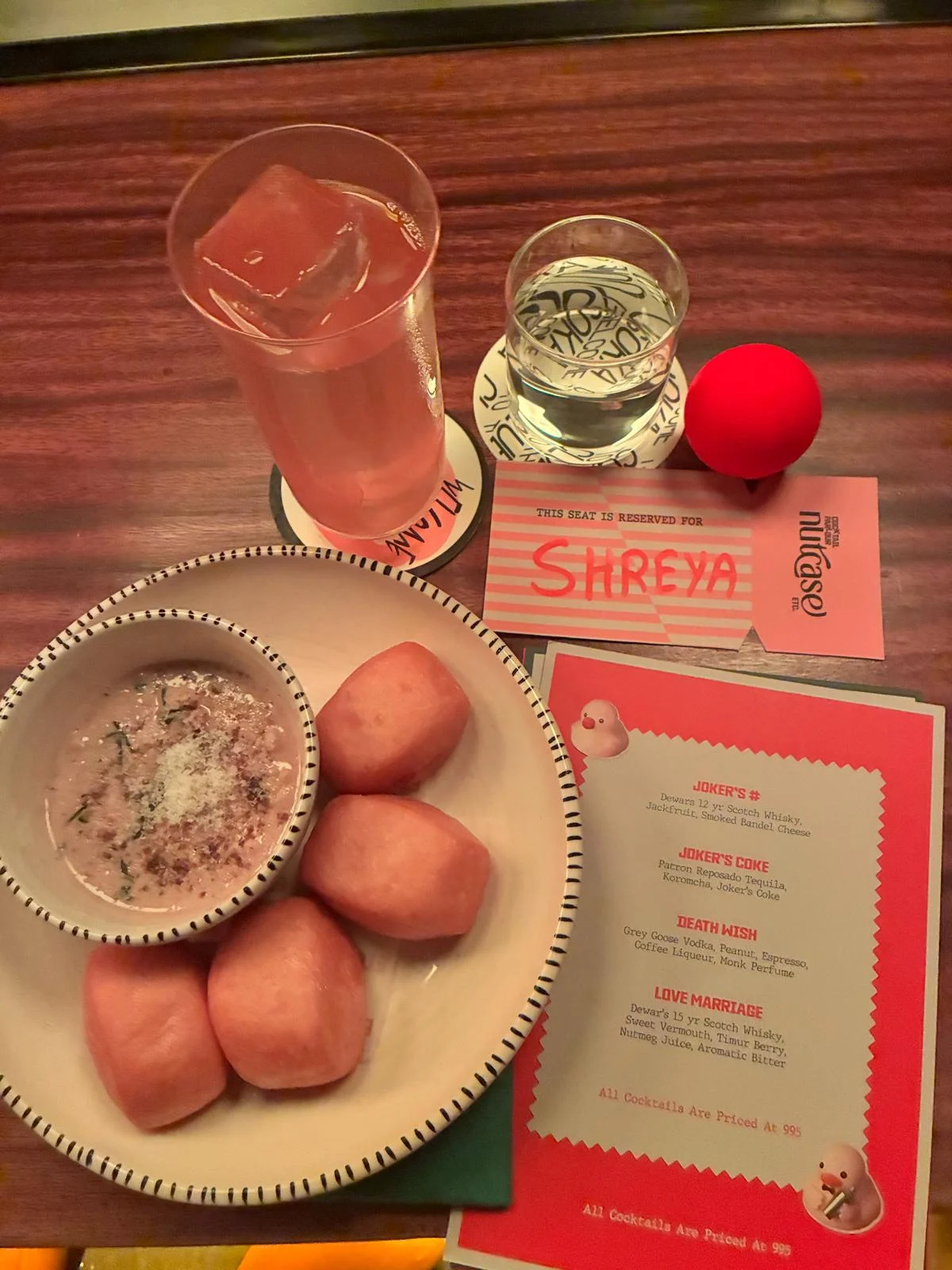
The result of this 48-hour immersion was a four-cocktail menu that blended high-end spirits—including Dewar’s Scotch and Patrón Tequila—with hyper-local ingredients like smoked Bandel cheese, karamcha (Bengal currants), and patali gur (date palm jaggery).
Chronology of a Collaboration: From Mystery Box to Menu
The journey of The Joker Shift unfolded in three distinct phases: the revelation, the exploration, and the execution.

Phase I: The Mystery Box (The ‘Googly’)
The process began the evening before the market visit. In the dimly lit, sophisticated interior of Nutcase Etc. on Manohar Pukur Road, the visiting bartenders were presented with a plain cardboard box.
"When they landed, they expected the usual suspects—gondhoraj lemons or kasundi (mustard paste)," says Priyadarshini Chitrangada, Manager of Brand and Community at Nutcase Etc. "But we wanted to throw them a googly."
Inside the box lay eight ingredients that formed a sensory map of the region:
- Smoked Bandel Cheese: A salty, pungent cheese with origins dating back to Portuguese settlers in Bengal.
- Patali Gur: Solidified date palm jaggery, prized for its deep, caramel-like sweetness.
- Sundarban Honey: Wild, multi-floral honey from the world’s largest mangrove forest.
- Badshah Bhog Rice: An aromatic, short-grain rice used in festive offerings.
- Panch Phoron: The "five-spice" heart of Bengali tempering (cumin, mustard, fenugreek, nigella, and fennel).
- Jamun & Hog Plum: Seasonal fruits offering astringency and sourness.
- Karamcha: Glossy pink Bengal currants, known for their sharp, acidic bite.
Phase II: The Lake Market Foraging
The following afternoon, the team moved to Lake Market. This was where the "language of the pantry" was translated. For Manoj and Krishna, the market was a revelation of shared heritage. As they moved through the dry goods section, they noted that while the names changed—Patali Gur in Kolkata versus various jaggery forms in Karnataka—the underlying soul of the ingredients remained remarkably consistent.

"Both of them felt the produce here was extraordinary," noted Rahul Banerjee, head bartender and co-founder of Nutcase. "The revelation was that if you strip away geography, Indian pantries often speak the same dialect."
Phase III: The Lab and The Shift
The final 12 hours were spent in the "lab," where the bartenders used techniques like fat-washing, infusions, and clarification to marry the market finds with premium spirits. The resulting menu, served on July 2nd, was a testament to rapid-fire creativity.
Supporting Data: Decoding the Ingredients
The success of the Joker Shift relied on the scientific application of local flavors to classic cocktail structures.
- The Bandel Cheese Factor: Bandel cheese is highly salty and smoky. In the cocktail "Joker’s #," the team used this to provide a savory counterpoint to the sweetness of jackfruit and the peat of Dewar’s 12-Year Scotch. It functioned similarly to a saline solution but with an added layer of fermented complexity.
- The Karamcha Acid Trip: The karamcha (Bengal currant) is often too sour to eat raw. In "Joker’s Coke," it was used to provide the acidic backbone usually reserved for lime or lemon, pairing with Patrón Reposado to create a regional riff on a Paloma or Margarita.
- Aromatic Synergy: "Love Marriage," a standout drink of the night, utilized Dewar’s 15-Year Scotch, sweet vermouth, and Timur berry (a relative of the Sichuan peppercorn). The addition of fresh nutmeg juice provided a bridge between the spicy notes of the Scotch and the floral aromatics of the vermouth.
Official Responses: The Philosophy of the "Empty Hand"
The organizers and participants view this format as a necessary evolution for the industry.

Rituparna Banerjee, Chef and Founder of Nutcase Etc., emphasized the importance of perspective: "Usually, bars collaborate by making the drinks they’re already known for. We wanted MK and KK to discover Kolkata through their own eyes—specifically, through the eyes of Bengaluru. It wasn’t about replicating Soka in Kolkata; it was about what happens when Soka meets Kolkata."
Rahul Banerjee highlighted the educational aspect for the bartenders themselves: "There were these lovely moments when we realized the same ingredient exists across states. Only the names change. That realization changes how you approach drink-making back home."
For the visiting bartenders, the experience was an exercise in sensory agility. Neither Manoj nor Krishna had tasted karamcha before this trip. Their reaction—studying the taut skin, biting into the acidity, and immediately discussing its "tannic potential"—reflected a high-level culinary approach to mixology.
Implications: The Future of Indian Mixology
The Joker Shift at Nutcase Etc. signals three major trends currently reshaping the Indian hospitality landscape:

- The Death of the "Signature" Guest Shift: The era of bartenders flying across the country to serve the same five drinks they serve at their home base is waning. Discerning consumers are looking for "limited edition" experiences that cannot be found elsewhere. By forcing bartenders to create on the spot, bars are offering a truly unique, ephemeral product.
- Hyper-Localism as Luxury: There is a growing movement to elevate "humble" ingredients—like panch phoron or patali gur—to the status of luxury components. By placing these alongside premium international spirits, the industry is validating Indian terroir.
- Cross-Regional Culinary Dialogue: As the Indian bar scene matures (evidenced by the rising number of Indian bars on the "Asia’s 50 Best" list), there is more internal exchange. The dialogue is no longer just between "London and Mumbai" or "New York and Delhi," but between regional hubs like Bengaluru and Kolkata.
Conclusion
The cocktails served on July 2nd were more than just beverages; they were the physical manifestation of 36 hours of intense cultural immersion. From the smoke-dried rinds of Bandel cheese to the wild sweetness of Sundarban honey, the "Joker Shift" proved that the most exciting flavors in modern mixology are often found not in a catalog of imported liqueurs, but in the humid, crowded aisles of a local vegetable market.
As Nutcase Etc. prepares for its next edition of the shift, the industry will be watching to see which city’s pantry will be "translated" next, and which "Joker" will be brave enough to arrive empty-handed.
