

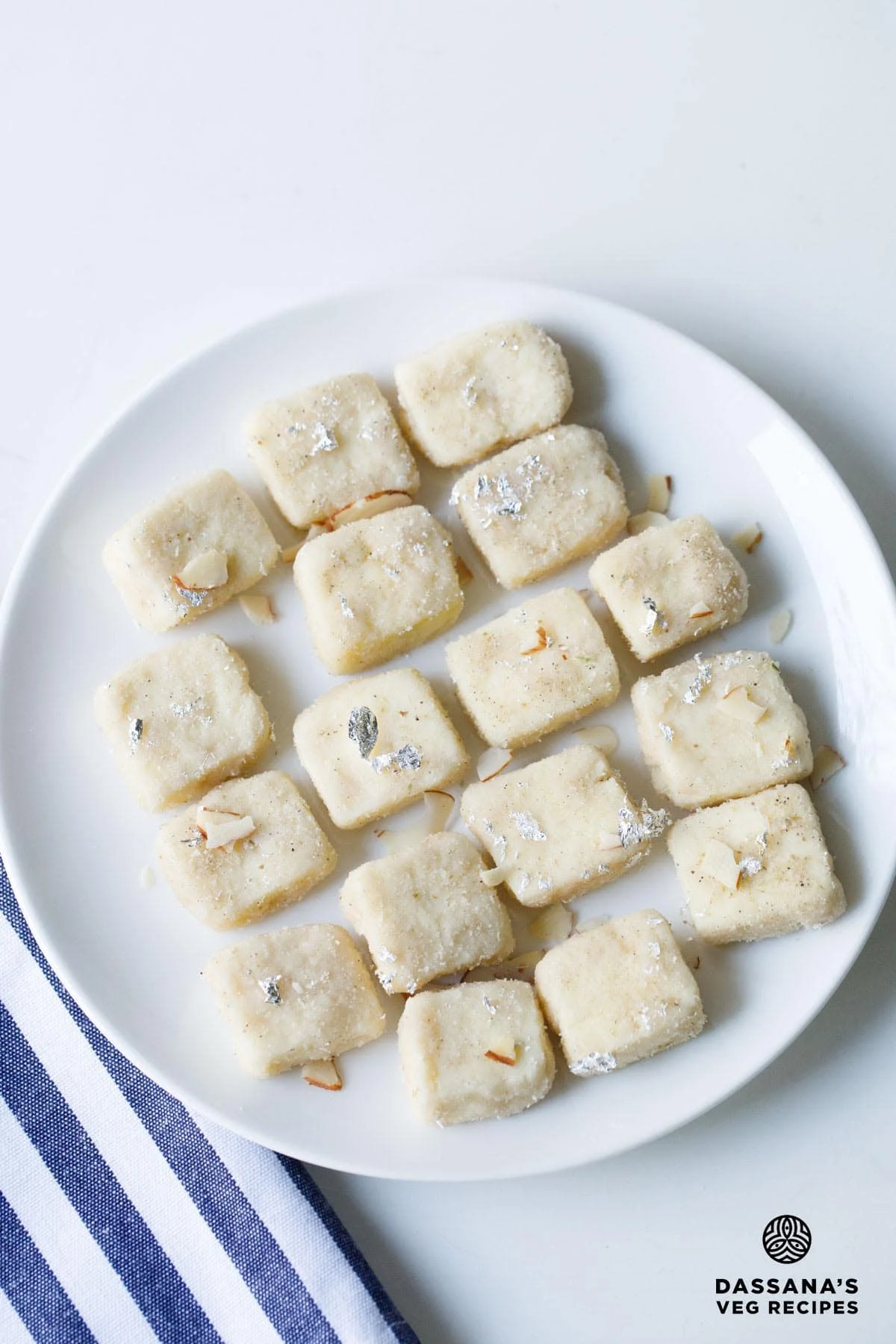
KOLKATA – In the vast and intricate landscape of Indian confectionery, few regions boast a repertoire as sophisticated and dairy-centric as Bengal. While the world-renowned Rasgulla and Sandesh often dominate the international narrative of Bengali sweets, a humbler yet technically demanding delicacy continues to hold its ground in traditional households and artisanal sweet shops: Chena Murki.
Chena Murki, a traditional sweet consisting of hand-cut cubes of fresh chhena (Indian cottage cheese) coated in a meticulous layer of crystallized sugar, represents a pinnacle of textural contrast. It is a dish where the simplicity of ingredients—milk and sugar—meets the complexity of thermodynamic precision. As the modern culinary world leans toward artisanal and "slow food" movements, Chena Murki is witnessing a resurgence among gourmet enthusiasts who prize its unique "crisp-outside, tender-inside" profile.

I. Main Facts: The Anatomy of a Bengali Classic
Chena Murki, also frequently spelled as Chhena Murki, is defined by its geometry and its finish. Unlike many Indian sweets that are drenched in liquid syrup (like Gulab Jamun) or reduced to a fudge-like consistency (like Barfi), Chena Murki is a "dry" sweet.
The Etymology of ‘Murki’
The term murki in the Bengali lexicon traditionally refers to food items that have been enrobed in a layer of crystallized sugar or jaggery. While Khoi Murki (puffed rice coated in jaggery) is a common rural snack, Chena Murki elevates this concept by using high-quality chhena as the base.

The Composition
The dish relies on three primary pillars:
- The Core: Freshly curdled milk solids, known as chhena. In contemporary kitchens, high-quality, firm paneer is often substituted, provided it retains a high moisture content to ensure a soft center.
- The Shell: A delicate, snowy coating of sugar that has been heated to a specific concentration and then agitated to induce crystallization.
- The Aromatics: Traditionally infused with cardamom powder and rose water, providing a floral counterpoint to the richness of the dairy.
One of the most notable features of Chena Murki is its inherent dietary profile. Being made primarily of milk solids and sugar, it is naturally gluten-free, making it an accessible option in an era of increasing dietary sensitivities.

II. Chronology: The Lifecycle of a Chena Murki Cube
The production of Chena Murki is a chronological exercise in temperature control and patience. A mistake at any stage—from the cutting of the cheese to the final stirring—can result in a product that is either too rubbery, too hard, or unevenly coated.
Phase 1: Preparation and Dehydration
The process begins with the selection of the paneer or chhena. Professional confectioners emphasize that the cheese must be sliced into perfectly even cubes, typically measuring between 2.5 to 3 centimeters. This uniformity is not merely aesthetic; it ensures that each piece reacts identically to the heat of the sugar syrup.

Following the slicing, the cubes must undergo a period of air-drying. This 10-to-15-minute window is crucial. By allowing the surface moisture to evaporate, the chef ensures that the sugar syrup will adhere to the cube rather than sliding off or becoming diluted by excess water from the cheese.
Phase 2: The Chemistry of the ‘One-String’ Syrup
The second phase involves the creation of a concentrated sugar solution. Sugar and water are combined in a heavy-bottomed kadai (wok) or frying pan. The goal is to reach the "one-string" consistency (Ek Taar Chashni).

In this state, the syrup has reached a boiling point where the sugar concentration is high enough that a drop pulled between the thumb and forefinger forms a single, resilient thread. This specific viscosity is the "Goldilocks zone" for Chena Murki: thick enough to crystallize upon cooling, but thin enough to permeate the outer layers of the paneer.
Phase 3: The Infusion
Once the syrup is ready, the heat is lowered, and the paneer cubes are introduced. They are not merely tossed in; they are gently simmered for five to six minutes. During this stage, a process of osmosis occurs where the cheese absorbs a portion of the sweetness while its exterior becomes primed for the crystallization process.

Phase 4: Forced Crystallization (The Stirring Stage)
The final and most labor-intensive stage begins once the pan is removed from the heat. As the temperature drops, the solubility of the sugar decreases. To prevent the sugar from forming a solid, glass-like sheet, the chef must engage in continuous, gentle agitation with a flat wooden spatula.
Over a period of 10 to 20 minutes, the syrup transforms from a clear, glossy liquid into a cloudy, granular mass. The constant stirring ensures that the crystals form individually around each cube of paneer rather than clumping together. This stage requires significant manual dexterity to avoid breaking the softened cheese cubes.

III. Supporting Data: Nutritional and Technical Specifications
From a nutritional and chemical standpoint, Chena Murki offers a fascinating look at traditional Indian food science.
Nutritional Profile (Per Serving/Cube)
Based on standard laboratory estimates for a 200g batch of paneer and 150g of sugar, a single serving (approximately one cube) contains:

- Calories: 49 kcal
- Carbohydrates: 6g (primarily from sucrose)
- Protein: 1g
- Fat: 2g (saturated fat: 1g)
- Calcium: 41mg (contributed by the dairy base)
- Cholesterol: 6mg
The Role of Sugar Refinement
Data suggests that the type of sugar used significantly alters the final product’s "optical" and "textural" qualities:
- Refined White Sugar: Produces a bright, clinical white coating with larger, more distinct crystals. This is the standard for commercial "halwai" (sweet shop) versions.
- Organic Cane Sugar: Due to the presence of trace minerals and a lack of bleaching agents, this results in a pale cream or light brown coating with a finer, almost powdery texture.
Thermodynamic Factors
The crystallization of sugar in Chena Murki is highly sensitive to ambient humidity. In the tropical climate of Bengal, particularly during the monsoon season, the stirring stage can take up to 30% longer as the sugar crystals struggle to shed moisture. This necessitates a highly controlled environment for large-scale production.

IV. Official Responses: The Culinary Perspective
Culinary historians and professional chefs view Chena Murki as a vital link to Bengal’s dairy-rich past.
"Chena Murki is a testament to the Bengali ‘Maira’ (confectioner) community’s mastery over milk," says Dr. Arindam Das, a researcher in Indian food heritage. "Unlike Western cheeses which are often aged, Chhena is a ‘fresh’ product. The technique of coating it in sugar was likely a method of short-term preservation in a pre-refrigeration era, as the high sugar concentration on the surface acts as an antimicrobial barrier."

Chef Soumyen Malick, a specialist in regional Indian desserts, emphasizes the technical difficulty that is often overlooked. "Many people think it’s just paneer in sugar. But if your syrup goes to ‘two-string’ consistency, the coating becomes a rock that can chip a tooth. If it stays under ‘one-string,’ it remains a sticky mess that never dries. It is a dish of exactness."
When asked about the use of store-bought paneer versus traditional chhena, Malick notes: "The industry has moved toward paneer for its structural integrity. Traditional chhena is very soft and can disintegrate during the 20-minute stirring process. However, the ‘soul’ of the dish remains the quality of the milk solids."

V. Implications: The Future of Artisanal Confectionery
The persistence of Chena Murki in the modern era carries several implications for the food industry and cultural preservation.
1. The Resurgence of "Clean Label" Sweets
As consumers become increasingly wary of artificial preservatives, stabilizers, and complex additives, Chena Murki stands out as a "clean label" product. With only four or five ingredients—milk, sugar, water, and spices—it aligns with the modern demand for transparency in food production.

2. The Globalization of Regional Cuisines
With the Indian diaspora spreading across North America, Europe, and the Middle East, regional sweets like Chena Murki are moving beyond the borders of West Bengal. It is now common to find these "crystallized cubes" in high-end Indian boutiques in London and New York, rebranded as "Artisanal Milk Curd Confections."
3. Economic Impact on Dairy Farmers
The demand for sweets like Chena Murki, particularly during festive seasons such as Durga Puja and Diwali, provides a significant economic boost to rural dairy cooperatives. Because the dish requires high-fat, high-quality milk to produce the best chhena, it incentivizes farmers to maintain superior livestock standards.

4. Technical Challenges in Mass Production
While many sweets have been successfully mechanized, Chena Murki remains stubbornly resistant to full automation. The final "stirring to crystallization" phase requires a human touch to sense the changing resistance of the syrup and to ensure the cubes do not break. This ensures that the dish remains a stronghold for artisanal skill rather than industrial assembly lines.
5. Storage and Sustainability
The "dry" nature of Chena Murki gives it a slightly better shelf life at room temperature compared to "wet" sweets like Rasgulla, which require constant refrigeration. However, as noted in culinary guidelines, the sugar coating is hygroscopic—it absorbs moisture from the air. This characteristic poses a challenge for sustainable packaging, requiring airtight solutions to maintain the signature crunch that defines the dish.

In conclusion, Chena Murki is more than just a sweet; it is a culinary artifact that encapsulates the history, chemistry, and artistry of Bengal. As it transitions from traditional kitchen counters to the global stage, it remains a quintessential example of how simple ingredients, when handled with expert patience, can create a sensory experience that is both timeless and sophisticated.
