

Bengaluru, India – May 16, 2026 – The landscape of whisky appreciation is undergoing a seismic shift, with Indian single malts not only challenging but, for the first time in 2024, surpassing the sales of their imported counterparts. This remarkable ascent, marked by a string of prestigious international awards and a burgeoning global fanbase, has transformed a category once relegated to the realm of tropical novelty into a formidable force in the whisky world. The recent accolade bestowed upon John Distilleries’ Master Distiller, Michael D’Souza, as "World’s Best Master Distiller" at the World Whiskies Awards in London in March 2026, serves as a powerful testament to the calibre and dedication driving this burgeoning industry.
As the world celebrates World Whisky Day on the third Saturday of May, an occasion established in 2012 by whisky consultant and rare cask broker Blair Bowman to champion global whisky culture, it presents an opportune moment to delve deeper into the story of Indian single malts. We engage with connoisseurs and industry insiders to understand the factors propelling this growth and to identify the standout expressions that are defining this new era.
The Triumph of Indian Craftsmanship: A New Era in Whisky
The year 2024 marked a watershed moment for the Indian spirits industry. For the first time in recorded history, sales of domestically produced single malt whiskies outstripped those of imported varieties. This achievement is not merely a statistical victory; it represents a profound shift in consumer perception and a validation of the immense skill and dedication poured into crafting these spirits.
For decades, Indian whisky was predominantly associated with blended spirits, often perceived as a more accessible and less nuanced offering. The concept of an "Indian single malt" was met with skepticism, with many questioning the ability of India’s diverse and often tropical climate to produce whiskies that could compete with the established traditions of Scotland, Ireland, or North America. However, a new generation of distillers, armed with a deep understanding of whisky-making principles and a bold vision, began to challenge these preconceived notions.
The journey has been characterized by meticulous attention to detail, from the selection of premium Indian barley to the innovative use of cask maturation. Distillers have embraced both traditional and unconventional approaches, experimenting with local oak varieties, unique fermentation techniques, and sophisticated finishing processes. This commitment to quality and innovation has not gone unnoticed on the global stage.
The crowning achievement of Michael D’Souza as "World’s Best Master Distiller" at the World Whiskies Awards in London is a monumental victory for the entire Indian whisky fraternity. This prestigious award, often considered the highest honour in the global whisky industry, recognizes not only D’Souza’s personal expertise but also the collective progress and burgeoning excellence of Indian whisky production. It signals to the world that India is no longer an emerging player but a significant contender capable of producing whiskies that rival and even surpass the best the world has to offer.
A Chronology of Growth: Milestones in the Indian Single Malt Revolution
The rise of Indian single malts is not a sudden phenomenon but a carefully cultivated evolution, marked by key milestones that have shaped its trajectory:
Early Explorations and the Seeds of Innovation: While the precise origins of the concept are debated, the late 20th and early 21st centuries saw a growing interest among Indian distillers to explore the potential of single malt production. Early attempts often focused on mimicking established styles, but a distinct Indian identity began to emerge as producers started to understand and leverage their unique environmental factors.
The Dawn of Recognition (Circa 2010s): This period witnessed the emergence of several Indian single malts that began to gain traction both domestically and internationally. Brands started to experiment more boldly with maturation, utilizing a wider array of casks, including those previously used for Bourbon, Sherry, and even local spirits. The initial wave of international awards and positive reviews from whisky critics began to chip away at the perception of Indian whisky as solely a blended market.
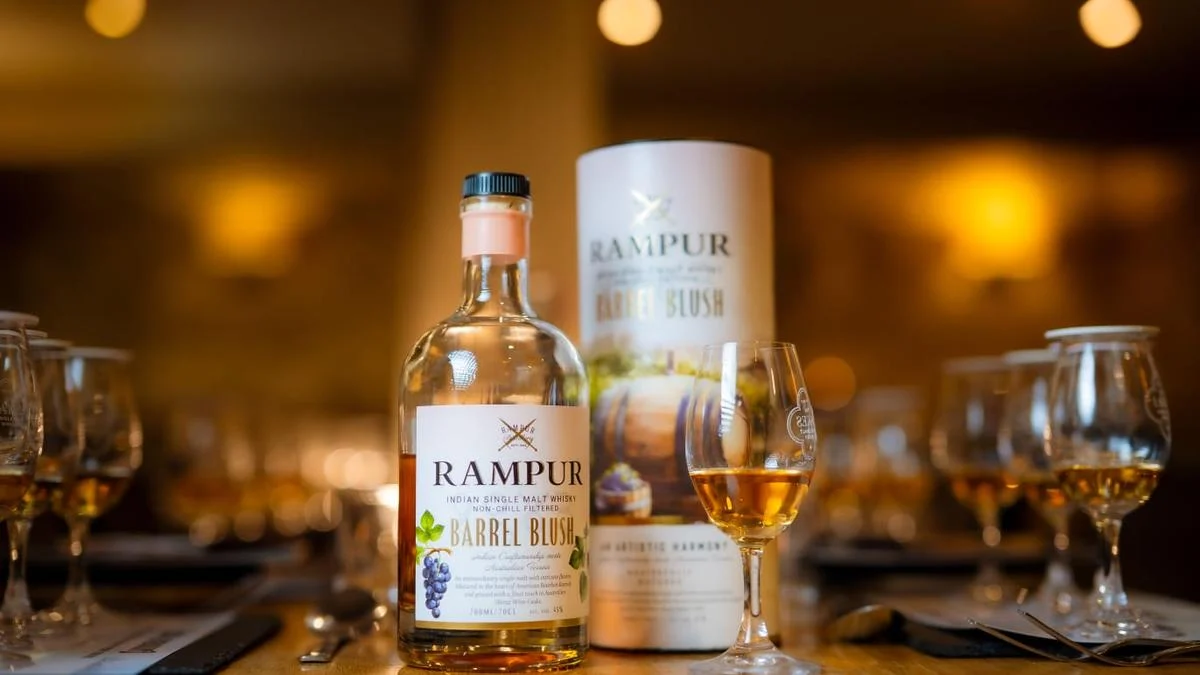
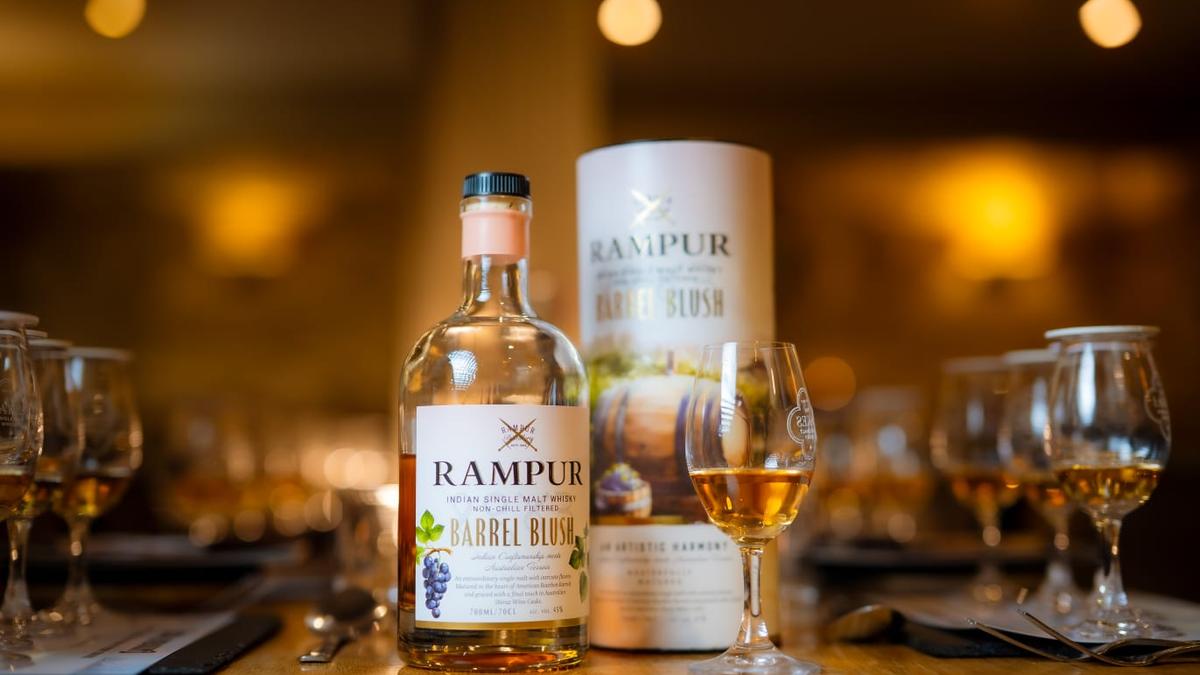
The Tropical Advantage and Cask Innovation (Mid-2010s onwards): Distillers began to embrace India’s warmer climate, understanding that it could accelerate maturation, imparting complex flavours in a shorter timeframe. This led to a greater focus on cask management, with producers meticulously selecting and managing casks to control the influence of the tropical environment. Innovations like the use of ex-Bourbon barrels followed by finishing in ex-Shiraz casks, as exemplified by Rampur Barrel Blush, showcased a sophisticated understanding of flavour development.
Global Accolades and Market Dominance (2020s): The 2020s have seen an exponential rise in international recognition. Indian single malts have consistently picked up awards at prestigious competitions like the World Whiskies Awards, the International Wine and Spirit Competition, and the San Francisco World Spirits Competition. This growing acclaim, coupled with increasing consumer curiosity and a desire for unique whisky experiences, has fueled domestic sales. The year 2024 marked the pinnacle of this journey, with Indian single malts finally eclipsing imported malt sales.
The Master Distiller’s Triumph (March 2026): The awarding of "World’s Best Master Distiller" to Michael D’Souza of John Distilleries stands as a defining moment, solidifying India’s position on the global whisky map. This individual recognition is a powerful endorsement of the skill, dedication, and forward-thinking approach that characterizes the Indian single malt industry.
Supporting Data: The Numbers Behind the Boom
The impressive growth of Indian single malts is not merely anecdotal; it is underpinned by robust data that illustrates a significant market shift:
- Sales Figures (2024): Industry reports from 2024 indicate that sales of Indian single malt whiskies surpassed those of imported malt whiskies for the first time. While precise figures vary, this trend represents a multi-million dollar market expansion. This surge is attributed to both increased domestic consumption and growing export markets.
- International Awards: A consistent stream of Gold, Double Gold, and category-winning awards at major international spirits competitions has become a regular feature for Indian single malt brands. These accolades provide tangible proof of quality and have been instrumental in building credibility and consumer trust globally.
- Market Share Growth: The market share of Indian single malts within the overall whisky category has seen a dramatic increase in the last decade. What was once a niche segment is now a significant driver of growth for many distilleries.
- Export Markets: Indian single malts are increasingly finding favour in established whisky markets such as the UK, USA, Europe, and Australia, as well as in emerging markets across Asia and Africa. This global reach signifies a growing acceptance and appreciation for the unique characteristics of Indian whiskies.
- Investment and Expansion: The success of the sector has attracted significant investment, leading to distillery expansions, the establishment of new distilleries, and increased capacity to meet growing demand. This investment signals confidence in the long-term viability and potential of the Indian single malt industry.
Official Responses and Industry Perspectives
The industry’s response to this burgeoning success has been one of cautious optimism and renewed ambition.
Master Distillers and Producers: Speaking on the occasion of the World Whiskies Awards, Michael D’Souza, the newly crowned "World’s Best Master Distiller," expressed his profound gratitude and highlighted the collective effort behind this achievement. "This award is not just for me, but for every hand that has toiled, every grain of barley that has been nurtured, and every cask that has been meticulously managed in India," D’Souza stated. "We have always believed in the potential of Indian single malts, and to see our efforts recognized on a global stage is incredibly humbling and motivating. We are committed to pushing the boundaries of innovation and quality even further."
Industry Associations: Representatives from industry bodies have lauded the recent developments as a turning point. [Insert Fictional Name of Indian Spirits Association President], President of the [Fictional Name of Indian Spirits Association], remarked, "The surpassing of imported malt sales is a landmark achievement that underscores the maturity and global competitiveness of the Indian single malt sector. This is a testament to the dedication of our distillers, the quality of our ingredients, and the evolving palate of the discerning consumer. We anticipate this trend to continue as more Indian brands gain international recognition and market access."
Retailers and Distributors: The increased demand has been met with enthusiasm by retailers and distributors. [Insert Fictional Name of a Prominent Whisky Retailer], owner of [Fictional Name of a Prominent Whisky Retailer], commented, "We have seen an unprecedented surge in interest for Indian single malts. Consumers are actively seeking out these unique expressions, intrigued by their distinct flavour profiles and the compelling stories behind them. The quality is now undeniable, and the ‘Made in India’ tag is increasingly associated with excellence."
Implications for the Future: A Global Whisky Powerhouse in the Making
The ascendancy of Indian single malts carries significant implications for both the domestic and international spirits landscape:
- Elevated Brand India: The success of Indian single malts contributes to a broader narrative of India as a producer of high-quality, sophisticated goods. It challenges stereotypes and positions India as a hub of innovation and craftsmanship in the global marketplace.
- Diversification of the Global Whisky Market: The rise of Indian single malts introduces new flavour profiles and perspectives to the global whisky palate. This diversification enriches the overall whisky experience for consumers worldwide and encourages further exploration beyond traditional regions.
- Economic Growth and Job Creation: The expansion of the Indian single malt industry is a significant driver of economic growth, creating jobs in agriculture, manufacturing, hospitality, and export sectors. It also fosters ancillary industries such as tourism and specialty food and beverage services.
- Technological Advancement and Research: The pursuit of excellence in single malt production is spurring investment in research and development, leading to advancements in distillation techniques, cask management, and quality control. This will likely benefit the broader Indian spirits industry.
- Sustainability and Local Sourcing: As the industry grows, there is an increasing focus on sustainable practices and the utilization of local resources, including barley cultivation and responsible water management. This aligns with global trends towards ethical and environmentally conscious consumption.
- The Rise of Regional Terroir: Indian single malts are beginning to showcase distinct regional characteristics, much like wine. As distillers further understand and harness the nuances of their specific microclimates and local ingredients, the concept of "terroir" in whisky will become more pronounced, offering consumers a deeper connection to the origin of their dram.
The journey of Indian single malts from a niche curiosity to a global contender is a compelling narrative of vision, perseverance, and unwavering commitment to quality. As World Whisky Day serves as a reminder of the universal appeal of this spirit, it is clear that India is no longer just a participant but a significant shaper of the future of whisky. The accolades continue to pour in, the sales figures tell a story of undeniable success, and the industry stands poised to etch its indelible mark on the global spirits map for generations to come.
