

In the ancient city of Madurai, where the towering gopurams of the Meenakshi Amman Temple define the skyline and the air is thick with the scent of jasmine and incense, time often feels like a fluid concept. Yet, amidst the rapid modernization of Tamil Nadu’s cultural capital, certain landmarks remain resolutely anchored in the past. One such institution is the Aathi Kalathu Original Nei Mittai Kadai.
For over thirteen decades, this modest establishment, identifiable by its signature red signboard near the historic Pudumandapam, has served as a gastronomic sanctuary. While the surrounding streets have evolved from quiet thoroughfares into bustling commercial hubs, the shop has remained a constant, offering a sensory portal to the late 19th century through its unwavering commitment to traditional sweets and savories.
A Century of Lineage: The Chronology of Excellence
The story of Aathi Kalathu Original Nei Mittai Kadai is not merely one of commerce, but of a family’s multi-generational vow to preserve a specific flavor profile. The shop’s history is a timeline of the Chettiar family’s dedication to the art of confectionery.
The Foundation (Late 1800s)
The enterprise was inaugurated by G. Muthuswamy Chettiar, a visionary who recognized the demand for high-quality, ghee-based sweets among the pilgrims and locals frequenting the Meenakshi Temple. In an era where "fast food" was non-existent, Muthuswamy established a benchmark for purity, focusing on Nei (ghee) as the primary medium of preparation.
The Era of Consolidation (Early to Mid-20th Century)
The mantle was later passed to his son, M. Rajamanickam, who maintained the shop’s reputation through the tumultuous years of the early 20th century. By the 1950s, N. Sundaresan, a close relative and the father of the current proprietor, took over the reins. It was during this period that the shop solidified its status as a Madurai landmark, navigating the transition of India’s independence and the subsequent shifts in the local economy.
Modern Stewardship
Today, the shop is managed by S. Narasiman Sundaresan, who represents the current generation of this culinary dynasty. Under his watch, the shop has faced its greatest challenge: the pressure to modernize. In an age where traditional sweet shops are increasingly rebranding as multi-cuisine bakeries, Narasiman has made the conscious decision to stay small and specialized.
"We have seen many old shops change over the years," Narasiman observes. "Establishments that once specialized in traditional snacks have added cakes, bread, and cold drinks to their shelves. We have resisted that. Our focus remains on what we know best."
Supporting Data: The Anatomy of a Traditional Menu
The enduring success of Aathi Kalathu Original Nei Mittai Kadai is rooted in its refusal to expand its menu at the cost of quality. The shop’s offerings are a curated selection of South Indian classics, each prepared with a rigor that borders on the ritualistic.
The Wheat Halwa: A Study in Texture
The shop’s most sought-after item is the Wheat Halwa. Unlike the mass-produced versions found in modern supermarkets, this halwa is the result of a labor-intensive process.
- Preparation: The process begins at dawn, around 6:00 AM, with the soaking and processing of high-quality wheat to extract the milk.
- The Experience: Served traditionally on a mantharai leaf, the halwa is glossed with a layer of pure ghee. It possesses a unique duality—melting almost instantly upon contact with the tongue while retaining a slight, chocolate-like chewiness. The aroma of caramelized sugar and clarified butter serves as its primary advertisement.
Thirattu Paal: The Delicate Alternative
For those seeking a different profile, the Thirattu Paal Halwa (literally meaning "gathered milk") offers a contrast.
- Composition: Made primarily from milk solids, sugar, and ghee, it lacks the elasticity of the wheat variant.
- Texture: It is semi-liquid, smooth, and delicate. It is particularly popular among the younger demographic and those who prefer a creamier, more lactic sweetness.
The Signature Nei Mittai
The shop’s namesake, the Nei Mittai, is a testament to the beauty of simple ingredients. A combination of crushed groundnuts, jaggery, and ghee, these candies are individually wrapped. While it has been a staple for decades, Narasiman notes a significant surge in its popularity over the last six years, as consumers increasingly seek out "nostalgia foods" that are free from artificial preservatives.
The "Pottalam" Legend: Food as Social History
Perhaps the most culturally significant item on the menu is the Pottalam, a spicy savory preparation that carries the history of Madurai’s old market culture.
The Market Connection
In the 1980s and earlier, the area surrounding the shop housed a vibrant vegetable market. Farmers and traders from across the district would arrive in the pre-dawn hours. These workers often brought kanji (rice porridge) or curd rice from home but required a spicy accompaniment to sustain them through a long day of physical labor.

Culinary Symbiosis
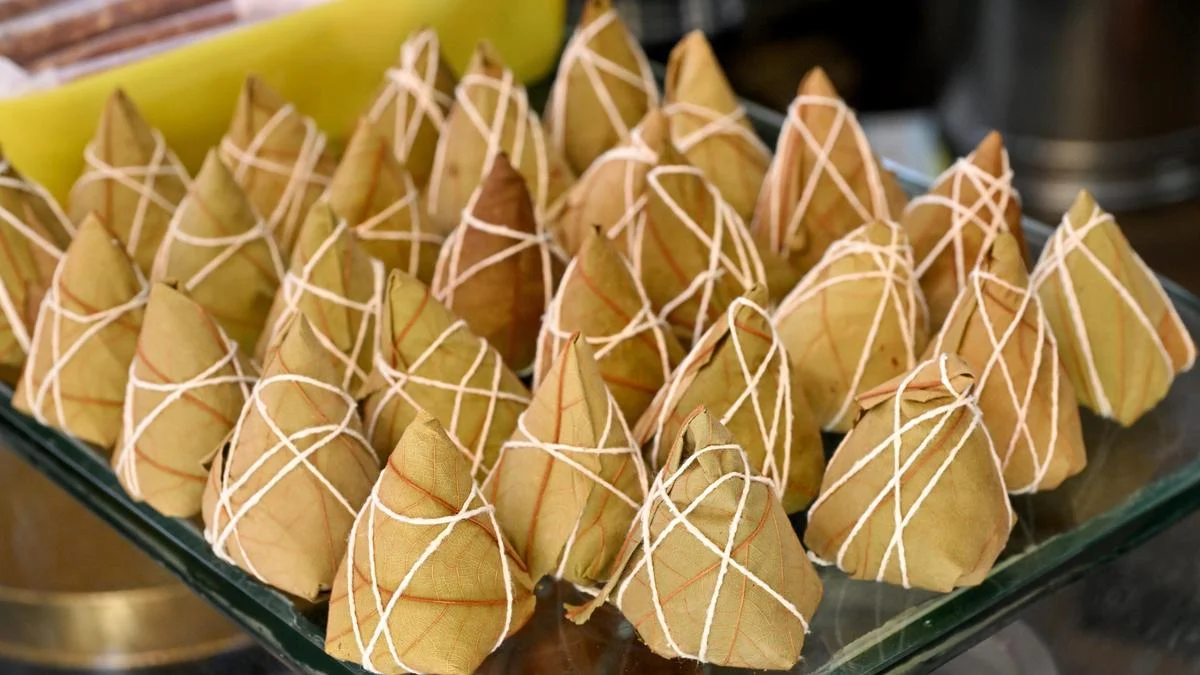
The Pottalam—a mixture of small onions (shallots), chillies, and spices packed into a tight cone of mantharai leaf—became the de facto companion to the morning meal. "The combination of cool curd rice and the sharp, spicy kick of the pottalam was a local favorite," says Narasiman. Although the vegetable market has since moved, the shop continues to produce the Pottalam in the same traditional leaf packaging, preserving a specific "taste-memory" of old Madurai.
Official Responses: Quality Control and the Philosophy of "Slow Food"
Narasiman Sundaresan’s approach to business provides a rare look into the "Slow Food" philosophy in a commercial setting.
On Consistency
When asked about the secret to their 130-year run, Narasiman points to the refusal to compromise on ingredients. "The taste is the only thing we haven’t changed. We haven’t added items just because they are popular in the market. If we did, we would lose the identity that my forefathers built."
On the Daily Routine
The shop operates on a fresh-daily model. Production begins in the early morning, and the goal is to sell out by the end of the day. This eliminates the need for the chemical stabilizers found in modern confectionery. The shop also caters to the traditional "life-cycle" events of the community, providing bulk orders of wheat halwa and boondhi for baby showers (Valaikappu) and religious festivals like Gokula Ashtami.
On Innovation
Despite the focus on tradition, Narasiman is not entirely closed to change, provided it comes from the customer. "If a regular customer asks for something specific, we will make it for them. But we don’t put it on the board unless we are sure it meets our standards," he explains.
Implications: Cultural Heritage and the Future of Traditional Retail
The continued existence of Aathi Kalathu Original Nei Mittai Kadai has broader implications for the culinary landscape of Southern India.
Preservation of "Mantharai" Leaf Culture
The shop is one of the few remaining establishments that still uses the mantharai leaf for both serving and packaging. In an era of plastic and styrofoam, this practice is not just eco-friendly; it is essential to the flavor. The leaf imparts a subtle, earthy aroma to the warm halwa, a nuance that is lost in modern packaging.
Tourism and Heritage Gastronomy
As Madurai positions itself as a major destination for heritage tourism, places like Aathi Kalathu are becoming as important as the temples themselves. Tourists are increasingly looking for "authentic" experiences that haven’t been sanitized for the mass market. The shop’s red board and simple interior serve as a badge of authenticity.
The Economic Resilience of Specialization
The shop’s success suggests a counter-narrative to the "big-box" retail trend. By specializing in a handful of high-quality items rather than a thousand mediocre ones, Aathi Kalathu has maintained a loyal customer base that spans generations. Grandfathers who visited the shop in the 1960s now bring their grandchildren to taste the same halwa, ensuring a continuous cycle of patronage.
Conclusion
The Aathi Kalathu Original Nei Mittai Kadai is more than a sweet shop; it is a living museum of Madurai’s social and culinary evolution. In its vats of bubbling ghee and its carefully folded leaf packets, one finds the history of a city that refuses to forget its roots. For Narasiman Sundaresan, the goal is simple: to ensure that when a customer takes a bite of their wheat halwa, they are tasting the exact same recipe that G. Muthuswamy Chettiar perfected thirteen decades ago.
As the sun sets over the East Avani Moola Street and the crowds from the Meenakshi Temple grow thicker, the small shop with the red board continues its quiet work, proving that in the world of flavor, some things are indeed timeless.
Fact Box:
- Location: East Avani Moola Street, opposite the Nandhi Statue, Madurai.
- Specialties: Wheat Halwa, Thirattu Paal, Nei Mittai, Spicy Pottalam.
- Legacy: Established 130+ years ago; currently managed by the 4th generation.
- Contact: 9487180422
