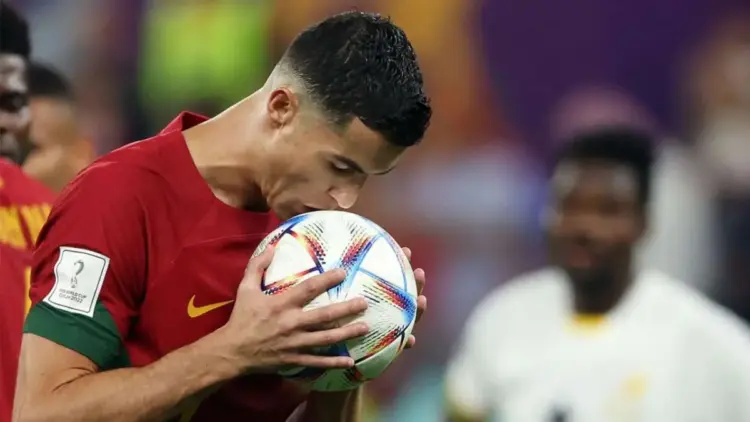
Lisbon, Portugal – November 5, 2026 – In a seismic announcement that has sent shockwaves across the global football landscape, Cristiano Ronaldo, one of the sport’s most iconic and enduring figures, has officially retired from international football. After an unparalleled 23-year career representing Portugal, amassing an astonishing 234 caps and an unprecedented 146 goals, the 41-year-old superstar confirmed his departure in an emotional video message, bringing down the curtain on an era that redefined Portuguese football.
The announcement, made on Thursday, November 5, 2026, was tinged with both profound sadness and a sense of an inevitable conclusion. "I leave with my head held high. Portugal will always be in me," Ronaldo declared, his voice imbued with the weight of two decades of dedication. While his illustrious career is adorned with numerous trophies, records, and individual accolades, one coveted prize famously eluded him: the FIFA World Cup. His retirement marks the definitive end of his quest for that elusive global title, cementing his legacy as perhaps the greatest international goalscorer in history, yet one whose ultimate dream remained just out of reach.
A Staggering Legacy Concludes
Ronaldo’s numbers for A Seleção are nothing short of monumental. His 234 appearances make him the most capped male international player of all time, a testament to his incredible longevity, fitness, and unwavering commitment. His 146 goals dwarf those of any other male player in international football history, a record that may stand for generations. These statistics are not merely figures; they represent countless moments of brilliance, decisive interventions, and the sheer force of will that propelled Portugal onto the global stage.
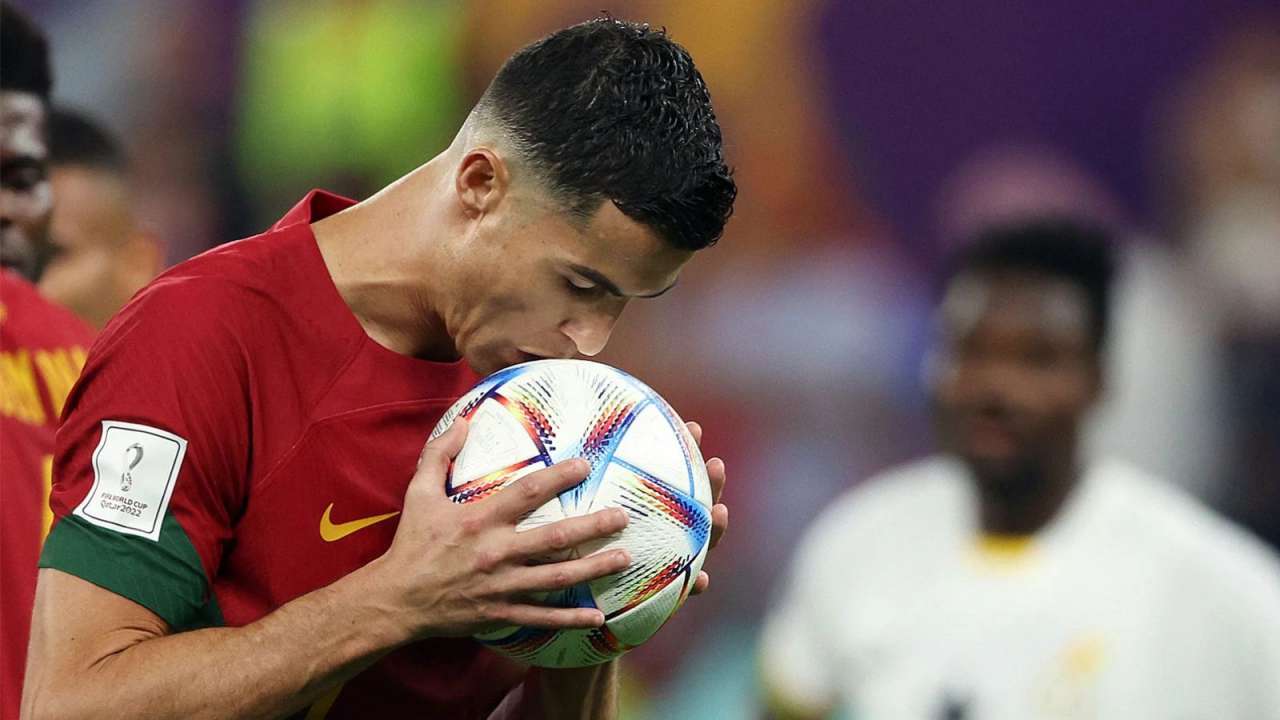
From his debut as a raw, exciting teenager in 2003 to his final appearances as a seasoned veteran in 2026, Ronaldo has been the heartbeat of his nation’s team. He captained Portugal to their first major international trophy, the UEFA Euro 2016, and followed it up with two UEFA Nations League titles in 2019 and 2025. He is also the only player to have scored in six different FIFA World Cup tournaments, a record that underscores his incredible consistency and adaptability across changing eras of the game. His departure leaves an immense void, both in terms of on-field production and the sheer star power he brought to the national team.
The Unfulfilled Dream: A World Cup Eludes the Legend
Despite his myriad achievements, the World Cup remained the one significant lacuna on Ronaldo’s otherwise perfect international resume. His journey with Portugal at the World Cup spanned six editions, beginning with a promising run to the semi-finals in 2006, where they ultimately fell to Zinedine Zidane’s France. Subsequent tournaments saw varied fortunes for Portugal, often relying heavily on Ronaldo’s individual brilliance but never quite gelling into a cohesive unit capable of going all the way.
The closest he came again was in 2022, reaching the quarter-finals before a heartbreaking exit. The 2026 tournament, which he had initially intended to be his swansong, passed without Portugal reaching the final stages, and now, his retirement has extinguished any lingering hopes of him lifting football’s most coveted trophy. This narrative of the unparalleled individual who could not quite elevate his team to the ultimate global triumph will forever be a part of his story, adding a layer of bittersweet irony to his otherwise glorious career.
A Tumultuous Departure: The Fallout with Jorge Jesus
The final months of Cristiano Ronaldo’s international career were marred by growing tensions and a public fallout with Portugal’s national team coach, Jorge Jesus. This fractured relationship ultimately served as the catalyst for his premature retirement, cutting short his stated ambition to continue playing until after the 2026 World Cup. The discord began to escalate in September 2026, painting a stark contrast to the harmonious image often projected by the national team.
The Bench and the Broken Promise
The turning point came on September 27, 2026, during a crucial 2-1 victory over Norway. Ronaldo, typically the first name on the team sheet, was surprisingly benched for the entire match. According to sources close to the player, Ronaldo had been assured by Coach Jesus that he would be rested for a significant portion of the game but would be given a 30-minute window to play. However, that opportunity never materialized.
What reportedly infuriated Ronaldo even more than being sidelined was the alleged breach of a prior agreement. He claimed that Jesus had promised to inform the media that his benching was a pre-planned rest, a tactical decision to manage his workload. When Jesus failed to make this public statement, Ronaldo felt undermined and betrayed. The perception of being deliberately benched without proper communication, especially for a player of his stature, reportedly deeply bruised his pride and trust in the coaching staff. This incident ignited a simmering tension that would soon boil over.

Copenhagen and the Consequence
The fallout intensified ahead of Portugal’s subsequent match against Denmark. In a dramatic turn of events, Ronaldo reportedly left the Copenhagen training camp after a heated conversation with Pedro Proença, the head of the Portuguese Football Federation (FPF). The exact details of this conversation remain confidential, but it is understood to have revolved around the escalating issues with Coach Jesus and Ronaldo’s role within the squad.
His unauthorized departure from the camp was a clear breach of team discipline, leading to swift action from the FPF. Ronaldo later expressed regret for his actions, acknowledging that leaving the camp had been a mistake. However, the damage was done. The federation imposed a fine of 255 euros and a 30-day suspension. Crucially, the suspension was backdated, meaning he remained technically eligible for selection. While the disciplinary action was relatively light, the public nature of the disagreement and the subsequent punishment highlighted a significant rift that proved irreconcilable. This episode underscored a rare moment of vulnerability and frustration for a player usually known for his unwavering focus and control.
A Premature End?
Ronaldo had consistently expressed his desire to continue playing for Portugal until after the 2026 FIFA World Cup, driven by his relentless ambition and the pursuit of even more records. His physical condition, meticulously maintained, suggested he could have continued to contribute. However, the unravelling of his relationship with Jorge Jesus forced his hand. The emotional toll, coupled with the disciplinary actions and the feeling of being marginalized, appears to have extinguished his desire to continue. What was meant to be a grand farewell on the biggest stage became an abrupt and somewhat acrimonious exit, leaving fans to ponder what might have been had the coaching dynamic been different.

A Deeper Look at the Coach-Player Dynamic
The public spat between Ronaldo and Jesus also opens a broader discussion about the evolving dynamics between legendary players and their national team coaches. For decades, Ronaldo has been an untouchable figure in Portuguese football, his presence often dictating tactical approaches and team selections. However, as players age, and new talent emerges, coaches often face the difficult task of integrating veterans while simultaneously planning for the future. Jorge Jesus, known for his strong personality and tactical inflexibility, may have felt the need to assert his authority and implement his vision, even if it meant challenging the established hierarchy.
This clash of titans, one representing the ultimate embodiment of Portuguese football and the other a coach striving to build a new identity, ultimately proved unsustainable. The incident highlights the delicate balance required in managing superstar athletes, where performance, ego, and team cohesion must all be carefully navigated. The FPF’s intervention, while attempting to mediate, ultimately couldn’t mend the fundamental breakdown in trust and respect between player and coach, leading to this regrettable conclusion.
A Chronology of Greatness: 23 Years in Red and Green
Cristiano Ronaldo’s journey with the Portuguese national team is a saga spanning over two decades, marked by evolution, unparalleled success, and moments of profound emotion. It’s a story of a boy from Madeira who became the face of a nation’s sporting ambition.

The Prodigy Emerges (2003-2006)
Ronaldo’s international debut came on August 20, 2003, at the tender age of 18, against Kazakhstan. His raw talent and audacious dribbling immediately caught the eye. His rapid ascent saw him play a pivotal role in Portugal’s UEFA Euro 2004 campaign on home soil. As a 19-year-old, he started the final, famously weeping on the pitch after Portugal suffered a shock defeat to Greece. This early heartbreak, however, only fueled his ambition.
By the 2006 FIFA World Cup in Germany, Ronaldo was a bona fide star. He helped guide Portugal to the semi-finals, their best World Cup performance since 1966, where they were narrowly defeated by France. His performances in these early tournaments showcased a player destined for greatness, capable of influencing major games despite his youth.
Ascending to Stardom (2007-2014)
Following the retirement of Luís Figo, Ronaldo inherited the captain’s armband, a testament to his burgeoning leadership qualities and importance to the squad. Over the next decade, he solidified his position as one of the world’s elite. Euro 2008, World Cup 2010, and Euro 2012 saw him carry the hopes of the nation, often delivering crucial goals and performances. At Euro 2012, his sensational displays, including a brace against the Netherlands, propelled Portugal to the semi-finals, where they lost to eventual champions Spain on penalties.

The 2014 FIFA World Cup in Brazil proved to be a disappointment for Portugal and Ronaldo, as the team exited in the group stage amidst concerns over his fitness. Despite individual brilliance, the collective unit often struggled to match the superstar’s intensity and quality, leading to frustrating campaigns where Portugal couldn’t quite break into the elite tier of international footballing nations.
The Pinnacle: Euro 2016 and Nations League Triumphs
The crowning glory of Ronaldo’s international career came in 2016. After years of near misses and heartbreaks, he finally led Portugal to their first major international trophy at UEFA Euro 2016 in France. His leadership throughout the tournament was immense, scoring three goals and providing three assists. The final against hosts France was an emotional rollercoaster; Ronaldo was forced off with an injury early in the match, but his presence on the touchline, passionately urging his teammates on, became an enduring image. Eder’s extra-time goal secured a historic 1-0 victory, and Ronaldo, tears of joy now replacing those of sorrow from 2004, lifted the Henri Delaunay trophy, fulfilling a lifelong dream for himself and his country.
This triumph sparked a new era of confidence for Portugal. Ronaldo continued to lead, securing the inaugural UEFA Nations League title in 2019, where he famously scored a semi-final hat-trick against Switzerland. His influence remained crucial, even as younger talents began to emerge around him. He added a second Nations League title in 2025, defeating Spain in the final, further cementing Portugal’s status as a formidable force in European football.

The Record Breaker (2018-2026)
In his later years, Ronaldo’s focus shifted towards breaking seemingly insurmountable records. In 2021, he surpassed Ali Daei’s long-standing record of 109 international goals, becoming the all-time leading male international goalscorer. He extended this record to an astounding 146 goals by the time of his retirement. He also holds the record for most appearances (30) and goals (14) in the UEFA European Championship.
The 2026 FIFA World Cup, despite the controversy surrounding his departure, saw him achieve yet another historic milestone: he became the first player ever to score in six different World Cup tournaments. This remarkable feat underscores his incredible longevity, adaptation, and consistent goal-scoring prowess at the highest level of the game, a testament to his unparalleled dedication to his craft.
The Final Chapter: World Cup 2022 and 2026
The 2022 FIFA World Cup in Qatar was a mixed bag for Ronaldo and Portugal. He started the tournament as captain but was controversially benched for the knockout stage matches, including the quarter-final loss to Morocco. This period foreshadowed the later conflict with Jorge Jesus, highlighting a growing tension regarding his role. Despite scoring in the group stage, his overall impact was diminished, and Portugal exited earlier than anticipated.

The 2026 World Cup saw him return to the squad, seemingly reconciled, and he made history by scoring in his sixth tournament. However, Portugal’s campaign did not reach the heights they hoped for, and the disappointment, combined with the escalating issues with the coaching staff, ultimately led to his difficult decision to retire from the international stage just weeks after the tournament concluded.
Beyond the Numbers: Ronaldo’s Enduring Impact and Records
Cristiano Ronaldo’s influence on Portuguese football transcends mere statistics. He was not just a player; he was a phenomenon, a cultural icon who transformed the perception and ambition of his nation’s team. His presence elevated every match, every tournament, and every generation of players he shared the pitch with.
Statistical Dominance
Ronaldo’s 146 international goals are distributed across various competitions, showcasing his versatility and sustained threat:

- European Championship Qualifiers: ~31 goals
- FIFA World Cup Qualifiers: ~36 goals
- UEFA European Championship Finals: 14 goals
- FIFA World Cup Finals: 9 goals
- UEFA Nations League: ~7 goals
- Friendlies: ~49 goals
These numbers are a testament to his ability to perform consistently at every level. He holds virtually every major goal-scoring record for Portugal and is the most capped player by a significant margin. His nearest rival in international goals, Ali Daei, sits far behind, highlighting the unique nature of Ronaldo’s achievement. He has scored against 47 different national teams, demonstrating his global reach and effectiveness against diverse opponents.
The Face of Portuguese Football
For over two decades, Cristiano Ronaldo was synonymous with Portuguese football. He transcended the sport, becoming a global ambassador for his country. His sheer star power attracted unparalleled media attention to A Seleção, drawing new fans and significantly boosting the profile of the national team worldwide. Before Ronaldo, Portugal was often seen as a dark horse; with him, they became perennial contenders, expected to challenge for major honours. He inspired a generation of Portuguese footballers, showing them that a small nation could produce a global superstar and achieve unprecedented success.
A Symbol of Ambition and Resilience
Ronaldo’s personal journey – from a humble background to the pinnacle of football – mirrored the aspirations of many. His relentless pursuit of perfection, his legendary work ethic, and his unwavering belief in his own abilities became a source of national pride. He epitomized resilience, bouncing back from injuries, disappointments, and criticism with renewed determination. His mental fortitude in high-pressure situations, often single-handedly dragging his team through difficult moments, earned him immense respect and admiration. He instilled a winning mentality in the squad, demanding the same high standards from his teammates that he imposed upon himself.

The Unattainable Holy Grail: Why the World Cup Remained Elusive
The World Cup’s absence from Ronaldo’s trophy cabinet is a paradox that continues to puzzle fans and pundits. Despite his individual brilliance, Portugal often struggled to assemble a truly world-beating squad around him that could consistently perform at the highest level across a month-long tournament. In 2006, they had a strong team but fell short. In subsequent years, the reliance on Ronaldo was perhaps too great, and when he couldn’t single-handedly win games, the team sometimes lacked the collective firepower or tactical adaptability to compensate.
Factors such as inconsistent defensive solidity, a lack of a prolific secondary goalscorer for extended periods, and perhaps moments of tactical misjudgment in crucial matches all played a part. The World Cup is an unforgiving tournament where even the smallest slip-up can be fatal. While Ronaldo carried the hopes of a nation on his shoulders, football remains a team sport, and even the greatest individual cannot always overcome collective shortcomings, or simply, the cruel hand of fate.
Official Responses and Public Reaction
The retirement of a player of Cristiano Ronaldo’s magnitude invariably elicits widespread reactions from official bodies, former teammates, rivals, and the global football community. His departure has been met with a mix of tribute, understanding, and a touch of melancholy.

The Federation’s Stance
The Portuguese Football Federation (FPF) released an official statement shortly after Ronaldo’s announcement, acknowledging his immense contributions. Pedro Proença, President of the FPF, who had previously engaged in discussions with Ronaldo during the Copenhagen incident, issued a heartfelt message. "Cristiano Ronaldo’s impact on Portuguese football is immeasurable. He has inspired generations, broken countless records, and brought immense joy and pride to our nation. We respect his decision and wish him all the best in his future endeavours. His legacy will forever be etched in the history of A Seleção." The statement, while respectful, noticeably steered clear of directly addressing the recent controversies, opting instead for a celebratory tone befitting his legendary status.
Coach Jorge Jesus’s Perspective
Coach Jorge Jesus, the figure at the center of the recent dispute, also offered a public comment. His statement was measured, reflecting a desire to move past the personal differences and acknowledge Ronaldo’s unparalleled career. "Cristiano is a phenomenon, a legend of the game. His achievements for Portugal speak for themselves," Jesus stated. "My role as coach is to make decisions that I believe are best for the team. Sometimes these decisions are difficult, and not everyone agrees. We part ways with respect for what he has given to our country." While not an apology, the statement aimed to convey a professional acknowledgement of Ronaldo’s career, even amidst the recent tensions.
Tributes from Teammates and Rivals
Tributes poured in from former and current teammates. Bernardo Silva, a key player in the current Portugal squad, posted on social media: "Thank you, legend, for everything. It was an honour to share the pitch with you and learn from the best. Your legacy will live forever." Bruno Fernandes echoed similar sentiments, highlighting Ronaldo’s inspirational leadership. From outside Portugal, rivals and fellow legends also offered their respect. Lionel Messi, Ronaldo’s long-time counterpart, was quoted saying, "Cristiano has had an incredible international career. He pushed us all to be better. He will be missed on the international stage." Such tributes underscore the profound respect Ronaldo commanded across the footballing world.

A Nation’s Farewell
In Portugal, the news has been met with a mixture of sadness and gratitude. National newspapers dedicated extensive coverage to his retirement, with headlines mourning the end of an era. Fan forums and social media platforms were awash with messages of thanks, reminiscing about his greatest moments in a red and green jersey. While the circumstances of his departure were somewhat clouded by controversy, the overwhelming sentiment was one of appreciation for the joy, pride, and success he brought to the nation. Public opinion, while acknowledging the recent issues, largely reverted to celebrating the hero who elevated Portuguese football to unprecedented heights.
The Road Ahead: Implications for Portugal and Ronaldo
Cristiano Ronaldo’s retirement from international football marks a definitive turning point for both the Portuguese national team and the player himself. It ushers in a new era, fraught with challenges but also ripe with opportunities for evolution.
A New Dawn for A Seleção
For Portugal, the immediate implication is a fundamental shift in team dynamics and identity. For over two decades, the team has been built around Ronaldo, his goal-scoring prowess, and his undeniable leadership. Now, Coach Jorge Jesus and his successors face the monumental task of forging a new path. This will involve:

- New Leadership: The captain’s armband will likely pass to another veteran, with players like Bernardo Silva, Bruno Fernandes, or Rúben Dias being strong candidates. More importantly, the psychological burden of leadership will be distributed amongst several players, fostering a more collective responsibility.
- Tactical Adjustments: Portugal will need to adapt its playing style. Without Ronaldo’s prolific goal-scoring, the team may become less reliant on individual brilliance and focus more on collective attacking patterns, pressing, and fluid movement. This could potentially lead to a more unpredictable and defensively solid unit, but also necessitates other players stepping up to fill the immense goal-scoring void.
- Emergence of New Stars: Ronaldo’s departure creates space for younger talents to truly flourish. Players who might have been overshadowed by his presence will now have greater opportunities to shine and establish themselves as key figures. The post-Ronaldo era could see a more balanced attack and midfield, with diverse threats emerging from various positions.
- Managing Expectations: Fans and media will need to adjust their expectations. While Portugal won major trophies with Ronaldo, sustained success without their greatest-ever player will be a significant challenge. The emphasis will shift from individual heroics to collective strength and tactical innovation.
The post-Ronaldo era will be a true test of Portugal’s depth, coaching philosophy, and ability to adapt. While difficult, it also presents an exciting opportunity for the team to evolve and prove its enduring quality beyond the shadow of one player.
Ronaldo’s Club Future: The Pursuit of 1,000 Goals
For Cristiano Ronaldo, his international retirement means he can now channel his legendary focus and drive entirely into his club career. Currently with Al-Nassr in Saudi Arabia, his ambition remains undimmed, particularly his stated goal of reaching 1,000 career goals. With 979 goals already to his name, this personal target now seems more attainable than ever.
By eliminating the demands of international travel, high-stakes qualifiers, and major tournaments, Ronaldo can dedicate himself fully to his club duties. This reduced workload could potentially extend his club career even further, allowing him to concentrate on maintaining his physical peak and maximizing his goal-scoring output. His focus will be entirely on Al-Nassr, continuing to elevate the profile of the Saudi Pro League, and relentlessly pursuing that unprecedented quadruple-digit goal tally. This singular focus might even see him play well into his mid-40s, a testament to his unique dedication and self-preservation.

Cementing a Global Icon’s Legacy
Irrespective of the World Cup that eluded him, Cristiano Ronaldo’s place in the pantheon of footballing greats is unequivocally secure. His international career alone – 23 years, 234 caps, 146 goals, a European Championship, and two Nations Leagues – is a testament to unparalleled dedication, talent, and longevity. He has transcended the sport, becoming a global brand and an inspiration for millions.
His retirement marks the end of an extraordinary chapter, but his legacy will continue to influence football for generations. He proved that a player from a smaller footballing nation could dominate the global stage, break records, and lead his country to glory. The debate over whether he is the greatest of all time will rage on, but there is no denying that Cristiano Ronaldo changed Portuguese football forever and left an indelible mark on the beautiful game.
The emotional farewell, even amidst the recent controversy, serves as a poignant reminder of the immense journey he undertook. From the tearful teenager of Euro 2004 to the triumphant captain of 2016, and finally, the record-breaking veteran of 2026, Cristiano Ronaldo’s international career was a spectacle of human endeavour, relentless ambition, and undeniable genius. Portugal will now look to a future without its brightest star, but the constellation he created will continue to shine brightly in its footballing firmament.