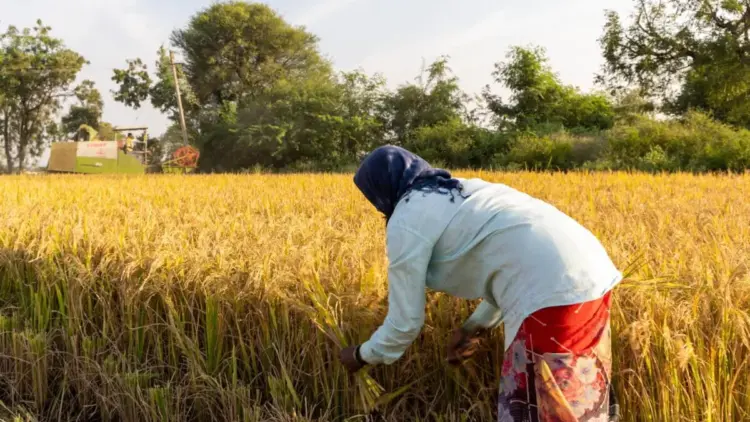
In the lush green expanses of Kamrup district in Assam, the rhythm of life has long been dictated by the sun. But in recent years, that rhythm has fractured. Manoj Borah, a welfare officer at a local tea garden, observes a shift that transcends mere discomfort. It is a biological and economic stalling. While the laborers under his care have historically braved the scorching midday sun, a new, more insidious enemy has emerged: the humid heat that refuses to dissipate, even after the sun goes down.
“The high temperature during the night is burning them out,” Borah explains. “It is difficult to rest at night, and this is taking a toll on their health. Without proper rest, it is difficult to go out and work in the fields the next day.” To survive, the gardens have been forced to overhaul centuries of tradition, shifting outdoor working hours to start at 5 AM and concluding strictly by noon to avoid the lethal combination of moisture and heat.
Borah’s observations are not merely anecdotal; they are the human face of a staggering global statistic. According to a new study published in the Journal of Geophysical Research (JGR) Atmospheres, a journal of the American Geophysical Union, India now accounts for more than half of the global rise in potential productivity loss due to extreme humid heat since the mid-1980s. As the planet warms, the intersection of high temperatures and high humidity is creating a "wet-bulb" effect that the human body—and the Indian economy—is increasingly unable to withstand.
Main Facts: A Nation Under Thermal Siege
The study, led by scientists including Subodh Kumar Saha from the Indian Institute of Tropical Meteorology (IITM), Pune, paints a grim picture of the subcontinent’s climatic trajectory. The core of the issue lies in "humid heat stress," a condition where the air is so saturated with moisture that sweat—the body’s primary cooling mechanism—cannot evaporate.

The Productivity Gap
The researchers utilized a metric known as "potential occupational productivity loss." This is calculated by multiplying the total hours of work lost due to dangerous humid heat levels by the number of people working in a specific region. The findings reveal that India is the global "hotspot" for this phenomenon. Since the mid-1980s, the surge in humidity-driven heat has outpaced dry heat waves in its impact on the workforce, particularly in the agricultural and industrial sectors.
The ENSO Connection
Crucially, the study identifies a strong correlation between these productivity losses and the El Niño-Southern Oscillation (ENSO). ENSO is a natural cycle of warming (El Niño) and cooling (La Niña) in the tropical Pacific Ocean. The researchers found that year-to-year swings in humid heat stress in India are heavily influenced by these distant oceanic patterns. Because ENSO can be forecasted months in advance, scientists now believe they can predict periods of extreme humid heat stress up to six months before they occur.
Chronology: The Escalation of Moist Heat (1980–Present)
The crisis of humid heat in India has not happened overnight; it is the result of a multi-decade escalation driven by global warming and changing sea-surface temperatures.
- The Mid-1980s: This period serves as the baseline for the study. While India has always dealt with heat, the "potential productivity loss" began to climb significantly during this decade as global temperatures started their steady upward march.
- 1995–2020: Records from South Asia during this window show a dangerous trend: the daily maximum "wet-bulb" temperature (a measure of heat plus humidity) began occurring several hours after the daily maximum dry temperature. This meant that instead of cooling down in the late afternoon, the air became more oppressive, extending the heat stress well into the evening and night.
- The Post-2000 Acceleration: Data published in the International Journal of Climatology (February 2024) indicates that humid heat extremes intensified markedly after the year 2000. Coastal regions, particularly along India’s east coast, saw a sharp rise in daily maximum wet-bulb temperatures between April and June.
- The Current Era: In the Northeast, the average length of a heat stress event has doubled. Professor B.N. Goswami of Gauhati University notes that while heat stress events lasted about five days in the 1940s and 50s, they now frequently last 10 to 20 days.
Supporting Data: The Science of the "Wet-Bulb"
To understand why humid heat is more dangerous than dry heat, one must look at the "wet-bulb temperature" (WBT).

The Evaporation Failure
In dry heat, the human body stays cool by sweating. As sweat evaporates off the skin, it carries away heat. However, when the air is already saturated with moisture (high humidity), evaporation slows or stops. A wet-bulb temperature of 33°C (91.4°F) is considered the threshold of extreme danger. At this point, even a healthy person sitting in the shade with plenty of water can suffer from heatstroke because the body cannot shed its internal heat.
Regional Vulnerabilities
The impact is not uniform across the country. The study highlights specific geographic trends:
- The East Coast: States like Odisha and Andhra Pradesh have seen the sharpest increase in humid heat. The warming of the Bay of Bengal has increased the moisture content of the air, making the pre-monsoon months (April to June) particularly lethal.
- The Northeast: Traditionally cooler regions like Assam are now seeing night-time temperatures stay above 30°C. This prevents the "recuperation phase" of the human body.
- Urban Slums: In densely populated cities, the "Urban Heat Island" effect combines with humidity to create stifling conditions for those living in poorly ventilated housing.
Official Responses and Expert Warnings
Scientists and former policymakers are calling for an immediate shift in how India manages its climate risk.
Subodh Kumar Saha (IITM, Pune): Saha emphasizes the urgency for outdoor workers in agriculture and construction to halt activities during peak humid heat. "Continued exposure can lead to severe medical conditions like heat stroke and even death," he warns. He advocates for using the 1-to-6-month ENSO forecast window to implement "adaptation planning," such as managing water resources more aggressively before a predicted heat surge.

Madhavan Nair Rajeevan (Former Secretary, Ministry of Earth Sciences): Rajeevan points out that the complexity of humid heat makes it harder to manage than traditional dry heat waves. He suggests that because we can now predict these events, the government must move toward "seasonal predictability." This includes sensitizing hospitals to expect a rise in kidney and heart-related admissions months in advance and redesigning urban shelters for the homeless and slum dwellers.
Professor B.N. Goswami (Gauhati University): Goswami highlights a critical gap in data. He argues that India needs to use its own localized data on work conditions and vulnerability to define "heat stress" thresholds, rather than relying solely on international standards. "It should be adequately communicated to the people so that necessary steps can be taken in time," he says.
Implications: The Toll on Health and Economy
The long-term implications of India’s rising humid heat are twofold: a public health crisis and a structural economic slowdown.
The Biological Decline
Unlike the immediate shock of a dry heat stroke, humid heat often causes a "slow decline." When the body cannot cool down, the heart must work harder to pump blood to the skin, and the kidneys struggle with dehydration and electrolyte imbalances. Professor Goswami notes that many casualties are not officially linked to heat stress because the damage—specifically to the heart and kidneys—happens gradually. Without nighttime recovery, the body remains in a state of permanent physiological stress.

The Productivity Drain
As India strives to become a global manufacturing and agricultural powerhouse, humid heat acts as a silent brake on GDP. When workers are forced to stop by noon, or when their physical capacity is reduced by 50% due to thermal exhaustion, the economic output of the nation suffers. The study’s finding that India represents over half of the global rise in productivity loss suggests that climate change is not just an environmental issue for India, but a direct threat to its "demographic dividend."
The Path Toward Adaptation
The researchers and experts agree on several "adaptation pillars":
- Work Hour Reform: Standardizing the 5 AM start time for outdoor industries across heat-vulnerable states.
- Climate-Resilient Infrastructure: Building "cool sheds" in agricultural fields and improving the ventilation of industrial workshops.
- Early Warning Systems: Integrating ENSO-based humid heat forecasts into the National Disaster Management Authority (NDMA) protocols.
- Urban Greening: Increasing canopy cover in cities to provide natural cooling and reduce the moisture-trapping effect of concrete.
As Manoj Borah looks out over the tea gardens of Assam, he knows the future of his workers depends on more than just rain and soil. It depends on a national recognition that the air itself is changing—becoming heavier, hotter, and harder to breathe. The science is clear: the warning signs are now visible six months out. The question remains whether India’s policy and infrastructure can move fast enough to keep pace with a warming world.