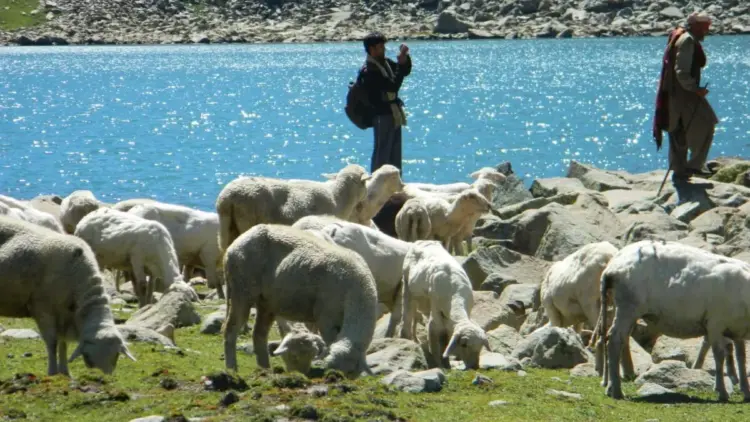
Srinagar, Jammu and Kashmir – Every summer, the high-altitude pastures of the Kashmir Himalayas witness an ancient spectacle: the seasonal migration of the Gujjar and Bakarwal pastoralists. Moving with thousands of sheep, goats, and cattle, these communities traverse rugged terrain in search of the lush, nutrient-rich grasses found in the mountains. However, this traditional practice, which has sustained livelihoods for centuries, is now being scrutinized through the lens of modern biosecurity.
A recent study has sounded an alarm, mapping the precarious "contact zones" where these migratory livestock routes overlap with the habitats of some of the world’s most endangered wildlife, including the Kashmir red deer (Hangul) and the Markhor. The primary concern is the potential transmission of Foot-and-Mouth Disease (FMD), a highly contagious viral pathogen that could spell disaster for isolated wildlife populations already on the brink of extinction.
Main Facts: A Convergence of Tradition and Vulnerability
Foot-and-Mouth Disease (FMD) is a severe, highly communicable viral disease affecting cloven-hoofed animals. While it is a well-known scourge in the agricultural sector, causing significant economic losses, its impact on wildlife in the Himalayan region remains a critical yet under-studied frontier.
The study, published in the Virus Disease journal, identifies 34 potential disease-risk zones across 15 protected areas in Jammu and Kashmir. These zones are defined by the proximity of pastoral migratory routes to the boundaries of wildlife sanctuaries and national parks. The research highlights a "One Health" crisis, where the health of domestic animals, wild animals, and the ecosystem are inextricably linked.

Key Species at Risk
- The Hangul (Kashmir Red Deer): The only surviving sub-species of Red Deer in Asia, restricted largely to the Dachigam National Park and its surrounding areas.
- The Markhor: The world’s largest wild goat, known for its corkscrew horns, found in the steep cliffs of the Pir Panjal range.
- Himalayan Musk Deer and Goral: Rare ungulates that share the same high-altitude grazing resources as migratory livestock.
The proximity is startling. In some areas, such as the Lachipora Wildlife Sanctuary in Baramulla, the interface between livestock routes and protected wildlife habitats is as narrow as 370 meters.
Chronology: A Pattern of Outbreaks
The urgency of the study is underscored by a series of recent FMD and FMD-like outbreaks that have plagued the region, demonstrating the virus’s persistent presence in the livestock population.
- 2021: Widespread Epidemic: Large-scale outbreaks were recorded across the districts of Budgam, Pulwama, and Srinagar. Farmers suffered massive economic losses as the virus tore through unvaccinated herds.
- May 2024: Southern and Central Resurgence: FMD outbreaks hit the villages of Kudara and Sirander in Bandipora, as well as parts of Pulwama district, coinciding with the early stages of the summer migration.
- July 2024: Highland Crisis: Reports emerged of an FMD-like outbreak in the highland pastures of Kargil. These high-altitude infections are particularly concerning as they occur in the very areas where livestock are most likely to encounter wild ungulates.
Despite systematic mass vaccination efforts under the National Animal Disease Control Programme (NADCP), pockets of unvaccinated or partially immunized livestock—often those in transit—continue to sustain focal outbreaks, providing a reservoir for the virus.
Supporting Data: Mapping the Risk Zones
The research team, led by scientists from the Central University of Jammu, utilized Geographic Information Systems (GIS) spatial analysis and participatory surveys with herders to categorize the risk. They demarcated three distinct zones based on the distance from protected areas:

- High-Risk Zones: Within 5 km of a protected area boundary.
- Buffer Zone 1: Between 5.1 km and 10 km.
- Buffer Zone 2: Between 10.1 km and 15 km.
Geographic Distribution of Risk
The study found that four districts account for over 65% of the identified risk zones:
- Baramulla: 11 interfaces (Highest in the region).
- Bandipora: 9 interfaces.
- Rajouri: 8 interfaces.
- Ganderbal: 7 interfaces.
Dr. Vinita Sharma, assistant professor at the Wildlife Conservation Research Laboratory, Central University of Jammu, noted that the overlap is not merely a line on a map. "In many areas, livestock and wildlife share grazing grounds, water sources, and movement corridors. This involves actual resource sharing, which increases the likelihood of pathogen spillover," she explained.
The Biology of Transmission
FMD is notorious for its environmental resilience. The Foot-and-Mouth Disease Virus (FMDV) thrives in cold, humid conditions—exactly the climate found in the Kashmir highlands during the summer and monsoon months.
- Aerosol Transmission: The virus can spread through the air; a mere 10 virus particles are enough to infect an animal via the respiratory route.
- Indirect Contact: Shared salt licks, water holes, and contaminated soil can harbor the virus for extended periods.
- Viral Shedding: Actively infected livestock shed high concentrations of the virus before they even show clinical symptoms, making early detection nearly impossible without active surveillance.
Official Responses and Expert Perspectives
The study has sparked a debate among veterinarians, ecologists, and conservationists regarding the best path forward.

The Conservationist View
Dr. Pervaiz Dar, an associate professor of veterinary microbiology at SKUAST, emphasizes that current frameworks are too livestock-centric. "Pathogen spillover poses not only a livestock economic threat but also an existential extinction risk to small, isolated wildlife populations," Dar said. He argues that while vaccination has dampened large-scale epidemics, the "migratory bridge" remains a significant biosecurity gap.
Rahul Kaul, an ecologist and former CEO of the Wildlife Trust of India, offered a nuanced critique of the study’s methodology. He pointed out that some areas with the highest grazing pressure, like Upper Dachigam and Hirpora, were not as prominently featured as high-risk zones in the study as field experience might suggest. "This points to possible limitations in methodology and field verification," Kaul noted, suggesting that real-world grazing pressure might be even higher than the GIS models indicate.
The Veterinary Response
Dr. Mohsin Ali Gazi, a wildlife veterinary officer, highlighted a "critical gap" in surveillance. Currently, the J&K Animal Husbandry Department focuses exclusively on domestic animals. "Wildlife is not included in the active surveillance net. Without it, we cannot know if wild ungulates are merely ‘dead-end victims’ or if they are acting as reservoirs that could re-infect livestock later," Gazi warned.
He called for a unified framework between the Wildlife Protection Department, the Animal Husbandry Department, and academic institutions like SKUAST-Kashmir to implement a "One Health" strategy.

Implications: A Call for Integrated Management
The potential for an FMD outbreak in wildlife is not a theoretical concern. In 2022, in Madhya Pradesh’s Sanjay-Dubri Tiger Reserve, a containment strategy had to be rapidly deployed to prevent FMD from jumping from village cattle to wild ungulates. In the fragile ecosystem of the Kashmir Himalayas, where species like the Hangul number fewer than 300 individuals, a single outbreak could be catastrophic.
Recommendations for Policy and Practice
To mitigate these risks without dismantling the traditional livelihoods of the Gujjar and Bakarwal communities, experts suggest a multi-pronged approach:
- Pre-Migration Certification: Mandatory health checks and "vaccination passports" for livestock before they are permitted to move into highland pastures.
- Mobile Veterinary Units: Establishing temporary clinics along the primary migratory routes to treat sick animals and provide booster shots.
- Grazing Buffers: Coordination between herders and forest officials to designate "no-go" zones around the core habitats of the Hangul and Markhor, particularly during the rutting and calving seasons.
- Community-Led Surveillance: Training local youth within the pastoral communities to recognize FMD symptoms and report them via mobile apps. This "citizen science" approach could provide real-time data from remote areas that are inaccessible to government officials.
- Non-Invasive Wildlife Monitoring: Using environmental DNA (eDNA) from water sources or fecal sampling to monitor the presence of FMDV in wild populations without the need for stressful physical captures.
Conclusion: Balancing Heritage and Survival
The migration of the Gujjar and Bakarwal is more than just a movement of animals; it is a living heritage that defines the cultural landscape of Jammu and Kashmir. However, as the study makes clear, this heritage now exists in a world of increasing biological risk.
The mapping of these 34 risk zones provides a blueprint for action. By moving toward a "One Health" model—where the health of the shepherd’s goat is seen as vital to the survival of the mountain’s Markhor—the region can protect its unique biodiversity while sustaining its traditional economies. As the study concludes, the integration of GIS technology, real-time alerts, and community partnership is no longer optional; it is the only way to ensure that the "invisible threat" of FMD does not become a visible tragedy for the wildlife of the Himalayas.