As the mercury begins to dip in mid-November, a transformative silence settles over the landscape of Dargarbond, a village nestled on the fringes of Son Beel in Assam’s Barak Valley. For Arup Das, a local farmer, this seasonal transition is a call to action. Looking out across the expansive marshes that were, until only weeks ago, a vast inland sea, he releases his flock of Nageshwari ducks. They waddle into the receding waters to forage for snails, aquatic plants, and insects—the organic remnants of a retreating monsoon.
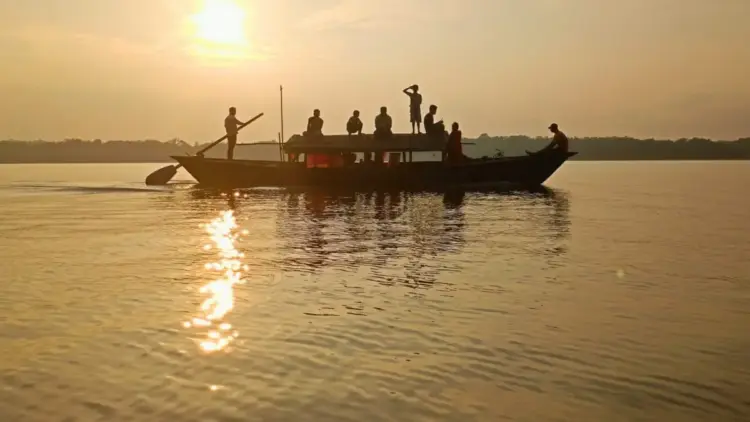
Son Beel is not merely a geographic feature; it is the lifeblood of southern Assam. As the largest wetland in the state, its size is a rhythmic accordion, expanding to cover thousands of hectares during the monsoon and contracting into fragmented pools during the dry winter. More than 50,000 people—fishers, farmers, and laborers—depend directly on this pulse for their survival. Yet, this ancient cycle of inundation and retreat is under unprecedented pressure. A combination of climate-driven erraticism and human-induced degradation is forcing the communities of Son Beel to choose between radical adaptation or total displacement.
Main Facts: A System in Flux
The ecological significance of Son Beel lies in its identity as a "shunting" system for the region’s hydrology. Tapati Das, an ecologist and head of the Department of Ecology and Environmental Science at Assam University, emphasizes that a wetland is far more than a static body of water. "It is a system of inundation and retreat, of channels and marshes, which naturally replenishes a landscape in cycles," she explains.
During the monsoon, the wetland acts as a massive sponge, absorbing the overflow from the Singla River and spreading it across the surrounding lowlands. This expansion creates a vast aquatic habitat, allowing fish populations to surge and migrate. As the dry season arrives, the water recedes, concentrating fish in remaining perennial pools and exposing nutrient-rich substrates that farmers use for winter crop cultivation.

However, the "integrated farming" model practiced by Arup Das highlights a shift in how residents view this land. Rather than relying solely on the whims of the wetland’s natural fish stocks, Arup has developed a closed-loop system. His Nageshwari ducks, a hardy local breed, provide droppings that serve as organic feed for his fish ponds. This diversification is a response to a harsh reality: the wetland is no longer as predictable or as bountiful as it once was.
Chronology: From Traditional Abundance to Modern Struggle
The story of Son Beel’s transformation can be traced through the lives of its inhabitants and the shifting timelines of their livelihoods.
2014–2018: The Seeds of Diversification
Arup Das’s journey reflects the broader community’s move toward resilience. In 2014, he began with a single cow, hoping to build a dairy-based income. However, by 2025, even as his herd grew to twenty, he realized the local market was saturated and maintenance costs were prohibitive. In 2018, acting on advice from the Khanapara Veterinary College, he pivoted to Nageshwari ducks—a breed better suited to the amphibious landscape of the Barak Valley.
2019–2021: The Siltation Crisis and Economic Shifts
By 2019, scientific reviews began documenting a disturbing trend: the Singla River was depositing sediment into Son Beel faster than the Kachua River could carry it away. This imbalance led to the death of 14 out of 24 major group fisheries. Despite this, the fishery department recorded a peak production of 824,000 kg in 2020-21, though local fishers noted that this volume masked a decline in high-value native species.

2023–2025: The Acceleration of Climate Risk
Recent years have seen a convergence of climatic and non-climatic stressors. A 2023 study confirmed a significant decline in fish variety, with species like Chapila, Basa, and Pabda becoming increasingly rare. By 2025, satellite imagery analysis revealed a shocking statistic: the deep-water perennial core of the wetland—the "refuge" where fish survive the winter—had shrunk by 50% in just a decade, from 0.66 square kilometers in 2015 to a mere 0.33 square kilometers.
Supporting Data: The Science of Shrinking Habitats
The crisis at Son Beel is supported by a growing body of empirical evidence. Researchers have identified several key metrics that illustrate the wetland’s decline:
1. Hydrological Collapse
A watershed study published in 2024 examined the catchment area between 1990 and 2020. It found that the total mapped water-body area in the region fell from 46.44 to 39.64 square kilometers. The loss of "hydrological sponges"—swamps and marshlands—has led to accelerated surface runoff and higher sediment delivery from the Mizo Hills, which effectively "chokes" the wetland basin.
2. Socio-Ecological Vulnerability
A December 2025 study interviewed 160 households across 16 villages around Son Beel. The findings revealed a stark divide in adaptive capacity:

- High Resilience: Villages like Anandapur and Dargarbond, where farmers like Arup have access to capital and education, are better positioned to handle climate shocks.
- High Vulnerability: Villages such as Krishna Nagar and Bhairab Nagar face severe risks. These communities suffer from limited livelihood diversification, poor housing infrastructure, and a heavy reliance on traditional fishing, which is failing due to wetland degradation.
3. Biodiversity Loss and Pollution
The District Fishery Development Officer (DFDO) of Sribhumi, Anupam Sharma, notes that while 61 fish species remain, the ecosystem is being undermined by unsuitable fishing gear. Small mesh nets indiscriminately capture juvenile fish, preventing populations from regenerating. Furthermore, the rise of tourism has introduced plastic pollution, while the invasion of water hyacinth (Eichhornia crassipes) on exposed lake beds prevents the natural regrowth of native aquatic flora.
Official Responses: Policy Gaps and Government Plans
The government’s approach to Son Beel is a mixture of ambitious infrastructure goals and notable omissions in conservation funding.
The ADB-SWIFT Exclusion
The most glaring gap in official support is the "Sustainable Wetland and Integrated Fisheries Transformation" (SWIFT) project. Funded by the Asian Development Bank (ADB), this statewide initiative aims to restore wetlands across Assam. However, Himangshu Talukdar, the District Project Director of ADB-SWIFT, confirmed that Son Beel—despite being the state’s largest wetland—has no approved package under this project.
Tourism and Energy Aspirations
The state government’s 2025-26 budget speech highlighted plans for enhanced tourism infrastructure at Son Beel. Additionally, the Assam Power Generation Corporation Limited (APGCL) has proposed a floating solar project on the wetland. While these projects promise economic growth, ecologists express concern. "Economic incentives cannot outweigh ecological health," warns Tapati Das. She argues that before any major intervention, there must be a comprehensive documentation of native species and a seasonal baseline of water quality and flow.

The KVK Perspective
Pulakabha Chowdhury, head of the Krishi Vigyan Kendra (KVK) in Sribhumi, points out the logistical hurdles to adaptation. Only about 5% of farmers have successfully adopted integrated farming. "A farmer who owns little land may have nowhere to construct a fishpond," Chowdhury says. "Even when land and capital are available, managing several enterprises requires labor and time that many impoverished households simply do not have."
Implications: The Future of a Seasonal Giant
The current trajectory of Son Beel suggests a future where the wetland may cease to function as a seasonal ecosystem, instead becoming a fragmented collection of agricultural plots and stagnant pools. The implications are profound for both the environment and the human population.
The Adaptation Gap
For farmers like Arup, integrated farming is a shield against climate variability, but it is not a cure for the wetland’s death. He notes that summers in Assam are becoming longer and more intense, making it difficult to maintain the precise temperatures required for his duckling incubators. If the "deep-water core" continues to disappear, the natural fish stocks will eventually collapse entirely, making even integrated "pond-and-duck" systems more expensive as they lose the benefit of free-range foraging in the marshes.
The Risk of Mono-Culture
The preference for "quick return" crops, such as seedless tomatoes, over traditional or climate-resilient crops like dragon fruit or foxnuts (makhana), indicates a community in survival mode. Without a guaranteed market for diversified produce, farmers are forced into high-risk, high-input agricultural practices that further deplete the soil and require chemical fertilizers, which eventually wash back into the wetland, poisoning the fish.

A Call for Seasonal Sensitivity
Ecologists argue that the only way to save Son Beel is to manage it as a seasonal entity rather than a permanent lake. This requires:
- Desiltation: Targeted dredging of the core areas and the Kachua River outlet to restore the natural flow.
- Regulated Tourism: Implementing strict "no-plastic" zones and limiting motorboat activity to protect fish breeding grounds.
- Inclusive Restoration: Incorporating Son Beel into large-scale projects like SWIFT to provide the 95% of non-diversified farmers with the capital needed to build resilient livelihoods.
As Arup Das watches his Nageshwari ducks move through the shallow waters of Dargarbond, he is a man standing between two worlds: an ancestral past of natural abundance and an uncertain future of engineered survival. The story of Son Beel is a microcosm of the global wetland crisis—a reminder that when the pulse of the water fades, the heartbeat of the community is not far behind. Without immediate, science-based intervention, Assam’s largest wetland may soon become its largest memory.