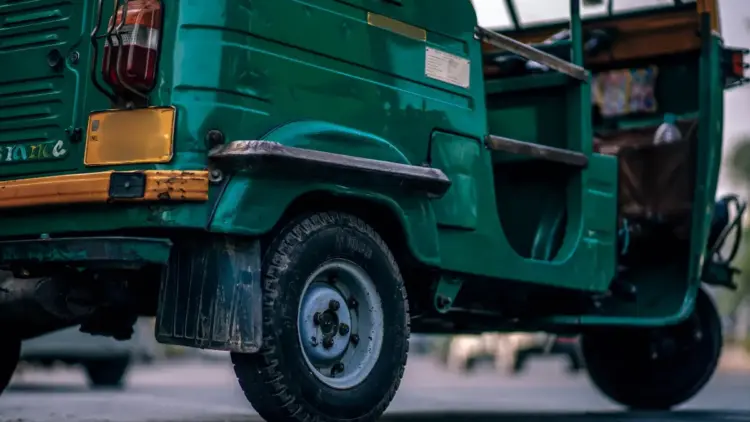
As India accelerates its journey toward becoming a global economic powerhouse, the roar of its automotive industry has never been louder. In 2023, the nation officially surpassed Japan to become the world’s third-largest automobile market. However, trailing behind every vehicle on India’s expanding network of highways and urban flyovers is a microscopic trail of chemical debris.
Every time a tire rotates, it sheds tiny particles of rubber. For decades, this was viewed merely as physical "wear and tear." But a groundbreaking scientific discovery has revealed that a specific chemical additive in these tires—6PPD—reacts with the atmosphere to create a byproduct so toxic it has been linked to the mass extinction of aquatic species in North America. While the Western world begins to grapple with the regulatory fallout, India remains in a state of data-blindness. Despite record-breaking vehicle sales, experts warn that there is virtually no data on how much of this lethal chemical is currently leaching into the country’s rivers and groundwater.
Main Facts: The Chemistry of a "Goldilocks" Additive
To understand the scale of the potential crisis, one must first understand the chemistry of the tire. Tires are not merely rounds of natural rubber; they are complex chemical amalgams designed to withstand immense heat, friction, and environmental degradation.
The primary culprit in this emerging environmental narrative is 6PPD (N-(1,3-dimethylbutyl)-N′-phenyl-p-phenylenediamine). In the tire industry, 6PPD is often referred to as a "Goldilocks" chemical because it performs its job perfectly: it acts as a powerful antioxidant and antiozonant. By migrating to the surface of the tire, 6PPD reacts with ground-level ozone before the ozone can attack the rubber polymers. This prevents the rubber from cracking and becoming brittle, significantly extending the lifespan and safety of the tire.
However, the very reaction that saves the tire creates a secondary monster. When 6PPD reacts with ozone, it transforms into 6PPD-quinone (6PPD-Q).
A Potent Aquatic Toxin
Scientific consensus now ranks 6PPD-Q as one of the most toxic compounds ever discovered for aquatic organisms. According to Paul Sharp, a chemist and Professor Emeritus at the University of Missouri, 6PPD-Q is "ubiquitous all over the motorized world." It is not contained by borders or specific climates. As tires wear down against asphalt, they release "tire wear particles" (TWP) impregnated with 6PPD-Q. During rainstorms, these particles are swept from the hot tarmac into storm drains, eventually discharging directly into rivers, lakes, and streams.
The toxicity is staggering. Research indicates that 6PPD-Q is the second most toxic chemical to aquatic life ever documented, trailing only behind a few highly regulated pesticides. Even in miniscule concentrations—measured in nanograms per liter—it can prove fatal to sensitive species.

Chronology: The 20-Year Mystery of the Pacific Northwest
The identification of 6PPD-Q was not an overnight discovery; it was the culmination of a decades-long forensic investigation into an ecological enigma known as "Urban Runoff Mortality Syndrome."
1990s–2010s: The Dying Salmon
For over twenty years, biologists in the U.S. Pacific Northwest observed a disturbing pattern. Every time a heavy rain hit the urban centers of Seattle and Portland, adult coho salmon returning to spawn in local creeks would begin to swim erratically, gasp at the surface, and die within hours. In some streams, the mortality rate was as high as 40% to 90% of the returning population.
2010s: Eliminating the Usual Suspects
Researchers led by Jen McIntyre, an Assistant Professor at Washington State University, began a process of elimination. They tested for every known variable: high water temperatures, pathogens, low dissolved oxygen, heavy metals like zinc, and common pesticides. None of these factors could explain the rapid, mass deaths. The only consistent clue was the rain. Specifically, the "first flush" of stormwater coming off busy urban roads.
December 2020: The Breakthrough
The mystery was finally solved when a team of researchers from the University of Washington and Washington State University published a landmark study in the journal Science. By using high-resolution mass spectrometry, they isolated a previously unidentified compound in the stormwater. They traced it back to tire rubber and identified it as 6PPD-quinone. This was the "smoking gun" that linked tire wear directly to the collapse of salmon populations.
2021–Present: Global Recognition
Since the 2020 study, the global scientific community has scrambled to assess the damage. Studies in Australia, China, and Canada have confirmed the presence of 6PPD-Q in their urban waterways. However, in India, the world’s most populous nation and a burgeoning automotive hub, the scientific response is only just beginning to take shape.
Supporting Data: India’s Escalating Risk Profile
India’s vulnerability to 6PPD-Q pollution is exacerbated by its rapid industrial growth and unique urban infrastructure.
Record-Breaking Automotive Growth
According to the Society of Indian Automobile Manufacturers (SIAM), the fiscal year 2025-26 saw record growth of 10.4% in automobile wholesales. Total tire production in India mirrored this trend, rising by 21% in 2022 and another 6% in 2023, according to the Automotive Tyre Manufacturers’ Association (ATMA). As more vehicles hit the road, the volume of tire wear particles deposited on Indian soil increases exponentially.

The Kolkata Air Study
While data on water contamination is scarce, a 2022 global air-monitoring study provided a chilling preview. The study, which used passive samplers to quantify tire-derived chemicals in 18 megacities, found that Kolkata ranked first globally in the concentration of diphenylguanidine—another chemical used in tire manufacturing. While 6PPD-Q was not the primary focus of that specific study, the high levels of other tire chemicals suggest that Indian urban centers are hotspots for tire-derived pollution.
The Crumb Rubber Factor
The risk is not limited to active driving. In India, the "circular economy" often involves shredding old tires into "crumb rubber." This material is used as infill for artificial turf in sports fields and playgrounds to provide cushioning. Research in the United States has already detected 6PPD and 6PPD-Q leaching from these artificial fields. As the artificial turf market expands in India, the potential for 6PPD-Q to enter the environment through recreational spaces increases.
Official Responses: A State of Institutional Silence
Despite the mounting global evidence, Indian regulatory bodies have been slow to react. The lack of data is not necessarily a sign of safety, but rather a lack of surveillance.
The Awareness Gap
N. Jayaraman, Professor and Chair of the Department of Organic Chemistry at the Indian Institute of Science (IISc) in Bangalore, notes that awareness of 6PPD-Q in India remains critically low. He points out that the COVID-19 pandemic and subsequent geopolitical tensions have diverted resources away from emerging environmental threats.
"To the best of our knowledge, no scientific data exists on the 6PPD-Q levels in Indian road dust, stormwater, or water bodies," Jayaraman states. He further emphasizes that Indian tires are made using the same global standards as those in the West. "6PPD is the goldilocks of the tire industry, so Indian tires use them… it’s backed up by literature."
Regulatory Lapses
In the Western world, the discovery of 6PPD-Q has already triggered legal and regulatory action. In California, for instance, tire manufacturers are now required to research safer alternatives. In contrast, India’s Central Pollution Control Board (CPCB) has yet to issue guidelines or monitoring protocols for tire wear particles.
Jayaraman argues that India’s weaker law enforcement and lack of dedicated regulatory bodies for small-scale water bodies make the country particularly vulnerable. "Our water bodies are already in poor shape," he warns, "so regulation becomes very important to save the water bodies from 6PPD-Q pollution."

Implications: An Ecological Crisis in the Making
The implications of 6PPD-Q in India extend far beyond the death of a few fish species; it represents a systemic failure of urban planning and environmental protection.
The Stormwater Paradox
One of the most significant challenges in India is the lack of proper Stormwater Management (SWM). In most Indian cities, the drainage systems are "combined," meaning they carry both rainwater and untreated sewage. When intense, erratic rainfall hits—a phenomenon becoming more common due to climate change—this toxic cocktail of sewage and 6PPD-Q-laden road runoff overflows directly into rivers like the Ganges, Yamuna, and Mithi.
Without a dedicated SWM system to filter or treat runoff, there is no barrier between the toxic asphalt and the nation’s primary water sources.
Biodiversity at Risk
While the U.S. studies focused on coho salmon, the impact of 6PPD-Q on Indian freshwater species remains a complete unknown. India is home to a vast array of endemic fish and amphibians, many of which may be just as sensitive to 6PPD-Q as the salmon of the Pacific Northwest. The potential for "silent extinctions" in Indian rivers is high, as mass die-offs might be attributed to general pollution or low oxygen rather than the specific chemical toxicity of tire wear.
The Path Forward: Green Chemistry
The solution to the 6PPD-Q problem is not to stop driving, but to change how tires are made. This requires a shift toward "Green Chemistry"—finding an antioxidant that protects rubber without transforming into a lethal toxin. However, until the Indian government and scientific community begin measuring the scale of the problem locally, there is little incentive for the domestic tire industry to innovate.
Conclusion
As India continues to pave over its landscape to accommodate millions of new vehicles, the environmental cost of mobility is being rewritten. 6PPD-Q represents a new class of "stealth" pollutants—chemicals that are essential for industrial performance but devastating to the natural world.
Until India starts measuring 6PPD-Q in its road dust, drains, and rivers, the scale of the problem will remain hidden in plain sight. For a nation that relies so heavily on its river systems for both spiritual and physical sustenance, the invisible erosion of tire rubber may be a price too high to pay for progress. The message from experts is clear: the data-gap must be closed before the "Urban Runoff Mortality Syndrome" becomes a permanent fixture of the Indian landscape.