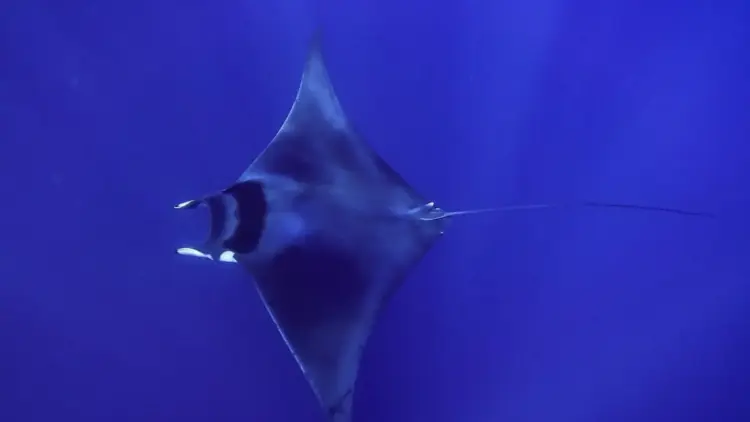
THOOTHUKUDI, India — They are often described as the "ghosts of the ocean," majestic cartilaginous giants that glide through the water with bird-like grace. Manta and devil rays, known scientifically as mobulids, are among the most charismatic megafauna of the marine world. Yet, beneath the surface of India’s coastal waters, a silent catastrophe is unfolding.
A comprehensive decade-long study has revealed a harrowing trend: the populations of these slow-growing creatures are in freefall. Despite their ecological importance and international protected status, India has emerged as the global leader in mobulid mortality, accounting for more than a quarter of all deaths worldwide. As fishing pressure intensifies and regulatory gaps persist, the very survival of these "winged" fish hangs in a precarious balance.
1. Main Facts: India’s Leading Role in a Global Crisis
The scale of the threat facing mobulids is staggering. Globally, an estimated 259,000 manta and devil rays are killed annually. While industrial fishing is often blamed for marine declines, the primary driver for mobulid mortality is small-scale fisheries (SSFs).
According to research published in Conservation Science and Practice, five countries—India, Indonesia, Sri Lanka, Myanmar, and Peru—are responsible for 87% of these deaths. India stands at the top of this list, contributing 28.2% of total global landings.
The crisis is rooted in the biology of the rays themselves. Unlike many fish that produce thousands of eggs, mobulids are "K-selected" species. They are long-lived, mature late, and have exceptionally low reproductive rates, often producing only one pup every two to three years. This makes them biologically incapable of rebounding from the high levels of extraction currently seen in Indian waters.

In the fishing hubs of Thoothukudi, Tamil Nadu, four specific species have shown marked declines:
- The Spinetail Devil Ray (Mobula mobular)
- The Sicklefin Devil Ray (Mobula tarapacana)
- The Oceanic Manta Ray (Mobula birostris)
- The Bentfin Devil Ray (Mobula thurstoni)
The study highlights a grim paradox: while the total number of rays landed has increased slightly due to more boats and better technology, the individual populations are collapsing.
2. Chronology: Tracking a Decade of Disappearance (2013–2023)
To understand the shifting dynamics of ray populations, a team of researchers, led by Mayuri Chopra of Oxford University and Divya Karnad of the University of Exeter, conducted a longitudinal study at two major landing sites in Thoothukudi: Threspuram and Tharuvaikulam.
The Initial Baseline (2012–2014)
The study began by establishing a baseline of mobulid landings. During this period, researchers documented the peak seasons and the primary gear types used. They found that mobulid catches were heavily linked to the tuna fishing season, primarily between May and July. At this stage, the spinetail devil ray was already the most common species in the bycatch, representing the vast majority of landings.
The Technological Shift
Between 2014 and 2022, the fishing landscape in Tamil Nadu underwent a significant transformation. Small-scale fishers began adopting more advanced GPS systems, larger vessels, and more efficient drift gill nets. This allowed fleets to travel further offshore and stay at sea longer, increasing the "fishing effort" significantly.

The Follow-up Assessment (2023)
When researchers returned for a concentrated assessment in 2023, the data revealed a starkly different reality. While the number of vessels had grown, the "catch per unit effort" (CPUE)—a standard metric for measuring fish density—had plummeted. The peak landing season had also shifted slightly to July through September, tracking the changing migratory patterns of tuna and the rays that follow them.
3. Supporting Data: The Anatomy of a Population Collapse
The researchers utilized three primary indicators to assess the health of the mobulid populations: mean disc width, the ratio of adults to juveniles, and landings per vessel. Each metric pointed toward overexploitation.
Shrinking Sizes and "Truncated" Populations
One of the most alarming findings was the reduction in the average size of the rays being caught. The mean disc width (the distance from wingtip to wingtip) of spinetail devil rays decreased by 10 centimeters over the decade.
"This change isn’t necessarily because the rays are evolving to be smaller," explains Mayuri Chopra. "It’s because the larger, older adults are being removed from the population."
This leads to what scientists call an "age-class truncated population." In 2013, 64% of the spinetail devil rays landed were adults. By 2023, that number had plummeted to just 26%. Because adults are the primary drivers of reproduction, their disappearance creates a "recovery debt" that may take decades to repay.

The Efficiency Trap
The data from individual landing sites tells a story of local depletion:
- At Threspuram: Landings per vessel fell by 86% for spinetail devil rays, 92% for sicklefin devil rays, and 83% for manta rays.
- At Tharuvaikulam: Bentfin devil ray landings dipped by 65%.
Despite these massive drops in individual boat success, the total number of rays landed across the region actually rose by 4%. This "contradiction of the catch" is explained by the sheer volume of new boats entering the water. As Divya Karnad notes, "More efficient technology or more boats will get a higher catch, but that does not mean that there are more fish in the sea."
Gear and Bycatch
The study found that drift gill nets—long walls of netting that hang in the water column—accounted for 98.9% of all mobulid landings. These nets are largely non-selective; while they target tuna, their mesh size and placement make them lethal traps for rays.
4. Official Responses and the Regulatory Gap
The plight of India’s rays is complicated by a fractured legal framework that often fails to align with biological reality.
The Wildlife (Protection) Act (WPA)
Under India’s WPA 1972, manta rays were elevated to Schedule I status in April 2023, granting them the highest level of protection, equivalent to tigers or elephants. However, devil rays—which are often indistinguishable from mantas to the untrained eye and face the same threats—do not share this level of protection.

- The Sicklefin Devil Ray is listed under Schedule II.
- The Spinetail Devil Ray (the most frequently caught) is listed under Schedule IV, a category that primarily regulates international trade rather than prohibiting domestic capture.
The CITES Paradox
In November 2025, all 10 species of manta and devil rays were added to CITES Appendix I, which effectively bans all international commercial trade of these animals. While this is a landmark victory for conservationists, experts warn it may not be enough.
Peter Kyne, a fish biologist at Charles Darwin University, argues that CITES is limited. "It only regulates international trade; it has no control over domestic catches or trade, and enforcement and monitoring are lacking," Kyne says.
Lack of Incentives for Fishers
Currently, there is no government compensation scheme for fishers who cut their nets to release a ray. For a small-scale fisher, a damaged net represents a significant financial loss. Consequently, rays caught as bycatch are brought to shore and sold in local markets for meat or dried for their gill plates.
5. Implications: The Future of India’s Marine Biodiversity
The decline of mobulids is not merely a loss of a "pretty" species; it is an indicator of the declining health of the entire Indian Ocean ecosystem. As top-tier filter feeders, rays play a vital role in nutrient cycling, moving minerals between the surface and the deep sea.
The Risk of Local Markets
As international trade routes for gill plates (used in traditional Asian medicine) tighten due to CITES regulations, researchers fear a "displacement effect." If the rays can no longer be exported to China or Hong Kong, they may be redirected toward local consumption in India. This would keep fishing pressure high while making the trade even harder to track through official statistics.

A Call for "No-Take" Zones and Gear Reform
The study’s authors argue for several urgent interventions:
- Uniform Protection: Elevating all devil ray species to Schedule I of the WPA to match the protections given to manta rays.
- Spatial Management: Identifying and protecting "hotspots"—critical habitats where rays congregate to feed or breed.
- Gear Modification: Encouraging the use of smaller mesh sizes or shorter "soak times" for nets to reduce the likelihood of entanglement.
- Economic Alternatives: Developing eco-tourism (such as ray-watching) which has proven more lucrative than fishing in countries like the Maldives and Indonesia.
The Long Road to Recovery
The researchers conclude with a sobering reminder: because of their slow reproductive cycles, the recovery of these populations will be measured in decades, not years.
"We have seen smalltooth sawfish show significant recovery in the U.S. within two decades with strict conservation measures," says Karnad. The question remains whether India can implement similar measures before the "ghosts of the ocean" disappear entirely from its shores.
References & Credits:
- Data sourced from "Conservation Science and Practice" (2024/2025) and "Marine Policy."
- Field Research: Mayuri Chopra (Oxford), Divya Karnad (Exeter).
- Images: Mayuri Chopra, Julien Renoult, Alicia Christman.