The Indian Bison, or Gaur (Bos gaurus), stands as a testament to the raw power and ecological complexity of India’s wilderness. As the largest wild bovine on the planet, its presence in a landscape is often a primary indicator of a healthy, thriving ecosystem. Recently, news from the heart of India has brought a wave of optimism to the conservation community: the Gaur has made a triumphant return to the Bandhavgarh Tiger Reserve in Madhya Pradesh.
Decades after the species vanished from the reserve’s meadows and forests, a concerted reintroduction effort has transformed a once-absent population into a thriving community. This resurgence, however, is not merely a story of biological recovery; it is a complex narrative involving habitat management, human-wildlife conflict, and the adaptive resilience of a species facing a rapidly changing world.
Main Facts: The Giants of the Indian Wilderness
The Gaur is an animal of superlatives. Often referred to as the "Indian Bison," though it is biologically distinct from the American or European bison, it is the world’s largest wild cattle species.
Physical Profile
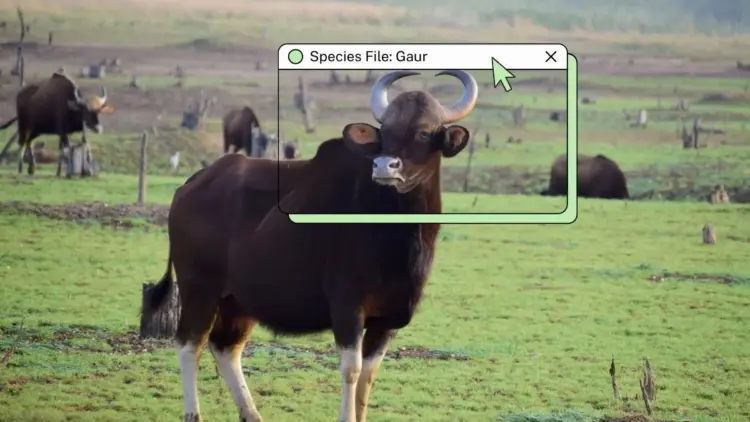
A fully grown bull can stand up to two meters tall at the shoulder and weigh as much as 1,500 kilograms—roughly the weight of a mid-sized sedan. These massive animals are characterized by their deep, muscular frames, a prominent dorsal ridge on their backs, and striking "white socks" on all four legs.
Sexual dimorphism is clearly visible in the species:
- Males (Bulls): Feature dark, near-black coats and massive, upward-curving horns that thicken at the base.
- Females (Cows): Are generally smaller and sport a lighter, reddish-brown coat.
Ecological Role
Despite their intimidating size, Gaur are notoriously shy and elusive. They are social creatures, typically living in small herds ranging from 8 to 20 individuals, almost always led by an experienced matriarch.
As "ecosystem engineers," their role is vital:
- Seed Dispersal: By consuming vast quantities of grasses, bamboo, and leaves, they facilitate the spread of plant species across forest floors.
- Soil Tilling: Their massive weight and movement help churn the soil, aiding in aeration and nutrient cycling.
- Prey Base: They serve as a critical food source for India’s apex predators, including the Bengal tiger, leopards, and packs of dholes (Asiatic wild dogs).
Conservation Status
Globally, the Gaur is listed as ‘Vulnerable’ on the International Union for Conservation of Nature (IUCN) Red List. While their range extends across Nepal, Bhutan, China, and parts of Southeast Asia, India remains their primary stronghold, hosting approximately 85% of the global population (estimated between 13,000 and 30,000 individuals).
Chronology: The Bandhavgarh Revival
The story of the Gaur in Bandhavgarh Tiger Reserve (BTR) is one of the most successful reintroduction programs in modern Indian conservation history.
The Period of Absence
For decades, the bellows of the Gaur were silent in Bandhavgarh. While the reserve remained a premier habitat for tigers, the local Gaur population had been wiped out due to a combination of factors, including potential disease outbreaks from domestic cattle, poaching, and habitat degradation. By the late 20th century, the species was considered locally extinct in the region.
The 2011-2012 Translocation
Recognizing the ecological void left by the Gaur, the Madhya Pradesh Forest Department, in collaboration with experts from the Wildlife Institute of India (WII), launched a bold reintroduction project.
- The Source: A founder herd of approximately 40 Gaur was carefully selected from the Kanha Tiger Reserve, which maintained a healthy and stable population.
- The Move: The translocation was a feat of logistics and veterinary science, requiring the sedation and safe transport of these massive animals across hundreds of kilometers.
A Decade of Growth
Since the reintroduction in 2011-12, the population has shown remarkable resilience. Freed from the immediate pressures that caused their initial disappearance and supported by improved protection measures, the herd began to breed successfully. Today, the Gaur population in Bandhavgarh has swelled to over 220 individuals, marking a more than fivefold increase in just over a decade.
Supporting Data: Distribution and Demographic Realities
The success in Bandhavgarh is a bright spot in a broader, more complicated national picture.

National Distribution
The Gaur is the state animal of both Goa and Bihar, reflecting its historical significance across the subcontinent. Its current distribution is largely fragmented across three major regions:
- The Western Ghats: Home to the largest concentrations, particularly in the Nilgiri Biosphere Reserve.
- Central India: Including the landscapes of Kanha, Satpura, and now Bandhavgarh.
- Northeast India: Inhabiting the foothills of the Himalayas and the floodplains of the Brahmaputra.
The Threat of Habitat Loss
While the numbers in protected reserves are rising, the quality of the habitat is under severe pressure. According to data highlighted by Mongabay-India, the primary threat is the loss of grasslands. In reserves like Bandipur and Bandhavgarh, the "Green Desert" phenomenon is taking hold. This occurs when invasive plant species, such as Lantana camara and Chromolaena odorata, carpet the forest floor. These plants provide no nutritional value to herbivores but choke out the native grasses and bamboo that Gaur depend on.
Human-Wildlife Interface
As forests shrink or become degraded by invasive species, Gaur are increasingly forced into human-dominated landscapes. This has led to a significant shift in the species’ demographic footprint:
- Nocturnal Adaptation: In regions like the Nilgiris and Kodagu, Gaur have begun shifting their activity patterns to the night to avoid contact with humans.
- Urbanization: In hill stations like Coonoor and Kotagiri, Gaur have become surprisingly habituated to human presence, often seen grazing in tea estates or even wandering through town streets during the day.
Official Responses and Conservation Framework
The Indian government and scientific community have established a robust, albeit challenged, framework for the protection of the Gaur.
Legal Protection
The Gaur is granted the highest level of legal protection in India. It is listed under Schedule I of the Wildlife (Protection) Act, 1972. This status ensures that any harm to the animal or its habitat carries severe legal penalties, equivalent to those protecting the tiger or the elephant.
Scientific Perspectives
Experts emphasize that protecting the Gaur requires looking beyond individual animals to the health of the landscape. T. Ramesh, a senior scientist at the Salim Ali Centre for Ornithology and Natural History (SACON), has voiced concerns regarding the current state of Indian grasslands.
"Today, most of our grasslands have been taken over by invasive species, leaving little for the gaur to feed on," Ramesh noted in a 2025 report. "This forces them to move into interface areas or zones shared by both humans and wildlife, leading to conflicts."
Management Strategies
State forest departments are currently focusing on:
- Invasive Species Removal: Large-scale programs to uproot Lantana and restore native grasslands.
- Corridor Protection: Ensuring that Gaur can move between different protected areas to maintain genetic diversity.
- Community Engagement: Educating local populations in areas like the Western Ghats on how to safely coexist with these massive neighbors.
Implications: The Conflict-Coexistence Paradox
The recovery of the Gaur population brings with it a set of complex socio-ecological implications. While the growth in numbers is a victory for biodiversity, it creates a "conflict-coexistence paradox" that will define the next decade of Indian conservation.
The "Urban Gaur" Phenomenon
The behavioral shift of Gaur in the tea-growing regions of Southern India is particularly striking. Unlike their "shy" forest-dwelling ancestors, these populations have adapted to human-modified landscapes. While this shows the species’ resilience, it increases the risk of accidental encounters. A 1,500 kg animal, even if not naturally aggressive, can cause fatal injuries if startled or cornered in a narrow tea-estate path or a village alleyway.
Impact on Tiger Conservation
The success of Gaur reintroduction in Bandhavgarh has a direct positive impact on the reserve’s tiger population. By increasing the available biomass of large prey, the reserve can support a higher density of tigers. However, if the Gaur are forced out of the forest due to a lack of grass, the tigers may follow them to the edges of the reserve, further escalating human-wildlife conflict.
The Path Forward
The return of the Gaur to Bandhavgarh proves that with political will and scientific management, species can be brought back from the brink. However, the long-term survival of the "Indian Bison" depends on more than just translocation. It requires:
- Grassland Restoration: A national-level policy to reclaim meadows from invasive species.
- Land-Use Planning: Restricting developmental projects in critical wildlife corridors.
- Adaptive Management: Developing new protocols for managing wildlife in human-dominated landscapes where traditional "fenced" conservation is no longer feasible.
As India continues to balance its developmental goals with its environmental heritage, the Gaur serves as a massive, brooding reminder of what is at stake. Its resurgence in Bandhavgarh is a milestone, but the journey toward a landscape where humans and these gentle giants can coexist without conflict is only just beginning. Through the "Species File" and continued monitoring, the story of the Gaur will remain a central chapter in the history of India’s biodiversity.