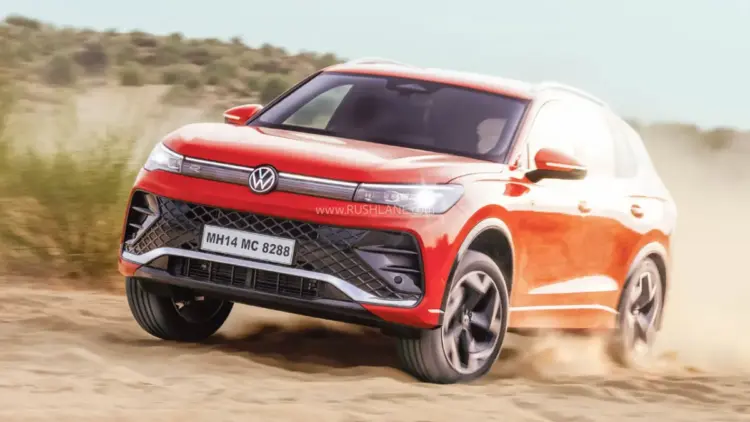
The Indian automotive landscape is one characterized by rapid evolution, where consumer preferences and fiscal policies often dictate the lifespan of even the most prestigious models. In a move that has caught many enthusiasts and industry observers by surprise, Volkswagen India has quietly removed its flagship SUV, the Tiguan R-Line, from its official digital portfolio. Launched with much fanfare in April 2025 as a premium, fully imported offering, the Tiguan R-Line’s departure marks a significant pivot in Volkswagen’s long-term strategy for the Indian subcontinent.
While the company has yet to issue a formal press release regarding the discontinuation, the de-listing from the official website serves as a definitive signal. The move streamlines Volkswagen’s SUV lineup, leaving the locally manufactured Taigun and the newly introduced, locally assembled Tayron to carry the mantle for the German automaker.
Main Facts: The Quiet Departure of the Flagship
The Volkswagen Tiguan R-Line represented the pinnacle of the brand’s internal combustion engine (ICE) engineering in India. Positioned as a premium mid-size SUV, it targeted a niche audience that valued German build quality, sophisticated aesthetics, and the prestige associated with a Completely Built Unit (CBU).
1. The CBU Factor and Pricing
The Tiguan R-Line was imported directly from Europe, which subjected it to high import duties. This reflected in its final price tag of Rs 47.11 lakh (Ex-showroom). While the vehicle offered an uncompromising European specification, the price point placed it in direct competition with entry-level luxury SUVs from brands like BMW, Audi, and Mercedes-Benz, as well as its own sibling, the Skoda Kodiaq.
2. The Internal Rivalry: Tayron’s Rise
The primary catalyst for the Tiguan R-Line’s discontinuation appears to be the arrival of the Volkswagen Tayron. Unlike the Tiguan R-Line, the Tayron is brought into India via the Completely Knocked Down (CKD) route and assembled at the Volkswagen Group’s facility in Chhatrapati Sambhajinagar (formerly Aurangabad). This local assembly allows for more competitive pricing and a broader range of variants, effectively making the imported Tiguan R-Line redundant in a price-sensitive market.
3. Streamlining the Portfolio
With the Tiguan R-Line gone, Volkswagen’s SUV portfolio is now more focused. The Taigun serves the volume-heavy mid-size segment (competing with the Hyundai Creta and Kia Seltos), while the Tayron addresses the premium D-segment. This simplification helps the brand focus its marketing efforts and spare parts logistics on models with higher volume potential.
Chronology: The Journey of the Tiguan Brand in India
To understand why the discontinuation of the R-Line is significant, one must look at the historical trajectory of the Tiguan nameplate in the Indian market.
- The Debut (2017): Volkswagen first introduced the second-generation Tiguan to India in 2017. It featured a 2.0-litre TDI diesel engine and was praised for its understated elegance and "tank-like" build quality.
- The Shift to Petrol (2020): Following the implementation of BS6 emission norms and the Volkswagen Group’s global "SUVW" strategy, the diesel Tiguan was phased out. It was replaced by the Tiguan Allspace—a 7-seater long-wheelbase version imported as a CBU.
- The Facelift (2021): Volkswagen returned to local assembly (CKD) for the 5-seater Tiguan facelift, powered by the 2.0-litre TSI engine. This model became a staple for those seeking a "sleeper" performance SUV.
- The 3rd Gen Launch (April 2025): The 3rd Generation Tiguan R-Line was launched as a CBU to showcase the brand’s latest global design language and tech. It was intended to serve as a halo product.
- The Discontinuation (Present): Less than a year after its 3rd-gen debut, the R-Line is de-listed, making way for the Tayron to lead the premium segment.
Supporting Data: Comparing the Tiguan R-Line and the Tayron
The decision to phase out the Tiguan R-Line becomes clearer when looking at the specifications and value proposition of its successor, the Tayron.
| Feature | Tiguan R-Line (Discontinued) | Tayron R-Line (Current) | Tayron Life (Current) |
|---|---|---|---|
| Import Route | CBU (Imported) | CKD (Locally Assembled) | CKD (Locally Assembled) |
| Seating | 5-Seater | 7-Seater (3 Rows) | 5-Seater (2 Rows) |
| Price (Ex-sh) | Rs 47.11 Lakh | Rs 47.74 Lakh | Rs 41.99 Lakh |
| Engine | 2.0L Turbo Petrol | 2.0L Turbo Petrol | 2.0L Turbo Petrol |
| Power/Torque | 201 bhp / 320 Nm | 201 bhp / 320 Nm | 201 bhp / 320 Nm |
| Drivetrain | 4MOTION AWD | 4MOTION AWD | FWD / 4MOTION (Opt) |
The "Tayron Life" Advantage
A critical piece of data is the existence of the "Tayron Life" variant. Priced at Rs 41.99 lakh, it offered a 5-seater configuration similar to the Tiguan but with significantly more cabin space and a larger boot, all while being nearly Rs 5 lakh cheaper than the Tiguan R-Line. For the Indian consumer, the Tayron Life provided better "value per square inch," making the Tiguan R-Line a difficult sell.
Performance Parity
Both vehicles shared the same mechanical heart: the EA888 2.0-litre turbocharged four-cylinder engine. Delivering 201 bhp and 320 Nm of torque through a 7-speed DSG (Direct-Shift Gearbox), the performance metrics were identical. Since the Tayron offered the same driving dynamics with more versatility (7 seats or more space), the Tiguan’s USP was limited solely to its "Made in Germany" import status.

Official Responses and Market Silence
As of the date of this report, Volkswagen India has not issued a formal statement explaining the removal of the Tiguan R-Line. This "silent exit" is a common tactic in the automotive industry when a model is being phased out due to low volumes or a shift in production priority.
However, sources close to the company suggest that the move is part of a broader "efficiency drive." By focusing on CKD models like the Tayron, Volkswagen can better manage its inventory and hedge against currency fluctuations that often plague CBU imports.
For existing owners of the Tiguan R-Line, the official stance remains that after-sales service and spare parts availability will continue unaffected. Since the Tiguan and Tayron share the MQB Evo platform and the 2.0L TSI powertrain, mechanical components are expected to remain readily available for the foreseeable future.
Implications: What This Means for Volkswagen and the Indian Market
The discontinuation of the Tiguan R-Line is more than just the end of a single model; it is an indicator of where the Indian premium SUV market is headed.
1. The Death of the "Niche CBU"
The Indian government’s high taxation on CBUs is successfully pushing manufacturers toward local value addition. Volkswagen’s decision shows that even for premium products, the "Imported" tag is no longer enough to justify a massive price premium if a locally assembled alternative exists with similar or better specs.
2. Strengthening the "India 2.0" and Beyond Strategy
Volkswagen and Skoda’s "India 2.0" project focused on heavy localization (Taigun/Kushaq). The shift toward the Tayron suggests an "India 2.1" phase, where even the premium segments are being brought under the umbrella of local assembly to ensure sustainable margins and competitive pricing.
3. Competition Heating Up
The exit of the Tiguan R-Line leaves the field open for the Hyundai Tucson and the Jeep Compass, but more importantly, it strengthens the position of the Skoda Kodiaq. It also paves the way for Volkswagen to potentially introduce electric SUVs (like the ID.4) as their next flagship CBU, rather than maintaining an expensive ICE import.
4. Consumer Sentiment
For the enthusiast, the loss of the Tiguan R-Line is the loss of a specific European tuning and aesthetic. However, for the pragmatic luxury buyer, the Tayron offers a more sensible package. The market is increasingly prioritizing features like ADAS (Advanced Driver Assistance Systems), panoramic sunroofs, and ventilated seats—all of which the locally assembled Tayron provides at a more palatable price point.
Conclusion
The Volkswagen Tiguan R-Line was a vehicle of immense capability and poise, representing the best of German engineering. Its discontinuation in India is not a reflection of its quality, but rather a testament to the brutal efficiency required to survive in the Indian automotive market.
By consolidating its premium offerings under the Tayron banner, Volkswagen is positioning itself for a more stable and high-volume future. While the Tiguan badge may be absent from the configurator for now, its spirit lives on in the Tayron—a vehicle that promises to offer the same "fun-to-drive" DNA with the added practicality that the Indian family demands. As the brand moves forward, the focus will remain on balancing European sophistication with Indian economic realities.