The Indian automotive landscape in October 2026 presented a complex but ultimately resilient picture of consumer demand. According to the latest retail data, the passenger vehicle (PV) segment crossed the significant milestone of 5,00,000 units, a testament to the enduring appetite for personal mobility in the world’s third-largest auto market. However, the month was characterized by a statistical anomaly: a double-digit year-on-year decline contrasted against a robust month-on-month recovery.
Main Facts: A Tale of Two Trends
In October 2026, India’s passenger vehicle retail sales reached 5,07,768 units. While this figure represents a formidable volume, it reflects a 14.23% decline compared to the record-breaking October 2025, where sales peaked at 5,92,032 units.
Despite this annual contraction, the industry found reason for optimism in the sequential data. Sales grew by 18.86% over September 2026, which saw 4,27,213 units retailed. This month-on-month surge indicates that the momentum is building toward a massive year-end finish. Furthermore, the October 2026 performance remains historic in its own right, standing as the third-highest retail volume ever recorded for the month of October.
On a year-to-date (YTD) basis, the industry remains in a strong position. For the period of April to October 2026, cumulative retail sales reached 30,68,353 units, a 16.14% increase over the 26,35,837 units sold during the same period in 2025. This suggests that while individual months may fluctuate due to external factors, the long-term trajectory of the Indian car market remains firmly upward.

Chronology: The Impact of the Festive Calendar
The primary driver behind the 14.23% year-on-year decline is not a waning of consumer interest, but rather a significant shift in the Hindu lunar calendar, which dictates the timing of India’s major festivals.
In 2025, the peak festive period—comprising Navratri, Dhanteras, and Diwali—fell largely within the month of October, leading to a massive concentration of deliveries. In contrast, the 2026 festive calendar has pushed these key dates into November. With Dhanteras scheduled for November 6 and Diwali for November 8, 2026, a vast majority of "festive purchases" were deferred by consumers to the following month to coincide with these auspicious dates.
Historically, Indian consumers prefer taking delivery of new vehicles on specific days like Dhanteras. Because these dates fell in early November this year, the "retail billing" that usually occurs in October was pushed back. Consequently, October served as a "buildup" month rather than a "peak" month, explaining the high month-on-month growth but the lower year-on-year comparison.
Supporting Data: OEM Performance and Market Share
The competitive landscape saw several shifts in October 2026, with traditional leaders maintaining their grip while new entrants made surprising gains.

The Top Tier: Maruti Suzuki, Tata, and Mahindra
Maruti Suzuki India Limited (MSIL) continued to hold its dominant position, retailing 2,11,996 units. While its volume is staggering, its market share stood at 41.75%, slightly lower than its historical highs, as competitors in the SUV and EV spaces continued to eat into its margins.
The battle for the number two spot has intensified. Tata Motors reclaimed the second position in October 2026, retailing 73,449 units and securing a 14.47% market share. Tata’s performance was bolstered by its strong electric vehicle portfolio and the continued popularity of its "New Forever" range of SUVs. Mahindra & Mahindra followed closely in third place with 64,982 units (12.80% market share). Mahindra continues to see high demand for its flagship SUV models, though production constraints and waiting periods remain a factor for the brand.
The Mid-Tier: Hyundai, Kia, and Toyota
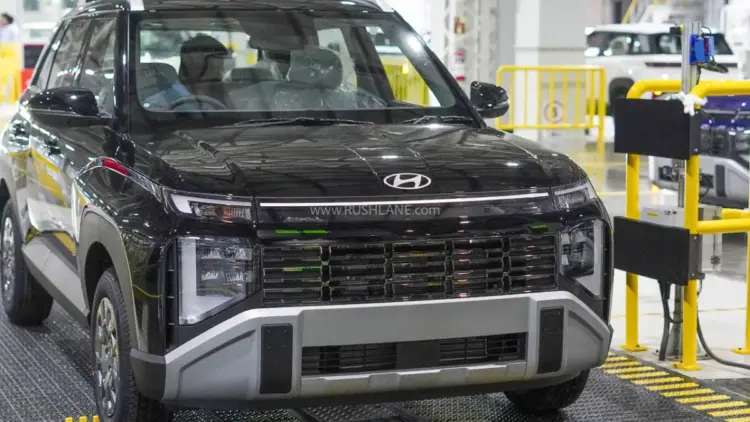
Hyundai Motor India faced a challenging month, with sales dipping to 58,099 units from 69,458 units in the previous year. Despite the decline, models like the New Venue (which recorded its highest-ever sales recently) continue to provide a foundation for the brand.
In a notable shift, Kia India overtook Toyota Kirloskar Motor. Kia recorded 30,799 sales, whereas Toyota saw its retail numbers dip to 28,727 units from over 38,000 in October 2025. This resulted in Toyota’s market share settling at approximately 6%.

The Disrupters and New Entrants
JSW MG Motor showed resilience, growing its sales to 7,082 units (1.39% share), up from 6,729 units YoY. However, the most explosive growth came from VinFast. The Vietnamese automaker, which is rapidly expanding its footprint in India, saw its retail volumes skyrocket to 2,517 units in October 2026, compared to a mere 142 units in October 2025. This suggests that VinFast’s aggressive localized strategy and new model launches are beginning to resonate with Indian buyers.
Conversely, legacy brands like Honda Cars India and Renault India continued to struggle. Honda’s sales fell to 5,455 units (from 7,777), while Renault dipped to 3,505 units (from 5,122).
Fuel-Wise Analysis: The Green Transition Accelerates
October 2026 provided a clear look at the changing preferences of the Indian car buyer regarding powertrain technology.
- Petrol and Ethanol: While still the dominant force, petrol and ethanol-blend vehicles saw their share at 41.60%.
- CNG and LPG: These remains a popular "middle ground" for budget-conscious buyers, commanding a 24.59% share.
- Diesel: Once the king of the Indian road, diesel’s share has stabilized at 16.57%, primarily confined to large SUVs and luxury vehicles.
- Hybrids and EVs: The most significant story of the month was the rise of Strong and Mild Hybrids (9.94% share) and Battery Electric Vehicles (7.38% share). Combined, "green" vehicles now account for nearly 17.5% of the total retail market, a massive jump from just a few years ago.
Geographically, demand was balanced. Urban centers saw a 20.10% growth in demand, while rural markets—supported by a healthy monsoon and positive agricultural sentiment—grew by 16.90%.

Luxury Segment: BMW Leads the Pack
In the luxury car market, the hierarchy saw a temporary shuffle. BMW India outperformed its primary rival, retailing 1,770 units in October 2026. Mercedes-Benz, usually the market leader, saw its sales dip to 1,682 units from 2,077 units in October 2025.
Other notable performances in the premium and niche segments included:
- Force Motors: 1,330 units.
- Stellantis (Citroen/Jeep): 1,079 units (a decline from 1,419).
- BYD India: 737 units (up from 708).
- Jaguar Land Rover: 472 units.
Official Responses and Industry Outlook
While official statements from the Federation of Automobile Dealers Associations (FADA) and the Society of Indian Automobile Manufacturers (SIAM) emphasize the calendar shift, there is an underlying caution regarding inventory levels.
Industry analysts suggest that because October retail was lower than October 2025, dealership inventory might be at an all-time high heading into November. Dealers are expected to push aggressive schemes and discounts in the first two weeks of November to clear stocks before the year-end "2026 model" clearance sales begin in December.

"The 14% YoY drop is purely a calendar event," says a leading automotive analyst. "The 18% MoM growth is the real metric to watch. It shows that the walk-ins and bookings are there; people are simply waiting for the ‘Shubh Muhurat’ (auspicious timing) of November to sign the final papers."
Implications: What This Means for 2027
The data from October 2026 carries several long-term implications for the Indian automotive industry:
- The SUV Dominance: The success of Tata, Mahindra, and the Hyundai Venue reinforces that the Indian market is now an SUV-first market. Hatchbacks are increasingly becoming a secondary or entry-level choice.
- Hybrid vs. EV: The near 10% market share for hybrids suggests that consumers are looking for immediate fuel efficiency gains without waiting for charging infrastructure to mature. However, the 7.38% EV share shows that the pure electric segment is no longer a niche; it is a mainstream pillar of the industry.
- The Rise of New Powerhouses: The meteoric rise of VinFast and the steady growth of JSW MG indicate that the "Old Guard" (Maruti, Hyundai, Honda) can no longer take their market shares for granted. Innovation and aggressive pricing from new entrants are forcing legacy players to accelerate their product cycles.
- Rural Resilience: The nearly 17% growth in rural demand suggests that the "Bharat" economy is doing well, which bodes well for entry-level cars and small SUVs in the coming year.
As the industry moves into November 2026, all eyes will be on whether the festive surge can compensate for the October dip. If November deliveries cross the 6-lakh mark, 2026 could go down as the most successful year in the history of the Indian passenger vehicle industry.