

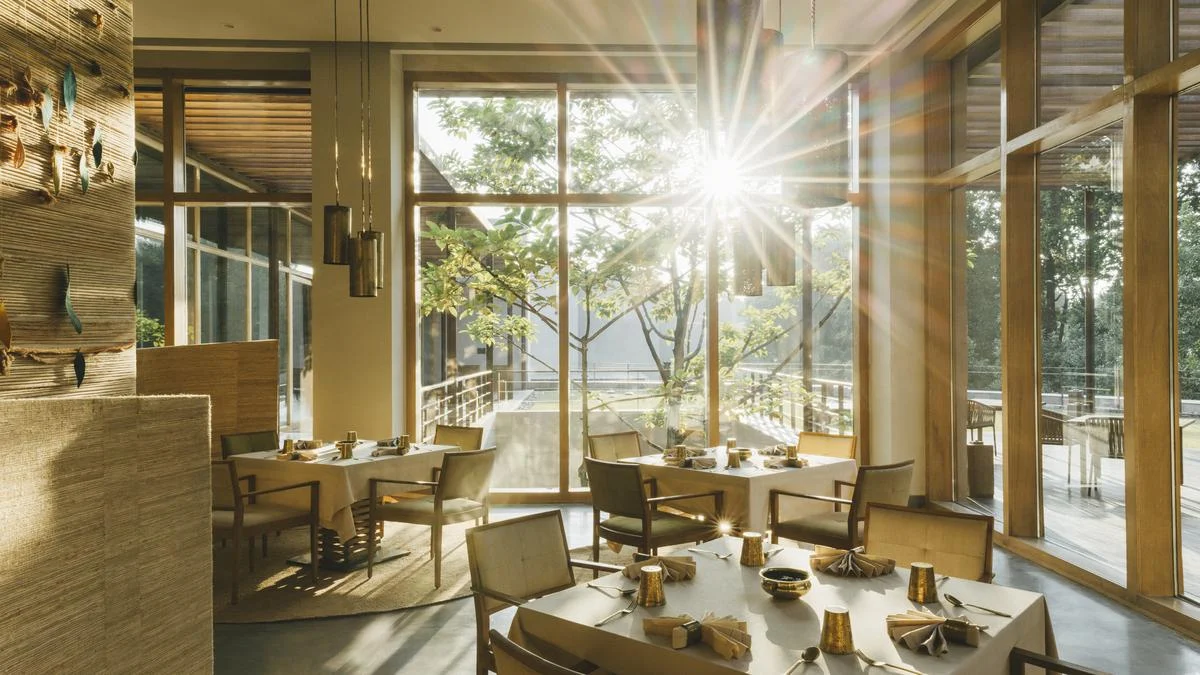
In the rarefied world of global travel, the "Michelin Star" has long been the ultimate arbiter of culinary excellence. However, the landscape of luxury changed significantly in 2024 and early 2025 as the Michelin Guide officially extended its rigorous inspection system to the world of hospitality. By October 2025, Michelin had awarded its prestigious "Keys" to 2,457 hotels worldwide. In a significant nod to the subcontinent’s burgeoning luxury sector, 36 Indian properties were handpicked for this distinction, signaling a new era of accountability and prestige for the Indian hotel industry.
Main Facts: The Anatomy of a Michelin Key
For decades, the hotel industry relied on a self-determined star system. A property would invest in specific amenities—a swimming pool, a 24-hour gym, or a certain ratio of staff to guests—to earn a three, four, or five-star classification. While demanding, this hierarchy was largely a checklist-driven exercise within a hotel’s control.
The Michelin Key, however, represents a shift from quantitative metrics to qualitative experiences. Much like the Michelin Stars for restaurants, these Keys are awarded by anonymous inspectors who evaluate properties based on five distinct criteria:
- Architecture and Interior Design: Does the property have a distinct aesthetic soul?
- Quality and Consistency of Service: Is the hospitality seamless and intuitive?
- Overall Personality and Character: Does the hotel possess a unique "vibe" that cannot be replicated?
- Value for Price: Does the experience justify the expenditure?
- Meaningful Contribution to the Setting: Does the hotel enrich its local environment or community?
India’s 36-hotel haul is divided into a three-tier recognition system: 14 properties received One Key (indicating a "very special stay"), 20 received Two Keys ("an exceptional stay"), and a mere two properties achieved the pinnacle of Three Keys ("an extraordinary stay").
Chronology: From Road Maps to Royal Palaces
The Michelin Guide’s relationship with hotels is not new, but its formalization is. To understand the weight of these 2024/2025 awards, one must look back at the guide’s evolution.
- Early 1900s: The Michelin brothers, Andre and Edouard, published the first guide to encourage motorists to explore the French countryside (and thus wear out their tires). It included basic recommendations for inns and hotels.
- 1920s–2020s: While the restaurant "Star" became a global phenomenon, hotel recommendations remained a secondary, descriptive feature of the guide.
- 2023: Michelin announced the "Key" as a formal counterpart to the Star, responding to a post-pandemic travel market that craves curated, high-integrity experiences over generic luxury.
- April 2024: The first Michelin Keys were announced in France.
- Late 2024 – Early 2025: The rollout reached India, marking the first time the country’s diverse hospitality landscape—from Himalayan retreats to Rajasthani palaces—was subjected to Michelin’s global standard.
Supporting Data: A Deep Dive into the Tiers
To understand the practical difference between these tiers, one must examine the specific winners through the lens of Michelin’s five criteria.

One Michelin Key: The Precision of Six Senses Vana, Dehradun
A One Key property is defined by its ability to do one thing exceptionally well. Six Senses Vana in Dehradun is a masterclass in this singular focus. Located minutes away from the urban sprawl of Dehradun, Vana functions as a "sealed oasis."
The experience is characterized by a radical departure from traditional luxury. Guests, referred to as vanavasis, are required to wear identical white organic cotton kurta pyjamas. This eliminates "decision fatigue" and fosters a sense of egalitarianism. The property restricts phone use and prohibits photography, forcing a digital detox. With rooms priced at approximately ₹95,000 (USD $1,100) per night, the value lies not in gold-plated faucets, but in a transformative wellness journey involving Ayurvedic, Tibetan, and natural healing therapies. Michelin rewards Vana because it executes its "inward-looking" vision with absolute conviction.
Two Michelin Keys: The Cultural Custodianship of The Imperial, New Delhi
Two Keys are reserved for hotels that are more than just places to stay; they are landmarks of cultural relevance. The Imperial in New Delhi, often called the "Grand Dame," sits as a silent witness to Indian history.
Unlike the modern minimalism of Vana, The Imperial is an exercise in historical immersion. It houses an art collection of over 5,500 works, curated by theme and geography. The hotel’s "Gandhi Table" (Table No. 14 at the 1911 restaurant) remains a preserved site where political conversations shaped the birth of a nation. As an independently owned property (held by the Akoi family since the 1930s), it offers a level of warmth and continuity that corporate chains often struggle to replicate. Two Keys recognize this ability to balance luxury with a deep sense of place and historical responsibility.
Three Michelin Keys: The Irreplaceability of Taj Lake Palace, Udaipur
The Three Key distinction is reserved for hotels that transcend hospitality to become living heritage. The Taj Lake Palace in Udaipur is one of only two such properties in India (the other being Taj Falaknuma Palace, Hyderabad).
Floating in the center of Lake Pichola, the 18th-century white marble palace is reachable only by boat. Here, the experience is inseparable from the site. The architecture—a blend of Mughal and Rajasthani styles—cannot be replicated elsewhere. The exclusivity is absolute; non-residents are not permitted on the island, ensuring a level of privacy reserved for royalty. While the culinary offerings are excellent, the true "Three Key" factor is the sense of suspended time—the jasmine-scented air, the sound of the flautist echoing off the marble, and the feeling of living inside a historical marvel.

Official Responses and Regional Breakdown
While the Michelin Guide does not provide individual "report cards" to the public, the hospitality industry has reacted with a mix of celebration and introspection. Industry analysts suggest that the concentration of Keys in Rajasthan (with 11 properties across Jaipur and Udaipur) reaffirms the state’s position as the heart of Indian luxury tourism.
The Full List of Recognized Indian Properties:
- Three Keys: Taj Lake Palace (Udaipur), Taj Falaknuma Palace (Hyderabad).
- Two Keys (Highlights): The Oberoi Amarvilas (Agra), Amanbagh (Alwar), The Leela Palace (New Delhi), The Imperial (New Delhi), Six Senses Fort Barwara (Sawai Madhopur).
- One Key (Highlights): The Oberoi Gurgaon, Taj Mahal Palace (Mumbai), The Lodhi (New Delhi), The Kumaon (Almora), Soho House (Mumbai).
The presence of "lifestyle" brands like Soho House alongside heritage giants like the Taj Mahal Palace indicates that Michelin is looking for "character" over mere age or traditional opulence.
Implications: What the Keys Mean for India’s Future
The introduction of Michelin Keys to India carries several long-term implications for the country’s travel and tourism sector.
1. The Global Validation of Indian Service
India has long claimed "Atithi Devo Bhava" (The Guest is God) as its hospitality mantra. The Michelin recognition provides a standardized, global validation of this claim. For international travelers who rely on the Michelin Guide in Europe and the US, these Keys provide a "trusted shorthand" for quality when navigating the Indian market.
2. A Shift from "Bling" to "Soul"
The criteria for the Keys—specifically "personality and character" and "contribution to the setting"—suggest that the era of generic luxury is ending. To earn a Key, future Indian developments cannot simply rely on expensive materials. They must offer a narrative. This will likely encourage developers to invest more in local craftsmanship, sustainable architecture, and heritage preservation.

3. Price Transparency and Value
With several properties on the list charging upwards of ₹1,00,000 per night, the Michelin Guide acts as an auditor of value. By awarding a Key to a high-priced hotel, Michelin is essentially certifying that the experience justifies the cost. Conversely, the omission of several famous five-star chains may serve as a wake-up call for properties that have grown complacent.
4. Tourism Beyond the Golden Triangle
While Rajasthan and Delhi dominate the list, the inclusion of properties like The Kumaon in Almora and Taj Rishikesh suggests that Michelin is looking for excellence in remote corners of India. This could drive high-end "slow tourism" into the Himalayas and other ecologically sensitive areas, provided the hotels maintain their "meaningful contribution" to their settings.
Final Verdict
The Michelin Keys are not a linear ladder where "three" is simply a better version of "one." Instead, they represent different planes of ambition. A One Key hotel like Six Senses Vana is a masterpiece of precision; a Two Key hotel like The Imperial is a custodian of memory; and a Three Key hotel like the Taj Lake Palace is an irreplaceable icon.
Ultimately, Michelin’s entry into the Indian hotel scene signifies that luxury is no longer just about the thread count of the sheets or the speed of the Wi-Fi. It is about the "inevitability" of an experience—the sense that a hotel has become the best possible version of itself, deeply rooted in its time and place. For India, with 36 Keys now shining on the global stage, the message is clear: the country is no longer just a destination for history; it is a global benchmark for the future of hospitality.
