

History, it is often said, has many hiding places. In the quiet, riverine town of Chandannagar in West Bengal—a place where French colonial architecture still whispers to the flowing Hooghly—history has chosen to settle inside a piece of sandesh. This ancient French outpost has entrusted its collective memory to a confection no larger than the palm of a hand. To the uninitiated, it looks like an ordinary mound of cottage cheese, but beneath its unassuming, pale exterior lies a feat of culinary engineering: a pocket of fragrant syrup that remains miraculously contained until the very first bite.
On June 26, 2026, this legendary sweet, known as the jalbhara (literally "filled with water"), was formally awarded the Geographical Indication (GI) tag. Created by the legendary Surjya Kumar Modak and his son Siddheshwar Modak, the sweet has now been officially recognized as a confection inseparable from the soil and spirit of the town where it was first imagined nearly 220 years ago. It is a victory not just for a family, but for a tradition that has survived empires, famines, and the relentless march of modernity.

The Core Narrative: A Confection That Defied Time
The story of the jalbhara is a testament to resilience. It has outlived the departure of the French administrators, the slow fading of the Bengali zamindars (landlords), chronic sugar shortages, and the dramatic shifts in consumer palates brought about by the age of refrigeration and global migration. For two centuries, it has traveled in tin boxes, tucked between layers of clothing in suitcases, making its way from the narrow lanes of Chandannagar to Kolkata, Delhi, and eventually, the farthest corners of the globe.
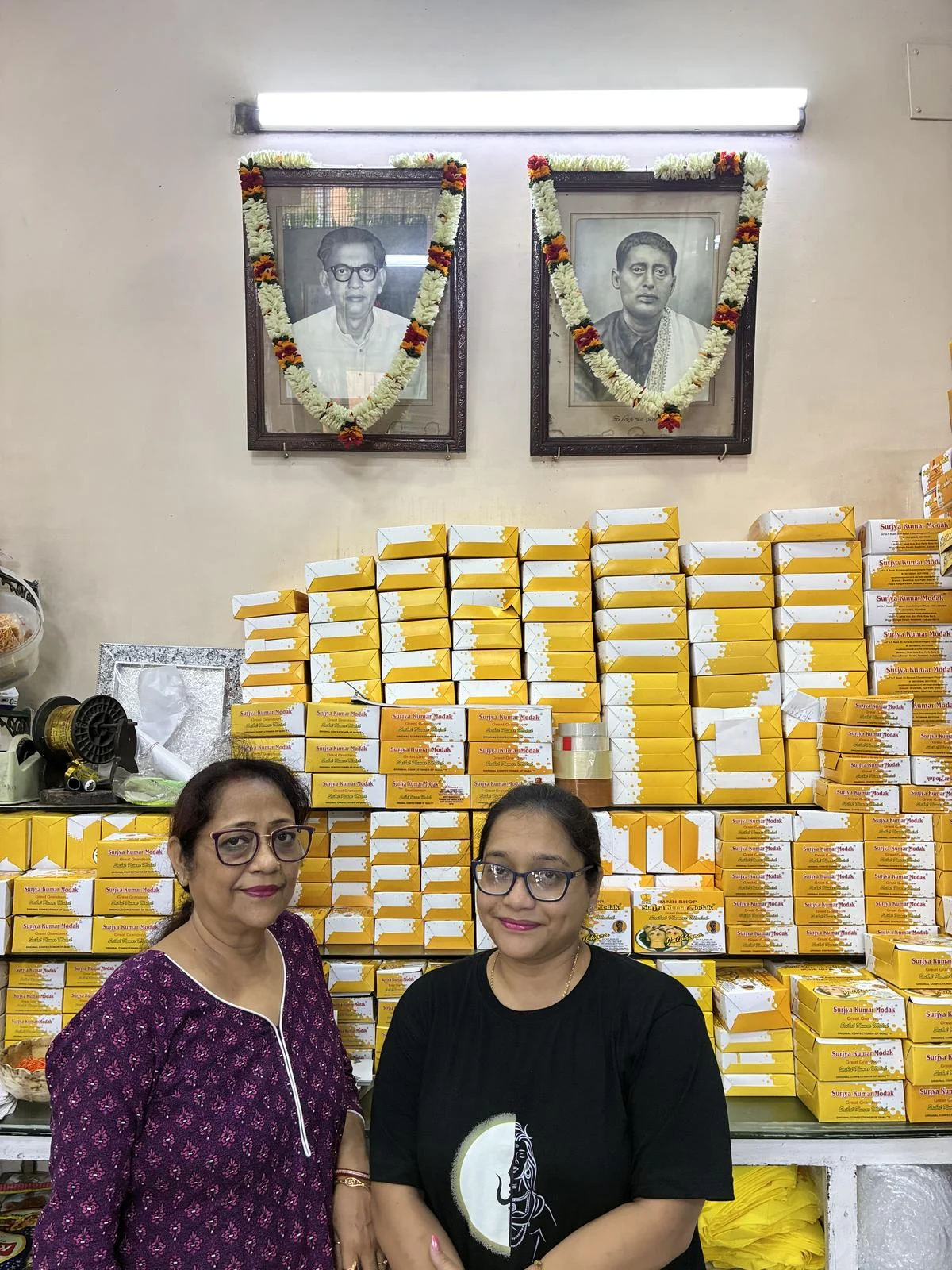
Yet, for nearly 200 years, every first-time visitor to the Surjya Kumar Modak shop has asked the same question: How can a solid sweet hold a liquid center without leaking? To unravel this mystery, one must travel 45 kilometers from the bustling metropolis of Kolkata to the original storefront at 247, Grand Trunk Road East, in Barasat, Chandannagar.

While the town now teems with shops bearing the name "Surjya Modak"—a byproduct of the sweet’s immense fame—the original establishment remains the primary custodian of the secret. Alongside the modern storefront stands the original shop where, around 1843-1844, the jalbhara was born. Today, the family maintains only one legitimate branch in Kolkata, located at the Misti Hub in New Town’s Eco Park, ensuring that the quality remains under the strict supervision of the descendants.
A Chronology of Sweet Subversion: 1843 to the Present
The genesis of the jalbhara is rooted in a playful request and a touch of 19th-century mischief. In the year 1250 of the Bengali calendar (approximately 1843-1844 AD), the wife of the powerful zamindar of Telinipara sent a summons to Surjya Kumar Modak. A wedding was approaching, and the grihini (lady of the house) wanted a sweet that was entirely unique—something that would not only delight but also playfully prank the newlywed groom during his first ceremonial meal at the household.

Surjya and his son Siddheshwar rose to the challenge. They drew inspiration from the talshansh, the translucent, cooling pulp of the ice apple (toddy palm fruit). Using chhena (fresh cottage cheese made by curdling cow milk), they crafted a mold that mimicked the shape of the fruit. However, the innovation lay in the center. They prepared a mixture of aromatic rose extract and dolo (jaggery reduced to a thick, sticky, yet fluid consistency) and encased it within the chhena shell.
The result was the jalbhara. When the unsuspecting groom bit into the sweet, the hidden syrup burst forth, spilling down his fine silk panjabi (kurta). The women of the household erupted in laughter, the prank was deemed a success, and a culinary icon was born.

The Portuguese Influence and the Evolution of Chhena
The history of the jalbhara is also a chapter in the broader evolution of Bengali sweets. Before the arrival of the Portuguese in nearby Bandel, Bengali sweets were primarily made from coconut, sugar, and flour. The Portuguese introduced the technique of curdling milk with acid to create chhena. While orthodox Hindu priests initially viewed curdled milk as "broken" or "spoiled," local moiras (confectioners) like Surjya Modak saw its potential. They transformed this "broken" ingredient into a refined art form, eventually making Bengal the undisputed capital of cottage-cheese-based desserts.
The Poet-Confectioner
Surjya Kumar Modak was more than a businessman; he was a man of the Bengal Renaissance. In an era where craft and culture were deeply intertwined, Surjya was also a published poet. His collection, Geet Gobindo, is still preserved in the French Museum in Chandannagar. This intellectual background perhaps explains the elegance of his creations—the jalbhara was not just a dessert; it was a sensory poem.

Supporting Data: The Science of the Shell and Modern Innovation
The enduring mystery of the jalbhara lies in its structural integrity. Gitasree Modak, a sixth-generation descendant and one of the current custodians of the legacy, explains that the secret is in the consistency of the outer shell.
"The chhena is worked to a specific texture that ensures it never absorbs the liquid inside," she notes. "This allows the sweet to remain intact for four to five days without refrigeration, even in the height of the Bengali summer."

Seasonal and Modern Variations
While the classic jalbhara remains the gold standard, the Modak family has not been afraid to innovate:
- The Winter Special: During the cooler months, the rose-water filling is replaced with nolen gur (fresh date palm jaggery). In this version, both the shell and the liquid heart take on a deep amber hue and a smoky, earthy sweetness.
- Fruit Infusions: To cater to modern palates, the shop now offers versions filled with Alphonso mango pulp, strawberry, black currant, and green mango.
- The "Cadbury" Sandesh: A chocolate-inspired version has also been introduced to appeal to younger generations.
Pricing and Production
Consistency is maintained by sourcing milk, sugar, and chhena from a tight-knit network of trusted suppliers in the Chandannagar suburbs.

- Classic Jalbhara: Priced at approximately ₹65 per piece.
- Mango Jalbhara: Priced at ₹90 per piece, reflecting the cost of premium Alphonso pulp.
Official Responses and the Tagore Connection
The Modak family’s history is peppered with interactions with the giants of Indian culture. Gitasree Modak recounts a cherished family story involving the Nobel laureate Rabindranath Tagore. Tagore frequently stayed at the historic Patal Bari, a house built partially below the river level, overlooking the Hooghly.
During one of his visits, Tagore sampled various sweets from Surjya Modak’s shop. While he admired the jalbhara, another sweet caught his eye—one made of delicate grains of chhena that resembled tiny pearls. Tagore christened it Motichur Sandesh. Unlike the common motichoor ladoo made from gram flour, this was a sophisticated dairy creation that still carries the name given to it by the poet.

The Significance of the GI Tag
The awarding of the GI tag on June 26, 2026, marks a pivotal moment for the family. For Saibal Kumar Modak (fifth generation) and his daughters Bhagyasree and Gitasree (sixth generation), the tag is more than just a certificate.
"For international business, we needed official recognition," Gitasree explained. "Earlier, the world knew it as Surjya Modak’s sweet. Now, it is officially Chandannagar’s jalbhara. It places our town on the global gastronomic map."

Implications: From a River Town to the Global Stage
The GI tag comes at a time when the demand for traditional Indian sweets is skyrocketing globally. The logistics of the jalbhara have transformed from hand-carried tins to high-speed international shipping.
Export and Logistics
- Domestic Reach: The shop sends six to seven major dispatches every week to metropolitan hubs like Bengaluru, Delhi, Hyderabad, and Mumbai, often reaching customers within 24 hours.
- International Markets: Through partnerships with global couriers like DHL, the jalbhara is exported to the United States, where a dedicated vendor distributes the sweets across the country.
- Regulatory Compliance: The GI tag assists in navigating the complex food safety regulations of various countries, providing a "passport" for the sweet to enter international markets as a verified heritage product.
Cultural Preservation
The success of the jalbhara serves as a blueprint for the preservation of other "lost" sweets of Bengal. It proves that a product rooted in 19th-century craftsmanship can thrive in the 21st-century digital economy if the core quality remains unchanged. The Modak family has managed to balance the "magic" of the original recipe with the demands of modern scaling.

As the sun sets over the Hooghly and another tray of jalbhara is emptied at the Barasat shop, the legacy of Surjya Kumar Modak remains as fluid and vibrant as the syrup inside his famous creation. The GI tag may be a modern accolade, but the true reward remains the look of astonishment on a customer’s face when the brittle shell yields, the sweetness spills, and the oldest trick in Chandannagar is performed once again.
