

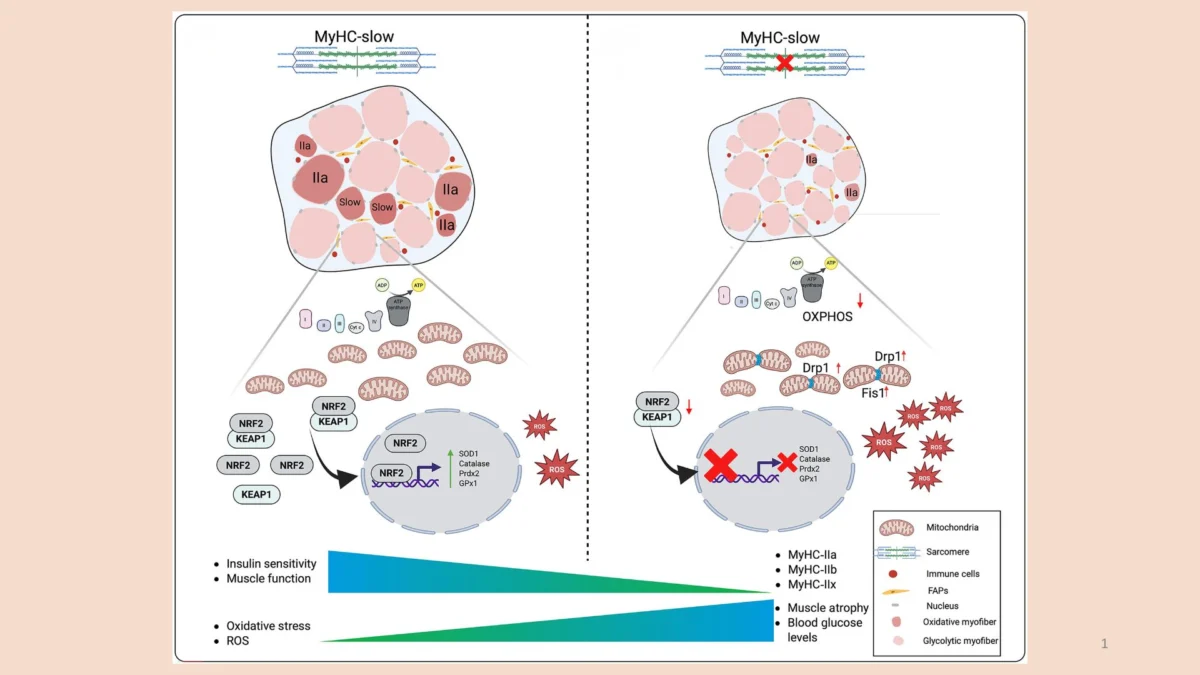
FARIDABAD, India — In a landmark study that bridges the gap between exercise physiology and molecular endocrinology, researchers at the Regional Centre for Biotechnology (RCB) have identified a specific muscle protein as a primary guardian against metabolic decay. The study, published in June 2026, reveals that the slow myosin heavy chain protein—a hallmark of endurance-oriented muscle fibers—plays a far more sophisticated role than mere physical movement. It acts as a metabolic linchpin, and its absence triggers a cascade of cellular failures that lead directly to the onset of Type 2 Diabetes.
The findings provide a definitive molecular explanation for why physical fitness is inextricably linked to blood sugar regulation, offering a potential new therapeutic pathway involving naturally occurring compounds found in cruciferous vegetables.
Main Facts: The Myh7 Discovery
For decades, clinicians have observed a correlation between muscle composition and metabolic health. Individuals with a higher proportion of slow-twitch (Type I) muscle fibers—the kind used for posture and long-duration activities—tend to exhibit better insulin sensitivity. Conversely, those suffering from Type 2 Diabetes often show a significant reduction in these fibers. However, the scientific community has long debated a "chicken-or-egg" dilemma: does diabetes cause the loss of slow-twitch fibers, or does the loss of these fibers cause diabetes?
The RCB research team, led by senior investigators in Faridabad, has effectively settled this debate. By utilizing advanced genetic engineering, the team isolated the Myh7 gene, which is responsible for producing the slow myosin heavy chain protein.
Key findings of the study include:

- The Genetic Link: Mice genetically modified to lack the Myh7 protein developed systemic Type 2 Diabetes by six months of age, despite no changes in diet.
- The NRF2 Switch: The loss of muscle protein caused a dramatic decline in NRF2, a master regulator of the body’s antioxidant response.
- Mitochondrial Collapse: Without NRF2, the "powerhouses" of the muscle cells became damaged by oxidative stress, rendering them unable to process glucose.
- A Potential Reversal: Treatment with sulforaphane, a compound derived from broccoli, was found to reactivate the protective pathways and stabilize blood sugar levels in the experimental models.
Chronology of the Research: From Genetic Engineering to Therapeutic Discovery
The journey toward this discovery began with the creation of a specialized mouse model. The researchers aimed to simulate the "muscle wasting" or "fiber shifting" often seen in sedentary or aging populations to see the systemic effects.
Phase 1: The Knockout Experiment
The team used Cre-Lox recombination technology to "knock out" the Myh7 gene specifically in the skeletal muscles of the mice. Initially, the young mice appeared relatively normal, though they lacked the endurance of their wild-type counterparts. However, as the mice reached early adulthood (around six months), a dramatic transformation occurred. They exhibited profound muscle weakness, a reduction in total muscle mass, and a sedentary lifestyle. More importantly, their internal chemistry shifted: they developed fasting hyperglycemia and impaired insulin tolerance—the hallmarks of Type 2 Diabetes.
Phase 2: Proteomic Mapping
To understand why a lack of muscle protein led to a blood sugar disorder, the researchers performed a comprehensive proteomic analysis using mass spectrometry. They compared the protein profiles of healthy muscles against the Myh7-deficient muscles. This "molecular census" identified a massive deficit in the nuclear factor erythroid 2-related factor 2 (NRF2).
Phase 3: Testing the Broccoli Hypothesis
Once NRF2 was identified as the missing link, the team looked for a way to artificially stimulate its production. They turned to sulforaphane, a well-documented NRF2 activator. In the final stage of the study, the diabetic mice were administered sulforaphane. The results were startling: the treatment did not just mask the symptoms; it addressed the underlying cellular damage, repairing mitochondria and restoring the animals’ ability to regulate glucose.
Supporting Data: The Role of NRF2 and Oxidative Stress
The technical core of the study lies in the relationship between mechanical muscle tension and chemical signaling. Slow-twitch fibers are dense with mitochondria because they rely on aerobic metabolism. These mitochondria require a robust defense system against the "exhaust" they produce—reactive oxygen species (ROS).

The data showed that the slow myosin heavy chain protein is likely involved in a mechanical sensing pathway. When this protein is present and active, it signals the cell to maintain high levels of NRF2.
Quantitative Observations:
- Oxidative Stress Markers: In the absence of Myh7, markers of oxidative damage (such as lipid peroxidation) increased by over 40% in muscle tissue.
- Mitochondrial Function: Oxygen consumption rates in the mitochondria of the modified mice dropped significantly, indicating a "stalling" of the cellular engine.
- Insulin Resistance: In glucose tolerance tests, the Myh7-deficient mice took nearly twice as long to clear sugar from their bloodstream compared to the control group.
The study clarifies that when NRF2 levels plummet, the resulting oxidative stress "poisons" the insulin receptors on the surface of the muscle cell. Even if the body produces enough insulin, the muscle—the primary consumer of glucose in the body—simply cannot "open its doors" to let the sugar in.
Official Responses and Expert Context
While the RCB researchers are optimistic, they maintain a disciplined scientific perspective on the limitations of the current data.
"Our study provides a direct molecular link between muscle fiber integrity and systemic metabolic health," the lead researchers noted in their summary. "However, the mechanical reason why the loss of a structural protein like Myh7 causes a chemical drop in NRF2 remains a hypothesis. We believe the muscle’s ‘mechanosensors’—the systems that feel movement and tension—are failing to send the necessary survival signals to the nucleus."

Outside experts in the field of metabolic medicine have praised the study for its precision. "For years, we told patients that exercise helps diabetes by ‘burning sugar,’" says Dr. Aris Thorne, a metabolic specialist not involved in the study. "This research shows that it’s much deeper than that. Exercise, specifically through the maintenance of slow-twitch fibers, maintains the very chemical machinery (NRF2) that allows our body to handle sugar at all. It’s not just about burning fuel; it’s about maintaining the engine’s integrity."
However, the researchers also issued a caveat regarding the sulforaphane treatment. While the compound was a "miracle cure" when administered early, its effectiveness dropped when given to mice with advanced, long-term diabetes. This suggests a "point of no return" where mitochondrial damage may become too severe for chemical intervention alone.
Implications: A New Frontier in Diabetes Prevention
The implications of this study for human health are profound, particularly in an era where sedentary lifestyles are contributing to a global diabetes epidemic.
1. Targeted Pharmacotherapy
The identification of the NRF2 pathway as a mediator for muscle-driven glucose control opens the door for "exercise mimetic" drugs. For patients who are unable to perform high-intensity exercise due to age or physical disability, compounds that target the NRF2 pathway could provide the metabolic benefits of slow-twitch muscle activity without the physical strain.
2. Nutritional Intervention
The success of sulforaphane in the mouse models reinforces the importance of "functional foods." While eating broccoli alone may not cure Type 2 Diabetes, this research suggests that a diet rich in NRF2 activators could serve as a critical preventive measure, particularly for those genetically predisposed to muscle fiber loss.

3. Redefining Muscle Health
Historically, muscle health has been viewed through the lens of strength and aesthetics. This study shifts the paradigm, positioning muscle as an endocrine-like organ that actively manages the body’s internal chemistry. It underscores the necessity of endurance-based activities—such as walking, swimming, or cycling—which specifically maintain the slow-twitch fibers and their associated Myh7 proteins.
4. Future Research Directions
The RCB team is now looking toward human clinical trials. The next step is to analyze muscle biopsies from diabetic patients to see if mutations or suppressions of the MYH7 gene correlate with the severity of their metabolic dysfunction. If the human correlation holds as strongly as the mouse model, it could revolutionize how we screen for diabetes risk, moving from simple blood sugar tests to genetic and proteomic muscle profiling.
In conclusion, the research from Faridabad serves as a powerful reminder of the interconnectedness of the human body. By uncovering the hidden dialogue between a single muscle protein and the body’s antioxidant defenses, scientists have moved one step closer to a future where Type 2 Diabetes can be managed, or perhaps even reversed, at its molecular source. The humble slow-twitch fiber, once thought to be just a tool for endurance, may actually be our most potent weapon in the fight against metabolic disease.
