

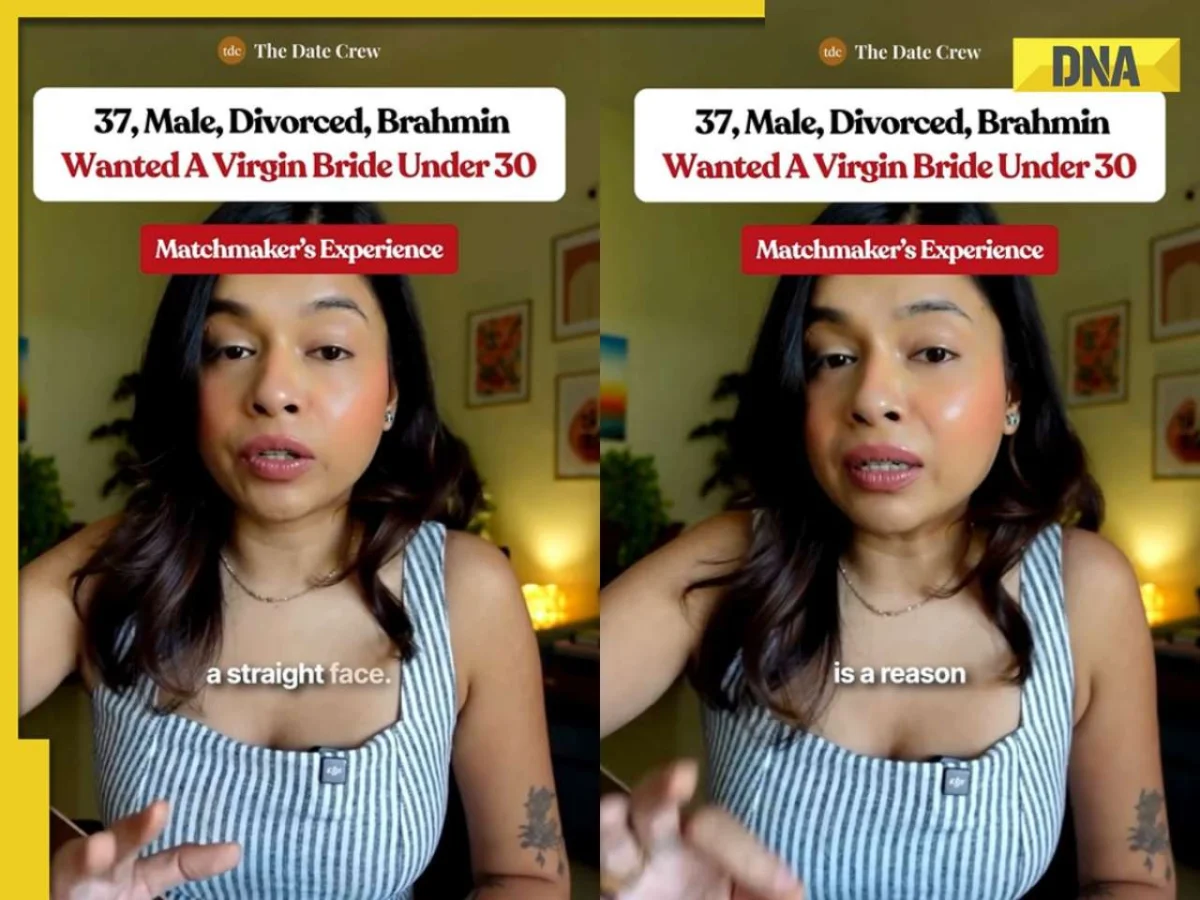
New Delhi, India – A recent viral social media post by prominent dating coach and matchmaker Oendrila Kapoor has ignited a fiery debate across India, exposing a stark disconnect between evolving societal norms and deeply entrenched traditional expectations within the realm of matrimony. The catalyst for this widespread discussion is the seemingly paradoxical set of demands put forth by a 37-year-old divorced, IIT-educated professional seeking a bride. His stringent criteria – a woman under 30, from the Brahmin community, with no prior romantic entanglements or sexual history – has drawn sharp criticism and sparked a national conversation on fairness, hypocrisy, and the pressures faced by women in the Indian marriage market.
The Unveiling of a Controversial Client
The controversy first surfaced when Oendrila Kapoor, a well-known figure in the dating and relationship coaching circuit, shared an anonymized account of a client’s peculiar marriage preferences on her social media platforms. The client, described as a highly accomplished individual, boasts an impressive educational pedigree, having graduated from an Indian Institute of Technology (IIT) – a hallmark of academic excellence in India. He is reportedly in his late thirties, has experienced a previous marriage that ended in divorce, and holds a senior corporate position, purportedly as a director in a billion-dollar company.
)
Despite his own marital history, which inherently signifies a departure from a "first-time" union, the man allegedly presented a non-negotiable list of prerequisites for his potential life partner. These demands, as shared by Kapoor, included:

- Age Restriction: The bride must be under the age of 30.
- Community Affiliation: She must belong to the Brahmin community, a historically upper caste in India traditionally associated with religious and scholarly pursuits.
- Relationship Status: She must have no prior romantic relationships.
- Sexual History: She must have no past sexual experiences.
Kapoor, accustomed to navigating the diverse and often complex landscape of client preferences, found these demands particularly egregious, especially given the client’s own divorced status. She expressed her bewilderment at the rigidity of his expectations, particularly when contrasted with his personal life experiences.
)
The Illusory Shield of "Research" and Gendered Justifications
When confronted by Kapoor about the apparent double standard, the client reportedly attempted to justify his stringent criteria by referencing unsubstantiated "research." He claimed that his investigation, through unspecified sources, suggested a higher propensity for infidelity among women with multiple past romantic relationships. This justification, however, did little to assuage Kapoor’s concerns and instead opened the door to further scrutiny of his underlying beliefs.
)
The matchmaker, employing her professional acumen, directly challenged the man’s logic by posing a crucial question: "Should the same ‘research’ not apply to you, as a divorced man?" The client’s response, as recounted by Kapoor, further exacerbated the situation and highlighted a deeply ingrained patriarchal mindset. He allegedly dismissed the comparison, stating that his situation was not equivalent. When pressed for a clearer explanation, he reportedly uttered the phrase, "Because I am a man." This statement, a blunt admission of gendered entitlement, immediately drew widespread condemnation and solidified the perception of hypocrisy.
)
This exchange underscores a prevalent, albeit problematic, narrative within certain segments of Indian society, where men are often afforded greater leniency and fewer repercussions for past relationship experiences compared to women. The expectation of female purity and virginity, particularly in traditional communities, often stands in stark contrast to the acceptance of male experience, even in cases of divorce or multiple relationships.
)
A Matchmaker’s Ethical Stance: Refusal to Compromise Principles
Oendrila Kapoor, recognizing the problematic nature of the client’s mindset, made the firm decision not to proceed with his case. She articulated her reasoning, emphasizing that his expectations were not indicative of a desire for a healthy partnership but rather a manifestation of a controlling and biased worldview.
)
"His mindset reflects control rather than compatibility," Kapoor stated, as per the initial report. She argued that such unrealistic expectations, rooted in prejudice rather than a genuine pursuit of a life partner, were unlikely to lead to a successful or fulfilling marriage. Furthermore, she pointed out the inherent contradiction in his demands: a woman meeting his criteria of purity and lack of experience would likely hail from a highly traditional background, potentially making it difficult for her to accept a partner who has gone through a divorce, especially one with such rigid and demanding views. This suggests a fundamental disconnect between the kind of partner he sought and the kind of partner he himself represented in the marriage market.
)
Kapoor’s refusal to compromise her ethical principles and her willingness to publicly highlight the issue have been widely applauded, positioning her as a voice of reason in a conversation often dominated by outdated traditions.
)
The Avalanche of Social Media Criticism: A Mirror to Societal Fault Lines
The dissemination of Kapoor’s post triggered an immediate and overwhelming response across social media platforms. The narrative quickly transcended the specific case, becoming a focal point for broader discussions about gender inequality, the double standards prevalent in Indian society, and the evolving dynamics of relationships and marriage.
)
Users from diverse backgrounds chimed in, expressing their outrage and disbelief at the client’s audacity. The common themes that emerged from the online discourse included:
)
- Hypocrisy: A significant portion of the commentary centered on the glaring hypocrisy of a divorced man demanding a virgin bride. Critics pointed out the inherent unfairness of applying one set of rules to men and another to women.
- Outdated Notions: Many users condemned the demands as archaic and reflective of a regressive mindset that fails to acknowledge the realities of modern life and the agency of women. The emphasis on virginity and lack of past relationships was seen as a relic of patriarchal control, aimed at objectifying women rather than valuing them as individuals.
- Gendered Expectations: The client’s justification, "Because I am a man," became a rallying cry for those highlighting the pervasive gender bias in societal expectations. Users argued that this statement epitomized the unequal playing field women face in the marriage market.
- "Brahmin Virgin" Archetype: The specific mention of "Brahmin" alongside "virgin" further fueled discussions about caste-based prejudices and the often-unspoken expectations within certain communities regarding purity and lineage.
- Shared Experiences: Numerous users shared their own encounters with similar, albeit sometimes less extreme, demands in the context of arranged marriages. This collective sharing of experiences underscored that the client’s mindset, while shocking, is not entirely isolated and points to systemic issues.
The outpouring of criticism served as a powerful testament to the growing awareness and intolerance towards gender-based discrimination and the antiquated notions that continue to influence matrimonial pursuits in India.
)
Implications for Modern Matrimony and Societal Progress
The incident involving the divorced IITian’s demands has far-reaching implications for the future of marriage and relationships in India. It highlights several critical areas that require urgent attention and societal introspection:
)
- The Pervasive Nature of Patriarchy: The incident serves as a stark reminder that patriarchal attitudes, despite societal progress, continue to exert a significant influence on individual beliefs and behaviors, particularly concerning gender roles and expectations in marriage. The client’s justification exemplifies a deeply ingrained belief in male privilege and a double standard that often penalizes women for their past experiences.
- The Evolving Role of Women: As women in India increasingly gain financial independence, pursue higher education, and carve out professional careers, their expectations from relationships and marriage are also evolving. They are less likely to accept traditional roles that limit their agency or subject them to unfair scrutiny based on outdated moral codes. The backlash against the client’s demands reflects this growing assertiveness among women.
- The Impact of Education and Social Status: The client’s IIT background and senior corporate position, often seen as markers of modernity and progressive thinking, ironically did not translate into a more egalitarian outlook on relationships. This suggests that education alone is not a panacea for ingrained societal biases and that deeper attitudinal shifts are necessary.
- The Role of Matchmaking and Marriage Bureaus: The incident also places a spotlight on the responsibility of matchmakers and marriage bureaus. While they aim to fulfill client needs, they also play a crucial role in shaping perceptions and promoting healthy relationship dynamics. Kapoor’s decision to refuse the client sets a precedent for ethical conduct and the importance of challenging discriminatory requests.
- The Need for Open Dialogue: The widespread debate generated by this incident underscores the necessity of open and honest conversations about gender equality, consent, and the complexities of modern relationships. Such discussions are vital for dismantling harmful stereotypes and fostering a more equitable and respectful approach to marriage.
- Re-evaluating Traditional Metrics: The emphasis on virginity and lack of past relationships as primary criteria for a bride often overshadows more important qualities like compatibility, emotional maturity, shared values, and mutual respect. There is a growing need to re-evaluate these traditional metrics and focus on building partnerships based on genuine connection rather than superficial purity.
In conclusion, the viral post by Oendrila Kapoor has inadvertently illuminated a significant fault line in contemporary Indian society. The divorced IITian’s controversial demands, while an extreme example, encapsulate a broader struggle between traditional patriarchal values and the aspirations of a modern, evolving populace. The ensuing debate is not merely about one individual’s preferences but about the fundamental principles of fairness, equality, and respect that should underpin all relationships. As India continues its journey of progress, such incidents serve as crucial, albeit often uncomfortable, catalysts for introspection and the necessary dismantling of outdated norms that hinder genuine human connection and societal advancement.
