

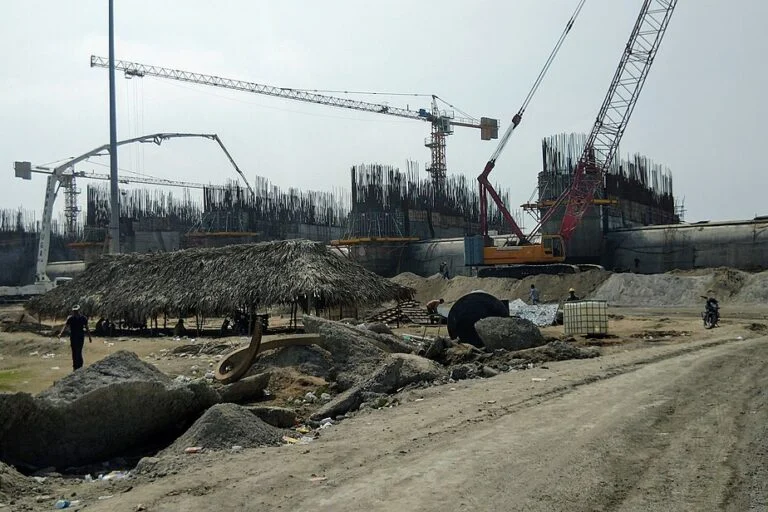
KONTA, CHHATTISGARH — Where the dense teak forests of the Sukma district yield to the sweeping banks of the Sabari River, Manglu Dorla stands on the land his family has tilled for generations. For the Dorla community, an indigenous tribe of southern Chhattisgarh, this landscape is not merely property; it is a holistic ecosystem providing fuel, fodder, and spiritual sustenance. However, a shadow now looms over this ancestral soil—a shadow cast by a massive wall of concrete and steel located more than a hundred kilometers downstream.
The Polavaram Irrigation Project (PIP), a multi-purpose dam under construction on the Godavari River in Andhra Pradesh, has become a symbol of progress for some and a harbinger of erasure for others. As the project nears its 2027 completion deadline, residents of Konta and surrounding villages find themselves trapped in a state of "submergence limbo," where official maps are missing, village counts are contradictory, and the threat of displacement is as murky as the monsoon-swollen river.
I. Main Facts: A Project of National Scale and Local Consequence
The Polavaram Irrigation Project is one of India’s most ambitious engineering feats. Located near Ramanayyapeta in Andhra Pradesh’s Polavaram mandal, the dam sits approximately 42 kilometers upstream of the historic Sir Arthur Cotton Barrage. With a designed elevation of 45.72 meters (150 feet), the reservoir is intended to harness the Godavari’s immense flow before it reaches the coastal plains.
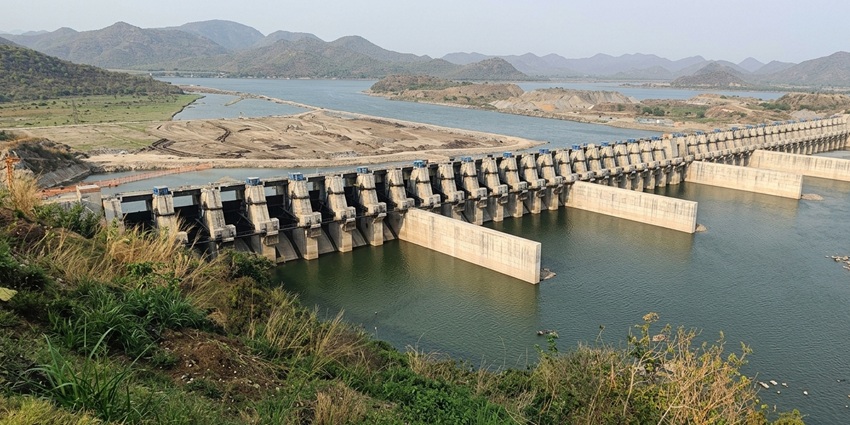
The project’s objectives are vast:
- Irrigation: Creating potential for 2.91 lakh hectares of farmland.
- Hydropower: Generating 960 MW of electricity.
- Water Security: Supplying drinking water to 28.5 lakh people across 540 villages.
- Inter-basin Transfer: Diverting 80 TMC (Thousand Million Cubic feet) of water to the Krishna River basin to alleviate water scarcity in other regions.
Declared a "National Project" in 2014, the PIP is primarily funded by the Union Government, while the state of Andhra Pradesh oversees its execution. In August 2024, the Union Cabinet approved a staggering ₹30,436.95 crore (approximately $3.6 billion) to bring the reservoir to its first-phase water level. However, the benefits touted for Andhra Pradesh’s coastal belt are viewed with deep suspicion by the tribal communities of the upstream hinterlands in Chhattisgarh and Odisha.
II. Chronology: Decades of Negotiation and Legal Deadlock
The history of Polavaram is a marathon of bureaucratic hurdles and interstate disputes:
- 1980: A foundational interstate agreement is signed. At the time, today’s Chhattisgarh was still a part of Madhya Pradesh. The agreement laid the groundwork for water sharing and submergence limits.
- 2004: Construction officially begins under the Andhra Pradesh government, despite simmering concerns from neighboring states.
- 2005-2007: Environmental clearances are granted, but almost immediately challenged. Odisha moves the Supreme Court in 2007, arguing that the dam’s design would cause unlawful submergence within its borders.
- 2011: The Ministry of Environment and Forests issues a "stop-work order" due to violations of clearance conditions, specifically the failure to hold public hearings in affected areas of Chhattisgarh and Odisha. However, this order is later kept in "abeyance," allowing construction to proceed for over a decade.
- 2014: The project is elevated to "National Project" status under the Andhra Pradesh Reorganisation Act.
- 2024-2025: Andhra Pradesh Chief Minister N. Chandrababu Naidu pledges a 2027 completion date. Simultaneously, a performance audit by the Comptroller and Auditor General (CAG) of India, tabled in early 2026, flags critical unresolved risks regarding interstate submergence.
III. Supporting Data: The "Missing Map" and Submergence Discrepancies
The most distressing aspect for residents like Manglu Dorla is the lack of a definitive "submergence map." Over the years, the number of villages officially recognized as "at risk" has fluctuated wildly depending on the source and the year:

- 2013 (Union Government): 8 villages in Chhattisgarh were identified for submergence.
- 2020 (Chhattisgarh Water Resources Minister): The number rose to 9 villages—Banjamgunda, Metaguda, Pedakisoli, Asirguda, Injaram, Fandiguda, Dhondra, Konta, and Venkatpuram—affecting approximately 18,510 residents.
- 2025 (CAG Audit Report): The report warned that without protective embankments, the backwaters could submerge 12 villages in Chhattisgarh and Odisha, impacting 3,337 project-affected families.
- 2026 (Bastariya Raj Morcha): Local political and social organizations now claim the number of affected villages could be as high as 18, demanding a full public accounting.
The Embankment Failure
To mitigate submergence, the original project report (dating back to 1978-80) proposed 29.12 km of protective embankments in Chhattisgarh and 30 km in Odisha. These structures were intended to act as levees, keeping the Sabari and Sileru rivers within their banks even when the Polavaram reservoir was full. However, the 2025 CAG report confirmed that construction of these embankments has not even begun. The delay is rooted in a "catch-22" legal scenario: the embankments require environmental clearances and public hearings, but the states of Chhattisgarh and Odisha refuse to facilitate these hearings while the matter remains sub judice in the Supreme Court.
IV. Official Responses: Political Blame and Administrative Silence
The political discourse surrounding Polavaram is characterized by a "blame game" that spans state and federal levels.
Andhra Pradesh’s Stance:
Chief Minister N. Chandrababu Naidu has made the project a cornerstone of his administration’s infrastructure agenda. The state government maintains that the "first phase" of the project, impounding water up to 41.15 meters, will not cause interstate submergence, providing a window to resolve the embankment issues later.
Chhattisgarh’s Response:
The state’s leadership appears divided and defensive. Chief Minister Vishnu Deo Sai recently visited the flood-prone Sukma region, acknowledging that the number of affected villages could exceed 18. However, opposition leaders, including Bastar Congress president Deepak Baij, have criticized the state government for failing to leverage its alignment with the Union government to protect tribal interests. "They share power in the Center, in Andhra, and in Chhattisgarh, yet they cannot provide a clear answer to the people of Konta," Baij stated.

Expert Critique:
Himanshu Thakkar, coordinator at the South Asia Network on Dams, Rivers & People (SANDRP), describes the project’s progression as a "complete violation of the law." Thakkar points out that the environmental clearance remains technically suspended and that the backwater impact—the phenomenon where the reservoir’s presence causes the river to rise further upstream during floods—has never been adequately assessed. "Neither the state nor the central government should allow the project to go ahead without a transparent public hearing," Thakkar told Mongabay-India.
V. Implications: Cultural Erosion and the Human Cost
Beyond the technicalities of TMCs and meters of elevation lies the existential threat to the Koya and Dorla tribes. For these indigenous communities, displacement is not merely a change of address; it is the severance of a relationship with the land that defines their identity.
1. Loss of Tribal Heritage:
Manish Kunjam, a former MLA and leader of the Bastariya Raj Morcha (BRM), emphasizes that the Koya and Dorla cultures are inextricably linked to the Sabari River. "Displacement means losing our language, our sacred groves, and our traditional governance systems," Kunjam notes. The BRM has demanded that any resettlement must include education in local languages and the preservation of communal structures.
2. The "Flood" vs. "Submergence" Confusion:
In recent years, Konta has experienced unprecedented flooding. While officials often attribute this to heavy rainfall, locals fear it is a preview of the "backwater effect" caused by Polavaram’s existing infrastructure. This ambiguity leaves residents unable to plan for the future. Should they repair their homes? Should they plant long-term crops?

3. Socio-Economic Limbo:
The lack of clarity has stalled development in the region. Sukma’s District Collector, Amit Kumar, noted that the matter largely falls outside his immediate jurisdiction, reflecting the bureaucratic fragmentation that leaves local administrators powerless to provide answers to their constituents.
4. Legal Precedents:
The Polavaram case is a litmus test for the Forest Rights Act (FRA) and the PESA (Panchayats Extension to Scheduled Areas) Act. Both laws mandate that tribal communities must be consulted on projects affecting their lands. The bypass of public hearings in Chhattisgarh and Odisha represents a significant challenge to these constitutional protections.
Conclusion: A Call for Transparency
As the 2027 deadline approaches, the tension in the Sabari basin is palpable. Manglu Dorla’s question remains the central grievance of thousands: "How do you prepare to lose your home when the government cannot tell you today whether your village name will be on the list?"
The Polavaram Irrigation Project stands as a testament to India’s engineering prowess, but its legacy may ultimately be defined by how it treats the people at its margins. Without a transparent, science-based assessment of backwater impacts and a genuine effort to engage with the tribal communities of Chhattisgarh and Odisha, the project risks becoming a monument to "development by displacement." For the residents of Konta, the "missing map" is not just a clerical error—it is a map of their future, currently being written in invisible ink.
