

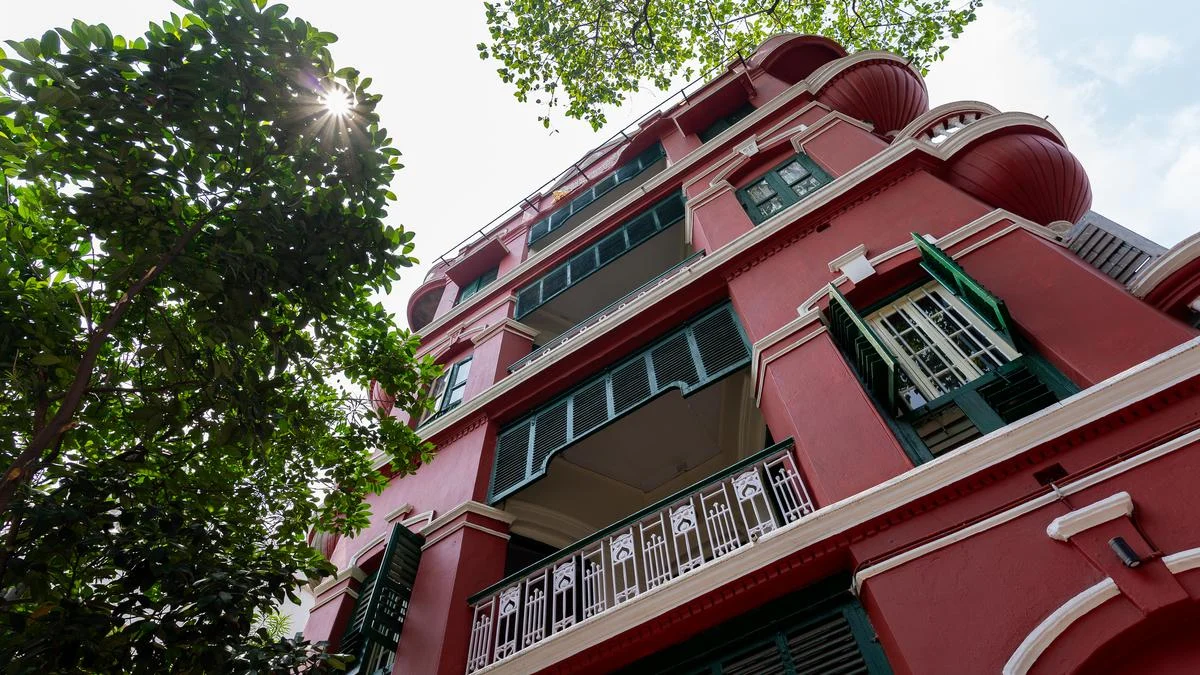
The heritage buildings of Kolkata rise against the city’s skyline like the sturdy chords of an ancient chamber organ. For decades, these architectural reeds—composed of red brick, lime mortar, and intricate cast-iron lacework—lent the city a melancholic music: a composition defined more by loss and decay than by life. However, a new movement is sweeping through the "City of Joy." From the bureaucratic corridors of Dalhousie Square to the narrow lanes of Kalighat, Kolkata’s crumbling estates are being reimagined not as museum pieces, but as vibrant, economically viable hubs of culture, commerce, and community.
This shift toward "adaptive reuse" represents a departure from traditional conservation. Rather than viewing old buildings as liabilities to be shuttered or demolished, a new generation of entrepreneurs, architects, and preservationists is proving that the city’s past can be the most effective engine for its future.

Main Facts: The Performance of Preservation
The epicenter of this revival was recently marked by a startling transformation at the Royal Insurance Building. Located in the heart of Dalhousie Square (now B.B.D. Bagh) and facing the majestic General Post Office (GPO), the 109-year-old structure is a masterpiece of early 20th-century colonial commercial architecture. While it spent decades shrouded in the gray routine of bureaucracy, on the evening of March 27, it became a stage for the avant-garde.
Neon pink and blue lights washed over Edwardian pillars and Classical ornamentation. Flamenco dancers in high heels gathered on the creaking stairwells, their rhythmic footwork echoing through halls that once housed insurance ledgers. This event was the brainchild of "Kolkata Unforgettable," an experiential tourism initiative led by Shailaja Mundra and her daughter, Vasudha Pachisia.

The initiative’s philosophy is simple: heritage structures are "pre-made backdrops" for cultural experiences. By hosting fortnightly curated performances—ranging from theatrical productions on the history of the GPO to Dastangoi (storytelling) sessions inside North Kolkata rajbaris—the project generates the revenue necessary to maintain aging properties.
"Dalhousie, which is the downtown area of the city, is dead on weekends despite its architectural richness," explains Vasudha Pachisia. "We have to go wild with our imagination and reimagine every venue as a stage."

Chronology: From Colonial Grandeur to Modern Decay and Rebirth
The timeline of Kolkata’s architectural evolution is one of peak prosperity followed by a long period of stagnation, leading to the current era of creative intervention.
- Early 1900s: The construction of landmark commercial buildings like the Royal Insurance Building (1915) and residential mansions in Kalighat and South Kolkata. This era combined European styles (Edwardian, Neo-Classical) with local Bengali aesthetics (verandahs, red oxide floors).
- Post-Independence (1947–1990s): Many heritage properties fell into disrepair due to the Rent Control Act, which made it financially impossible for owners to maintain buildings on meager rents. Large estates were partitioned among heirs, leading to legal stalemates.
- 2010–2020: The "demolition era." Significant structures, such as the residence of legendary filmmaker Pramathesh Barua, were razed to make way for high-rise apartments.
- 2019–Present: The rise of adaptive reuse. Munir Mohanty acquires a 109-year-old building in 2019 to create Skinny Mo’s Jazz Bar. Avantika Jalan and John Grams acquire "The Red Bari" in 2022. Initiatives like "Kolkata Unforgettable" begin animating these spaces in 2024.
Supporting Data: The Technical and Financial Reality of Restoration
The move toward adaptive reuse is driven by the harsh reality that heritage owners often lack the financial incentive to maintain properties. According to conservationists, the cost of restoring a heritage building can be 30% to 50% higher than new construction due to the specialized materials and labor required.

Case Study: Skinny Mo’s Jazz Bar
Munir Mohanty, co-founder of Skinny Mo’s, spent a full year restoring a late-colonial building on Manoharpukur Road. The process was a lesson in structural archaeology:
- The Shell: The building was stripped to its brick shell to address deep-seated dampness.
- Modernization: All sewage and electrical systems were replaced. To accommodate a jazz bar, the building required extensive soundproofing.
- Material Sourcing: Mohanty eschewed modern glass windows for aluminum, retained traditional red oxide flooring, and sourced specific tiles from Bikaner—a city that still maintains the artisanal supply chains required for palace-style restorations.
Case Study: The Red Bari
Acquired by Avantika Jalan and John Grams in October 2022, this 90-year-old Kalighat building serves as a traditional Bengali urban mansion. The restoration focused on "continuity" rather than "renovation":

- Structural Integrity: The owners refused to move the thick internal walls that provide the building’s main support, preserving the "old home vibe."
- Regulatory Compliance: To meet modern safety standards, a fire escape and a lift were added as external structures, ensuring the weight did not strain the original masonry.
- Hydraulic Challenges: Plumbing remains the greatest hurdle. The owners clean the 90-year-old drains four times more frequently than a modern establishment and refused to add bathrooms where original water lines did not exist.
Official Responses and the Legal Battle for the City’s Soul
While private entrepreneurs are leading the charge, the institutional framework remains a point of contention. G.M. Kapur, a General Council Member and Convenor of INTACH (Indian National Trust for Art and Cultural Heritage) West Bengal, highlights the fragility of these successes.
INTACH has recently been involved in a petition before the Calcutta High Court, raising alarms over the weakening of heritage protections. The petition cites:

- The Loss of Landmarks: The demolition of the Pramathesh Barua residence.
- Uncertain Futures: Concerns regarding the Roxy Cinema and landmark institutional buildings like the Alipore and Presidency jails.
- Regulatory Loopholes: Allegations that heritage status is being altered or removed to facilitate redevelopment pressures.
In response to these challenges, INTACH is working on a pragmatic solution: a digital platform where heritage property buyers and sellers can meet. "Instead of flattening the building, we are in the process of creating a platform where… we meet to discuss and come to an agreement or a deal," says Kapur. The goal is to match heritage buildings with investors who value their architectural character.
Furthermore, initiatives like Jugaadopolis, created by architect Aishwarya Tipnis and Hinna Devi Singh, provide an "open-source restoration toolbox." Inspired by the principles of the circular economy, this project empowers middle-class homeowners to restore their properties using sustainable, locally sourced materials rather than selling to developers.

Implications: Beyond Nostalgia to Economic Continuity
The shift in Kolkata’s heritage landscape suggests that the city is moving past a "museum-only" mindset. The implications of this movement are three-fold:
1. The Economic Viability of History
Adaptive reuse proves that heritage is not a "sunk cost." By transforming these buildings into jazz bars, cafes (like The Red Bari), boutique shops (like Bombaim), and performance spaces, owners are generating the revenue required for long-term upkeep. This creates a self-sustaining cycle that relieves the state of the sole burden of conservation.

2. Tourism and Cultural Identity
"Kolkata Unforgettable" demonstrates that the city’s unique selling point for global tourism is its lived-in history. Unlike the sanitized heritage zones of Europe, Kolkata’s charm lies in the "music of memory, loss, and renewal." Immersive performances—such as playing a rarely heard pipe organ at St. John’s Church alongside a choir—provide a depth of experience that modern hotels cannot replicate.
3. Sustainable Urban Development
By reusing existing shells, owners are participating in a circular economy that reduces the carbon footprint associated with new construction. The thick walls of traditional Bengali mansions provide natural insulation, reducing the need for heavy air conditioning—a lesson in climate-responsive architecture that modern developers are only now beginning to relearn.

Conclusion: A New Rhythm for an Old City
The truest restoration is not merely of brick and lime, but of a city’s memory. Across Kolkata, old walls are finding new rhythms. As flamenco dancers stomp on the steps of the Royal Insurance Building and jazz notes drift through the halls of Skinny Mo’s, the city is proving that its heritage is not a ghost of the past, but a living, breathing part of its future. The "chamber organ" of the skyline is finally being tuned for a new era.
