

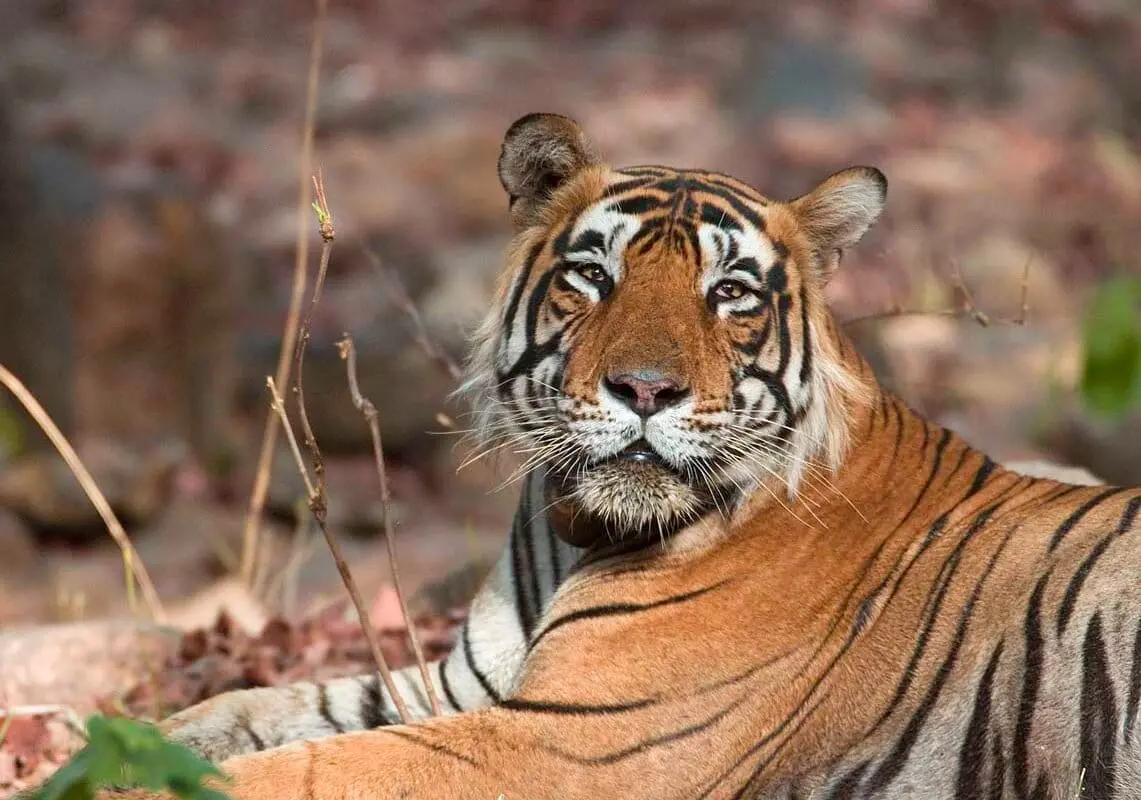
PHNOM PENH / NEW DELHI – In the dense, emerald canopy of the Cardamom Mountains, the shadows of the world’s most iconic apex predator have been missing for nearly two decades. A landmark international effort to return the Bengal tiger to the wilds of Cambodia, originally slated for a 2025 launch, has been officially pushed back to 2028. The delay follows a sobering ecological audit which concluded that the current "larder" of the forest—the population of prey animals—is insufficient to sustain a viable population of big cats.
The postponement represents a moment of scientific pragmatism over political ambition. While the governments of India and Cambodia remain committed to this historic transboundary translocation—the first of its kind for tigers—the three-year extension underscores a harsh reality: you cannot reintroduce a predator into a landscape that cannot feed it.
I. Main Facts: A Postponement Rooted in Biology
The decision to shift the target date from 2025 to 2028 comes after a rigorous review of the Kravanh National Park landscape in southwestern Cambodia. The 926,123-hectare site, nestled within the Cardamom Mountains, was identified as the primary release zone due to its status as one of Southeast Asia’s most intact forest corridors. However, "intact" in terms of flora does not always translate to "thriving" in terms of fauna.
The core issue is prey density. For a tiger population to survive, let alone thrive and breed, the forest must support a massive biomass of ungulates—specifically sambar deer, wild boar, and muntjac (barking deer). Current assessments indicate that the prey base in the Cardamoms has been severely depleted by decades of illegal snaring and habitat encroachment.
Key highlights of the postponement include:
- New Timeline: The reintroduction is now scheduled for 2028.
- The Source: India remains the donor nation, prepared to provide Bengal tigers (Panthera tigris tigris) from its healthy domestic populations.
- The Location: Kravanh National Park remains the designated site, but with a renewed focus on intensive "prey-stocking" and law enforcement.
- The Rationale: To avoid the ecological and PR disaster of a "failed release" where translocated tigers might starve or wander into human settlements in search of livestock.
II. Chronology: From Extinction to a Delayed Resurrection
The history of tigers in Cambodia is a tragic arc of rapid decline followed by a slow, arduous path toward recovery. Understanding the 2028 delay requires looking back at the timeline of the tiger’s disappearance.
The Era of Disappearance (2007–2016)
The last definitive evidence of a tiger in Cambodia was captured by a camera trap in 2007 in the dry forests of Mondulkiri province. For years following that image, conservationists searched in vain for tracks, scat, or further photographs. In 2016, following years of "functional extinction," the Cambodian government and the World Wildlife Fund (WWF) formally declared the tiger extinct in the country. The Indochinese tiger (Panthera tigris corbetti), which once roamed the region, was gone.
The Indian Partnership (2022–2023)
Recognizing that natural recovery was impossible, Cambodia looked toward India, the global leader in tiger conservation. In 2022, a Memorandum of Understanding (MoU) was signed between the two nations. India, having successfully doubled its own tiger population through "Project Tiger," agreed to share its expertise and its cats. The initial plan was ambitious, aiming to move the first batch of tigers by 2024 or 2025.
The Reality Check (2024–2025)
As 2025 approached, technical teams from the National Tiger Conservation Authority (NTCA) of India and international NGOs conducted site visits. The findings were consistent: while the forest cover was magnificent, the "empty forest syndrome"—a condition where large mammals are hunted out even if the trees remain—was prevalent. By late 2024, the decision was made to push the date to 2028 to allow for "habitat enrichment."
III. Supporting Data: The Math of Survival
The decision to delay is backed by harrowing statistics from a 2020 feasibility study published in Conservation Science and Practice. This study utilized spatial modeling to estimate the carrying capacity of the Cardamom Rainforest Landscape.
The Probability of Failure
The researchers found a stark disparity between the forest’s size and its current biological productivity:
- Viable Population Risk: There is a less than 25% probability that the current landscape can support a "viable" population of 25 adult tigers.
- Small Population Threshold: There is an 80% probability that the forest has enough prey to support just five tigers.
For a reintroduction to be considered a success, conservationists generally look for a "founding population" that can grow. Releasing only five tigers creates a genetic bottleneck and leaves the population vulnerable to a single disease outbreak or a few poaching incidents.

The Prey Gap
A single adult tiger needs to kill approximately 50 to 60 large prey animals per year to survive. To ensure that the prey population itself doesn’t go extinct from this predation, the "standing crop" (the total number of deer and boar in the forest) must be roughly 500 animals per tiger. To support a modest population of 20 tigers, the Cardamom Mountains would need a stable population of at least 10,000 large ungulates. Current estimates suggest the region is far below this threshold.
IV. Official Responses and Expert Warnings
The delay has been met with a mix of disappointment and relief from the scientific community, many of whom feared a rushed timeline would lead to the deaths of the translocated animals.
The Scientific Perspective
Dr. K. Ullas Karanth, a world-renowned carnivore biologist and Director of the Centre for Wildlife Studies, has been a vocal critic of premature reintroductions. Quoted in previous reports and echoed in recent discussions, Karanth emphasizes that "reintroducing tigers is not like releasing birds."
"Prey availability is the absolute determinant of tiger density," Karanth has noted. He has warned that without a massive increase in the number of sambar and wild boar, any tigers released would likely succumb to starvation or be forced into conflict with local communities as they seek out domestic cattle.
The Indian Government’s Stance
Officials from India’s Ministry of Environment, Forest and Climate Change have maintained a "cautious but committed" stance. Indian experts have insisted that Cambodia must demonstrate a sustained "zero-snaring" environment for at least three consecutive years before the tigers are crated for transport. India is wary of the international optics should a "gift" of national treasures perish due to foreseeable ecological shortages.
The Cambodian Ministry of Environment
Cambodian authorities have accepted the 2028 timeline as a necessary period for "capacity building." The Ministry has pledged to:
- Increase Ranger Patrols: Doubling the boots on the ground in Kravanh National Park.
- Zero-Snaring Campaigns: Launching massive public awareness and enforcement programs to remove the millions of wire snares that litter the Southeast Asian forest floor.
- Prey Translocation: Considering moving deer from other parts of Cambodia or breeding them in large enclosures to "seed" the Cardamom Mountains.
V. Implications: The "Empty Forest" and the Global Conservation Model
The delay in the India-Cambodia tiger project has broader implications for global conservation strategies, particularly the concept of "rewilding."
The Snaring Crisis
The primary hurdle in Cambodia is not habitat loss—though that remains a threat—but the "snaring crisis." Wire snares are cheap, easy to make, and non-discriminatory. They kill everything from rare ground birds to the very deer tigers need to survive. The three-year delay serves as a deadline for Cambodia to prove it can win the war against the "silent killers" of the forest. If snaring cannot be controlled, the 2028 target will likely slide further.
Geopolitical Conservation
This project is a test case for "Tiger Diplomacy." India is positioning itself as the global guardian of the species, willing to export its conservation success. However, the delay highlights that conservation cannot be "exported" as easily as technology. It requires the receiving nation to have the same level of political will and grassroots enforcement that India spent 50 years developing through its "Project Tiger" initiative.
The Economic Stake
For Cambodia, the return of the tiger is not just about biodiversity; it is about tourism. The "Roar of the Cardamoms" is a powerful branding tool that could transform the region into a global ecotourism destination, similar to India’s Ranthambore or Madhya Pradesh. The delay, while frustrating for the tourism sector, is an investment in the "product’s" long-term viability. A landscape with tigers that people can actually see—because they are thriving and not hiding in starvation—is the ultimate goal.
Future Milestones
Between now and 2028, the world will be watching for specific benchmarks:
- 2025-2026: Success of prey-breeding programs and the first "prey releases" into the core zone.
- 2027: A final "Tiger Readiness" audit by an international team of biologists.
- Early 2028: The construction of soft-release pens (large fenced areas where tigers can acclimate to the Cambodian climate before full release).
Conclusion
The postponement of the tiger reintroduction to 2028 is a victory for evidence-based conservation. It acknowledges that the tiger is not an isolated entity but the pinnacle of a complex, functioning pyramid. For the "King of the Jungle" to return to Cambodia, the jungle must first be made fit for a king. The next three years will determine whether the Cardamom Mountains remain a silent monument to what was lost, or become the stage for one of the greatest ecological comebacks in history.
