

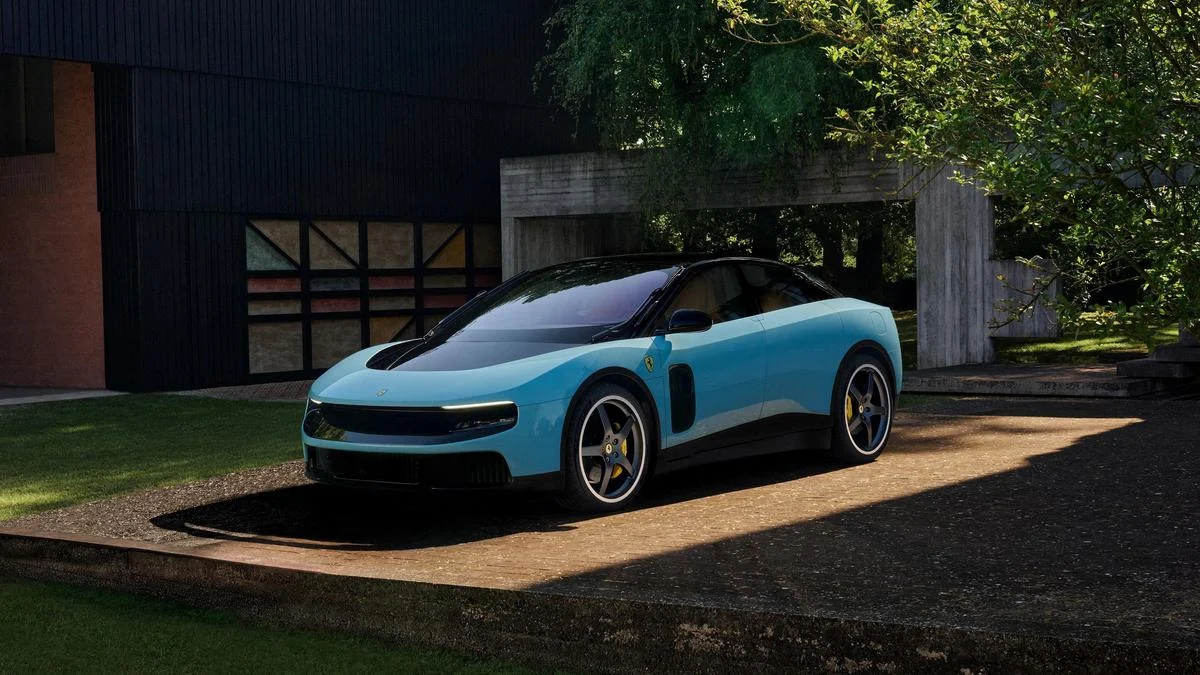
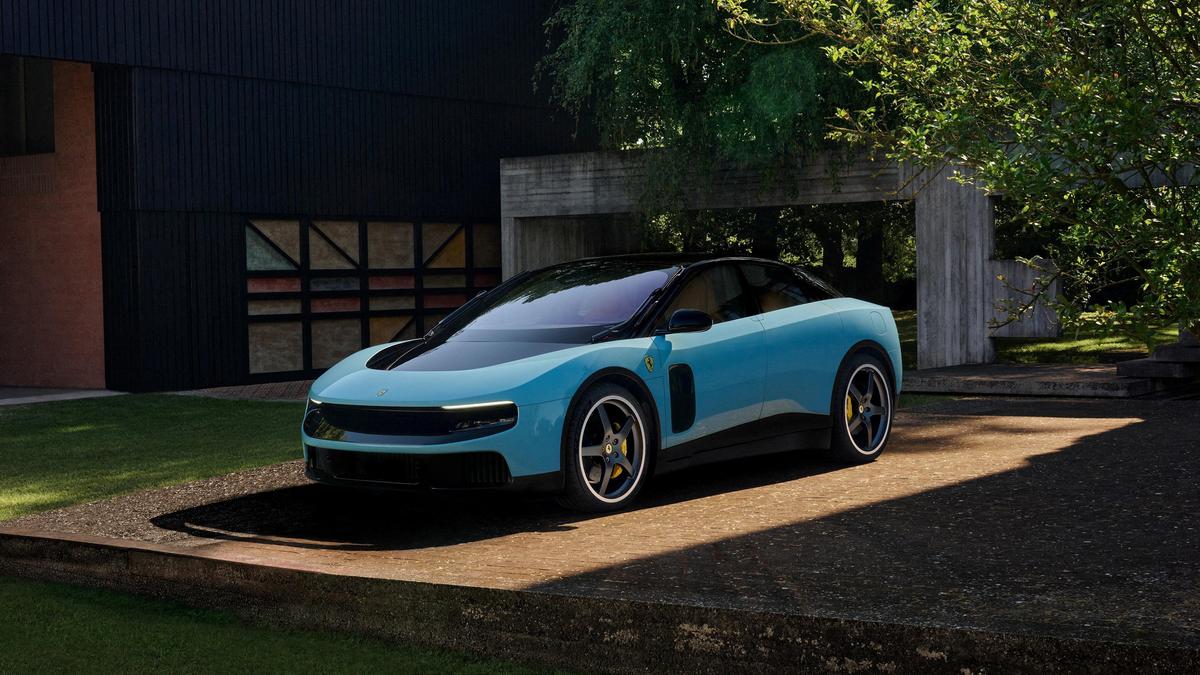
MARANELLO, ITALY — In a move that signals the definitive end of the internal combustion engine’s undisputed reign over the luxury automotive sector, Ferrari has officially pulled the silk sheet off the "Luce." As the brand’s first-ever fully electric vehicle (BEV), the Luce—Italian for "Light"—represents a seismic shift for a manufacturer whose identity has been forged in the roar of V12 engines and the smell of high-octane fuel.
The unveiling, held at the company’s historic headquarters in Maranello, marks a calculated, if somewhat delayed, entry into the high-performance electric market. Following in the footsteps of rivals like Porsche and Lamborghini, Ferrari is attempting to prove that the "soul" of the Prancing Horse can survive the transition from pistons to electrons.
Main Facts: A New Paradigm of Performance
The Ferrari Luce is not merely a battery-powered version of an existing platform; it is a ground-up reimagining of what a grand tourer can be in the 21st century. The technical specifications released late Monday suggest a vehicle that balances brutal acceleration with the long-range capabilities required of a luxury cruiser.
Technical Specifications and Performance
The Luce is powered by a sophisticated tri-motor setup—one on the front axle and two on the rear—delivering a combined output that allows the vehicle to sprint from 0 to 100 kph (62 mph) in a blistering 2.5 seconds. This puts it in direct competition with the highest-tier electric hypercars currently on the market.
Perhaps more impressive than its acceleration is its sustained performance. Ferrari claims a top speed exceeding 310 kph (190 mph), a figure that many electric vehicles struggle to reach due to the thermal limitations of battery discharge and the lack of multi-speed transmissions. To support this performance, the Luce is equipped with a massive 122 kWh lithium-ion battery pack, providing a range of over 530 kilometres (330 miles) on a single charge under the WLTP cycle.
The Paradox of Weight and Design
In a departure from Ferrari’s traditional focus on lightweight agility, the Luce is a heavyweight contender. Tipping the scales at 2.26 tonnes, it is officially the heaviest model in the company’s storied history. This weight is primarily attributed to the high-density battery pack required to achieve its ambitious range and power targets.
The Luce also breaks tradition in its silhouette. It is only the second four-door model in Ferrari’s history (following the Purosangue) and the first to offer a true five-seater configuration. This positioning suggests that Ferrari is targeting a broader lifestyle demographic—affluent families and "daily drivers" who seek the prestige of the brand without the compromises of a cramped two-seater cockpit.
Chronology: The Road to Maranello’s Electric Revolution
The journey to the Luce has been one of internal debate, strategic pivots, and immense engineering hurdles. For decades, the leadership at Ferrari maintained that an electric car was antithetical to the brand’s DNA.
- 2013: The Hybrid Experiment: Ferrari took its first tentative step toward electrification with the LaFerrari. By utilizing a KERS (Kinetic Energy Recovery System) inspired by Formula 1, the company proved that electric motors could enhance, rather than replace, the ICE experience.
- 2019: The SF90 Stradale: The launch of the SF90 Stradale, Ferrari’s first plug-in hybrid (PHEV), was a watershed moment. It demonstrated that a Ferrari could operate in "stealth mode" (electric only) for short distances, acclimating the loyal tifosi to the idea of a silent Prancing Horse.
- 2021: The Leadership Shift: The appointment of Benedetto Vigna—a veteran of the semiconductor industry—as CEO signaled a change in priority. Vigna was tasked with navigating the digital and electric transition, bringing a tech-centric approach to the mechanical artisans of Maranello.
- 2022-2024: The "E-Building" Construction: Ferrari invested over €200 million in a new "e-building" at its Maranello site. This facility was designed specifically for the production of electric motors, battery packs, and power inverters, ensuring that the core components of the Luce would be developed in-house rather than outsourced.
- May 2026: The Global Unveiling: After years of testing "mule" prototypes disguised as other models, the Luce was officially introduced to the public, marking the start of a new era.
Supporting Data: The Economic and Market Context
The launch of the Luce comes at a precarious time for the automotive industry. While the transition to EVs was once viewed as an inevitable, rapid sprint, the reality has proven more complex.
Shifting Targets
In 2023, Ferrari’s leadership was bullish, predicting that fully electric and hybrid models would make up 40% of its lineup by 2030. However, in the briefing accompanying the Luce’s launch, the company adjusted these expectations. Ferrari now anticipates that electric models will account for roughly 20% of its offerings by the end of the decade.
This downward revision reflects a broader trend in the luxury segment. High-end buyers in markets like the United States and China have shown a cooling interest in EVs due to concerns over charging infrastructure and the rapid depreciation of early-generation electric technology. By lowering its targets, Ferrari is signaling a "multi-path" strategy, continuing to invest in carbon-neutral e-fuels and high-performance hybrids alongside the Luce.
Competitive Landscape
The Luce enters a market that is increasingly crowded but still lacks a definitive leader in the "ultra-luxury" EV space:
- Porsche Taycan Turbo GT: The benchmark for electric handling, but lacks the "exotic" cachet of a Ferrari.
- Lamborghini Lanzador: A concept (slated for 2028) that follows a similar "Ultra-GT" 2+2 format.
- Rimac Nevera: Offers superior raw specs but at a much higher price point and with limited brand heritage.
Ferrari’s 122 kWh battery is one of the largest in the passenger car segment, significantly outpacing the 93 kWh pack found in the standard Taycan. This suggests Ferrari is prioritizing "grand touring" capability over the raw weight-saving measures seen in its track-focused ICE models.
Official Responses: Defining the "Electric Soul"
The rhetoric from Maranello during the launch event focused heavily on the concept of "emotion." For Ferrari, the challenge is not just making a fast car, but making a car that feels like a Ferrari.
"We are inaugurating a chapter that turns our vision into reality, strengthening Ferrari’s tradition of anticipating and shaping the future," said John Elkann, President of Ferrari. "The Luce is the ultimate expression of our commitment to innovation. It does not replace our heritage; it expands the definition of what a Ferrari can be."
CEO Benedetto Vigna addressed the most common criticism from purists: the lack of sound. "A Ferrari must always have a voice," Vigna stated. "With the Luce, we have developed a unique ‘sound signature’ that is not a fake recording of an engine, but a harmonic amplification of the electric motors’ frequencies. It is the sound of the future, tuned by the ears of Maranello."
Industry analysts have reacted with cautious optimism. "Ferrari is the last of the major icons to go fully electric," said Marco Silvestri, a senior automotive analyst at Milan’s Bocconi University. "By waiting, they have avoided the early-adopter pitfalls. The Luce appears to be a mature, well-rounded product, but the true test will be whether the traditional V12 customer is willing to trade the symphony of an engine for the silence of a battery."
Implications: The Future of the Prancing Horse
The introduction of the Luce has profound implications for Ferrari, its customers, and the wider automotive world.
1. The Preservation of the ICE
By launching a dedicated EV, Ferrari is actually buying time for its internal combustion engines. Under current EU and global regulations, manufacturers that reduce their fleet-wide emissions can continue to produce limited runs of high-emission vehicles. The Luce acts as a "compliance halo," allowing Ferrari to keep the V12 alive in limited-edition icons for the foreseeable future.
2. The Infrastructure Challenge
A 122 kWh battery requires significant power to charge. For the Luce to be viable, Ferrari must invest in—or partner with—high-speed charging networks. The company announced that Luce owners will have access to a proprietary "Ferrari Premium Charging" network at major European and North American hubs, capable of delivering 350 kW speeds, which could theoretically charge the Luce from 10% to 80% in under 20 minutes.
3. The Brand Identity Crisis
The most significant implication is psychological. Ferrari has always been about the macchina—the machine. The mechanical complexity of a gearbox and the combustion cycle is what customers paid for. An electric motor is, by comparison, a commodity. Ferrari’s future success depends on its ability to differentiate its software, its interior craftsmanship, and its "driving dynamics" (torque vectoring and regenerative braking feel) to a degree that justifies a half-million-dollar price tag.
4. Environmental Stewardship
While the Luce produces zero tailpipe emissions, the environmental cost of its 2.26-tonne frame—specifically the lithium, cobalt, and nickel required for the battery—remains a point of scrutiny. Ferrari has pledged to reach carbon neutrality in its production processes by 2030, but the Luce represents a new challenge in managing the supply chain of rare-earth minerals.
Conclusion
The Ferrari Luce is a bold gamble. It is a car of contradictions: named for "Light" yet weighing more than any Ferrari before it; powered by the technology of tomorrow yet wrapped in the heritage of a 20th-century icon. As it hits showrooms in late 2026, the Luce will not just be measured by its 0-100 kph time or its top speed, but by whether it can evoke the same passion as its petrol-burning predecessors. For the first time in eighty years, the Prancing Horse is running on a different kind of fire.
