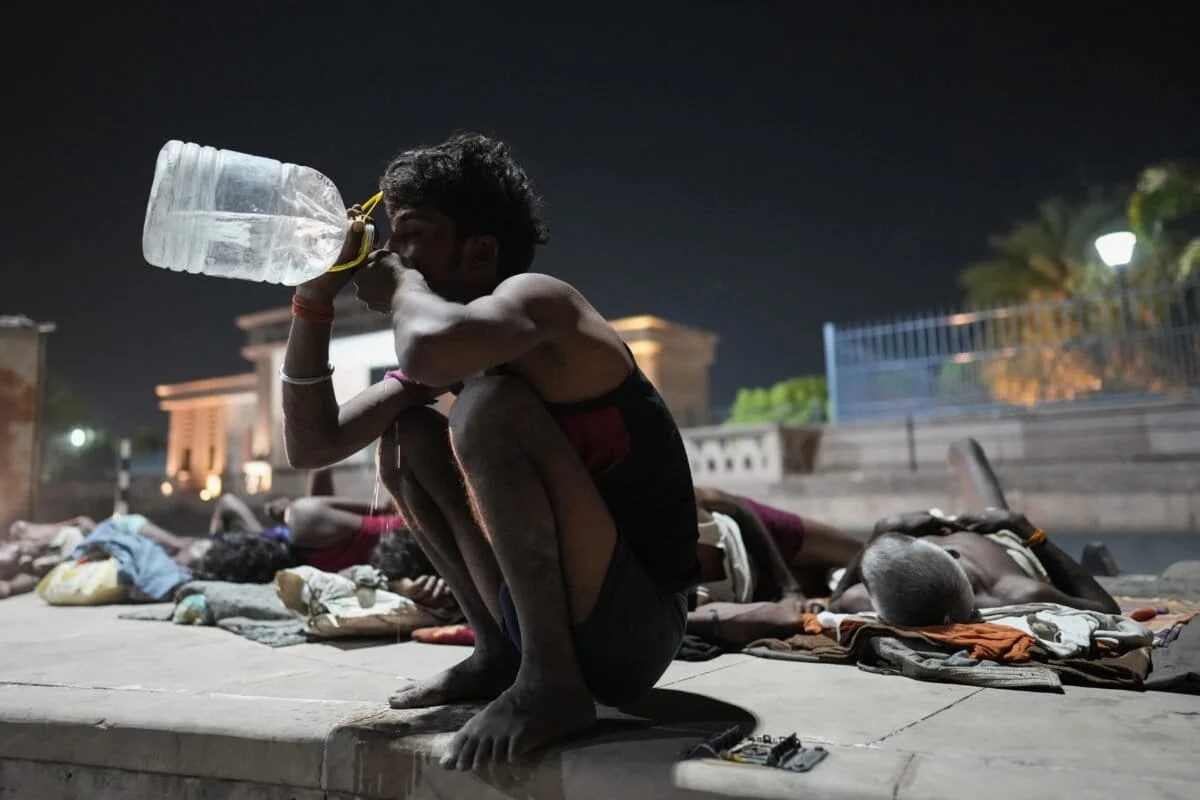
For decades, the standard narrative of the Indian summer was defined by the relentless afternoon sun—the "loo" winds of the north and the shimmering heat of the Deccan Plateau. Relief was a temporal certainty: once the sun dipped below the horizon, the earth would exhale its heat, and the air would finally cool. However, that fundamental rhythm is breaking. Across the Indian subcontinent, the night is no longer providing the sanctuary it once did.
Data from the India Meteorological Department (IMD) and recent climate studies paint a sobering picture of a nation where minimum temperatures—recorded in the dead of night or the early hours of the morning—are rising at a rate that often outpaces daytime maximums. This phenomenon, known as "nighttime warming," is transforming a seasonal discomfort into a year-round public health crisis, yet it remains largely absent from India’s official policy frameworks.
Main Facts: The 30°C Midnight
As of mid-2026, the seasonal outlook provided by the IMD suggests a troubling divergence in weather patterns. While maximum temperatures in several regions were predicted to remain near normal, minimum temperatures have consistently stayed "above normal" across the majority of the country. In the final week of May 2026, IMD observations revealed that nighttime temperatures in many districts were hovering between 3.1°C and 5.0°C higher than the long-term average.
In several urban centers, the thermometer has struggled to drop below 30°C even at 3:00 AM. This lack of nocturnal cooling is not merely a matter of comfort; it represents a failure of the local ecosystem to reset. When the body—and the built environment—cannot shed the heat accumulated during the day, a "heat debt" begins to accrue.

According to S.D. Sanap, a scientist at Climate Research Services, IMD Pune, the technical definition of a "warm night" is specific: it occurs when the maximum temperature exceeds 40°C and the minimum temperature is at least 4.5°C to 6.4°C above the seasonal norm. If the departure exceeds 6.4°C, it is classified as a "very warm night." While these definitions exist on paper, they have yet to trigger the same level of emergency response as daytime heatwaves.
Chronology: A Decadal Shift in the Indian Climate
The warming of Indian nights is not a sudden spike but the result of a compounding trend visible over the last three decades.
- 1991–2020: The baseline period for India’s climate averages established a mean minimum temperature of approximately 21°C. During this era, nighttime heat was largely considered a localized issue in the densest parts of Tier-I cities.
- 2001–2024: A study published in The Physics and Chemistry of the Earth analyzed 100 of India’s "Smart Cities," finding that 30 of them experienced significant nighttime heatwaves during this window. The frequency of these events began to intensify in the latter half of this period.
- 2025: The IMD’s annual report for 2025 provided a stark comparison. While the national annual maximum temperature was 0.10°C above the 1991–2020 average, the annual minimum temperature was significantly higher at 0.49°C. This confirmed that nights were warming nearly five times faster than days on an annual basis.
- 2026 and Beyond: The World Meteorological Organization (WMO) has signaled an 80% chance of an El Niño event developing in the June-August 2026 period. Historically, El Niño years correlate with suppressed monsoon activity and higher-than-average temperatures, suggesting that the current trend of warm nights will likely persist or intensify through the end of the decade.
Supporting Data: The Urban Heat Island and the "Lid" Effect
The disparity between rural and urban warming is perhaps the most critical data point in understanding this crisis. A study of 141 cities published in Nature Cities found that while the Indian countryside is warming at a rate of 0.26°C per decade, Indian cities are warming at 0.53°C per decade—roughly twice as fast.
The Urban Heat Island (UHI) Effect
In cities like Ahmedabad, Jaipur, and Delhi, the built environment acts as a thermal sponge. Concrete, asphalt, and steel absorb solar radiation throughout the day. Because these materials have high thermal mass, they release that heat slowly. By the time the air temperature begins to drop, the infrastructure is still radiating heat, keeping the urban microclimate 2°C to 10°C hotter than surrounding rural areas.

Anticyclonic Circulation and the "Heat Dome"
Scientifically, the lack of wind exacerbates the problem. S.D. Sanap explains that rising nighttime temperatures are often caused by anticyclonic circulation—large-scale high-pressure systems. "When this circulation is present, it acts as a lid, preventing air from escaping," Sanap notes. As the air is pushed downward, it undergoes "adiabatic compression," a process where pressure increases internal energy, thereby raising the temperature without the addition of external heat. This atmospheric "cap" also kills wind speeds, trapping stagnant, hot air in the lower troposphere.
The Aerosol Paradox
Vinoj V., an associate professor at IIT Bhubaneswar, points to an overlooked factor: pollution. Particulate matter and aerosols can actually have a cooling effect during the day by reflecting sunlight. However, at night, these same particles act like a blanket, trapping outgoing longwave radiation (heat) from the earth’s surface. This is particularly prevalent in Eastern India, where slow wind speeds allow pollutants from the Indo-Gangetic plain to accumulate, leading to some of the most oppressive nighttime conditions in the country.
Official Responses: A Policy Void
Despite the data, India’s policy infrastructure is lagging. Most Heat Action Plans (HAPs) at the municipal and state levels are triggered by maximum daytime temperatures. If a city hits 45°C during the day, alerts are sent, and labor hours are adjusted. However, if the night remains at a punishing 32°C, there is rarely a formal protocol.
The IMD Definition Gap
Currently, the IMD does not treat minimum temperatures as a primary criterion for declaring a "heatwave." While bulletins mention warm nights, the administrative machinery of the state—including disaster management funding and public health advisories—remains focused on the sun.

Emerging Local Initiatives
There are signs of change at the sub-national level. Kashif Imdad, an advisor to the Uttar Pradesh State Disaster Management Authority, notes that the state is working to officially recognize "compound heatwaves"—events where both day and night temperatures are excessive—as distinct risks by 2027. This would allow for more nuanced public health interventions, such as keeping public parks or air-conditioned "cooling centers" open through the night for those living in informal settlements.
Implications: Health, Equity, and the 2050 Challenge
The consequences of disappearing cool nights are profound and multi-faceted, affecting everything from biological health to national economic productivity.
The Biological "Heat Debt"
Human physiology relies on the nighttime dip in temperature to recover from daytime thermal stress. Palak Balyan, research lead at Climate Trends, notes that sustained nighttime heat is increasingly linked to chronic kidney stress, cardiovascular strain, and severe sleep deprivation. "Cooling in the night helps the ecosystem and the human body to survive. Warm nights don’t allow that break," adds Vinoj V. For the elderly and infants, whose thermoregulation systems are less efficient, this lack of recovery time can be fatal.
The Social Equity Gap
Nighttime warming is a deeply regressive phenomenon. Residents of high-end gated communities can offset the heat with air conditioning, though this ironically adds more "anthropogenic heat" to the city air, making the outdoors even hotter. Conversely, those in slums and informal housing—characterized by tin roofs, poor ventilation, and high density—are trapped in ovens. On top floors of low-income housing, the indoor heat index can remain dangerously high well into the early morning hours, long after the outside air has supposedly "cooled."

The Urbanization Tsunami
India is currently undergoing one of the fastest urban migrations in human history. As of the 2011 Census, 31% of the population lived in cities. By 2050, an additional 416 million people are expected to become urban dwellers. If the current trajectory of urban planning—prioritizing concrete over green cover and glass over passive cooling—continues, the number of people exposed to "very warm nights" will triple.
The Path Forward
Experts argue that the solution lies in a fundamental shift in urban design. This includes:
- Passive Cooling: Integrating traditional architectural techniques that promote natural ventilation.
- Urban Greening: Expanding "blue-green" infrastructure (parks and water bodies) to break the Urban Heat Island effect.
- Policy Integration: Formally including minimum temperature thresholds in all municipal Heat Action Plans.
- Targeting Tier-II Cities: As smaller cities begin their development boom, there is a window of opportunity to implement "cool" building codes before they become concrete jungles.
As the 2026 summer proves, the "silent surge" of nighttime warming is no longer a future threat—it is a present reality. India’s ability to adapt to this new climate frontier will determine the health and productivity of nearly a billion people in the decades to come. The sun may set, but for a warming India, the heat is just getting started.