

As a relentless heatwave sweeps across the Indian subcontinent, pushing temperatures in metropolitan hubs like Delhi and Mumbai to record-breaking highs, the Ministry of AYUSH (Ayurveda, Yoga & Naturopathy, Unani, Siddha, and Homoeopathy) has stepped forward with a comprehensive public health advisory. While the document covers a wide array of preventive measures and traditional wellness practices, one specific recommendation has sparked significant debate among nutritionists and the general public: the consumption of milk with added sugar as a primary tool for hydration and energy maintenance.
In an era where health narratives are dominated by the "war on sugar," the government’s suggestion to combine dairy with a sweetener to combat heat-related illnesses seems, at first glance, counterintuitive. However, a deeper dive into the physiological demands of the body during extreme heat, the nutritional profile of milk, and the principles of traditional medicine reveals a more nuanced perspective on this recommendation.
Main Facts: The Core of the AYUSH Advisory
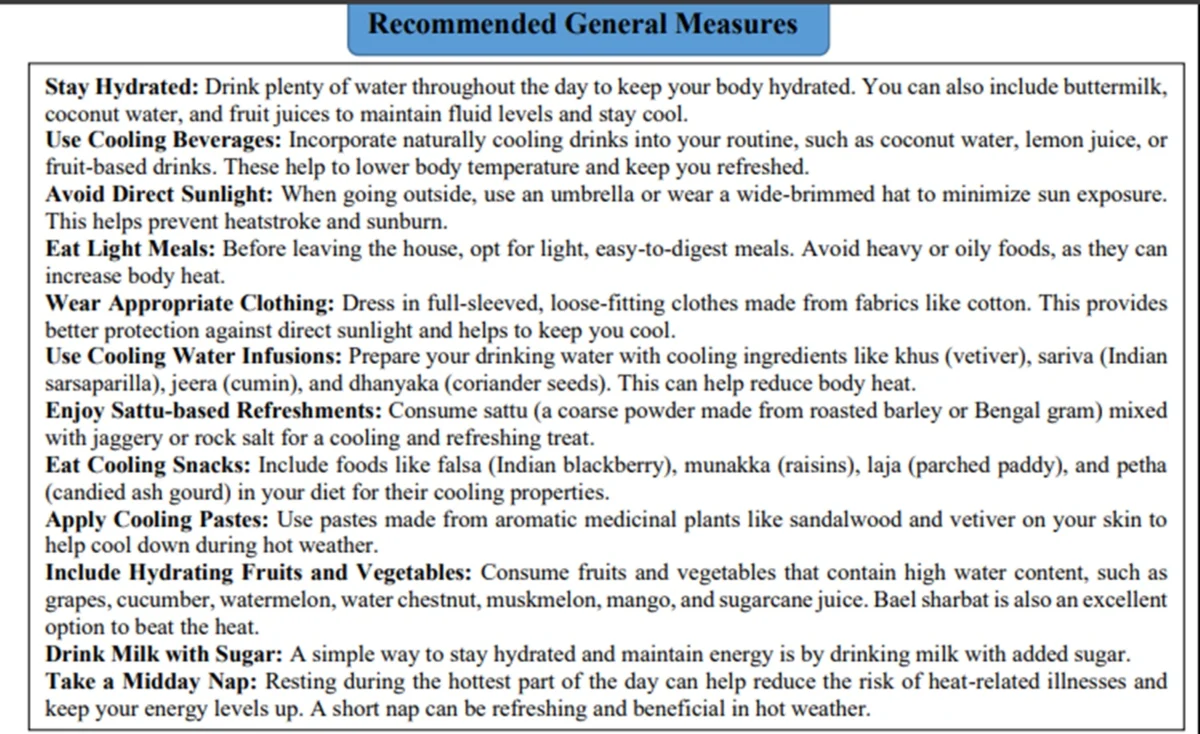
The advisory, released through the Press Information Bureau (PIB), serves as a strategic roadmap for citizens to navigate the "Loo" (the hot, dusty summer wind of the Indo-Gangetic Plain) and the broader risks of heat exhaustion and heatstroke. The Ministry’s "Recommended General Measures" emphasize a multi-pronged approach to summer safety:
- Hydration Strategy: Beyond plain water, the ministry advocates for fluids rich in electrolytes, including Oral Rehydration Solutions (ORS), lemon water, buttermilk (lassi), and seasonal fruit juices with a pinch of salt.
- The Dairy Component: The advisory explicitly states, “A simple way to stay hydrated and maintain energy is by drinking milk with added sugar.”
- Physical Protection: Advice includes wearing light-colored, loose-fitting cotton clothing and avoiding direct sunlight during peak hours (usually 11:00 AM to 4:00 PM).
- Dietary Adjustments: A focus on seasonal fruits with high water content, such as watermelon, muskmelon, oranges, grapes, and cucumbers.
- Emergency Response: Guidelines for identifying symptoms like dizziness, nausea, and muscle cramps, and taking immediate cooling measures.
The inclusion of sugared milk is positioned as a "comforting" yet functional beverage designed to provide both the fluid volume necessary for hydration and the caloric density required to stave off the fatigue that often accompanies heat stress.
Chronology: A Season of Escalating Temperatures
The issuance of this advisory follows a period of escalating climatic concern. In late April and throughout May, several Indian states reported temperatures exceeding 45°C (113°F).
- Early May: The India Meteorological Department (IMD) issued several "Red" and "Orange" alerts for heatwaves across Northwest and Central India.
- Mid-May: Reports of heat-related hospitalizations began to rise in cities like Delhi, Ahmedabad, and Mumbai. Common complaints included severe dehydration, heat exhaustion, and secondary infections like UTIs, exacerbated by the lack of fluid intake.
- Late May: The Ministry of AYUSH formulated its advisory, drawing from both traditional Ayurvedic wisdom and modern nutritional observations, aimed at providing low-cost, accessible solutions for the general populace.
- Current Context: As the heatwave persists into the pre-monsoon phase, the advisory has become a central point of discussion in public health circles, particularly regarding the efficacy of traditional drinks versus modern electrolyte solutions.
Supporting Data: The Nutritional Case for Milk and Sugar
To understand why the Ministry might recommend milk and sugar, it is necessary to look at the "Hydration Index" of various beverages. A landmark study by the University of St. Andrews found that milk is actually more hydrating than plain water.
The Science of Milk Hydration
Milk contains the sugar lactose, some protein, and some fat, all of which help to slow down the emptying of fluid from the stomach and keep hydration happening over a longer period. More importantly, milk is rich in sodium and potassium—electrolytes that are lost in significant quantities through sweat.
Fauziya Ansari, a dietitian at Apollo Spectra Hospital, Mumbai, notes that milk contains water, protein, calcium, and potassium. “These nutrients support the body when there is extreme heat outside. Milk can have a cooling effect on the body and help to get rid of tiredness and fatigue,” she explains.

The Role of Sugar in Heat Stress
While sugar is often vilified, in the context of acute heat stress, it serves a specific physiological purpose. Extreme heat causes the body to work harder to regulate its internal temperature, a process that consumes significant metabolic energy.
- Quick Energy: Sucrose (table sugar) provides an immediate glucose spike, which can be vital for individuals experiencing "heat lethargy" or hypoglycemia-like symptoms due to overexertion in the sun.
- The Glucose-Sodium Link: In the gut, the absorption of water is enhanced by the presence of glucose and sodium (the "sodium-glucose cotransport" mechanism). This is the fundamental principle behind ORS. Adding a small amount of sugar to a mineral-rich liquid like milk can, in theory, facilitate faster rehydration.
Official Responses and Expert Skepticism
Despite the theoretical benefits, the medical community remains cautious about a blanket recommendation for sugared milk, particularly for a population with high rates of metabolic disorders.
The Diabetes Concern
India is often referred to as the "diabetes capital of the world." For the millions of Indians living with Type 2 diabetes or pre-diabetes, the advice to add sugar to milk could be hazardous. Dt Amreen Sheikh, chief dietitian at KIMS Hospitals, Thane, warns that while the drink is "comforting," it is not a "complete solution." She emphasizes that sugar can provide a quick lift but may lead to a subsequent "crash" in energy levels, which could worsen the feeling of weakness in the long run.
Digestive Health
Heatwaves are notorious for slowing down the digestive system. Fauziya Ansari points out that "having too much milk can lead to bloating, stomach discomfort, acidity, or diarrhea." In extreme heat, the blood flow is often diverted from the gut to the skin to facilitate cooling, making the digestion of heavy proteins and fats found in dairy more difficult for some individuals.
The Balance of Moderation
The consensus among the experts consulted is that while the AYUSH Ministry’s advice has roots in traditional cooling practices—where milk is considered Pitta-shamak (heat-pacifying)—it must be applied with clinical common sense. It is recommended for:
- Growing children with high metabolic rates.
- Manual laborers who lose immense calories and electrolytes through physical toil.
- Individuals with no underlying metabolic conditions.
It is not recommended as a primary hydration source for sedentary office workers or those with insulin resistance.
Implications for Public Health and Traditional Wisdom
The AYUSH Ministry’s advisory represents a broader effort by the Indian government to integrate "Jan Andolan" (people’s movements) with traditional health practices. The implications of these guidelines are manifold:
1. Cultural Resonance vs. Modern Dietetics
In India, drinks like Thandai (a milk-based cooling drink) and Lassi have been used for centuries to combat the summer heat. By recommending milk and sugar, the Ministry is validating cultural practices. However, the implication is that public health messaging must be precise. There is a risk that the public might interpret "drink milk with sugar" as a license for excessive sugar consumption, which contradicts other national health goals aimed at reducing non-communicable diseases (NCDs).

2. Economic Accessibility
One of the strengths of the AYUSH advisory is that it relies on ingredients available in almost every Indian household. While branded electrolyte drinks can be expensive, milk, sugar, and salt are staples. This makes the advisory inclusive of lower-socioeconomic groups who are often the most exposed to extreme heat.
3. The Need for Personalized Nutrition
The debate highlights a growing need for "personalized" public health advisories. A "one size fits all" approach is becoming increasingly difficult in a diverse population. Future advisories may need to categorize recommendations based on age, activity level, and pre-existing health conditions (e.g., "If you are diabetic, choose salted buttermilk over sugared milk").
4. Holistic Heat Management
The advisory serves as a reminder that hydration is not just about water volume; it is about nutrient density. The inclusion of seasonal fruits like watermelon and vegetables like cucumber, alongside the milk recommendation, suggests a holistic approach to maintaining the body’s "homeostasis" (internal balance) during external environmental shocks.
Conclusion: A Tool, Not a Rule
The AYUSH Ministry’s recommendation to drink milk with sugar is a fascinating intersection of traditional Ayurvedic cooling therapy and modern hydration science. While the electrolytes and proteins in milk offer superior fluid retention compared to water, the addition of sugar serves as a double-edged sword—providing vital energy for some while posing risks for others.
As the country continues to grapple with the realities of climate change and more frequent extreme weather events, such advisories will become increasingly vital. However, the takeaway for the citizen remains one of balance. Milk with sugar may be an effective "occasional choice" for a quick recovery after being out in the sun, but it should not replace the fundamental pillars of heat safety: consistent water intake, the use of ORS when necessary, and, most importantly, listening to one’s body.
As the experts suggest, the best defense against a heatwave is a combination of modern medical awareness and the sensible application of traditional wisdom. Before adopting any new dietary routine in response to the heat, consulting a healthcare practitioner remains the safest course of action, ensuring that the remedy for the heat does not become a burden on one’s overall health.
DISCLAIMER: This article is based on information from the public domain and expert opinions. It is intended for informational purposes only and does not constitute medical advice. Always consult your health practitioner or a registered dietitian before making significant changes to your diet, especially if you have underlying health conditions like diabetes or lactose intolerance.
