

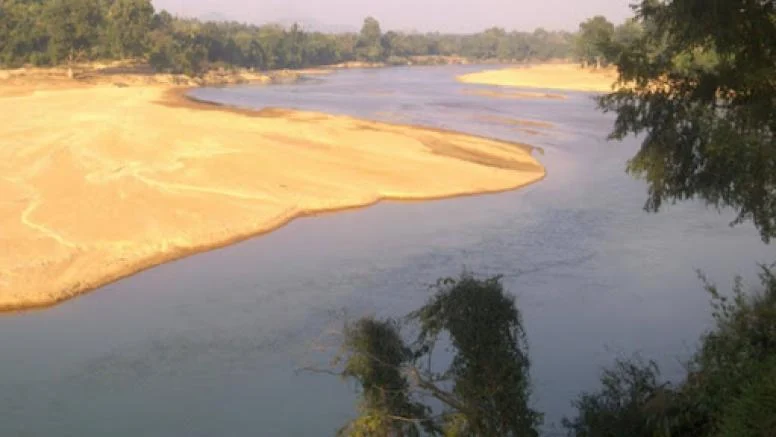
RAJGIR, BIHAR — In the heart of Odisha, where the Brahmani River snakes through the lush greenery of the Bhitarkanika Wildlife Sanctuary, a silent and microscopic invasion is underway. While the sanctuary is celebrated globally for its sprawling mangrove forests and prehistoric inhabitants, a new study has revealed that its waters are being infiltrated by a "Trojan Horse" of pollution. Microplastics—tiny fragments of synthetic polymers—are acting as chemical sponges, adsorbing and transporting toxic heavy metals into one of India’s most sensitive ecological zones.
A collaborative effort by researchers from Auburn University (USA), Nalanda University, Manipal Institute of Technology, The Energy and Resources Institute (TERI), and Nagaland University has exposed a harrowing reality: the plastic we discard is no longer just a physical nuisance; it is a sophisticated delivery system for some of the most dangerous elements on the periodic table.
Main Facts: A Convergence of Chemical and Plastic Threats
The study, recently published and centered on a 22-kilometer stretch of the Brahmani River, marks a significant milestone in Indian environmental science. It is the first comprehensive investigation to assess the specific ecological risks posed by the interaction between microplastics and heavy metals in this region.
The Brahmani River is a lifeline for the state of Odisha, but as it flows toward the Bay of Bengal, it passes through industrial hubs and dense human settlements. The research team discovered that as plastic debris breaks down into micro-scale particles (less than 5mm in size), it undergoes a chemical transformation. These particles, primarily composed of polyamide (nylon) from synthetic clothing and industrial runoff, develop a high affinity for heavy metals present in the water.
The findings indicate that these microplastics are "smuggling" a cocktail of toxins, including:
- Lead (Pb): A potent neurotoxin.
- Arsenic (As): A highly carcinogenic metalloid.
- Cadmium (Cd): Linked to kidney failure and bone toxicity.
- Chromium (Cr), Copper (Cu), and Zinc (Zn): Essential in trace amounts but lethal to aquatic life in high concentrations.
The Bhitarkanika Wildlife Sanctuary, a Ramsar site of international importance, stands directly in the crosshairs. As the second-largest mangrove ecosystem in India, it serves as a nursery for diverse marine life. The discovery that these pollutants are accumulating in the sanctuary’s sediments suggests that the very foundation of this food web is being compromised.

Chronology: From the Muddy Banks to the High-Tech Lab
The journey of this research began with extensive fieldwork along the Brahmani River, where the team sought to understand how geography influences the accumulation of toxins.
Phase 1: Field Collection (22km Perimeter)
The researchers identified 20 strategic sampling sites along a 22-kilometer stretch of the river, specifically targeting areas where the river enters the protected zones of Bhitarkanika. They collected sediment samples from the riverbed, focusing on both "trapping" sites—where dense mangrove roots naturally slow water flow—and open riverine sites.
Phase 2: Isolation and Digestion
Back at the laboratory, the sediment underwent a rigorous "cleaning" process. To separate the plastic from the mud, the team utilized a high-density liquid solution of zinc chloride. This caused the lighter plastic particles to float to the surface while the heavier minerals sank. To ensure that organic matter (such as leaf litter or small organisms) did not skew the results, the samples were treated with hydrogen peroxide, which chemically "digested" the natural material, leaving only the synthetic polymers behind.
Phase 3: Identification and Fingerprinting
Using high-powered stereomicroscopes, the team meticulously sorted the particles by size, color, and shape. To confirm the materials were indeed plastic, they employed the "hot-needle test"—a manual verification where the reaction of the particle to heat (melting vs. charring) distinguishes synthetic polymers from natural fibers.
The final identification was conducted using Fourier Transform Infrared Spectroscopy (FTIR). By bouncing infrared light off the particles, the researchers were able to read the "chemical fingerprint" of each fragment, identifying polyamide as the dominant pollutant.
Phase 4: X-Ray Analysis of Toxic Cargo
The most critical phase involved Scanning Electron Microscopy (SEM) equipped with an X-ray spectrometer. This allowed the researchers to zoom in on the surface of the microplastics at a near-atomic level. It was here that they confirmed the presence of heavy metals clinging to the plastic surfaces, proving that the particles were not just floating debris, but active carriers of industrial toxins.

Supporting Data: The Science of the "Chemical Sponge"
The study provides a granular look at how microplastics interact with the environment, revealing a complex relationship between physics, chemistry, and biology.
The Dominance of Polyamide
The research found that microscopic clothing fibers—specifically polyamides—were the most prevalent form of microplastic. This points to a significant contribution from domestic laundry greywater and textile industries. Polyamide fibers have a high surface-area-to-volume ratio, making them exceptionally efficient at "grabbing" molecules from the surrounding water.
The Biofilm Factor
One of the study’s most intriguing findings involves "biofilms"—the thin, slimy layers of bacteria and algae that coat submerged plastics. The researchers noted that these natural slimes likely act as an adhesive, further enhancing the plastic’s ability to trap heavy metals. However, the study also highlighted a "knowledge gap" here: the exact mechanism of how these biological layers alter metal absorption is not yet fully understood and requires further investigation.
Mangroves as "Pollutant Sinks"
The data compared open river sites with mangrove-heavy areas. Mangroves, with their complex aerial root systems (pneumatophores), are designed by nature to trap sediment. Unfortunately, this same mechanism makes them highly effective at trapping microplastics. The study confirmed that the sanctuary’s protected zones are inadvertently acting as "sinks" for the pollutants flowing downstream, concentrating the danger in the very areas where wildlife is most abundant.
Toxic Concentration Levels
While the study established a baseline, the detection of arsenic and lead on microplastic surfaces is particularly alarming. These metals do not break down; they bioaccumulate. When a small crustacean eats a microplastic fiber, the metals enter its tissues. As that crustacean is eaten by a fish, and the fish by a saltwater crocodile, the concentration of toxins increases—a process known as biomagnification.
Official Responses and Scientific Perspective
The research has sent ripples through the scientific and conservation communities in India. While official government policy regarding microplastics in riverine systems is still in its nascent stages, the study provides the "benchmark data" that policymakers have long requested.

Scientific Consensus:
Experts involved in the study emphasize that the Brahmani River is a "high-energy" system that transports vast amounts of sediment. The fact that microplastics are becoming a permanent part of this sedimentary cycle suggests that the pollution is not a fleeting issue but a long-term environmental shift.
Call for Action:
The research team has signaled that this work should serve as a "vital wake-up call." They argue that current waste management regulations are focused on macro-plastics (bags, bottles, and straws) and fail to address the "invisible" threat of microfibers and the chemical "hitchhikers" they carry.
Conservationist Perspective:
Local conservationists in Odisha have expressed concern over the impact on the Olive Ridley turtles that nest on the nearby Gahirmatha beach. If the Brahmani River is delivering toxic-laden plastics into the coastal waters, the reproductive health of these endangered turtles could be at risk. Similarly, the sanctuary’s famous saltwater crocodiles—some of the largest in the world—are top-tier predators that will eventually bear the highest burden of this chemical smuggling.
Implications: A Global Warning from a Local River
The implications of the study extend far beyond the banks of the Brahmani River. It challenges the traditional view of wildlife sanctuaries as "protected" spaces. In the age of the Anthropocene, a fence or a legal designation cannot stop the flow of microscopic pollutants.
Ecological Risks
The primary concern is the collapse of the "purity" of the Bhitarkanika ecosystem. If the base of the food chain is contaminated with lead and arsenic, the long-term survival of the sanctuary’s 215 species of birds, its resident elephants, and its iconic reptilian population is in jeopardy.
Human Health and the Blue Economy
The Brahmani River eventually flows into the Bay of Bengal, a major source of seafood for millions of people. The "smuggling" of heavy metals into the marine environment via microplastics suggests a direct pathway for these toxins into the human food supply. The "Blue Economy" of Odisha, which relies on healthy fisheries, faces a structural threat from this invisible pollution.

Policy and Infrastructure Requirements
The study underscores the urgent need for:
- Advanced Filtration: Upgrading wastewater treatment plants (STPs) to include membrane filtration capable of catching microfibers.
- Industrial Accountability: Stricter monitoring of heavy metal discharge from the industrial belts of Angul and Talcher, which sit upstream on the Brahmani.
- Public Awareness: A shift in consumer behavior regarding synthetic textiles and plastic disposal.
Conclusion
The research conducted by Nalanda University and its partners has peeled back a layer of environmental mystery, revealing a complex, dangerous synergy between plastic and chemistry. By proving that microplastics are actively "smuggling" toxic metals into the heart of the Bhitarkanika Wildlife Sanctuary, the study has provided the evidence needed to move from observation to action. Protecting the breathtaking biodiversity of the region now requires more than just guarding its borders; it requires a fundamental overhaul of how we manage the invisible waste of modern life.
