

What are your motivations? Barring what we do spontaneously, almost all of our actions are driven by an intricate web of desires, needs, and aspirations. It is, in fact, an all-encompassing force, starting from the seemingly mundane act of brushing our teeth for personal wellbeing to the profound pursuits that define us as individuals and shape the course of human history.
This pervasive influence extends far beyond personal habits, permeating our interactions, our professional endeavors, and our grandest ambitions. Whether it is the individual striving for personal growth or the visionary aiming for a nation’s highest office, every action is underpinned by a unique set of motivations. Even the scientists and inventors, whom we often place on a pedestal after their groundbreaking accomplishments, are no different. Their breakthroughs, whether the product of meticulous lifelong dedication or serendipitous discovery, invariably stem from a deep-seated drive. In cases of accidental innovation, the individual has often cultivated a lifetime of observation and insight, positioning themselves to recognize and capitalize on unforeseen opportunities. Then there are those who commit a lifetime to a singular, monumental goal, often without certainty of its eventual realization. French-born German engineer and inventor Rudolf Diesel, a figure whose name is synonymous with mechanical power, neatly fits into this latter, profoundly driven category.
Main Facts
Rudolf Diesel: A Visionary Beyond the Engine
Rudolf Diesel, now primarily remembered for the groundbreaking internal combustion engine that bears his name, was a polymath whose intellectual curiosity extended far beyond mechanical engineering. He was a gifted linguist, an admirer of the arts, and a profound social theorist who sought to understand and influence existing social phenomena. These diverse interests were not mere hobbies but integral components of his overarching vision, deeply influencing his motivations as an inventor.
His Core Motivation: Efficiency and Accessibility
At the heart of Diesel’s inventive spirit lay a potent combination of creative mechanical design, a thorough understanding of heat transference governed by natural physical laws, and a profound concept of sociological needs. The latter, in particular, served as one of his prime motivators. During the late 19th century, the industrial world was largely powered by inefficient steam engines, which were costly, cumbersome, and predominantly confined to large industrial setups, effectively serving the wealthy and powerful. Diesel dreamt of democratizing power, envisioning an engine that was not only vastly more efficient than existing systems but also accessible and affordable for small businesses, local artisans, and agricultural communities – the "smaller players with lower budgets" of his era.
The Revolutionary Principle
Diesel’s engineering genius culminated in the development of the compression-ignition engine. Unlike its predecessors, which used a spark plug to ignite a mixture of fuel and air, Diesel’s engine compressed only air to such an extreme degree that its temperature soared. When fuel was then injected into this superheated air, it ignited spontaneously, a principle known as auto-ignition. This fundamental difference unlocked unprecedented levels of thermal efficiency, marking a monumental leap in the evolution of power generation.
Chronology of Innovation
Early Life and Influences
Rudolf Christian Karl Diesel was born in Paris on March 18, 1858, to Bavarian immigrant parents. His early life was marked by intellectual promise and a natural aptitude for mechanics. The Franco-Prussian War in 1870 forced his family to relocate to London and then Augsburg, Germany, where young Rudolf’s academic journey truly began. He attended the Royal Bavarian Polytechnic of Augsburg and later the Technical University of Munich, where he distinguished himself as an exceptional student. It was there that he came under the tutelage of Carl von Linde, a renowned professor of thermodynamics and refrigeration pioneer. Linde’s lectures on the efficiency limitations of steam engines and the theoretical potential of the Carnot cycle deeply influenced Diesel, igniting a lifelong fascination with thermal efficiency. His early career saw him working with Linde, gaining invaluable experience in refrigeration technology, first in Paris for the Linde Ice Machine Company and later managing a Linde branch in Berlin. Yet, his mind was never far from his burgeoning desire to build a more efficient, universally accessible engine.
The Thermodynamics Dream
As a brilliant student of thermodynamics, Diesel was captivated by the theoretical possibility of converting a far greater proportion of heat into useful work than existing engines achieved. He understood that the steam engines dominating the 19th century, along with early internal combustion engines running on petrol and gas, were remarkably inefficient, often converting only around 10% of their fuel’s heat energy into usable power. This represented an enormous waste of resources and energy. For Diesel, this was not merely an engineering puzzle; it was a societal challenge. He observed that the pervasive steam-powered engines, due to their size, complexity, and cost, were largely confined to industrial behemoths. This meant that access to mechanical power, a cornerstone of economic advancement, was concentrated in the hands of the wealthy elite. Driven by his sociological convictions, Diesel dreamt of creating an engine that would transcend these limitations, offering a more efficient, economical, and thus more accessible power source for everyone, fostering economic independence for smaller enterprises and individuals.
Years of Trial and Peril
Fuelled by this ambitious dream, Diesel devoted himself entirely to engine experimentation throughout the 1880s. His journey was fraught with challenges and near-fatal setbacks. One particularly harrowing incident involved an experimental steam engine that utilized ammonia in its power-generating process. During testing, the engine exploded violently, severely injuring Diesel and permanently damaging his eyesight. The trauma could have deterred a lesser individual, but Diesel, demonstrating immense resilience, recovered and plunged back into his work with unwavering determination. He tirelessly churned out innovative designs, meticulously refining his concepts and pushing the boundaries of contemporary mechanical engineering. His perseverance through such adversity underscored his profound commitment to his vision.

The Breakthrough of 1893
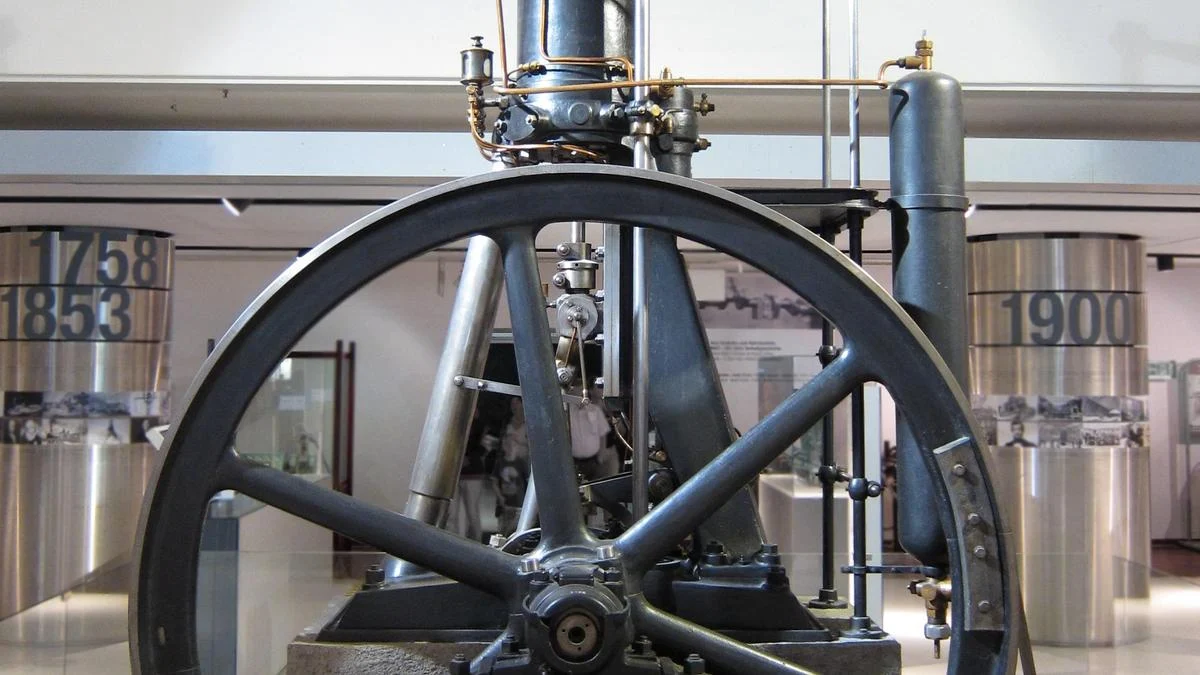
Diesel’s relentless efforts finally culminated in a pivotal success in 1893. On August 10, at the Maschinenfabrik Augsburg (later MAN AG) in Augsburg, Germany, his prime model – a stark, imposing 10-foot iron cylinder with a flywheel at its base – ran on its own power for the very first time. This seminal moment, though the engine still required significant refinement, marked the birth of a new era in power generation. It was a tangible realization of a decade-long pursuit, proving the viability of his compression-ignition principle. The scientific community and industrial circles began to take notice of this revolutionary development.
Refinement and Global Recognition
The initial success of 1893 was merely the beginning of a meticulous refinement process. Diesel spent the subsequent years tirelessly improving his design, transforming the raw prototype into a practical and powerful machine. On July 15, 1895, he filed for a U.S. patent, titled "Internal-combustion engine," which would eventually be granted on August 9, 1898. By this time, with the crucial aid of several prominent German firms, including MAN AG and Krupp, he had successfully demonstrated a more powerful and practical four-stroke engine. This improved iteration boasted a theoretical mechanical efficiency of 75.6%. While the real-world conversion of heat contained in the fuel into effective power stood at 26.8%, this figure was still an astounding two and a half times better than the best rival engines of the era. The implications were immediate and profound, setting the stage for global recognition and widespread industrial adoption.
Supporting Data and Technical Brilliance
The Science Behind the Diesel Cycle
The brilliance of the diesel engine lies in its unique method of ignition. Unlike petrol engines, which compress a mixture of air and fuel and then ignite it with an electrical spark plug, diesel engines operate on a compression-ignition principle. Here, only air is drawn into the cylinder and compressed to an extraordinarily high pressure. This compression dramatically increases the air’s temperature, reaching hundreds of degrees Celsius – hot enough to cause spontaneous combustion. At the peak of the compression stroke, fuel (diesel fuel) is finely atomized and injected directly into this superheated air. The high temperature instantly ignites the fuel, leading to a controlled combustion process that drives the piston. This method allows for much higher compression ratios compared to gasoline engines, which are limited by the pre-ignition (knocking) of the air-fuel mixture. The higher compression ratio is a key factor in the diesel engine’s superior thermal efficiency.
A Leap in Efficiency
The thermodynamic advantages of Diesel’s engine were revolutionary. The higher compression ratio inherent in the diesel cycle translates directly into greater expansion of the combustion gases, extracting more work from each combustion event. This, coupled with a more complete combustion process due to the direct injection of fuel into highly compressed, hot air, significantly reduces heat losses and maximizes the conversion of chemical energy into mechanical work. While theoretical models predicted an even higher efficiency, the real-world figure of 26.8% was a staggering improvement over the roughly 10% efficiency of contemporary steam and gasoline engines. This meant that for the same amount of fuel, a diesel engine could produce significantly more power, making it an exceptionally economical choice for industrial and heavy-duty applications.
The Vision for Diverse Fuels
One of Rudolf Diesel’s most remarkable insights, often overlooked in the modern context, was his intention for his engine to operate on a variety of fuels, not solely petroleum-derived diesel. He explicitly designed his engine with fuel flexibility in mind. At the Paris World Fair in 1900, Diesel famously demonstrated a model running on peanut oil, showcasing its versatility. His engine was capable of running on numerous other substances, from coal dust to various vegetable oils. Diesel was a staunch believer in the potential of vegetable oils as an important, renewable source of fuel, foreseeing a future where they could rival petroleum products. This vision was deeply intertwined with his sociological aspirations: he believed that locally sourced vegetable oils could empower agricultural economies, particularly in less developed regions, fostering self-sufficiency and reducing dependence on centralized fossil fuel supplies. His foresight on alternative fuels resonates profoundly with today’s global push for sustainable energy solutions.
Societal Impact Beyond Engineering
Diesel’s concept of "sociological needs" was not merely an abstract idea but a driving force behind his engineering pursuits. He envisioned his engine as a tool for social equity. The existing industrial landscape, dominated by large, expensive steam engines, created a barrier for small businesses, farmers, and artisans to access efficient mechanical power. Diesel sought to dismantle this barrier, believing that an affordable and efficient engine would enable these smaller players to mechanize their operations, increase productivity, and compete more effectively with larger industrial entities. He saw his invention as a catalyst for economic decentralization and empowerment, a means to elevate the working class and foster broader prosperity. This unique blend of engineering genius and social conscience truly set Rudolf Diesel apart.
Official Responses and Commercialization
Patenting a Revolution
Securing intellectual property was paramount for Diesel. His German patent (DRP 67207) for a "new rational heat engine" was granted in 1892, followed by the crucial U.S. patent (No. 608,845) in 1898. These patents were not just legal documents; they were the foundation of a global industrial revolution. They protected his innovative design, allowing him to control its production and commercialization. The value of these patents quickly became immense, attracting licensing agreements from manufacturers across Europe and America, eager to capitalize on this groundbreaking technology. This period marked a peak in Diesel’s financial success, as royalties began to pour in.

Industry Adoption and Early Success
The industrial world quickly recognized the transformative potential of the diesel engine. Its superior efficiency and robustness made it ideal for a vast array of applications. Early adopters included factories and power plants, where the engines provided reliable and cost-effective power generation. Its impact was particularly profound in the burgeoning shipping industry, where diesel engines offered a more compact, fuel-efficient, and less labor-intensive alternative to steam power, leading to larger cargo capacities and longer ranges. Soon, diesel engines were powering locomotives, submarines, and various heavy machinery, fundamentally reshaping transportation, manufacturing, and military capabilities across continents. The rapid licensing and manufacturing expansion created a global network of production, solidifying the engine’s place as a cornerstone of modern industry.
Shifting Tides of Wealth and Influence
While his patents initially made Diesel a wealthy man, managing a global empire of licenses and manufacturing agreements proved to be immensely complex and fraught with challenges. He faced numerous legal battles over patent infringements and struggled with the financial pressures of various entrepreneurial ventures. Ironically, while he had initially sought to empower smaller entities, his invention primarily benefited large-scale industrialists and corporations. The sheer capital required to manufacture and implement diesel engines on a grand scale meant that the largest players reaped the most significant rewards. This paradox, where his invention’s ultimate impact diverged from his original sociological intent, perhaps contributed to the mounting pressures he faced in the later years of his life.
Implications and Enduring Legacy
The Unfulfilled Dream and Global Reach
Rudolf Diesel once stated, with a prescient understanding of his invention’s future, "I am firmly convinced that the automobile engine will come, and then I consider my life’s work complete." Tragically, he was not alive to witness the full realization of this prediction. Yet, his life’s work was indeed completed, and then some. Diesel engines, while initially too heavy for early automobiles, soon became indispensable for commercial vehicles, lorries, buses, and heavy-duty trucks. Beyond road transport, they continue to power locomotives, transform global shipping with massive marine engines, and find applications in power generation, agricultural machinery, and even certain sectors of the aviation industry. His vision of an accessible, efficient engine has indeed permeated nearly every facet of modern industrialized society.
The Mysterious End of a Genius
The life of Rudolf Diesel, so marked by brilliance and innovation, ended in an enduring mystery. On the evening of September 29, 1913, Diesel boarded the mail steamer SS Dresden in Antwerp, bound for London to attend the opening of a new diesel engine plant and meet with British Admiralty representatives. He retired to his cabin after dinner, instructing the steward to wake him at 6:15 AM the following morning. However, he was never seen alive again. His cabin was found empty, his bed untouched, and his nightshirt neatly laid out. Ten days later, his body was discovered by a Dutch boat crew floating in the North Sea, but it was not recovered due to rough seas. Only personal items found on the body were sent to his son, Eugen, who identified them as his father’s.
His death, just before the outbreak of World War I, fueled a multitude of conspiracy theories that persist to this day.
- Financial Ruin: One prominent theory suggests suicide due to overwhelming financial troubles. Despite his initial wealth from patents, Diesel had made several poor investments, suffered from legal battles, and was reportedly facing significant debt and mental distress in his final years.
- Murder by Industrial Rivals or Oil Cartels: Another compelling theory posits that he was assassinated. Diesel’s invention, particularly his advocacy for vegetable oils as fuel, posed a direct threat to the burgeoning petroleum industry. His engines offered a powerful alternative to established energy monopolies. Furthermore, his patents were of immense strategic importance, especially given the escalating pre-WWI tensions.
- Assassination by Foreign Powers: A third theory suggests he was murdered by agents of rival governments (perhaps German intelligence, fearing he would sell his invaluable patents to the British, or vice-versa). The strategic military applications of his engines for submarines and other naval vessels made him a person of interest to major powers.
To this day, no definitive evidence has emerged to conclusively explain Rudolf Diesel’s disappearance and death. The truth remains shrouded in speculation, a tragic and enigmatic footnote to the life of a revolutionary inventor.
Enduring Impact and Modern Relevance
Despite the mystery surrounding his demise, Rudolf Diesel’s legacy is undeniable. The diesel engine has undergone continuous evolution, incorporating advancements such as turbocharging, common rail direct injection, and sophisticated electronic controls to enhance power, efficiency, and reduce emissions. While contemporary concerns about air quality and climate change have led to a re-evaluation of diesel’s environmental footprint, efforts to develop cleaner diesel technologies, including exhaust after-treatment systems and the use of advanced biofuels, continue. His early vision for vegetable oils as fuel sources has found renewed relevance in the 21st century’s pursuit of sustainable energy, with biodiesel now a viable alternative in many applications. The engine’s fundamental robustness, fuel efficiency, and high torque output ensure its continued indispensable role in global logistics, agriculture, construction, and power generation.
A Testament to Human Drive
Rudolf Diesel’s life story is a powerful testament to the profound impact of deep-seated motivation, intellectual brilliance, and unwavering perseverance. From his early fascination with thermodynamics to his relentless experimentation, through near-death experiences and financial struggles, his drive to create an efficient, accessible engine never wavered. He sought not just to build a machine, but to engineer a better society. His work fundamentally reshaped the industrial landscape, demonstrating how a singular individual’s vision, fueled by a complex interplay of scientific curiosity and social conscience, can profoundly and permanently alter the course of human civilization. The engines bearing his name continue to power much of the modern world, a silent, enduring tribute to the man who dared to dream of a more efficient and equitable future.
