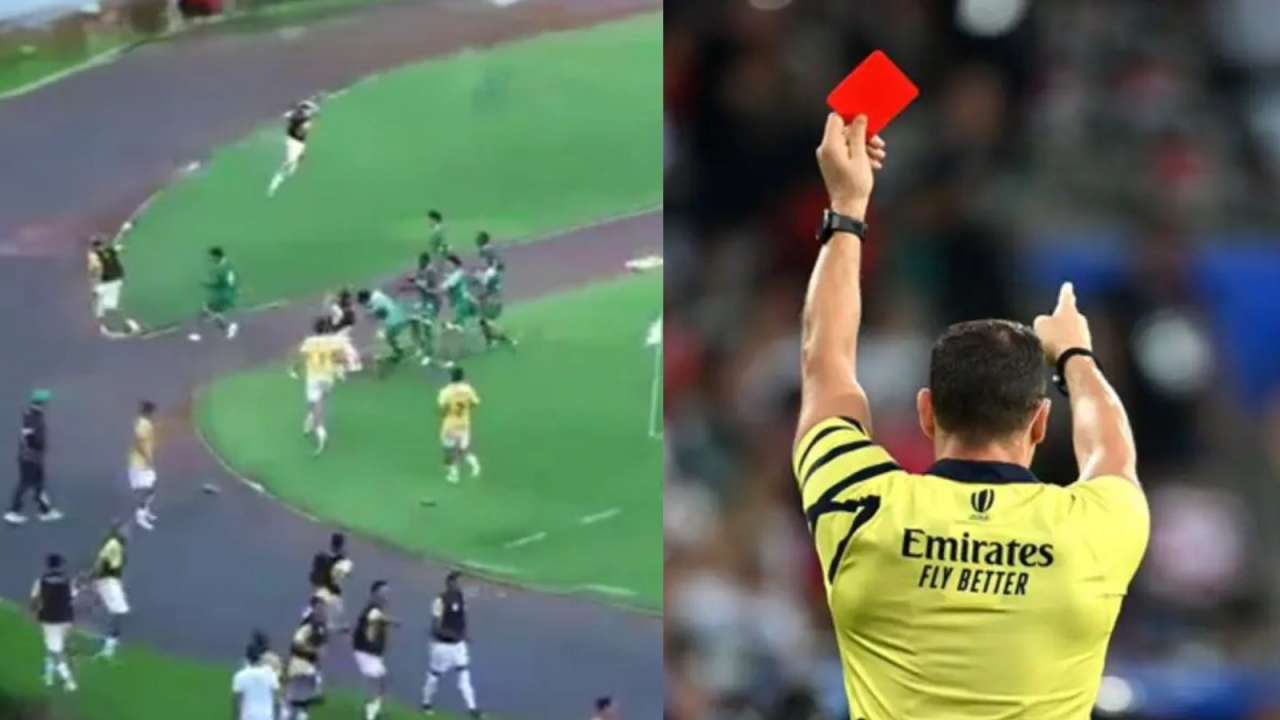
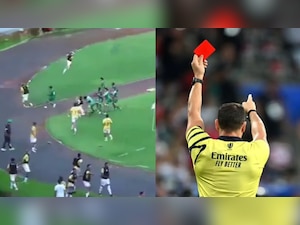
Minas Gerais, Brazil – November 6, 2026 – In an incident that has sent shockwaves through the global football community and cast a stark shadow over the beautiful game, a fiercely contested Under-20 semi-final match in Brazil culminated in an astonishing 53 red cards, setting an unprecedented world record for disciplinary action in a single professional football fixture. What began as a routine goal celebration spiralled into a mass brawl involving players, coaching staff, and even club officials, ultimately forcing the abandonment of the game and prompting widespread condemnation. The chaotic scene, triggered by an alleged taunt following a crucial goal, has ignited a fervent debate about sportsmanship, discipline, and the volatile nature of youth football in high-stakes environments.
The match, a pivotal semi-final clash between Mamoré and Uberlândia in the Minas Gerais state Under-20 championship, was poised on a knife-edge. With Uberlândia leading 3-1, the stakes were incredibly high, and emotions were already running close to the surface. However, the intensity of the competition dramatically and tragically transcended the boundaries of fair play, culminating in a spectacle of aggression that has etched itself into the annals of football history for all the wrong reasons. The repercussions of this incident are expected to be severe, with extensive investigations already underway by local and national football authorities.
The Anatomy of Chaos: A Chronological Breakdown
The incident did not erupt without warning, but rather built up through a series of events that underscored the simmering tensions inherent in such a crucial knockout fixture. Understanding the chronology is key to grasping the scale of the disciplinary breakdown.
High Stakes in Minas Gerais
The Minas Gerais Under-20 semi-final represented a significant milestone for both Mamoré and Uberlândia. For these young athletes, still honing their skills and aspiring to professional careers, a place in the final offered invaluable exposure and a chance at early silverware. The atmosphere, even before kick-off, was charged with the hopes and anxieties typical of such high-stakes youth encounters. Parents, scouts, and ardent club supporters packed the stands, anticipating a display of skill and determination. The pressure on these young shoulders was immense, setting the stage for an emotionally volatile contest.
The Match Unfolds
Prior to the fateful moment, the game had been a robust, competitive affair, characteristic of Brazilian youth football. Uberlândia had established a commanding 3-1 lead, putting them in a strong position to advance to the final. While the exact minute of the incident is not detailed, it occurred late in the game, adding to the sense of urgency and frustration for the trailing Mamoré side. Every tackle, every refereeing decision, and certainly every goal, carried amplified significance. The match had seen its share of fouls and perhaps some verbal exchanges, but nothing to foreshadow the unprecedented breakdown that was about to occur.
The Spark: Davi’s Goal and Taunt
The catalyst for the unparalleled chaos was the third goal scored by Uberlândia, which extended their lead to 3-1. The goalscorer, identified only as Davi, celebrated his crucial strike. However, it was the manner of his celebration that ignited the powder keg. According to the official referee’s report, Davi allegedly directed a taunt towards the opposition bench of Mamoré. While the precise words or gestures of the taunt have not been explicitly detailed, its provocative nature was undeniable and immediately perceived as an affront. In the charged atmosphere of a semi-final, such an act, even if minor in isolation, can be the match that lights the fuse of pent-up frustrations and competitive aggression. It was a lapse in sportsmanship that would have catastrophic consequences.
From Taunt to Turmoil
The reaction to Davi’s alleged taunt was swift and explosive. Paulo Sérgio Dias Dos Santos, the goalkeeping coach for Mamoré, became enraged by the perceived disrespect. In a profound breach of professional conduct, he left his technical area and confronted Davi directly on the field. This singular act of aggression from a senior staff member immediately escalated the situation beyond the realm of player-to-player interaction. The sight of a coach physically engaging with an opposing player sent a clear, negative signal, effectively granting implicit permission for others to follow suit.
The Mass Confrontation
Once the goalkeeping coach intervened, the situation deteriorated rapidly into a full-blown mass brawl. Players from both sides, already emotionally invested and physically exhausted, streamed towards the confrontation point. Benches emptied as substitutes, coaching staff, and even medical personnel joined the melee. Eyewitness accounts and the referee’s subsequent report paint a picture of utter pandemonium: shoves turned into punches, verbal abuse escalated into physical altercations, and the tactical battle of football transformed into a chaotic free-for-all. The referee and his assistants found themselves utterly overwhelmed, struggling to distinguish combatants from peacemakers in the swirling mass of bodies. It was a scene reminiscent of a street fight rather than a professional sporting event, a stark betrayal of the spirit of competition.
Referee’s Desperate Stand
Amidst the swirling chaos, the central figure tasked with maintaining order, referee Fernando Patrick Drosghic Modesto, faced an unenviable and dangerous challenge. Initially, he and his assistants attempted to intervene physically, trying to separate brawling players and staff. However, the sheer number of individuals involved and the intensity of the aggression rendered their efforts largely futile. Modesto, a relatively experienced official, found himself presiding over a game that had spiralled entirely out of control, placing his own safety, and that of his team, at considerable risk. His primary focus shifted from officiating a game to simply trying to restore a semblance of order and ensure no one was seriously injured.

The 40-Minute Stoppage
The brawl continued for an extended period, creating a deeply disturbing spectacle for everyone present. For approximately forty minutes, the game was entirely halted. During this prolonged stoppage, officials from both clubs, along with security personnel, desperately tried to calm the situation and separate the warring factions. The atmosphere remained incredibly tense, with lingering shouting and minor skirmishes even after the main brawl subsided. This extended pause underscored the severity of the incident and the profound difficulty in restoring any sense of normalcy or control.
Match Abandonment and Its Immediate Aftermath
Ultimately, after the arduous forty-minute stoppage, the decision was made to abandon the match. It became clear to all involved, particularly the referee and match delegates, that the situation was irretrievable. The emotional temperature was too high, too many individuals had been involved in the brawl, and the integrity of the game had been irrevocably compromised. There was no realistic path to safely resume play, let alone complete the remainder of the semi-final. The decision to call off the game was a regrettable but necessary acknowledgement of the complete breakdown of order and sportsmanship. The immediate aftermath saw security heightened as players and staff were slowly escorted from the field, still under the cloud of intense emotion and mutual recrimination.
A Disciplinary Avalanche: The Record-Setting Red Cards
The abandonment of the match, while significant, was only the precursor to the truly unprecedented aspect of this incident: the staggering number of red cards issued. Referee Fernando Patrick Drosghic Modesto’s official report, compiled with meticulous detail, revealed the astonishing scale of disciplinary action.

The Meticulous Report
Following the chaos, Modesto embarked on the arduous and crucial task of documenting every individual involved in the brawl and assigning appropriate disciplinary measures. His official report stands as a testament to the comprehensive breakdown of discipline. He formally sent off an astounding forty players from both teams for their direct involvement in the mass altercation. This alone is a monumental number. Furthermore, he issued red cards to eight members of the coaching and support staff who had actively participated in the brawl, including the aforementioned goalkeeping coach, Paulo Sérgio Dias Dos Santos.
Adding to this unprecedented tally, the report also accounted for three players who had already been sent off earlier in the game for separate infractions, prior to the mass brawl. This indicates that tensions were already simmering. In an extraordinary extension of disciplinary reach, Modesto also reported the expulsion of two Uberlândia board members who were present and deemed to have contributed to the escalating disorder. When all these figures are combined – 40 players, 8 coaching/support staff, 3 earlier send-offs, and 2 board members – the total reaches an astounding 53 red cards. This rigorous and comprehensive accounting by the referee ensured that the full scope of the disciplinary transgression was captured.
Shattering the Previous Record
The issuance of 53 red cards in a single match unequivocally shatters the previous world record, which stood at 36 red cards. That record was set in 2011 during a deeply controversial match in Argentina, between Claypole and Victoriano Arenas. While that incident was widely reported and considered an extreme example of football violence, the Brazil U20 semi-final has now redefined the upper limits of disciplinary chaos. The magnitude of breaking a record of this nature by such a significant margin underscores the utterly unique and disturbing character of the Minas Gerais incident. It moves the discussion beyond typical footballing skirmishes into an entirely different realm of collective breakdown.

Beyond the Field: Allegations of Death Threats
The referee’s ordeal did not end with the final whistle of the abandoned match or the submission of his report. Fernando Patrick Drosghic Modesto also alleged that he received death threats in the aftermath of the incident. Such threats, directed at an official performing his duties, represent a grave escalation of the misconduct and highlight the dangerous environment in which referees sometimes operate, particularly in highly charged matches. A police report has been filed regarding these threats, signaling that the consequences of this incident extend beyond sporting sanctions into the realm of criminal investigation, further compounding the severity of the situation.
Post-Match Fallout: Vandalism and Accusations
The abandonment of the match did not immediately quell the anger and frustration that had boiled over. The chaos spilled into the post-game environment, leading to further allegations of misconduct and damage.
Damage Reports
In the immediate aftermath, officials from Mamoré accused Uberlândia officials of damaging their equipment. While the specifics of the equipment and the extent of the damage have not been fully disclosed, such accusations point to continued animosity and a lack of control even after the players had left the field. This suggests that the emotional intensity did not dissipate quickly and that the breakdown in discipline extended beyond the players to other representatives of the clubs.

Dressing Room Desecration
Further compounding the post-match ignominy, members of the Mamoré team were also accused of vandalizing the home dressing room. This act of destructive retaliation, if proven, indicates a complete disregard for the sporting venue and a further erosion of respect. Dressing rooms are often seen as sacred spaces for athletes, and their desecration signifies a deep-seated anger and frustration that went unchecked. Such actions not only incur financial costs for repairs but also leave a lasting stain on the reputation of the involved individuals and clubs.
The Aftermath of Fury
These post-match incidents highlight that the fury unleashed on the pitch was not an isolated outburst but rather a symptom of deeper issues. The lingering tensions and subsequent acts of alleged vandalism serve as a stark reminder that the emotional damage and animosity generated by the mass brawl continued to reverberate long after the referee had blown his whistle for the final time. It became a situation where anger and retribution seemed to supersede any sense of sportsmanship or decorum.
Broader Context and Supporting Data
While the incident is unprecedented in terms of red card count, it exists within a broader context of football’s passionate, and sometimes volatile, nature, particularly in Brazil.

A Pattern of Passion or Aggression?
Brazilian football is renowned globally for its flair, passion, and competitive intensity. However, this same passion can sometimes spill over into aggression. Youth categories, in particular, can be hotbeds of emotion, as young players, eager to impress and secure their futures, often play with an unbridled intensity. While this competitive spirit is usually celebrated, incidents like the Minas Gerais semi-final raise uncomfortable questions about the fine line between passion and uncontrolled aggression, and whether enough is being done to instill discipline and respect from an early age within the country’s football development system. It challenges the romanticized view of Brazilian football, exposing a darker underbelly of unmanaged emotional outbursts.
The Global Picture: Historical Context of Football Disciplinary Issues
Football history is replete with infamous brawls and disciplinary crises, from the "Battle of Santiago" at the 1962 World Cup to numerous violent derby matches across South America and Europe. These incidents, often characterized by multiple send-offs and lengthy suspensions, highlight the sport’s capacity for intense, sometimes dangerous, emotional outbursts. However, even within this historical context, the Minas Gerais incident stands apart due to the sheer numerical scale of its disciplinary outcome. While other matches might have seen more severe individual acts of violence, none have resulted in such a widespread and meticulously documented expulsion of participants. This makes the 53 red cards a truly unique and alarming data point in the global history of football discipline, moving beyond isolated acts of violence to a systemic breakdown of order.
The Role of Youth Football
Youth football is fundamentally about development – not just of technical skill, but also of character, teamwork, and sportsmanship. Incidents like this severely undermine the educational and developmental objectives of youth sports. It sends a confusing and dangerous message to aspiring young athletes that uncontrolled aggression and disrespect can define high-stakes competition. The focus should be on nurturing talent and fostering a positive environment for growth, not on managing widespread chaos and disciplinary meltdowns.

Official Scrutiny and Disciplinary Fallout
The scale of the incident demands a robust and comprehensive response from football authorities. The implications for the clubs, players, and staff involved are expected to be severe.
The Minas Gerais Football Federation (FMF) Stance
The Minas Gerais Football Federation (FMF), under whose jurisdiction the match fell, is expected to launch an immediate and thorough investigation. Their primary responsibilities will include reviewing the referee’s report, gathering additional evidence (including any available video footage), and hearing testimonies from all involved parties. The FMF will face immense pressure to demonstrate that such egregious behavior will not be tolerated and to impose sanctions that reflect the severity of the transgression. Their response will set a precedent for future disciplinary actions in youth football across the state.
Club Statements
Both Mamoré and Uberlândia will likely issue official statements, though their tone and content will be closely scrutinized. It is anticipated that they will express regret for the events, distance themselves from the most extreme actions, and pledge full cooperation with the FMF’s investigation. However, the internal challenges for these clubs will be immense, as they grapple with managing public perception, internal discipline, and potential loss of sponsors or community support. They may also attempt to contextualize the incident, perhaps pointing to refereeing decisions or perceived provocations, though such defenses are unlikely to mitigate the scale of the disciplinary fallout.

Referee Protection and Support
Given the serious allegations of death threats against referee Fernando Patrick Drosghic Modesto, the FMF has a paramount responsibility to ensure his safety and provide him with full support. This includes working with law enforcement to investigate the threats thoroughly and taking any necessary measures to protect officials from intimidation and violence. The integrity of the game relies heavily on the safety and impartiality of its referees, and any threat to them must be met with the strongest possible response.
CBF’s Potential Involvement
While the incident occurred at a state-level youth competition, the unprecedented nature of the disciplinary action and the global attention it has garnered may prompt involvement from the Brazilian Football Confederation (CBF), the national governing body. The CBF may choose to oversee the FMF’s investigation or issue national guidelines to prevent similar incidents, recognizing the reputational damage this event inflicts on Brazilian football as a whole.
Far-Reaching Implications
The consequences of this record-breaking disciplinary meltdown will be multifaceted and long-lasting, extending far beyond the immediate bans and fines.

Severe Disciplinary Actions
The 53 red cards will translate into an unprecedented number of suspensions. Players involved in the brawl could face bans ranging from several matches to entire seasons, potentially jeopardizing their burgeoning careers. Coaches and staff members, particularly the goalkeeping coach who initiated the physical confrontation, are likely to receive lengthy bans from all footballing activities and substantial fines. The clubs themselves could face severe penalties, including hefty fines, points deductions in future competitions, or even expulsion from the current tournament. These sanctions are intended not only as punishment but also as a deterrent to prevent future recurrences.
Reputational Damage
The incident inflicts significant reputational damage on both Mamoré and Uberlândia, tarnishing their names and potentially alienating fans, sponsors, and prospective young talents. More broadly, it casts a negative light on the Minas Gerais state league and, by extension, on Brazilian youth football as a whole. Such incidents undermine the country’s image as a cradle of footballing talent and a bastion of the beautiful game, raising concerns about the environment in which young players are developed.
Impact on Player Development
For the young players directly involved, this incident could be a defining, and potentially detrimental, moment in their development. Beyond the disciplinary actions, it raises questions about the psychological impact of participating in such a violent confrontation. It also highlights the urgent need for comprehensive sportsmanship and ethical conduct education within youth academies, emphasizing that success must never come at the cost of integrity and respect.

Review of Protocols
The incident will undoubtedly trigger a thorough review of match security protocols, referee support mechanisms, and codes of conduct for players and staff in Brazilian youth football. There may be calls for stricter enforcement of rules, increased security presence at high-stakes matches, and more rigorous education programs on anger management and conflict resolution for all participants. The FMF and CBF may need to implement new guidelines to prevent similar breakdowns in the future.
The Spirit of the Game
At its core, football is meant to be a contest of skill, strategy, and athleticism, played with passion but within the bounds of fair play and mutual respect. The Minas Gerais incident represents a profound betrayal of the spirit of the game. It underscores a dangerous trend where competitive intensity can mutate into uncontrolled aggression, threatening the very essence of what makes football a beloved global sport.
A Lingering Stain
This U20 semi-final will forever be remembered, not for any display of footballing brilliance, but for its unparalleled disciplinary breakdown. It will serve as a stark and unfortunate benchmark in football history, a cautionary tale of how quickly a sporting contest can descend into chaos when discipline, respect, and sportsmanship are abandoned.

A Call for Sportsmanship and Discipline
The record-breaking 53 red cards issued in the Brazil U20 semi-final serve as an urgent and profound wake-up call for Brazilian football and, indeed, for the global sporting community. While the passion and competitive fire of football are celebrated, this incident tragically demonstrates the destructive consequences when those emotions are left unchecked and when individuals, particularly those in leadership positions, fail to uphold the standards of sportsmanship.
The investigations by the Minas Gerais Football Federation must be thorough, transparent, and result in sanctions that clearly communicate zero tolerance for such behavior. Beyond punitive measures, there is a critical need for introspection and reform within youth development programs. The focus must shift decisively towards instilling values of respect, discipline, and fair play alongside technical skill. Protecting referees, fostering a culture of mutual respect, and ensuring that the beautiful game remains beautiful, even in its most intense moments, are paramount. The legacy of this incident must be a renewed commitment to the true spirit of football, ensuring that future generations of players and fans witness sporting contests defined by skill and integrity, not by unprecedented chaos and disciplinary shame.