

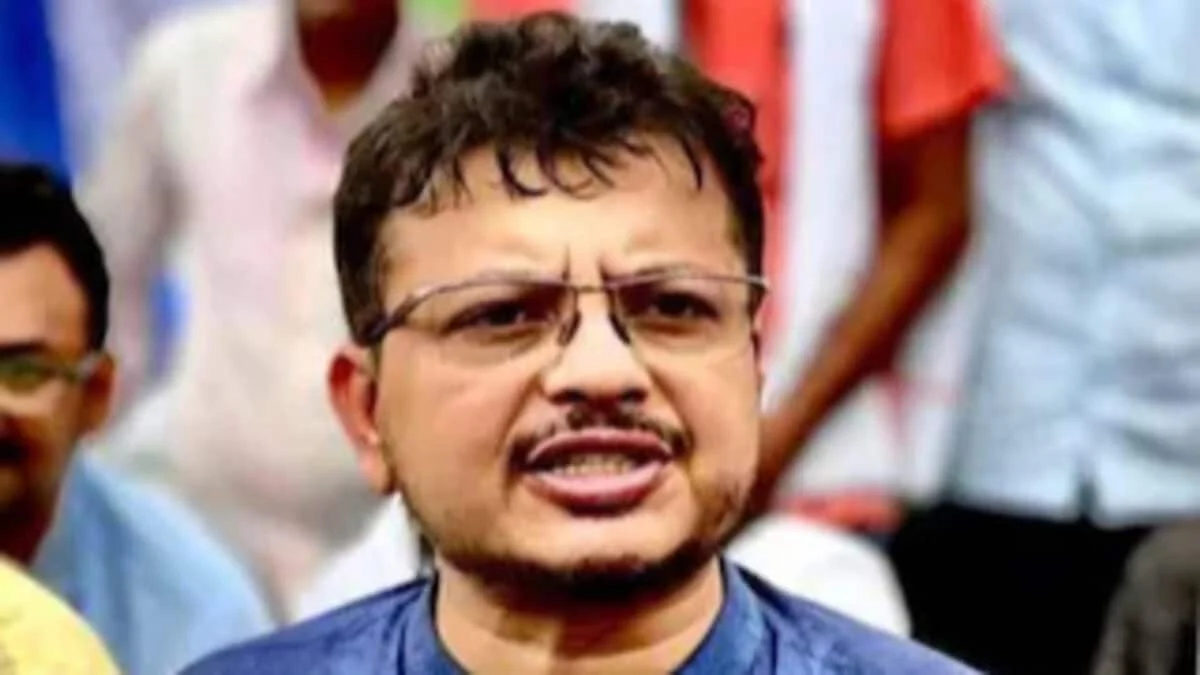
KOLKATA, INDIA – June 3, 2026 – West Bengal’s political landscape has been dramatically reshaped by a stunning internal rebellion within the ruling Trinamool Congress (TMC). In a move that has sent shockwaves through the state and national political establishments, expelled TMC leader Ritabrata Banerjee has been officially recognized as the Leader of the Opposition (LoP) in the newly constituted 18th West Bengal Legislative Assembly. Banerjee, who dramatically staked his claim before the Speaker, asserted the backing of an astonishing 59 legislators out of the total 80 TMC Members of the Legislative Assembly (MLAs) currently sitting in the House, effectively staging a massive, unprecedented structural revolt against the party’s established hierarchy.
The development signals a profound rupture at the heart of the TMC, challenging the undisputed authority of party supremo Mamata Banerjee and explicitly sidelining her nephew, National General Secretary Abhishek Banerjee, from any perceived legislative role. The orthodox TMC leadership has vehemently condemned the move as unconstitutional and has vowed to launch an immediate and aggressive legal challenge, setting the stage for a protracted constitutional and political battle that threatens to destabilize the state’s governance and redefine its political future.
A Seismic Shift in West Bengal Politics
The appointment of Ritabrata Banerjee as LoP marks a pivotal moment, fundamentally upending West Bengal’s political calculus. For an expelled member to assume such a critical parliamentary role, backed by a significant majority of the ruling party’s own MLAs, is an extraordinary occurrence in Indian legislative history. Banerjee’s rapid ascent to the LoP position, just hours after formally presenting his claim, underscores the deep-seated dissent that has festered within the Trinamool Congress.
Addressing a heavily attended press conference immediately following his high-profile appointment, the newly minted Leader of the Opposition carefully calibrated his political stance. He emphatically declared that his allegiance to Mamata Banerjee, the party’s founder and charismatic leader, remained steadfast despite his formal expulsion. "Mamata Banerjee is and will always be our true leader," Banerjee stated, positioning his faction not as defectors but as defenders of the party’s original ethos. He promised that under his stewardship, the breakaway group would function as a "positive, constructive, and highly responsible opposition" within the Assembly, implying a distinction between challenging the party’s current direction and outright opposition to its foundational principles.
However, the press conference took a sharper and more confrontational turn when Banerjee addressed the internal hierarchy of the party. In a series of pointed remarks that laid bare the deep factional warfare splitting the state’s political landscape, he firmly stated that TMC National General Secretary Abhishek Banerjee "exercises absolutely no role or authority within the newly constituted 18th Legislative Assembly." By drawing a clear and public line between the party’s supreme leader and its organizational general secretary, Ritabrata Banerjee sought to legitimize his faction’s coup as a defence of the original party vision against what he implicitly suggested was an unauthorized concentration of power. This direct challenge to Abhishek Banerjee, widely seen as Mamata Banerjee’s political heir, transforms an internal party dispute into a potential dynastic struggle with significant public implications.
The Chronology of a Coup
The dramatic events of June 3, 2026, were not an overnight phenomenon but the culmination of simmering tensions and a calculated political manoeuvre.
The Build-Up: Seeds of Discontent
Ritabrata Banerjee’s journey to becoming the LoP is rooted in his earlier expulsion from the Trinamool Congress. A former student leader known for his fiery rhetoric and organizational skills, Banerjee was once considered a rising star within the party. However, his political trajectory took a sharp downturn following his expulsion from the TMC in late 2024. The expulsion came amid allegations of anti-party activities and public criticism of the party leadership’s functioning, particularly concerning certain policy decisions and what he described as an increasing disconnect between the grassroots and the top echelons. While the specific details of his expulsion were then shrouded in internal party discipline, it was widely understood to be linked to his perceived alignment with a faction that felt sidelined by the growing influence of Abhishek Banerjee. His expulsion was a clear signal from the high command that dissent would not be tolerated, but it appears to have inadvertently created a rallying point for disgruntled elements within the legislative wing. Over the subsequent months, Banerjee reportedly maintained covert contact with a significant number of TMC MLAs who shared his grievances, laying the groundwork for the current rebellion.
The D-Day: Staking Claim and Recognition
The morning of June 3, 2026, saw a flurry of activity in Kolkata. Ritabrata Banerjee, accompanied by a sizeable contingent of MLAs, arrived at the West Bengal Legislative Assembly premises. His visit was not a mere courtesy call but a carefully orchestrated political statement. He formally presented a letter to the Speaker, explicitly staking his claim to the Leader of the Opposition position. Crucially, this letter was reportedly signed by 59 MLAs, affirming their support for his leadership and their decision to form a distinct legislative group within the House.
The Speaker, whose office is mandated to ensure the proper functioning of the legislature and uphold parliamentary traditions, faced an immediate and complex constitutional dilemma. The decision to recognize an expelled member, backed by a majority of the ruling party’s own legislative strength, was fraught with legal and political ramifications. After what sources within the Assembly describe as a rapid consultation process involving legal experts, the Speaker’s office officially recognized Ritabrata Banerjee as the Leader of the Opposition. This swift recognition suggests either an undeniable numerical superiority presented by Banerjee or a strategic decision by the Speaker to avoid prolonged constitutional ambiguity, even if it meant triggering a larger political crisis. The speed of the decision surprised many, indicating the depth of preparation from Banerjee’s camp and the Speaker’s assessment of the situation.
A Calculated Public Address
Immediately after his recognition, Banerjee convened a press conference that was both defiant and strategically nuanced. His declaration of continued allegiance to Mamata Banerjee, while simultaneously challenging her nephew’s authority, was a shrewd political move. It aimed to portray his faction not as traitors but as loyalists attempting to "course-correct" the party. By framing his rebellion as a defence of "Mamata Didi’s" original vision, he sought to tap into the emotional connect many party workers and voters have with the Chief Minister, potentially complicating the orthodox TMC’s narrative of a simple defection. His promise of a "positive, constructive, and highly responsible opposition" was also a calculated attempt to reassure the public and perhaps even garner cross-party support for his new role. The exclusion of Abhishek Banerjee from any legislative role was the most incendiary statement, directly targeting the perceived heir apparent and signaling a fight for the party’s soul. This move transforms the internal discord into a public power struggle, pitting the established old guard against the rising new leadership.
Unpacking the Numbers: A Deep Fissure within the TMC
The figure of 59 MLAs supporting Ritabrata Banerjee out of a total of 80 TMC legislators is staggering. It represents nearly three-quarters of the party’s legislative strength, fundamentally altering the power dynamics within the Assembly and the party itself.
Historically, intra-party dissent is not uncommon in Indian politics, but a legislative split of this magnitude within a ruling party is rare and deeply destabilizing. While the Trinamool Congress holds a comfortable majority in the Assembly (assuming it’s the ruling party, which is implied by the context of "expelled TMC leader" becoming LoP, though not explicitly stated), a defection of 59 MLAs creates a unique situation. If these 59 MLAs formally split and align with opposition parties, it could technically reduce the effective strength of the TMC in the House, even if it doesn’t immediately threaten the government’s stability (again, assuming TMC forms the government). However, the critical point is that they are still TMC MLAs by official record, now led by an expelled member as LoP. This creates a fascinating constitutional conundrum.
The anti-defection law (Tenth Schedule of the Indian Constitution) typically penalizes individual defections. However, it allows for a split if two-thirds of the members of a legislative party merge with another party or form a new party. Ritabrata Banerjee’s faction, by claiming the LoP position as a TMC group, is navigating a grey area. They are not explicitly merging or forming a new party yet; they are claiming to be the "real" TMC legislative wing, operating under a different leader within the Assembly. This sets up a complex legal battle where the definition of a ‘legislative party’ and ‘defection’ will be intensely scrutinized.
The immediate consequence of this split is the effective paralysis of the orthodox TMC’s legislative agenda. With 59 of its own MLAs recognizing a different leader as LoP, the party’s ability to smoothly pass legislation, manage debates, and present a united front within the Assembly will be severely hampered. This internal division provides a golden opportunity for existing opposition parties, such as the Bharatiya Janata Party (BJP) and the Left-Congress alliance, to exploit the Trinamool’s vulnerability and strengthen their own positions. The 59 MLAs represent diverse constituencies across West Bengal, and their defection indicates a widespread disenchantment that goes beyond individual grievances, potentially reflecting broader public sentiment.
Official Reactions and Legal Counter-Offensive
The recognition of Ritabrata Banerjee as the Leader of the Opposition has triggered an immediate and furious response from the orthodox Trinamool Congress leadership, loyal to Mamata and Abhishek Banerjee.
The Orthodox TMC’s Vehement Rejection
Senior TMC leaders, including state ministers and party functionaries, immediately denounced the Speaker’s decision and Ritabrata Banerjee’s actions as an "unconstitutional manoeuvre" and a "betrayal of the people’s mandate." Speaking to the media, a prominent TMC spokesperson, not wishing to be named directly given the sensitivity of the situation, stated, "This is a naked attempt to destabilize a democratically elected government and hijack our party from within. Ritabrata Banerjee was expelled for anti-party activities; he has no legitimate claim to represent the Trinamool Congress or its legislative wing. The Speaker’s decision is highly questionable and sets a dangerous precedent."
The party leadership is rapidly mobilizing its legal apparatus. Sources indicate that a petition challenging the Speaker’s decision and Ritabrata Banerjee’s claim to the LoP position will be filed in the Calcutta High Court, potentially even the Supreme Court, within days. The legal challenge is expected to focus on several key points:
- Validity of the expulsion: Arguing that Ritabrata Banerjee, as an expelled member, cannot represent the party.
- Anti-defection law: Contending that the 59 MLAs, by supporting an expelled leader and forming a separate group, have effectively "defected" and should be disqualified under the Tenth Schedule.
- Speaker’s authority: Questioning the Speaker’s jurisdiction and rationale for recognizing an LoP from within the ruling party’s legislative bloc without proper consultation or adherence to established parliamentary norms in such unprecedented situations.
The TMC is expected to launch a massive public relations campaign, portraying Banerjee and his supporters as opportunistic rebels bought by external forces, without directly naming them. This public narrative will be crucial in shaping voter perception as the legal battle unfolds.
The Speaker’s Stance
While the Speaker’s office has not yet issued a detailed public statement justifying the decision, sources close to the Assembly secretariat suggest that the recognition was based on a straightforward numerical assessment. "The Speaker received a formal claim with signatures from a clear majority of the legislative party’s members," an official indicated on condition of anonymity. "The role of the Speaker is to ensure the smooth functioning of the House and reflect the will of the legislators as presented. The anti-defection law comes into play if a party petitions for disqualification, but the recognition of a legislative group leader is based on the numbers presented." This suggests the Speaker might be interpreting the situation as an internal leadership challenge within the legislative party rather than an immediate defection event. The Speaker’s actions will undoubtedly be a central point of contention in the impending legal battles, with questions raised about procedural fairness and the interpretation of legislative rules.
Broader Political Commentary
The political opposition in West Bengal has reacted with a mix of cautious observation and opportunistic condemnation. The Bharatiya Janata Party (BJP), the primary opposition, has termed the development a "consequence of the TMC’s internal authoritarianism and corruption." A state BJP leader remarked, "The Trinamool Congress is imploding under the weight of its own contradictions. This internal strife proves that the people of West Bengal deserve better governance and a more stable political environment." They are likely to closely monitor the situation, potentially offering an olive branch to the rebel faction should the legal battles lead to disqualifications or a further fragmentation of the TMC.
Left Front and Congress leaders expressed concern over the "instability being introduced into the state’s political fabric." They called for adherence to constitutional norms and urged all parties to prioritize the welfare of the people. While publicly cautious, these parties are undoubtedly strategizing on how to capitalize on the TMC’s internal disarray in future elections.
Deeper Currents: The Mamata-Abhishek Dynamic
Ritabrata Banerjee’s pointed exclusion of Abhishek Banerjee from any legislative role is not merely a political jab; it’s a direct assault on the carefully cultivated succession plan within the Trinamool Congress. Abhishek Banerjee, Mamata Banerjee’s nephew, has steadily risen through the party ranks, assuming the powerful position of National General Secretary. He has been instrumental in organizational restructuring and electoral strategy, and is widely perceived as Mamata Banerjee’s chosen successor, despite occasional whispers of tension between them.
The internal party dynamics have often been characterized by a subtle tension between the "old guard" (loyalists who have been with Mamata Banerjee since the party’s inception) and the "new guard" (those who have risen under Abhishek Banerjee’s patronage or are seen as his close allies). Ritabrata Banerjee, having been expelled, likely identifies with the former, or at least seeks to harness the grievances of those who feel marginalized by Abhishek’s ascendancy. By declaring Mamata Banerjee as the "true leader" while denying Abhishek any legislative role, Ritabrata is attempting to drive a wedge between the aunt and nephew, and to position his faction as the legitimate inheritors of Mamata’s political legacy, free from the perceived influence of Abhishek. This move seeks to delegitimize Abhishek’s authority within the legislative sphere, potentially weakening his overall standing within the party and among the broader electorate. The public nature of this challenge forces Mamata Banerjee into a difficult position, requiring her to unequivocally back her nephew or risk further legitimizing the rebel faction.
Far-Reaching Implications for West Bengal’s Political Landscape
The ongoing crisis within the Trinamool Congress has profound and far-reaching implications for West Bengal’s political landscape, promising a period of intense instability and realignment.
Legislative Paralysis and Governance Challenges
With a significant portion of its own legislative strength now forming the opposition under an expelled leader, the Trinamool Congress government faces the immediate threat of legislative paralysis. Passing bills, approving budgets, and engaging in constructive debate will become exceedingly difficult if 59 MLAs consistently oppose the government’s agenda from within its own ranks. This internal friction could lead to a breakdown in legislative decorum, constant disruptions, and an inability to address critical state issues, ultimately impacting governance and public service delivery. The efficacy of the West Bengal government could be severely hampered, leading to public dissatisfaction.
The Future of the Trinamool Congress
This rebellion marks the most severe internal crisis the Trinamool Congress has faced since its inception. The party, built around the formidable personality of Mamata Banerjee, now faces a fundamental challenge to its unity and leadership structure. The split could lead to further defections, internal purges, and a prolonged period of introspection and restructuring. If the legal challenge fails to disqualify the rebel MLAs, the TMC could effectively operate as two distinct legislative entities, severely weakening its electoral prospects in future polls. The perception of a divided house could erode voter confidence and provide fertile ground for opposition parties.
A Precedent for Constitutional Battles
The legal battle that is now inevitable will set important precedents regarding party splits, the anti-defection law, and the Speaker’s powers in recognizing legislative leaders. The courts will have to navigate the complex interplay between internal party discipline, the rights of elected representatives, and the constitutional framework governing legislative bodies. The outcome of this legal confrontation could redefine how intra-party dissent is handled in state assemblies across India. The interpretation of what constitutes a ‘split’ versus ‘defection’ will be crucial.
Potential for Realignment and Instability
This political upheaval could trigger a broader realignment of political forces in West Bengal. Depending on the outcome of the legal challenges and the longevity of Ritabrata Banerjee’s faction, we could see:
- A new political party: The 59 MLAs, if disqualified or if they choose to formalize their split, could form a new regional party.
- Merger with opposition: They could eventually merge with an existing national or state-level opposition party, potentially the BJP, significantly altering the balance of power.
- Mid-term elections: Extreme instability could even lead to demands for fresh state assembly elections, although this remains a distant possibility.
The crisis threatens to plunge West Bengal into a period of heightened political instability, with potential repercussions for development, law and order, and social cohesion.
Conclusion: Awaiting the Next Chapter
The recognition of Ritabrata Banerjee as the Leader of the Opposition in the West Bengal Assembly is more than just a procedural change; it is a declaration of open warfare within the Trinamool Congress. With an expelled leader now commanding the allegiance of a vast majority of the party’s MLAs in the legislative chamber, the party faces an existential crisis. The direct challenge to Abhishek Banerjee’s authority, while pledging loyalty to Mamata Banerjee, complicates the narrative and underscores the deep factionalism at play.
As the orthodox TMC prepares its legal counter-offensive, and political analysts dissect every statement and move, West Bengal stands at a critical juncture. The coming weeks and months will determine not only the fate of Ritabrata Banerjee and his rebel faction but also the long-term stability and leadership trajectory of the Trinamool Congress, and indeed, the very political future of the state. The drama has just begun, and its resolution will undoubtedly write a new chapter in the turbulent history of West Bengal politics.
