

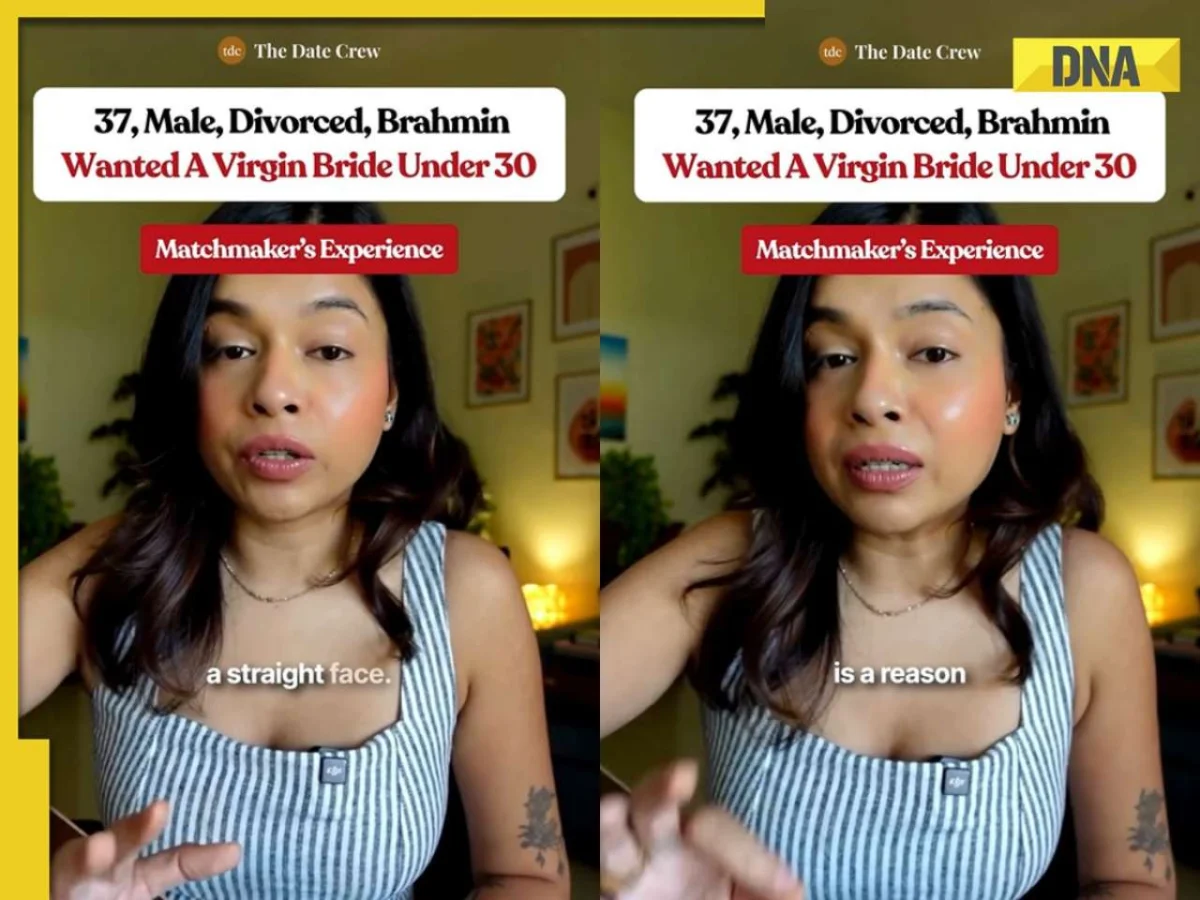
Mumbai, India – A recent viral social media post by prominent matchmaker and dating coach Oendrila Kapoor has ignited a fervent debate across India, shedding light on the often-unspoken, yet deeply entrenched, expectations within the country’s complex marriage landscape. The catalyst for this widespread discussion is the audacious demand of a 37-year-old divorced IIT graduate seeking a bride who is not only under 30 but also possesses no prior romantic or sexual history. This seemingly paradoxical set of criteria, particularly from an individual with a prior marital experience, has drawn sharp criticism, exposing a perceived hypocrisy and fueling broader conversations about gender equality, societal norms, and the evolving dynamics of modern relationships.
The saga began when Kapoor, known for her candid approach to relationship advice, shared the specifics of a client’s matrimonial aspirations. The individual in question, a highly educated and professionally successful man, presents a stark contrast to his seemingly rigid requirements for a life partner. While the article does not explicitly name the client, the details provided paint a picture of a man who has achieved significant milestones in his career and personal life, yet appears to harbor deeply conservative and arguably discriminatory expectations for his future spouse.
)
The Unyielding Demands: A Profile in Contradiction
The core of the controversy lies in the explicit stipulations laid out by the 37-year-old IIT alumnus. According to Kapoor’s account, he is seeking a bride who meets a very specific demographic and experiential profile:

- Age: Under 30 years old.
- Community: Belonging to the Brahmin community.
- Relationship History: No past romantic relationships.
- Sexual History: No prior sexual experience.
These demands, presented as non-negotiable by the client, immediately raised red flags for Kapoor, who has built her career on fostering healthy and compatible partnerships. The fact that the client himself is divorced, a status that inherently implies a past relationship and a failed marital union, makes his insistence on a completely "untouched" partner appear particularly contradictory and hypocritical to many observers.
)
The "Research" Defense: A Flawed Justification?
Adding another layer to the controversy, the client allegedly attempted to justify his stringent criteria by referencing unspecified "research." He reportedly claimed that women with multiple past relationships are more prone to infidelity. This assertion, presented as a factual basis for his demands, has been widely debunked and criticized as a superficial and biased interpretation of complex human behavior.
)
Kapoor, in her post, directly challenged the client on this point, questioning the validity and fairness of his reasoning, especially in light of his own marital history. When pressed about whether the same logic should apply to him as a divorced man, the client’s response further fueled the online outrage. He is reported to have dismissed the comparison, stating, "Because I am a man." This dismissive and unapologetic declaration of a double standard has become a focal point of the online backlash, with many decrying it as a blatant display of patriarchal entitlement.
)
The client’s justification, rooted in anecdotal or unverified "research," highlights a common, yet problematic, trend in societal perceptions of relationships and gender. The underlying assumption that a woman’s past experiences somehow diminish her value or trustworthiness, while a man’s experiences are either irrelevant or even seen as a sign of maturity, is a deeply ingrained bias that many are actively seeking to dismantle.
)
The Matchmaker’s Stance: Upholding Ethical Principles
Oendrila Kapoor’s decision to publicly share this client’s profile, and subsequently refuse to take him on as a client, has been lauded by many as a principled stand. She articulated her reasoning clearly, stating that the client’s mindset reflected a desire for control rather than a genuine pursuit of compatibility and partnership.
)
"His expectations were unrealistic and rooted in bias rather than genuine partnership goals," Kapoor reportedly stated, emphasizing that such a rigid outlook is detrimental to building a healthy marital relationship. She further pointed out the inherent difficulty in finding a woman who meets such specific traditional criteria while simultaneously being open to marrying a divorced man with such exacting demands. This suggests a potential disconnect between the client’s desired partner profile and the realities of the dating pool available to him.
)
Kapoor’s refusal to facilitate such a match underscores the ethical responsibilities of professionals in the matchmaking industry. It highlights the importance of not merely fulfilling client demands, but also of guiding them towards healthier and more equitable perspectives on relationships.
)
The Social Media Uprising: A Chorus of Criticism
The post, shared across various social media platforms, quickly garnered immense attention and sparked a torrent of reactions. The overwhelming sentiment online has been one of criticism and condemnation, with users calling out the perceived double standards and hypocrisy of the IIT graduate’s demands.
)
Key themes emerging from the social media discourse include:
)
- Double Standards: The most prominent criticism revolves around the blatant double standard applied to men and women regarding past relationships. Users have pointed out the irony of a divorced man expecting a partner with no prior experience, while his own marital history is seemingly overlooked.
- Hypocrisy: Many have labeled the client’s demands as hypocritical, highlighting the contradiction between his own marital status and his stringent requirements for a potential bride.
- Outdated and Patriarchal Views: The demands are widely seen as reflecting outdated and patriarchal views on women’s roles and value in society. The notion of a woman being "untainted" or "pure" based on her lack of past relationships is viewed as a relic of a bygone era.
- Objectification of Women: Critics argue that such demands reduce women to objects with specific checklists rather than valuing them as individuals with their own experiences and agency.
- Irony of "IIT Graduate": The client’s educational background from an Indian Institute of Technology, institutions renowned for their academic rigor and progressive outlook, has led to further disbelief and disappointment. Many question how such an esteemed educational background can coexist with such regressive mindsets.
- The "Brahmin" and "Virgin" Nexus: The specific mention of the Brahmin community alongside the demand for virginity has also drawn criticism, with some pointing out how religious and caste identities are sometimes weaponized to reinforce traditional and often restrictive social norms.
- Shared Experiences: Numerous users have shared their own experiences with similar expectations in the context of arranged marriages, indicating that while controversial, these attitudes are not entirely uncommon in certain segments of Indian society. This has broadened the discussion beyond a single individual to a systemic issue.
The online conversation has transcended mere criticism, evolving into a larger dialogue about the need for a fundamental shift in societal attitudes towards relationships, gender equality, and the definition of a "marriageable" individual.
)
Broader Implications: Navigating Modern Relationships in a Traditional Society
This incident, while seemingly focused on an individual’s specific demands, has significant broader implications for understanding and navigating the complexities of relationships in contemporary India.
)
- The Persistent Influence of Traditional Norms: The controversy underscores the enduring influence of traditional norms and expectations, particularly concerning women’s chastity and marital history, even amidst rapid societal modernization and increased educational attainment.
- The Evolving Definition of Partnership: The debate highlights the growing dissonance between traditional notions of marriage as a transactional exchange of lineage and purity, and modern aspirations for partnerships based on mutual respect, emotional connection, and shared life goals.
- The Power of Social Media: The viral nature of Kapoor’s post demonstrates the potent role of social media in amplifying voices, challenging established norms, and fostering collective consciousness on critical social issues. It provides a platform for individuals to express dissent and advocate for change.
- The Role of Education: The juxtaposition of the client’s IIT background with his regressive views raises questions about the true impact of education on societal attitudes. While education can broaden perspectives, it does not automatically eradicate deeply ingrained biases.
- The Future of Matchmaking: The incident compels a re-evaluation of the role of matchmakers and the broader matchmaking industry. It calls for ethical guidelines and a commitment to promoting healthy relationship dynamics rather than simply facilitating potentially harmful matches.
As India continues its trajectory of economic and social development, conversations like these are crucial for dismantling outdated prejudices and fostering a more equitable and progressive society. The viral post by Oendrila Kapoor, while initially sparked by a single, controversial demand, has undeniably served as a powerful catalyst, forcing a national introspection on what it truly means to seek a life partner in the 21st century. The debate is far from over, but the amplified voices of criticism suggest a growing impatience with the lingering shadows of patriarchal double standards and a stronger collective desire for genuine equality in relationships.
