

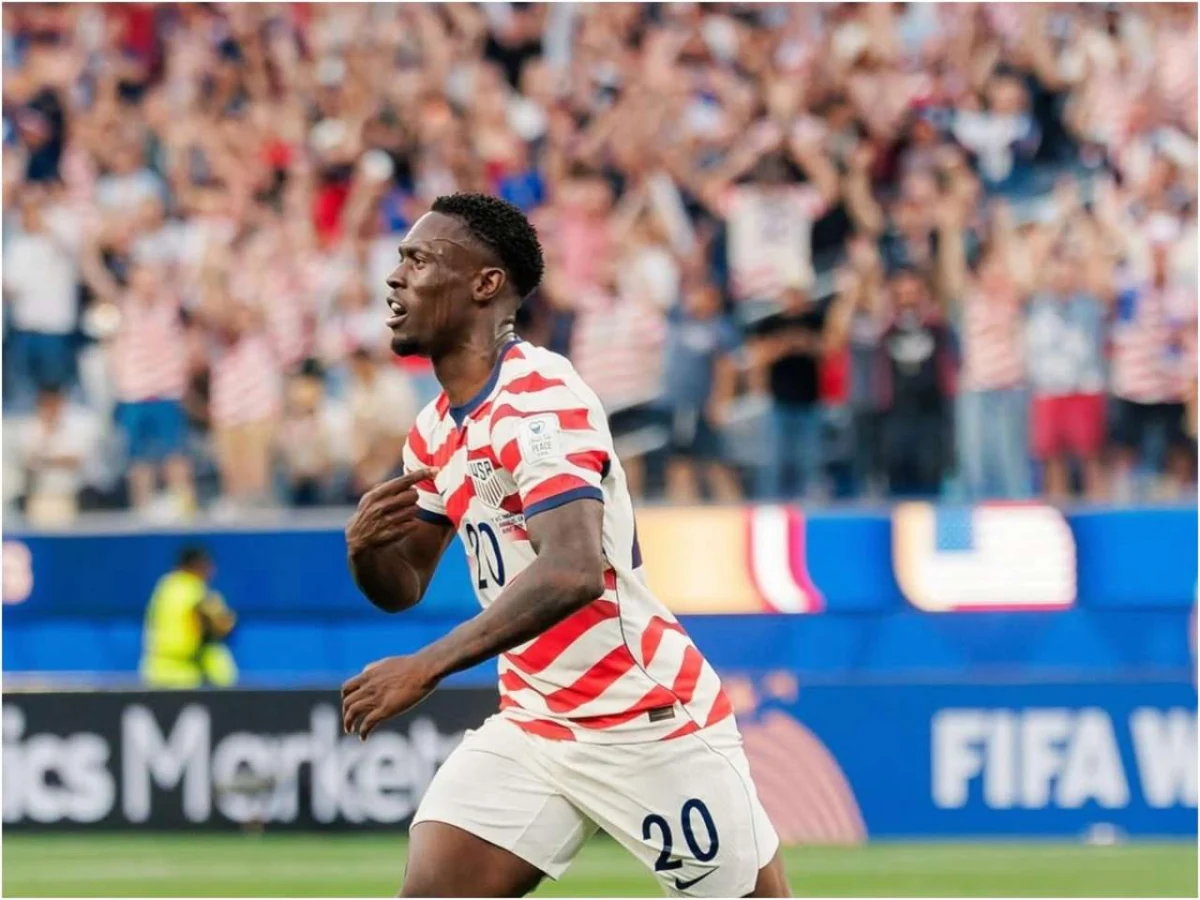
NEW YORK, USA – A seismic wave has rippled through the football world just hours before the highly anticipated FIFA World Cup 2026 Round of 16 clash between co-hosts USA and Belgium. Star striker Folarin Balogun, initially suspended after receiving a red card in the Round of 32, has had his ban controversially reversed by FIFA’s Disciplinary Committee. The decision has ignited a firestorm of debate, fueled by reports from Fox News and confirmed by former President Donald Trump himself, alleging direct intervention from the White House to influence the apex football body.
Balogun, a pivotal figure in the USA’s World Cup campaign, was expected to miss Monday’s crucial knockout fixture, a significant blow to the host nation’s aspirations. However, a sudden announcement from FIFA on Sunday evening cleared him to play, citing a rare application of disciplinary procedures. This extraordinary turn of events has not only boosted the USMNT but has also cast a long shadow of controversy over the tournament’s integrity, raising profound questions about external influence in the beautiful game.
The Red Card Incident and Initial Suspension
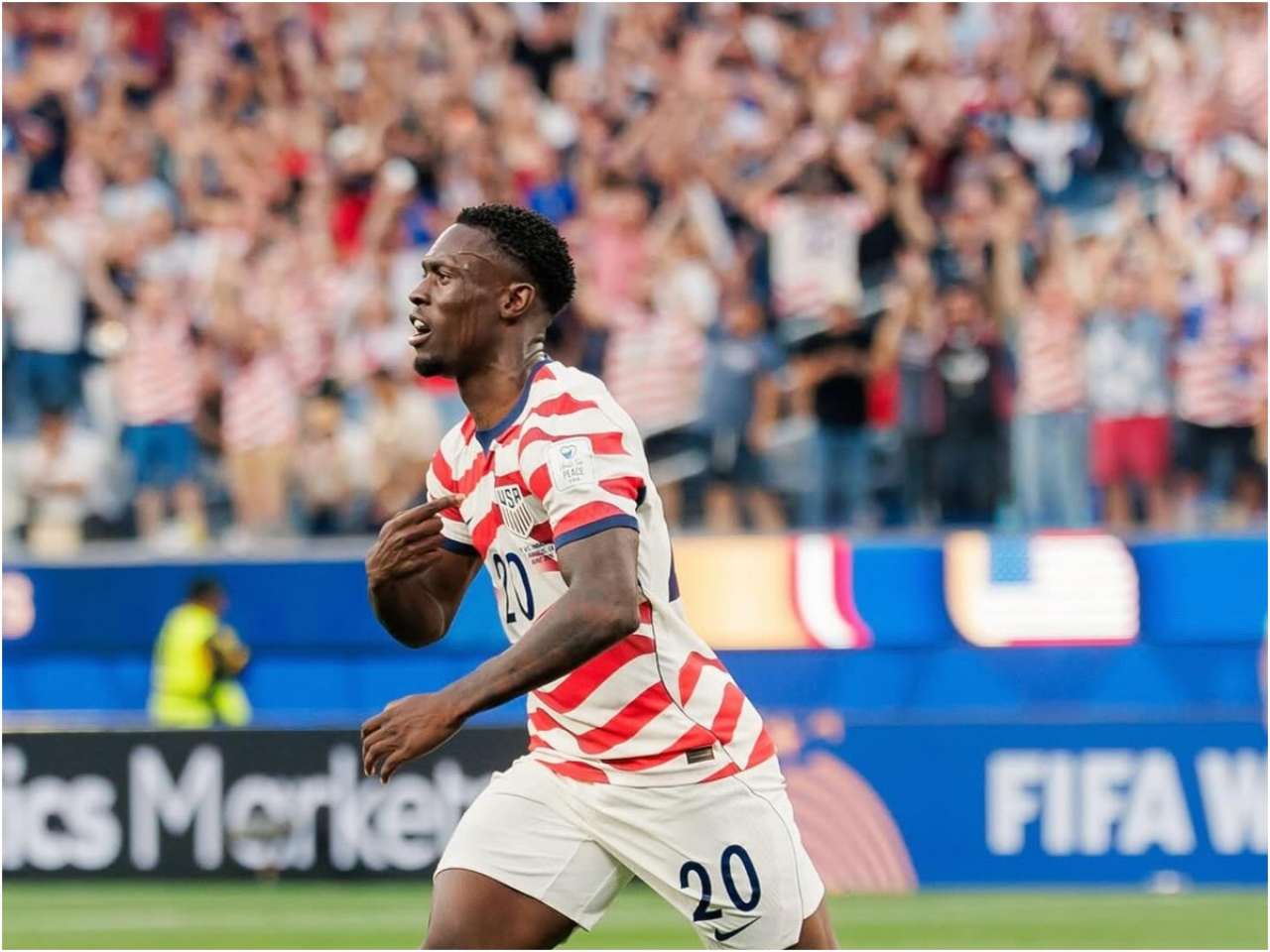
The incident that set this dramatic chain of events in motion occurred during the USA’s thrilling Round of 32 encounter against Bosnia and Herzegovina. In a hotly contested match, Balogun, known for his clinical finishing and relentless attacking prowess, was shown a straight red card in the latter stages of the game following a contentious challenge. While the specific details of the foul have been debated, the referee’s decision on the field was immediate and decisive, leading to an automatic one-match suspension.
For fans and analysts alike, the prospect of Balogun’s absence against Belgium was a devastating blow. The young striker has been in scintillating form throughout the tournament, spearheading the American attack and proving to be an indispensable asset. His energy, pace, and goal-scoring ability are considered vital for the USMNT’s chances of progressing deeper into the competition, especially against a formidable opponent like Belgium. The automatic suspension, a standard consequence of a straight red card, seemed immutable, leaving the team and its supporters to grapple with a significant tactical challenge.
)
A Stunning Reversal: FIFA’s Disciplinary Committee Steps In
The football world was stunned on Sunday when FIFA issued a statement announcing the suspension of Balogun’s automatic ban. The official communiqué from the Disciplinary Committee stated, "By operation of Article 27 FDC, the implementation of the automatic match suspension for USA player Folarin Balogun is suspended for a probationary period of one year." This effectively meant Balogun was immediately eligible to play in the Round of 16 match against Belgium, provided he maintains good conduct for the next year.
The immediate lifting of an automatic red card suspension, particularly at such a critical juncture in a major tournament, is exceptionally rare. FIFA’s disciplinary code is generally stringent, and on-field decisions leading to straight red cards are seldom overturned unless there is a clear and obvious error in the referee’s application of the laws of the game, or a procedural misstep. The invocation of "Article 27 FDC" immediately piqued the interest of legal and football experts, many of whom struggled to recall a similar precedent under these specific circumstances.

Allegations of Presidential Influence: A Political Football
The controversy escalated exponentially following reports, notably from Fox News, alleging that the reversal was not merely a standard disciplinary review but the direct result of high-level political intervention. According to these reports, US President Donald Trump personally contacted FIFA President Gianni Infantino after Balogun’s red card incident. The reports suggest that this call prompted FIFA to "review the matter" with unusual urgency, ultimately leading to the decision to clear the star forward.
The notion of a head of state directly engaging with the president of a global sports federation to influence a disciplinary ruling is virtually unprecedented in modern football history. Such an act, if proven definitively to have swayed the decision, would represent a severe breach of the principles of sporting autonomy and fair play, potentially setting a dangerous precedent for the future. The allegations have transformed a footballing matter into a geopolitical talking point, drawing criticism and concern from across the globe.
)
President Trump’s Public Acknowledgment
Adding further fuel to the fire, President Donald Trump himself weighed in on the matter via his TruthSocial platform. In a post, he publicly welcomed FIFA’s decision and thanked the football body, effectively lending credence to the reports of his involvement.
"Thank you to FIFA for doing what was right, and reversing a great injustice! President Donald J Trump," the post read.
)
This public statement, rather than clarifying the situation, has only intensified the scrutiny. While Trump’s message is a celebratory endorsement of the outcome, for many, it serves as an implicit confirmation of the extraordinary influence exerted from outside the traditional sporting framework. The phrase "doing what was right" can be interpreted as vindication for the alleged intervention, further blurring the lines between sports governance and political maneuvering.
FIFA’s Disciplinary Framework: Article 27 FDC Under Scrutiny
To understand the magnitude of this decision, it is crucial to delve into FIFA’s Disciplinary Code (FDC). Generally, a direct red card results in an automatic one-match suspension for the next official match. Appeals are typically limited to cases where there is a clear error in the referee’s identification of the player or a demonstrable misapplication of the rules. The threshold for overturning a referee’s on-field judgment is exceptionally high, designed to uphold the authority of match officials and the flow of the game.
)
Article 27 FDC, invoked in Balogun’s case, deals with "Suspension of implementation of a sanction." While the full text and its precise interpretation in this context are subject to legal scrutiny, it generally allows for the postponement or suspension of a sanction under certain conditions, often involving probationary periods. However, its application to an automatic match ban resulting from a direct red card for a serious foul is highly unusual, especially without a public explanation of why the committee found sufficient grounds to suspend the ban.
Football legal experts are scrambling to understand the precedent. Typically, such an article might be used for sanctions related to minor infringements or administrative issues, not for direct game-changing fouls. The lack of detailed justification from FIFA regarding the specific mitigating circumstances or errors in the original decision has only fueled speculation and suspicion, leading many to believe that factors beyond standard disciplinary review were at play.
)
The Controversy: Integrity of the Game Questioned
The Balogun saga has ignited a fierce debate about the integrity and autonomy of football as a global sport. Critics argue that if external political pressure can influence disciplinary decisions, it fundamentally undermines the fairness of the competition and the authority of referees. The principle of a level playing field, where all teams and players are subject to the same rules and disciplinary processes, is seen as paramount.
Questions being raised include:
)
- Fairness: Is it fair to other teams and players who have faced or will face suspensions without similar recourse or alleged intervention?
- Precedent: What precedent does this set for future tournaments? Could other nations or powerful figures attempt similar interventions?
- Referee Authority: Does this decision erode the authority of match officials, suggesting their judgments can be overridden by external forces?
- FIFA’s Autonomy: How independent is FIFA truly, if its decisions can be influenced by national political leaders, particularly from a co-host nation?
The controversy resonates far beyond the immediate match, touching upon the very ethical foundations of international sports governance. For a sport that prides itself on universality and meritocracy, the perception of political interference is a significant blow to its credibility.
Folarin Balogun: The Striker at the Heart of the Storm
At the center of this whirlwind is Folarin Balogun, a young striker whose career has taken a dramatic upward trajectory. Born in New York, raised in England, and having chosen to represent the United States, Balogun has quickly become a fan favorite and a crucial component of the USMNT’s attacking strategy. His prolific goal-scoring record and ability to perform under pressure have made him indispensable to the team’s ambitions.
)
His journey to the US squad was itself a high-profile decision, as he was also eligible to represent England and Nigeria. His commitment to the Stars and Stripes brought a new dimension to their attack, providing a natural goal-scorer the team had often lacked. For the USA to make a deep run in their home World Cup, Balogun’s presence and form are considered absolutely vital. His speed, intelligent movement, and clinical finishing make him a constant threat to opposition defenses, and his ability to convert chances is a rare commodity. The team’s strategy often revolves around creating opportunities for him, and his absence would necessitate a complete tactical overhaul.
Now, with his suspension lifted, Balogun finds himself under an unprecedented spotlight. Not only is he expected to deliver on the field, but he also carries the weight of a decision that has become a global talking point. His performance against Belgium will undoubtedly be scrutinized more intensely than ever before.
)
USA’s World Cup Ambitions and Historical Context
The Round of 16 clash against Belgium holds immense significance for the USMNT. As co-hosts, there is immense pressure on the team to perform well and inspire a nation. Reaching the quarter-finals would mark a historic achievement, the first time the USA would advance that far since their memorable run in 2002, where they captivated audiences before narrowly losing to Germany.
The memory of their last World Cup encounter with Belgium also looms large. In the Round of 16 of the 2014 FIFA World Cup, the Red Devils outshone the Yanks in a thrilling extra-time battle, securing a 2-1 victory that ended the USA’s campaign. This upcoming match offers a chance for redemption and a measure of progress for American football.
)
The inclusion of Balogun provides a significant boost to the team’s morale and tactical options. His presence transforms the dynamic of the USA’s attack, offering a genuine threat that was thought to be unavailable. This could be the psychological edge the team needs to overcome a strong Belgian side and make history on home soil.
Reactions Across the Football World
The football community has reacted with a mixture of disbelief, outrage, and cautious optimism. While US fans largely celebrated the news, the broader international football landscape has been more critical.
)
- Belgian Football Association (FA): While official statements might be diplomatic, there is likely to be significant internal frustration within the Belgian camp. They would have prepared for a US team without its primary striker, and the last-minute change could be perceived as unfair.
- Pundits and Analysts: Many football commentators have expressed concern over the precedent being set. Calls for greater transparency from FIFA and a robust defense of sporting independence have been widespread.
- Other National Federations: There is likely to be unease among other competing nations, particularly those without the geopolitical clout to allegedly influence such decisions.
- Fan Base: The global fan base is divided, with some celebrating the return of a star player, while others decry what they see as a manipulation of the rules. The debate rages on social media, with hashtags questioning FIFA’s integrity trending worldwide.
Implications for FIFA and Future Tournaments
The Balogun controversy poses a significant challenge to FIFA’s credibility and its stated commitment to "fair play" and "zero tolerance" for external interference. If the allegations of political intervention are substantiated or widely believed, it could severely damage public trust in the organization and its decision-making processes.
Long-term implications could include:
)
- Erosion of Trust: A decline in faith in FIFA’s ability to govern the sport independently and impartially.
- Precedent for Intervention: The potential for other powerful nations or individuals to attempt similar interventions in future tournaments or disciplinary cases.
- Challenges to Autonomy: Increased scrutiny and pressure on FIFA to demonstrate its independence from political and economic influences.
- Reputational Damage: A lasting stain on the FIFA World Cup 2026, regardless of its sporting success, if the controversy overshadows the competition.
The Road Ahead: USA vs. Belgium Showdown
With Balogun cleared to play, the narrative surrounding the USA vs. Belgium match has dramatically shifted. What was already a high-stakes encounter now carries an added layer of intrigue and controversy. All eyes will be on Balogun to see if he can deliver on the field and justify the extraordinary circumstances of his return.
The match itself promises to be a captivating affair. Belgium, with its roster of seasoned European stars, presents a formidable challenge. The USA, fueled by home support and now with their talismanic striker, will be looking to leverage this unexpected advantage. The psychological impact on both teams will be immense: the USA potentially buoyed by Balogun’s presence, Belgium perhaps feeling a sense of injustice.
)
Ultimately, the outcome of the match will dictate whether Balogun’s controversial return is remembered as a stroke of genius (or influence) that propelled the USA to glory, or as a contentious footnote in a campaign that ultimately fell short. Regardless of the result, the events leading up to this Round of 16 clash have already etched themselves into the annals of World Cup history, sparking a debate that will resonate for years to come.
How to Watch and Stream FIFA World Cup 2026 in India?
For football enthusiasts in India, the FIFA World Cup 2026 matches, including multiple group-stage encounters that will take place simultaneously, can be aired across the ZEE5 app and website.
Link: https://www.zee5.com/
)
Find your daily dose of All Latest News including Sports News, Entertainment News, Lifestyle News, explainers & more. Stay updated, Stay informed – Follow DNA on WhatsApp.
