

The history of Mumbai is a narrative of relentless expansion and the constant redefining of its geographical limits. For decades, the city’s growth was defined by a northward push from the colonial island city toward the suburbs. Later, the 1970s saw the birth of Navi Mumbai—a planned counter-magnet that eventually became a powerhouse in its own right. Today, the Mumbai Metropolitan Region (MMR) stands at the precipice of its most significant transformation yet: the emergence of Mumbai 3.0.
Far from being a mere marketing slogan, Mumbai 3.0 represents a structural evolution of the region, driven by massive infrastructure investments, the Navi Mumbai Airport Influence Notified Area (NAINA) project, and a fundamental shift in how people perceive the balance between work, life, and nature. This new chapter is set to redefine wealth creation and urban living for the next quarter-century.
1. Main Facts: Defining the Third Mumbai and NAINA
Mumbai 3.0, often referred to by state planners as "Third Mumbai," is a massive planned city conceptualized to bolster the economy of the MMR. At its core is NAINA, a participatory land-pooling scheme managed by the City and Industrial Development Corporation (CIDCO).
The Scale of Ambition
NAINA covers approximately 371 square kilometers, encompassing 174 villages. To put this into perspective, this area is larger than the original island city of Mumbai. Unlike the organic, often chaotic growth of Mumbai 1.0 (the Island City) or the retrofitted expansion of Mumbai 2.0 (the Suburbs and initial Navi Mumbai), Mumbai 3.0 is a greenfield project. This means it is being built on a "blank canvas," allowing for:
- Grid-based Planning: Wide arterial roads and organized zoning.
- Integrated Utilities: Underground cabling, advanced sewage systems, and dedicated cycling tracks planned before the first residents move in.
- Sustainable Urbanism: A significant percentage of land is reserved for open green spaces, parks, and eco-sensitive zones.
The Economic Core
The heart of this new city is the Navi Mumbai International Airport (NMIA). It is designed not just as a transit point, but as an "Aero City"—a hub for aviation, logistics, hospitality, and corporate headquarters that will serve as the primary economic engine for the region.
2. Chronology: The Three Stages of Mumbai’s Evolution
To understand the magnitude of Mumbai 3.0, one must view it through the lens of the city’s historical growth phases.
Phase 1: The Island City (Mumbai 1.0)
From the mid-19th century to the 1960s, Mumbai’s economic life was centered in South Mumbai (Colaba, Fort, Nariman Point). As the city became the financial capital of India, space constraints and skyrocketing prices began to push the middle class and industries further north.
Phase 2: The Suburbs and Navi Mumbai (Mumbai 2.0)
The post-independence era saw the rise of the Western and Eastern suburbs. By the 1970s, the government realized that the island city could no longer sustain the population influx. This led to the creation of Navi Mumbai. While initially slow to gain traction, Navi Mumbai eventually matured into a high-quality residential and commercial hub, proving that "far" is only a temporary perception.
Phase 3: The NAINA Era (Mumbai 3.0)
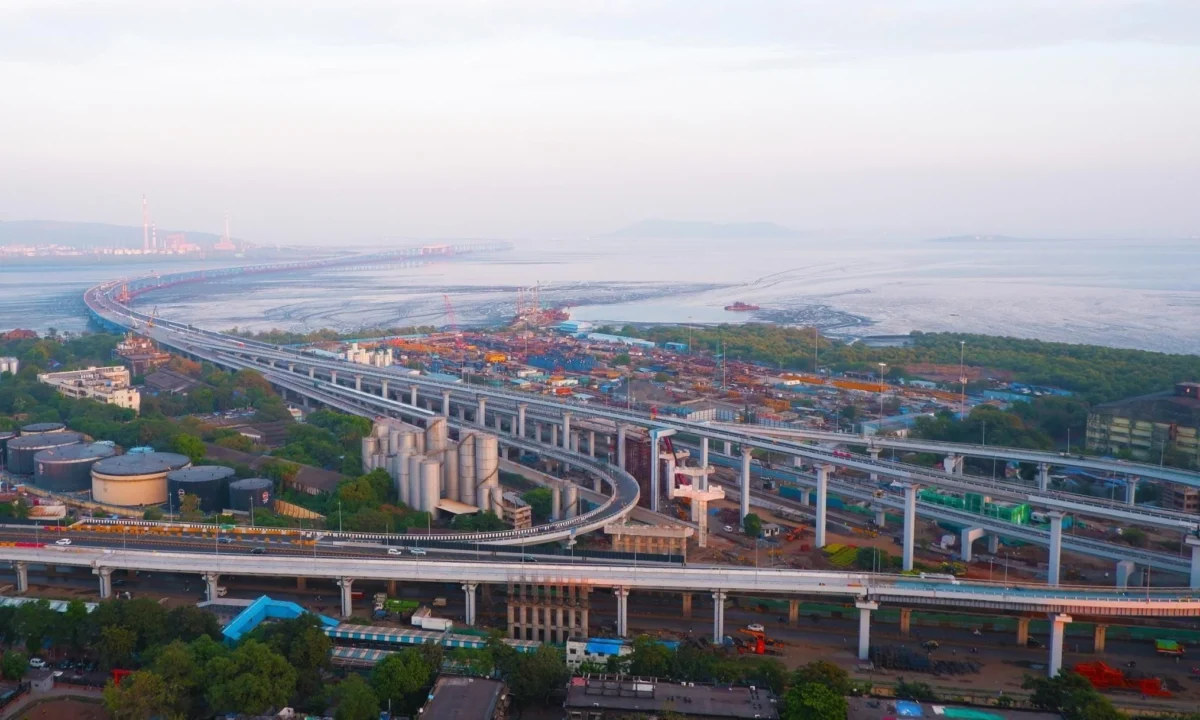
Starting in the early 2020s, the completion of the Atal Setu (Mumbai Trans Harbour Link) and the nearing completion of the new airport marked the start of the third phase. This era is defined by the integration of the mainland (Raigad district) with the peninsula. Areas like Panvel, Pen, and Karjat are now being absorbed into the metropolitan core, supported by digital infrastructure and high-speed transit.
3. Supporting Data: The Infrastructure Backbone
The viability of Mumbai 3.0 is anchored by a "Golden Quadrilateral" of infrastructure projects. These are not merely proposed; they are in various stages of advanced construction or operation.
Connectivity Milestones
- Atal Setu (MTHL): The 21.8-km sea bridge has slashed travel time between South Mumbai and Navi Mumbai from 2 hours to 20 minutes. This bridge is the physical umbilical cord that makes Mumbai 3.0 accessible to the traditional business districts.
- Navi Mumbai International Airport (NMIA): Spread over 1,160 hectares, the airport is expected to handle 60 to 90 million passengers annually upon full completion.
- Alibaug-Virar Multimodal Corridor: A 126-km mega-highway that will connect the major ports (JNPA), the new airport, and industrial clusters, bypassing the congested city roads.
- Panvel-Karjat Rail Corridor: The doubling of this line and its conversion into a suburban passenger corridor will provide local train connectivity to the interior of Mumbai 3.0, making it a viable option for daily commuters.
Economic Catalysts
- Data Center Hubs: Due to stable power and proximity to subsea cable landings, the Panvel-Taloja belt is becoming India’s premier data center destination.
- Education Hubs: Planned international university campuses and specialized research institutes are being incentivized to set up in the NAINA region, creating a "Knowledge City" environment.
- Logistics & Warehousing: With the proximity to the Jawaharlal Nehru Port Authority (JNPA), the region is seeing a surge in Grade-A warehousing, driven by the e-commerce boom.
4. Official Responses and Governance
The Maharashtra state government and CIDCO have been vocal about the strategic importance of this region. In recent cabinet briefings, officials have emphasized that "Third Mumbai" is essential to achieving Maharashtra’s goal of becoming a $1 trillion economy.
CIDCO’s Planning Framework
CIDCO has adopted a Land Pooling Scheme (LPS) for NAINA, which avoids the delays of traditional land acquisition. Under this model:
- Landowners surrender their land to the authority.
- CIDCO develops the infrastructure (roads, water, electricity).
- Landowners receive 40% of their original land back as a fully developed, serviced plot with a higher Floor Space Index (FSI).
This "win-win" official approach has led to the approval of several Development Plans (DPs) for various circles within NAINA. Government officials have noted that the emphasis is on "walk-to-work" culture and "15-minute city" planning principles, ensuring that residents do not have to travel long distances for basic amenities.
5. Implications: The New Real Estate Paradigm
The emergence of Mumbai 3.0 is fundamentally altering the DNA of the Indian homebuyer and investor. We are seeing a departure from the "compact apartment" mindset toward a "lifestyle-first" approach.
The Evolution of the "Second Home"
The traditional concept of a second home as a remote weekend getaway is dying. In Mumbai 3.0, the "second home" is becoming a "co-primary home."
- Remote Work Capability: High-speed internet and proximity to the city allow professionals to live in green, low-density areas for four days a week while commuting to the office for two.
- Wellness and Nature: The monsoon-drenched hills of the Western Ghats, which border Mumbai 3.0, offer a quality of life—clean air, privacy, and open spaces—that is physically impossible to achieve in Mumbai 1.0 or 2.0.
Land as a Finite Asset
For investors, the implications are clear. Historically, the most significant wealth in Indian real estate has been created by those who identified growth corridors before the infrastructure reached 100% maturity.
- Capital Appreciation: Land parcels in Panvel and surrounding NAINA villages have already seen steady appreciation. However, experts suggest that the "steepest" part of the value curve is yet to come, as the airport becomes operational.
- Clearer Titles: The transition of these areas into planned zones has brought about clearer land titles and organized frameworks, reducing the risk for individual investors.
A New Demographic of Buyers
Today’s investor is younger and more discerning. They are not just buying square footage; they are buying a "legacy." These buyers prioritize:
- Low-density living: A move away from the high-rise congestion of central Mumbai.
- Design-led communities: A preference for townships that offer curated experiences, such as organic farming zones, wellness centers, and sports academies.
- Long-term Diversification: Using real estate as a hedge against inflation, backed by tangible government-led infrastructure.
6. Conclusion: Hindsight and the Future
Every generation experiences a defining moment in its city’s evolution. For London, it was the development of the Docklands; for New York, the expansion into the outer boroughs. For Mumbai, that moment is now.
Mumbai 3.0 is more than just an expansion; it is a rebalancing of the region’s scales. It moves the center of gravity from the cramped peninsula to the vast, planned mainland. While the transformation is still unfolding, the trajectory is clear. The "Third Mumbai" is being built on the pillars of connectivity, planned urbanism, and a renewed focus on the quality of human life.
In a decade, the connectivity provided by the Atal Setu and the Navi Mumbai International Airport will be taken for granted, much like the Bandra-Worli Sea Link is today. However, those who recognize the potential of this region today—while the story is still being written—stand to be the primary beneficiaries of India’s most ambitious urban experiment. Mumbai 3.0 is not just where the city is going; it is where the future of modern India is being built.
Disclaimer: This report is based on current industry data, infrastructure progress reports, and urban planning frameworks. Real estate investments carry inherent risks. Prospective investors are advised to conduct independent due diligence and consult with financial advisors before making any commitments.
