

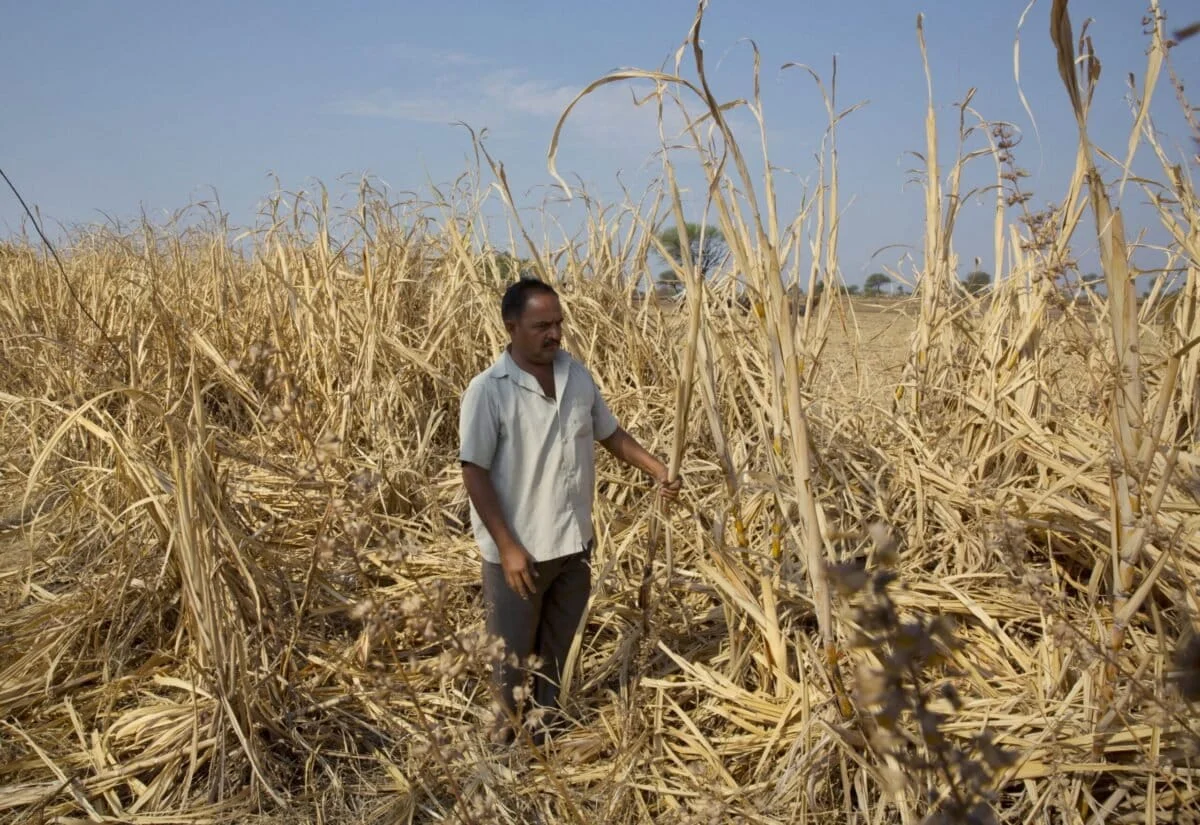
A comprehensive 22-year study of the Deccan Plateau reveals a troubling contradiction: while sugarcane productivity has reached historic highs, the crop’s dependence on stable weather patterns makes it increasingly susceptible to the intensifying whims of a changing climate.
Across the sun-drenched expanse of India’s Deccan Plateau, a quiet revolution has taken place over the last two decades. Sugarcane, the emerald backbone of the rural economy, has seen its yields climb steadily, bolstered by better seeds, improved fertilizers, and expanded irrigation. However, a new long-term study published in Scientific Reports warns that this progress is built on increasingly fragile foundations. As climate variability intensifies, the very districts that lead the nation in sugar production are finding themselves at the mercy of erratic monsoons and unprecedented heatwaves.
Main Facts: The Economic Weight and Environmental Cost
Sugarcane is more than just a crop in India; it is a political and economic juggernaut. It powers thousands of sugar mills, supports the nation’s ambitious ethanol-blending mandates, and provides a livelihood for millions of small-scale farmers in Maharashtra and Karnataka. In the Deccan Plateau, a semi-arid region characterized by its rocky terrain and seasonal rainfall, sugarcane has long been the preferred cash crop due to its guaranteed market and the "Fair and Remunerative Price" (FRP) system.
However, the crop is also one of the most water-intensive in the world. A single kilogram of sugar can require up to 2,000 liters of water, a staggering figure in a region where groundwater tables are plummeting and droughts are becoming a recurrent feature of the landscape.
The recent study, led by researchers including Krishna Kumar from the Department of Applied Science and Humanities at MIT-ADT University, Pune, analyzed 22 years of data (1999–2021) across five pivotal districts: Ahmednagar, Solapur, and Nashik in Maharashtra, and Bellary and Dharwad in Karnataka. The findings present a complex picture: while farmers have become better at squeezing more sugar from every hectare, the "safety margin" provided by nature is disappearing.

“We noticed that sugarcane cultivation in Maharashtra and Karnataka was increasingly being affected by climatic variability, even though it remains one of the most important economic activities across the Deccan Plateau,” says Kumar. The study highlights that the performance of the crop is now highly location-specific, and state-level averages often hide the acute "climate scars" being felt at the district level.
Chronology of Change: 1999 to 2021
To understand the trajectory of sugarcane in the region, the researchers divided their 22-year analysis into three distinct phases. This chronological approach allows for a clearer view of how agricultural technology has raced against—and sometimes fallen behind—climatic shifts.
Phase I: The Baseline (1999–2006)
During this period, yields were relatively modest. In districts like Ahmednagar and Nashik, average yields hovered around 69 tonnes per hectare. This era was characterized by traditional irrigation methods and a greater reliance on the predictability of the southwest monsoon. However, the period also saw significant volatility; for instance, Ahmednagar hit a record low yield of just 47 tonnes per hectare during the 2003–2004 drought year.
Phase II: The Transition (2007–2013)
This middle phase was marked by the introduction of higher-yielding varieties and the gradual adoption of micro-irrigation. While yields began to stabilize in some regions, others, like Dharwad in Karnataka, saw unstable patterns. The study notes that during this time, the "Moisture Adequacy Index" began to fluctuate more wildly, signaling the onset of more erratic weather patterns that would define the following decade.
Phase III: The High-Yield/High-Risk Era (2014–2020)
The final period of the study saw the most significant productivity gains. In Ahmednagar, yields jumped from the early average of 69 tonnes to a robust 87 tonnes per hectare. Nashik saw an even more dramatic rise, reaching 89 tonnes per hectare. By 2020–2021, Ahmednagar achieved a peak yield of 108 tonnes per hectare. Yet, this productivity coincided with the highest recorded number of "heat stress days" and more frequent rainfall deficits, creating a high-stakes environment for farmers.

Supporting Data: A Tale of Five Districts
The study utilized a wealth of data from the Directorate of Economics and Statistics and the India Meteorological Department (IMD) to create a granular map of sugarcane health.
The Production Giants
- Solapur (Maharashtra): Identified as the largest producer among the five districts. It maintains an average cultivation area of 117,000 hectares and produces roughly 10 million tonnes of cane annually. Despite its status, Solapur is also one of the most stressed, recording an average of 127 heat stress days per crop year.
- Bellary (Karnataka): Despite being in a drier zone with less than 780mm of annual rainfall, Bellary recorded the highest average yield at nearly 90 tonnes per hectare. Researchers attribute this to highly efficient water management and localized irrigation infrastructure.
The Productivity Gainers
- Ahmednagar & Nashik: These districts showed the most consistent long-term growth. Ahmednagar saw a statistically significant annual yield increase of 1.12 tonnes per hectare, while Nashik followed closely with a 1.08-tonne increase. The study suggests these gains were driven by "vertical growth"—improving the output of existing land—rather than "horizontal growth" (expanding the area of cultivation).
The Vulnerability Metrics
The researchers used three key indices to measure climate impact: the Drought Index, the Moisture Adequacy Index (MAI), and Heat Stress Days.
- In Ahmednagar, the mean drought index stood at -0.79, indicating persistent water stress.
- The study found a direct correlation: years with fewer heat stress days and higher MAI values invariably led to record-breaking yields, while years with prolonged high temperatures saw immediate drops in cane quality and weight.
Official Responses and Expert Analysis
The study’s findings have resonated with agricultural experts who are witnessing these trends on the ground. The consensus is that while the data shows resilience, it also serves as a final warning.
Priyanka Singh, an independent expert and senior scientific officer at the UP Council of Sugarcane Research, notes that the findings align with observations across India’s broader sugar belt. “There is increasing evidence that prolonged dry spells, erratic monsoon distribution, higher temperature episodes, and water stress are affecting cane productivity,” Singh explains.
However, Singh cautions against a fatalistic view. She argues that the data does not suggest that sugarcane is no longer viable in the Deccan Plateau, but rather that the method of cultivation must evolve. “The broader national trend is not simply declining sugarcane productivity due to climate change, but increasing variability and increasing dependence on efficient management,” she says.

Krishna Kumar emphasizes that the insight gained from district-level analysis is vital for policy. “This kind of insight matters a lot for creating climate-resilient agricultural policies and planning better infrastructure,” he notes. He suggests that state-level data often masks the "moderate to high vulnerability" of specific water-limited regions, leading to a one-size-fits-all policy that may fail the most stressed districts.
Implications: The Future of India’s Sweet Success
The study’s implications extend far beyond the farm gate, touching on national energy security and regional stability.
1. The Ethanol Mandate
India has set an ambitious goal of 20% ethanol blending in petrol (E20) by 2025–26. Sugarcane is the primary feedstock for this transition. If climate variability leads to sharp swings in production—as seen in the 22-year study—it could jeopardize the steady supply of ethanol needed to meet these green energy targets.
2. The Water-Food-Energy Nexus
The Deccan Plateau is already a "dark zone" for groundwater in many areas. The study confirms that sugarcane’s future depends on "climate-smart" agriculture. This includes a mandatory shift toward drip irrigation and "fertigation" (applying fertilizer through irrigation water), which can reduce water use by up to 50% while maintaining yields.
3. Breeding for Resilience
The data suggests that current varieties, while high-yielding, are sensitive to heat stress. There is an urgent need for agricultural universities to develop "climate-ready" sugarcane clones that can maintain sucrose content even when temperatures exceed 40°C for extended periods.

4. Infrastructure and Insurance
As production becomes more volatile, the study underscores the need for better drought contingency measures and more responsive crop insurance schemes. Farmers in districts like Dharwad, which showed unstable yield patterns, require financial buffers to survive the "swing years" between record harvests and climate-induced failures.
Conclusion
The 22-year journey of sugarcane in the Deccan Plateau is a testament to human ingenuity and the limits of natural resources. Farmers have managed to defy the odds, producing more with less, but the study makes it clear that the climate is changing faster than current agricultural practices. To protect the "sweet" economy of Maharashtra and Karnataka, the focus must shift from merely increasing yields to ensuring those yields are sustainable in a warming world. As Krishna Kumar puts it, "Climate-smart practices and efficient irrigation will matter more and more" if the Deccan Plateau is to remain the sugar bowl of India.
